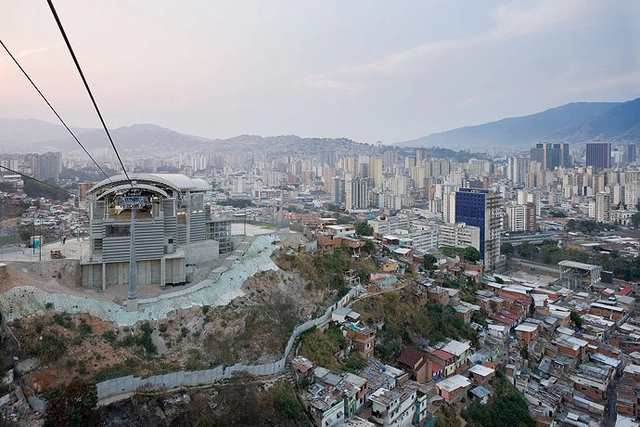
Earlier today in Shenzhen the 6th Bi-City Biennale of Urbanism/Architecture (UABB) opened its doors to public. Under the overall theme "Re-Living the City," curators Alfredo Brillembourg and Hubert Klumpner of Urban Think Tank headed up the "Radical Urbanism" exhibit in the main venue. Brillembourg and Klumpner invited the exhibition participants to show how we can learn from ad-hoc and "bottom-up" initiatives for alternative urban solutions. In the following essay - originally printed in the UABB 2015 catalogue - the curators call for us to "rethink how we can operate within the city, learn from its emerging intelligence and shap[e] its outcomes to radical and tactical ends."
The notion of a radical urbanism draws us unavoidably into the realm of the political. Imagining a more equitable and sustainable future involves an implicit critique of the spatial and societal conditions produced by prevailing urban logics.[1] As such, we are not only reminded of Le Corbusier’s famous ultimatum, “architecture or revolution,” but its generational echo in Buckminster Fuller’s more catastrophic pronouncement, “utopia or oblivion.”[2] Both were zero-sum scenarios born of overt social disjuncture, whether the deprivations and tensions of the interwar period, or the escalating conflicts and ecological anxiety of the late 1960s. While the wave of experimental "post utopian" practices that emerged in the early 1970s positioned themselves explicitly in opposition to perceived failures of the modern movement, these disparate groups shared a belief – however disenchanted – with their predecessors in the idea that radical difference was possible, as well as a conviction that a break was necessary.
After he achieved celebrity status at the turn of the millennium, in recent years the conversation around Frank Gehry has switched tones, going from near-universal admiration to widespread controversy. Yet according to Paul Goldberger, whose biography of Gehry was released in September, both adoration and critique of the architect might engender an overly simplistic interpretation of his long and storied career. In this interview originally published by Metropolis Magazine as "Q&A: Paul Goldberger on Frank Gehry's Life and Work," Goldberger delves into the many ways Gehry has been misunderstood over the years, and how his work, his psyche, and the interplay between the two have made him one of the most conversation-worthy architects of a generation.
Frank Gehry isn’t just the world’s foremost architect; he is, by all public standards, also one of our greatest living artists. Paul Goldberger’s new biography (his first), Building Art: The Life and Work of Frank Gehry, acknowledges the architect’s celebrity status but doesn’t acquiesce in it. Rather, Goldberger interrogates the peculiar psyche and restless contradictions of the man to shed light on the motivations behind the architecture. Metropolis editor Samuel Medina speaks to the newly minted biographer about defying genre conventions, unpacking the ambiguities of Gehry’s work, and giving reporters the finger.
Architecture is in some ways a paradoxical profession. On one hand, it projects a popular image of the lone, creative genius, taking control over all aspects of a building project and forming them to their creative ideals. But in reality, most projects take a huge team of people, all working together to produce a building which usually represents the creative input of not only many different people, but many professions too.
One way to find a balance between these two extremes is to take more creative control over the decisions of the group - in other words, to start your own practice, guided by your creative input alone. But is that goal worth the difficulty it might take to get there? This was the question we had in mind when we asked our readers to let us know the pros and cons of starting your own firm last month. Interestingly, not a single commenter left any response about the joys of working for someone else, and the consensus was firmly that running your own practice is preferable - provided you can deal with the significant problems of doing so. Read on to find out what they had to say.
Nevertheless, a quiet period doesn't mean there weren't some great discussions had in the comments over the past two weeks, with opinions shared on the success of BIG, the problem of negativity in architecture, and more. Read on to find out what our readers had to say.
In recent years, the ever-increasing profile of Bjarke Ingels and his firm BIG have been hard to miss. For an office that is barely 10 years old, the number and scope of their projects is astonishing; to cope with demand, the firm has grown to employ almost 300 people. This growth, though, did not happen by accident. In this article, originally published on DesignIntelligence as "The Secret to BIG Success," Bob Fisher speaks to the firm's CEO and Partner Sheela Maini Søgaard in order to uncover the business plan behind the BIG phenomenon.
BIG may be the most appropriately named firm on the planet.
The Bjarke Ingels Group (BIG) seems to have an outsized impact in all it does. The Copenhagen-based design firm turns conventions and assumptions upside down and combines contrasting possibilities in outrageously bold, imaginative and playful ways. Projects like Via at West 57th Street in New York City and the Amager Bakke Waste-to-Energy Plant in Copenhagen are prime examples: the first a pyramid-shaped apartment building that defies the forest of rectangular towers around it, and the second a power plant that doubles as a smoke ring-blowing ski slope.
The world has taken note. Whether in praise or criticism, the architectural, cultural and business media tend to strike a heroic tone when describing the firm’s work: radical, ambitious, bold, confident. In short…BIG.
For its fall season of architecture events, the Royal Academy’s working theme is “Architecture and Freedom: a changing connection,” in a program conceived and organized by Architecture Programme Curator, Owen Hopkins. One of these events was a recent lecture by Patrik Schumacher, Director of Zaha Hadid Architects, and ardent promoter of Parametricism. In his lecture, what starts out with a brief exercise in damage control over the barrage of criticism recently endured by the firm, emerges as an impassioned discussion of architectural politics, design philosophies, and social imperatives.
The winners of the 2015 LEAF Awards have been announced. Founded in 2001, the awards ceremony honors innovative architecture projects in 13 different categories dedicated to various aspects of building, including best façade design and engineering, best future building, and public building of the year.
Find out which projects won the awards, after the break.
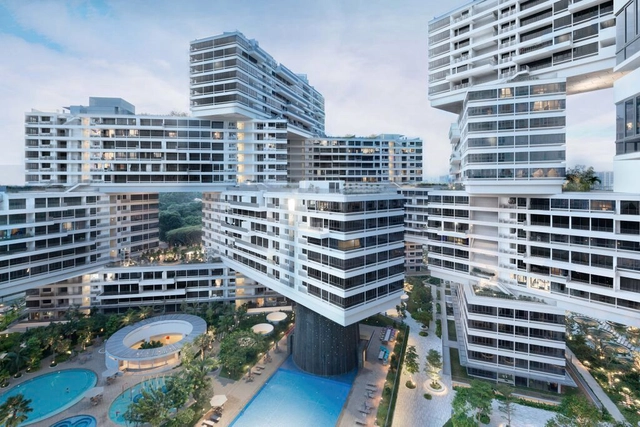
OMA and Buro Ole Scheeren's vertical village in Singapore, The Interlace has been named the World Building of the Year 2015 at culmination of the World Architecture Festival (WAF). Celebrated for being "an example of bold, contemporary architectural thinking," as WAF Director Paul Finch described, the project is eighth building to ever win the illustrious award. It is considered to be a "radical new approach to contemporary living in a tropical environment."
Winners of the year's Future Project, Landscape, Small Project and Color Prize awards were also announced. Read on to see the who won with comments from the jury.
For many architects, owning their own firm is the dream which drives their career. In a field such as architecture, the idea of having the freedom to seek out the projects you most want to do and the creative freedom to make the final decision on a design sounds like the ideal way to work. And yet, ask any successful firm founder and they'll probably tell you that owning your own architecture business doesn't live up to such a romantic notion, and takes a lot of hard (non-design) work to be successful. In the recession of recent years, many found this out the hard way, becoming self-employed out of necessity and having to get creative about how exactly they make their money.
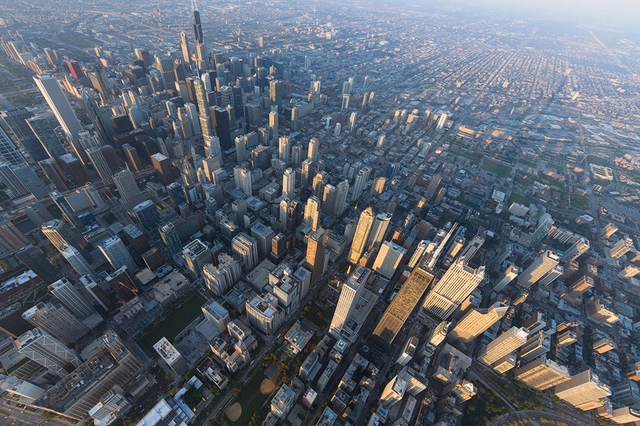
Iwan Baan was twelve years old when he received his first camera and, "within a week, [he] had traded it in for a better one." He is one of the most well-known and highly sought after architectural photographers in the world, recognised for shooting cities from above and for always highlighting people (occupation) in his images. In a short interview with Jonathan Glancey Baan is the first to state that he "doesn't know much about architecture" — something which has not inhibited his ability to produce some of the most successful photographs of the built world, and how we design, construct and occupy it.
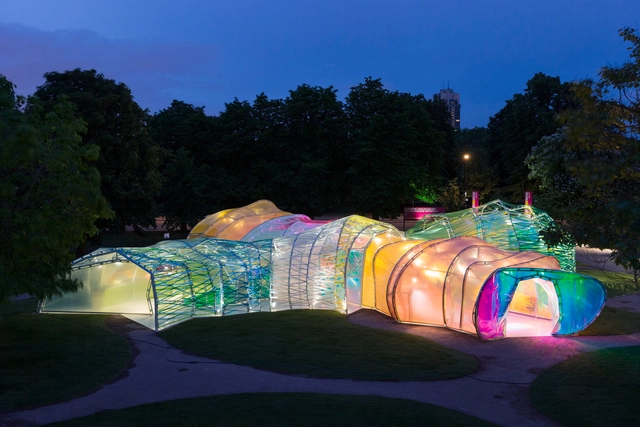
"There is never a good time to leave an institution but I wanted to leave the Serpentine at a time of strength and success," said Peyton-Jones, as reported by the Architects' Journal.
Concrete has long had a close relationship with the earth; as the favorite material for the creation of building foundations, one of its most common uses is effectively as a more reliable replacement for soil. In the twentieth century, concrete’s ability to transform our interaction with the ground was taken to the next step. As architects and engineers explored the opportunities offered by a combination of reinforced concrete and the modernist mindset, multiple attempts were made to replace the ground in a more dramatic way: by creating a new ground, separated from the earth itself. Most widespread among these plans was the engineer’s elevated highway which emerged worldwide, and the most relevant to architects the “streets in the sky” embodied by developments such as the Smithsons’ Robin Hood Gardens. Newcastle-upon-Tyne offers a city-wide example of this theory, embarking on an ambitious plan to become the “Brasilia of the North” by creating an elevated network of pedestrian routes entirely separated from the automobiles below - though the project was abandoned in the 1970s with only small sections implemented.
After Modernism’s dramatic fall from grace in the 1970s and 80s, this project to reinterpret the ground with concrete was largely forgotten. Of course architects still used concrete in their designs, but they were content with a purely traditional relationship to the ground: their buildings were discrete entities which sat upon the earth, and nothing more. However, as explored at length in Stan Allen and Marc McQuade’s 2011 book Landform Building: Architecture's New Terrain, recent years have shown architects willing to work upon the ground once again, in new and exciting ways. In the years since Landform Building’s publication, this trend has only intensified, as demonstrated by the following three projects.
Manufacturers: dormakaba, Assa Abloy, Roschmann Group, Sherwin-Williams, Thos. Moser, +391212 Studio, 9Wood, American Floor Covering, Ann Sacks, Armani Restoration, Automated Building Systems, Bisazza, Cherry Hill Glass, Chicago Metal Rolled Products, Connecticut Wells, Crenshaw Lighting, Cricursa, Curries Company, DJ Rossetti, De Vorm, Design Communications, Draperies, ETC, EcoLogic Energy Solutions, Extra Vega Milano, FUS, Get Real Surfaces, Haywood Berk, Legere Group, Marvin, Nemo Tile, Northeast Fire Protection, Penlyn Construction Corporation, Poltrona Frau, QSR Steel, Singer Equipment, Structurlam, The BILCO Company, Thrislington Cubicles, TriPyramid, Troy City Woodwork, Villa Construction, Zahner, thyssenkrupp-39
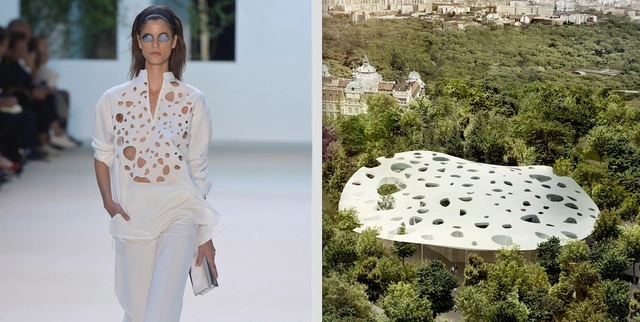
At this year’s Paris Fashion Week, Switzerland-based fashion house Akris showed its 2016 Spring/Summer Collection -- an assembly of garments based on the work of Japanesearchitect Sou Fujimoto.
Akris’ creative director, Albert Kriemler, was introduced to Fujimoto by photographer Iwan Baan while working on the Université Paris-Saclay. From a stance of admiration, Kriemler was thus influenced by Fujimoto’s work: "We share a vision to create an effortless relation between the body and the environment with utmost simplicity. Sou Fujimoto is an architect who understands that we have more senses than just the eye," said Kriemler.
Last week, the Chicago Architecture Biennial opened to over 31,000 visitors and much fanfare, and for good reason - it is the largest architecture event on the continent since the 1893 World's Columbian Exposition, featuring over one hundred exhibitors from over thirty countries. With a theme as ambiguous as "The State of the Art of Architecture," and with the hope of making the biennial, according to directors Joseph Grima and Sarah Herda, "a space for debate, dialog and the production of new ideas," the event was sure to generate equally wide-ranging opinions. Read on to find out what the critics had to say about the Biennial.















.jpg?1445874627&format=webp&width=640&height=580)


.jpg?1445874627)

_Dean_Kaufman.jpg?1461883250&format=webp&width=640&height=580)

_Dean_Kaufman.jpg?1461883165&format=webp&width=230&height=230&crop=true)
_Dean_Kaufman.jpg?1461883233&format=webp&width=230&height=230&crop=true)
_Dean_Kaufman.jpg?1461883182&format=webp&width=230&height=230&crop=true)
_Dean_Kaufman.jpg?1461883250)