Have you ever asked yourself this question? At first, it may seem strange to imagine that we have not always had windows in our buildings, let alone that they were sealed with a transparent material capable of allowing natural light into dark rooms or creating a barrier against the cold: glass.
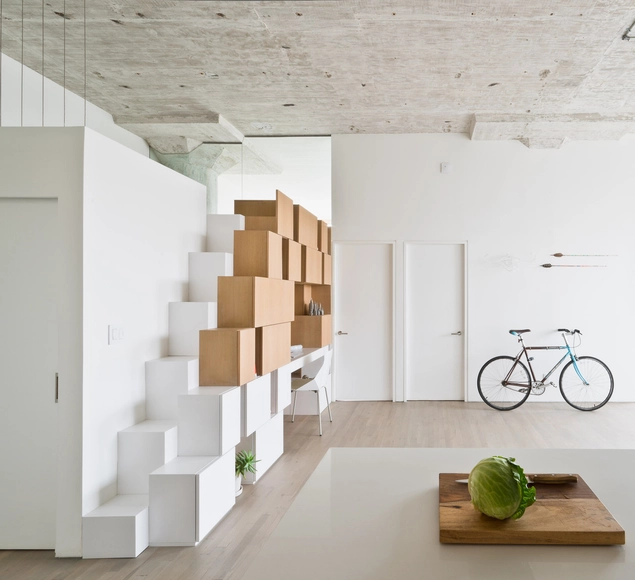
Conventional, spiral, curved, U-shaped, ship's ladder... there are various models and possibilities for designing stairs in projects, depending on space constraints and design intent. But what unique characteristics does the Santos Dumont staircase possess compared to others? Named after its creator, the inventor and pioneer of Brazilian aviation, this model serves as a middle ground between a typical inclined staircase and a vertical ladder. Its slope is much steeper than that of a conventional staircase, and its steps feature alternating cutouts for the left and right foot, reducing its footprint and saving space.
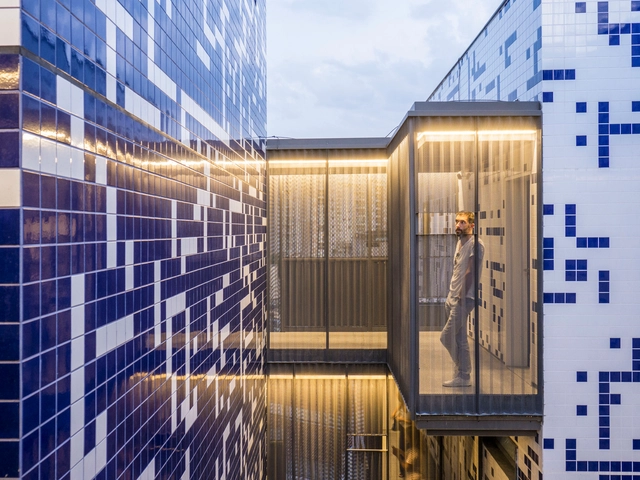
Ceramic tiles are usually used in the interior wet zones of residential and commercial projects—such as kitchens, bathrooms, and laundry rooms. However, an increasing number of architects have proven that this material has great graphic, aesthetic, and, above all, technical potential when applied to facades.
Due to its weather resistance, the material requires little to no maintenance; moreover, the variety of colors, sizes, textures, and patterns available on the market allows for countless uses and combinations.
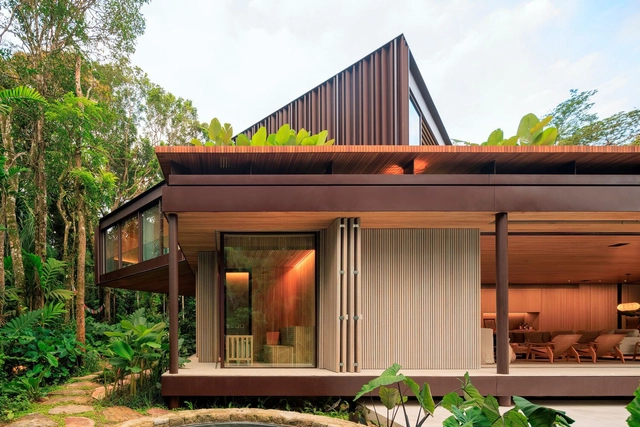
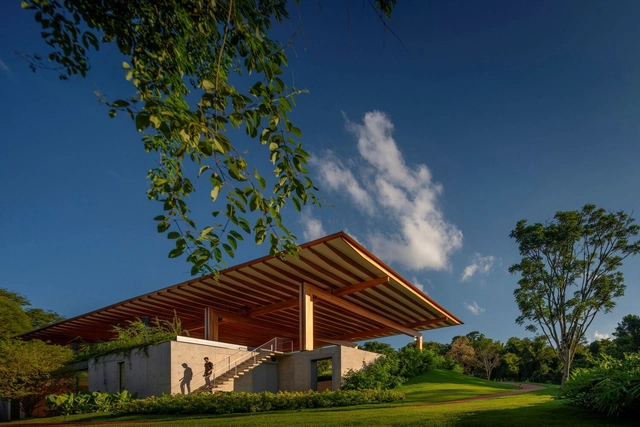
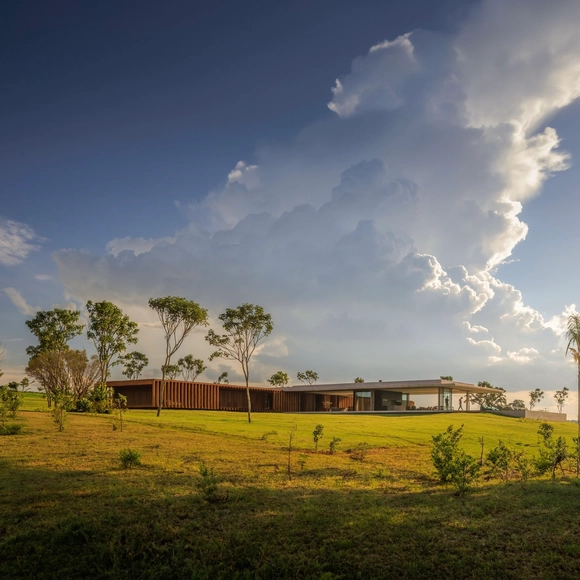
Frequently used in residential design as an extension of the roof slab, eaves have shed their modest dimensions and traditional role of simply protecting outer walls from rain. Today, they are being reinvented to create new living spaces, such as verandas, which seem to reinterpret the historic alpendre bandeirista and extend the interiors, blurring the boundaries between inside and out.
The Madrid City Council, through the Madrid Architecture Competition Office of the Official College of Architects of Madrid (COAM), has launched a competition to design three municipal libraries in the Spanish capital.
Following an investigation commissioned by the General Directorate of Libraries, Archives, and Museums and the Public Library Service, "a need to expand the current network of municipal public libraries was identified. This analysis was reinforced by requests from the 2016 district Participatory Budgeting call, as the vast majority of the centers identified in this report were supported by citizen petitions," the competition guidelines explain.
A new year has begun, and with it, a new edition of the ArchDaily Building of the Year Awards. For 17 years, we have handed over the reins to you, our readers, to choose the best architectural projects of the year, and you have consistently delivered. With a brand new set of over 3,000 projects from around the globe, it is now time to get lost in our projects library and start making your selection.
From a tiny library in rural Myanmar, awarded in the first ever edition of the Building of the Year in 2009, to an innovative waste-to-energy plant in 2025, the winners of the Awards have always been surprising, inspiring and, most importantly, a reflection of the current architectural landscape. Anyone can register for a free ArchDaily account and vote, and we invite you to delve into the catalog of projects published in 2025—all of which are eligible to participate under one or more of the 15 available categories—to choose your favorites.
https://www.archdaily.com/1037980/the-archdaily-2026-building-of-the-year-awardsDaniela Porto
As 2025 approaches its end, we look back at an eventful year in the world of interior design. Last year, designers favored reserved, modest approaches, a trend that continued from previous years. The emergence of artificial intelligence generated intense discussions on digital equity and misinformation, which continued into 2025, especially with the topic of the Venice Architecture Biennale, Intelligens. This opened the conversation to the opportunities of digital technologies, attempting a more hopeful outlook. On the other hand, completed interior design projects over the year focused more on the tangible and the pragmatic, with expressed raw materials and an appreciation of history.
Our contemporary society has been witnessing a surge in skyscraper construction in urban centers worldwide for various reasons—including engineering advancements, increased urban density, space constraints, and, arguably, a competitive drive for building the tallest structures. The allure of all-glass facades and the pursuit of curtain walls with larger panes of continuous glass have often come at the cost of functionality.
In these towers, operable windows are sacrificed for aesthetics and expansive views, with a central core layout that maximizes 360-degree views while creating architectural "solar heat-gain monsters." Without natural or cross ventilation, these glass skyscrapers trap significant heat from solar radiation within habitable spaces, relying almost exclusively on mechanical HVAC systems to cool these spaces. This raises the question: is passive ventilation strategy becoming obsolete in high-rise design, or can operable systems be integrated effectively into our high-tech towers?
-1.jpg?1566566661&format=webp&width=230&height=230&crop=true)


.jpg?1546264461&format=webp&width=640&height=580)