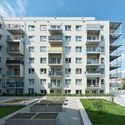
There are three primary settings in which lower-density urbanism can be useful, and where conditions favored by YIMBYs are weak or nonexistent: as a replacement for what is currently slated to be built out as sprawl, as a recovery process for existing sprawl, and in small towns that are growing. Giving up on these settings forces all development intended to combat the housing crisis into urban settings, ideally near transit, where land is much more expensive to acquire and to develop. It also allows the sprawl machine to roll on unimpeded.The best vehicle for implementing principles illustrated here at the scale of a neighborhood, hamlet, or village is not a major production builder, as these principles violate almost all of their conventional industrial practices. Instead, look to the record of stronger New Urbanist developers who are no strangers to doing things considered unconventional by the Industrial Development Complex in the interest of better places with stronger lifetime returns.
ArchDaily and VELUX have joined forces to provide you with an exclusive coverage of the highly anticipated UIA World Congress of Architects 2023. Watch Ambra Gugletti from KOMPAS VC and Lucas Carstens from Modulize explain how data-driven offsite construction can help reduce construction waste up to 90%
C40 and VELUX presents the panel discussion "Healthy Buildings at the Time of the Energy Crisis" at the UIA World Congress of Architects 2023.
The panel discussion will focus on the role of healthy building principles in addressing the ongoing energy crisis through accelerated retrofits while simultaneously promoting environmental sustainability, job creation, and social equity.
There is a general agreement that our built world should become climate neutral. But, how construction will have to change to make this future a reality is still uncertain. At the same time, the economic and social framework for construction and especially for housing construction are changing. Components, building products, and building systems are being reused, and this is accompanied by a new ethic of design and construction and a new aesthetic of architecture.
Heating and cooling buildings have always been two of the most important challenges in ensuring indoor user comfort. At a biological level, our bodies generate heat through metabolism, a physicochemical process. And although the human body has temperature regulation mechanisms, such as sweating and vasodilation, sometimes we need additional help to achieve thermal comfort. Therefore, since ancient times, traditional strategies have been sought to help achieve this, and many have been adapted to their historical and material contexts.
https://www.archdaily.com/1001837/empowering-thermal-comfort-through-smartphone-technology-in-hvac-systemsEnrique Tovar
Jingru (Cyan) Cheng . Image Courtesy of Wheelwright Prize
Harvard University Graduate School of Design (GSD) has announced Jingru (Cyan) Cheng as the recipient of the 2023 Wheelwright Prize, a study grant created to support globally-minded research and investigative approaches to contemporary architecture. The winning research project, titled “Tracing Sand: Phantom Territories, Bodies Adrift,” delves into the multifaceted impacts of sand mining and reclamation, understood from cultural, economic, and ecological perspectives. The unassuming material has become an indispensable element for our built environment and human communities, serving as a vital component in the production of glass, concrete, asphalt roads, and artificial land. Yet the process of dredging underwater systems and sand mining leads to the disruption of habitats in a process that simultaneously shapes one habitat while devastating another.