A year since the passing of David Bowie, one of music and pop culture’s greatest icons, fans have launched a fundraising campaign to support the erection of a permanent memorial statue in London, in honor of the late musician.
“We’re taking the lightning flash from the cover of Aladdin Sane, and turning it into a three-storey tall sculpture,” explains Charlie Waterhouse of This Ain’t Rock ‘n’ Roll, one of the organizations behind the campaign, working in conjunction with David Bowie’s team.
https://www.archdaily.com/805983/this-campaign-envisions-a-three-storey-lightning-bolt-in-honour-of-david-bowieOsman Bari
It's common knowledge that China has "at least 10 White Houses, four Arcs de Triomphe, a couple of Great Sphinxes and at least one Eiffel Tower," report the New York Times. But now photographs of a copy of London’s famous Tower Bridge (a Victorian riparian gateway to the city) in the Chinese city of Suzhou have emerged – and it's been adapted to suit a five-lane highway. Almost identical—from a distance, at least—to its British counterpart the new structure, which was completed in 2012, has been doubled – a feat which has also required some spectacular architectural additions.
https://www.archdaily.com/806431/twice-as-nice-suzhou-china-architectural-homage-copies-copy-london-tower-bridgeAD Editorial Team
Flexible studios to aid Dundee's thriving digital creative sector. Image Courtesy of Studioshaw
London-based firm Studioshaw has won a competition to design a hub facility for children and young people in Dundee, Scotland. The Interactive Hub will be located on the site of a former railway depot at the Seabraes Yards Digital Media Park. The competition, hosted by the Dundee Institute of Architects (DIA) and Scottish Enterprise, was one of 400 events taking place across Scotland as part of the RIAS 2016 Festival of Architecture.
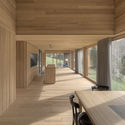
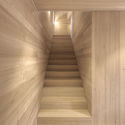
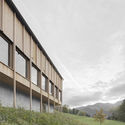
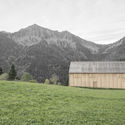
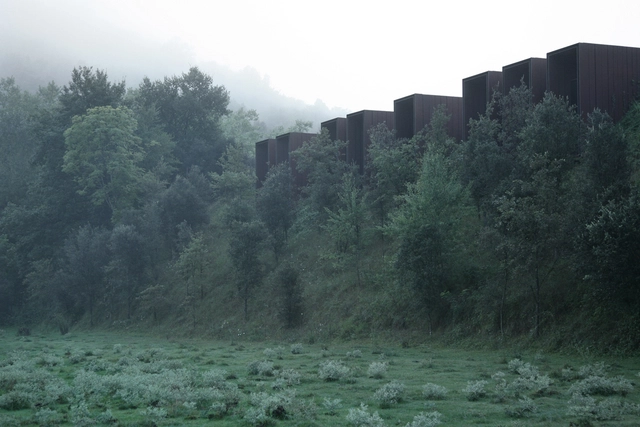
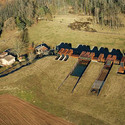
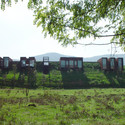
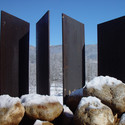
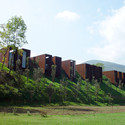
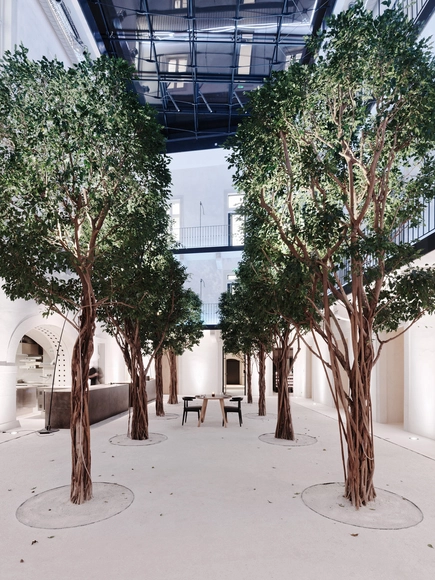
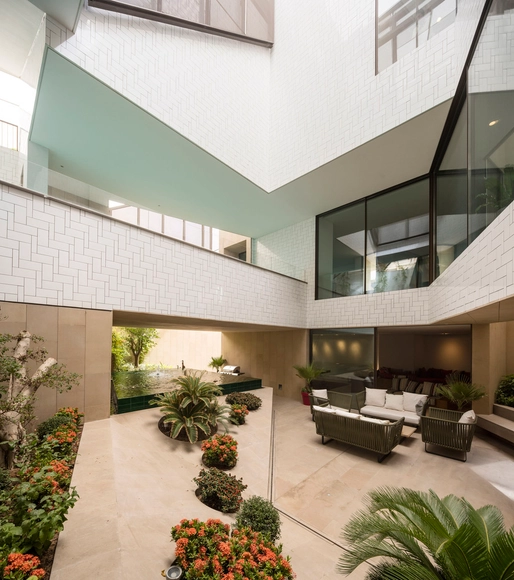
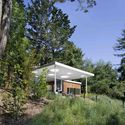
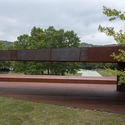
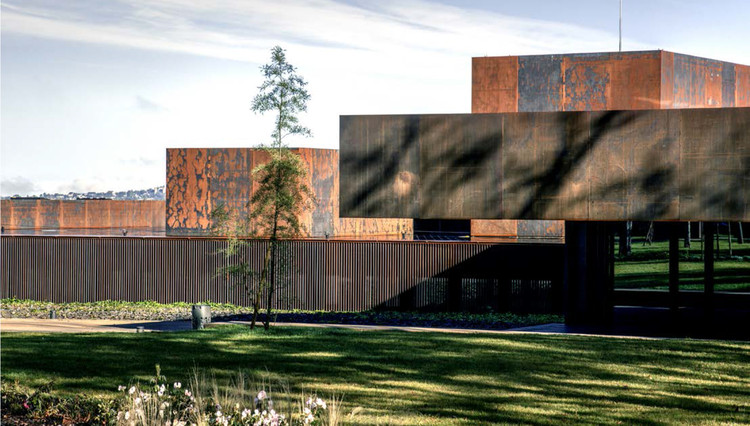
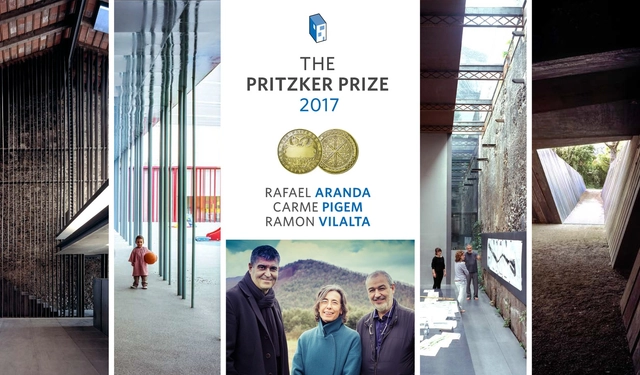
Today, Rafael Aranda, Carme Pigem and Ramon Vilalta were named the laureates of the 2017 Pritzker Prize, becoming the first trio of architects to be bestowed the profession’s highest accolade. Working together since 1988 as RCR Arquitectes, the team has tackled a wide range of project types, from libraries to wineries to park designs – many of which are located in their home region of Catalonia, Spain. Continue to see 20 images from their work that exemplify the firm’s outstanding attention to detail and considered use of materiality.
Picture of the Chaktomuk Conference Hall taken by Japanese expert Masao Ishihara (ca. 1964). Image Courtesy of Masaaki Iwamoto
"New Khmer Architecture and Japan" is the first show in Cambodian History to focus on the architectural drawings of its modern movement. Cambodia is a country with mature architectural culture, not only of the great Angkorian heritage and vernacular timber temples, but also of modern buildings from the 1950s and 60s known as New Khmer Architecture. Since the 1990s, in the context of the post-war redefinition of the national identity as well as the recent expansion of environmental consciousness, this Cambodian modern movement, with their sensibility to the traditional culture and tropical climate, is being re-evaluated; though the drawings and documents of the movement were believed to be destroyed and lost in the turmoil of the Civil War.
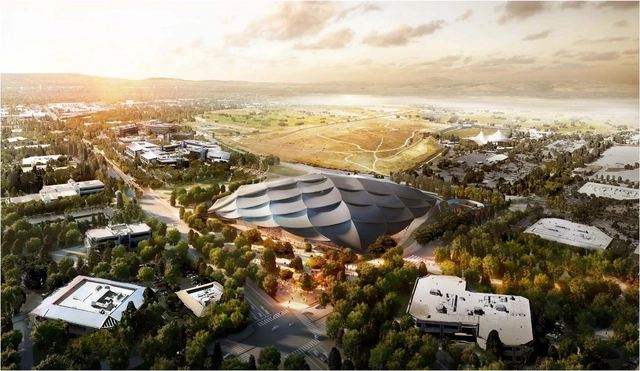
New images of BIG and Heatherwick Studio’s proposed Google campus in Mountain View California have been revealed in planning documents presented to the city last month. Initially announced in 2015, the project has seen several revisions after first running into difficulty with the city planning board, and then after swapping sites with fellow tech giant LinkedIn. The latest iteration, the 18.6-acre Charleston East campus, features a 2-story, 595,000-square-foot building topped with a flowing, tent-like canopy.
All planned for completion no later than 2022, the new buildings would target international businessmen and researchers, especially those displaced following the United Kingdom’s exit from the European Union.
Today, the Pritzker announced Rafael Aranda, Carme Pigem and Ramon Vilalta, the three founders of Catalan firm RCR Arquitectes, as the recipients of the 2017 Pritzker Prize. As designers of an architecture that is both stylistically and physically local—RCR Arquitectes’ work is mostly found in Catalonia, although recent projects have taken them to France and Belgium—the firm has established a strong profile in north-eastern Spain and a cult following among academic circles around the world. However, other members of the architectural community might find themselves forced to reach for the nearest search engine. For those people, the following 9 facts will provide the information you need to understand architecture’s newest Pritzker Prize laureates.
Rafael Aranda, Carme Pigem and Ramon Vilalta have been named as the laureates of the 2017 Pritzker Prize. Their projects emphasize materiality and craft – considered use of color, transparency (and thereby light) define an oeuvre which ranges from public buildings to houses, a kindergarten and a winery.
The three architects—all of whom are Spanish Catalan and originate from Olot, Girona (where they are all presently based)—have worked collaboratively together as RCR Arquitectes since 1988; they simultaneously graduated in Architecture from ETSAV, the School of Architecture in Valles (Escola Tècnica Superior d’Arquitectura del Vallès) a year prior. This 39th incarnation of the Prize represents the first instance in which three architects have been recognized at once, and only the second time—following Rafael Moneo in 1996—that Spanish practitioners have been honored.