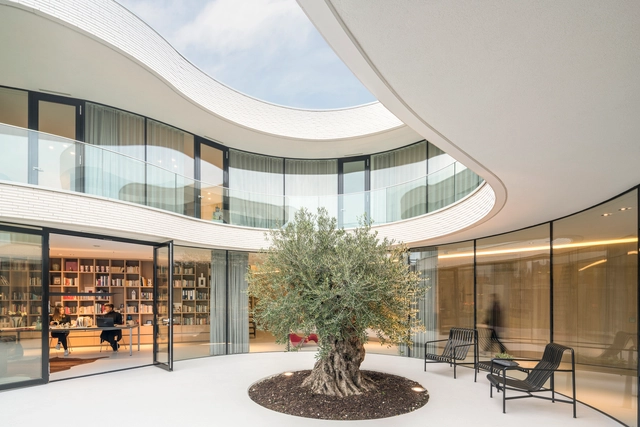
.jpg?1489053378 "© Roberto Aflalo")


-
Architects: aflalo/gasperini arquitetos
- Area: 178 m²
- Year: 2016
-
Manufacturers: thyssenkrupp
-
Professionals: Ávila Engenharia, Grupo Medabil, ingrone Iluminação, Inovatec Consultores Associados, Soma Arquitetos, +4



Real Estate firm Related Companies has announced the development of 15 new art gallery spaces to be located in and around the base of Zaha Hadid’s 520 West 28th Street residential building, located along the High Line in the New York neighborhood of Chelsea. The acclaimed Paul Kasmin Gallery, currently located in three West Chelsea locations, will serve as the anchor tenant with a 5,000 square-foot gallery in the base of the Hadid-designed building and additional space in the ‘High Line Nine,’ a collection of full service boutique exhibition spaces located adjacent to the building beneath the High Line.






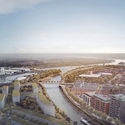
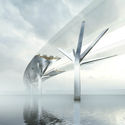
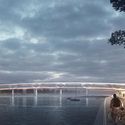
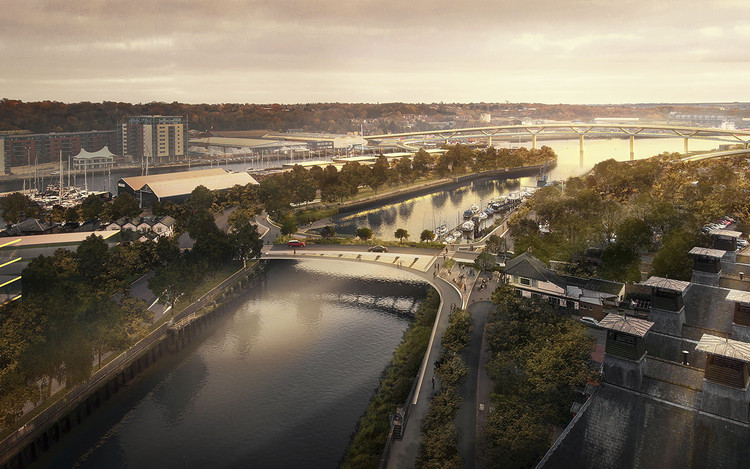
The Royal Institute of British Architects (RIBA) Competitions has announced that Foster + Partners has been selected as the winners of the Ipswich River Crossings competition, beating out proposals from a shortlist including Adamson Associates, Knight Architects, Marc Mimram and Wilkinson Eyre. The competition sought designs for three bridges crossing the Upper Orwell River that could reinvigorate and increase connectivity within Ipswich’s waterfront district.

Experimentation in architecture is what propels the discipline forward. In an ideal scenario, once a project gets as far as the planning stage, large amounts of careful research and collaboration between the architect, contractor, and client contribute to a smooth execution of an exploratory idea, and ultimately a successful end product. But it’s not uncommon for even the most skilled architects to design work that has a misstep somewhere along the line, whether it has to do with shrinking budget, unforeseen contextual changes, lack of oversight, or anything in between. In some way, the projects here all fall into the second category of failed experiments, but some have also become potential models for revitalization of existing buildings, rather than (less sustainable) demolition and reconstruction. Read on to discover what went wrong in these notable disasters.
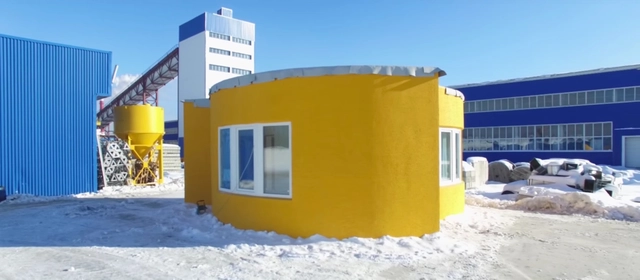
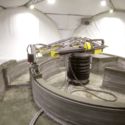
In recent times, 3D printing technology has made some great strides in its production content and quality, and now it has successfully printed the world’s first liveable house in Stupino, Russia. Responsible for this feat are San Francisco 3D printing startup Apis Cor, and Russian real estate developer PIK, who began the project in December of last year.
“Now we can say with confidence that with Apis Cor solution, the construction 3D printing has leaped to a new evolutionary stage,” said the project team. “The company and its partners are confident that the house in Stupino was the first step that can convince the world that 3D technology in the construction market is a reality.”

Amongst many things, Europe is known for some of the world’s most bicycle-friendly cities, offering safe and convenient travel routes for its two-wheeled commuters. Berlin, however, does not sit high on this list, but in an effort to address this, a new plan for a system of bicycle “superhighways” is undergoing implementation, incentivising cycling as an efficient means of transport.
Studies commissioned by Berlin’s Senate Department for the Environment, Transport, and Climate Protection looked into 30 possible bike paths, covering stretches of at least 5km. Of these, 12 have been selected as future superhighways, intended to be completely separated from other vehicles on the road.

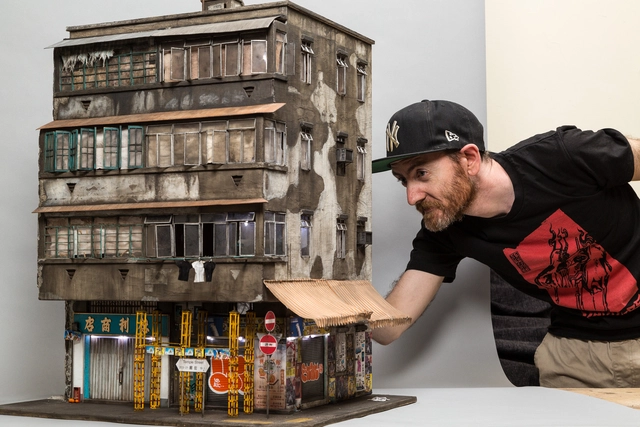
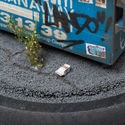
Joshua Smith, a miniaturist and former stencil artist based in South Australia, constructs tiny, intricate worlds for a living. His work, which exhibits astonishing observational and representational skills, focuses on the "overlooked aspects of the urban environment – such as grime, rust and decay to discarded cigarettes and graffiti," all recreated at a scale of 1:20. Smith, who has been making model kits for around a decade, only recently chose to move away from a 16-year-long career creating stencil art. With his creative talents now focused on model-making, and all those skills which accompany the craft, ArchDaily asks: how do you do it?
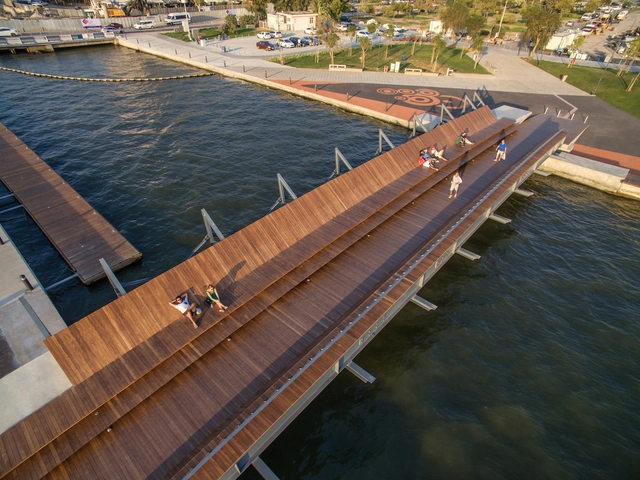

This month, in the city of Xiamen, China's first elevated cycling path was inaugurated. At nearly 8 kilometers long, the structure is now the world's longest elevated cycling path.
The construction of this exclusive cycling path was promoted by the Xiamen City Government to provide inhabitants with a new sustainable transportation alternative that could significantly reduce vehicular traffic on the city's already congested highways.


Architecture continually evolves to meet societal demands. Recently, a global effort to tackle climate change, and to achieve optimum energy efficiency in buildings, has brought standards such as BREEAM and LEED to the fore. However, as scientific analysis and awareness of human mental health has increased, architects are once again required to place humans at the centre of the design process. This growing trend has led to the development of WELL Building Certification – considered the world’s first certification focused exclusively on human health and wellbeing.

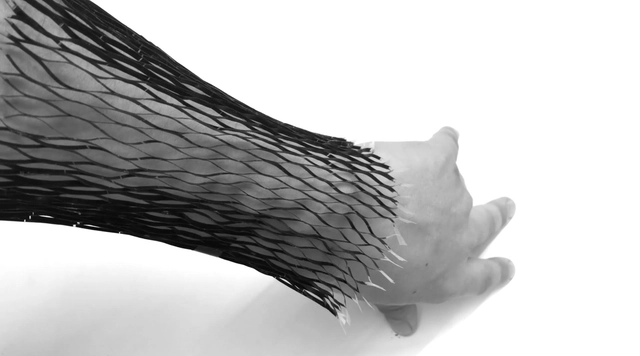
Researchers at MIT’s Self-Assembly Lab have recently developed an adaptable material that reacts in response to changes in heat. Known as Heat-Active Auxetics, the material functions in a similar manner to the pores on human skin, tightening and loosening based on exposure to various temperatures.
Contrary to most common materials, which tend to thin out while being pulled or stretched, this technology expands in all directions instead and completely shrinks when compressed. This provides insulation in colder conditions and added airflow and ventilation when it is warmer, all depending on the material’s porosity.
The Star Wars universe contains some impressive buildings. However, in the original trilogy, it's actually the Millennium Falcon, Han Solo's non-descript yet highly tuned ship, that provides the most important architectural setting for the story's events, acting as the de facto base for our heroes' scheming. While it's certainly not the largest or most complex floor plan in the universe, the interior of the Millennium Falcon is intriguing for the way it resolves the ship's circular shape.
With this model from Archilogic of the Millennium Falcon's main floor, Star Wars fans can get a sense of what it's like to tag along with Luke, Han, and the rest of the group—whether that's by hanging out in the living area, traversing the ship's curved corridors, or even sitting in the cockpit as an Imperial Star Destroyer approaches, the model has it all.