The Department of State’s Bureau of Overseas Buildings Operations (OBO), whose mission is to provide safe, secure and functional facilities that represent the U.S. Government in U.S. foreign policy objectives, has shortlisted twenty-six design firms for the Indefinite Delivery/Indefinite Quantity (IDIQ) Worldwide Design Services solicitation. The IDIQ provides comprehensive Architecture/Engineering (A/E) services for both new construction and modernization projects at U.S. diplomatic facilities worldwide.
OBO received 136 submissions for this IDIQ solicitation. The selected firms presented portfolios demonstrating exemplary past performance, experience and capabilities of their Lead Designer(s), and a well-defined approach to the challenge of public architecture including a commitment to sustainability and integrated design.
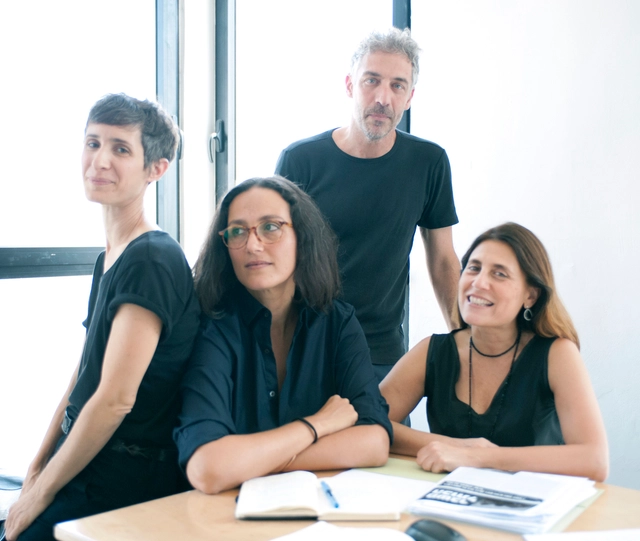
The Israeli Ministry of Culture have revealed In Statu Quo: Architecture of Negotiation as the theme of the Israeli Pavilion at the 2018 Venice Architecture Biennale. In the exhibition architects Ifat Finkelman, Deborah Pinto Fdeda, Oren Sagiv, and curator Tania Coen-Uzzielli, will examine "the complex mechanism of the 'Status Quo' within shared holy places in Israel-Palestine, which functions as an informal—if controversial and fragile—system of coexistence between rivals."
https://www.archdaily.com/881960/israeli-pavilion-at-the-2018-venice-biennale-to-explore-the-idea-of-status-quo-within-shared-holy-placesAD Editorial Team
The construction site for a house (designed by the author), located on one of the Thimble Islands, off the coast of Connecticut, circa 1990. Image Courtesy of Duo Dickinson
Truth be told, many architects I know are a little uneasy about their lack of building knowledge. Since architecture without construction is largely a graphic arts exercise, this is either deeply ironic or grimly paradoxical. To bridge this yawning gap, architects today typically hire a slew of consultants—roof, skin, curtain wall, interior, sustainability, preservation—who join the growing influence of software-driven structural and mechanical engineers to absorb much of what architects once assumed they could handle.
via Flickr User: Marcelo Campi Licensed Under CC BY-SA 2.0
There are a number of reasons to visit the architecture of Montevideo: the coastal city is the result of a complex interaction of historical factors that provided multiple trends and architectural styles, currently coexisting at par. Its streets and buildings tell the story of its past.
The city´s architectural sites are easily found walking around Ciudad Vieja (Old Town) or in the renowned Rambla. Below is a list of 15 sites that every architect should know of and visit.
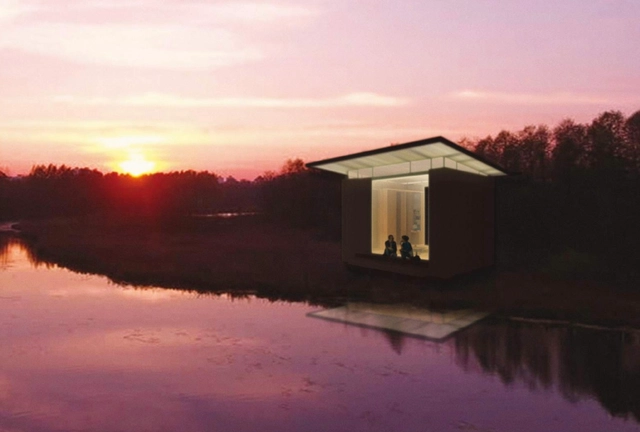
A design for a portable, sustainable 250 square foot house is no tall order. But back in June, online design magazine, Volzero, put $3200 USD on the line for designers to honor this request through their Tiny House Design Competition.
Interior program requirements included: Living Area | Sleeping Area for 2 | Cooking and Dining Area | Toilet | Workspace.
Around the world, creatives worked to conquer the puzzle of maximum usable space with a minimum footprint. Tiny houses were born. The jury consisted of five principals of different design firms: Abraham Cota Parades, Andrew Patterson, Didier Ryan, Md.Rafiq Azam and Sameep Padora. In addition to filling the basic needs of the competition, winning projects display a strong concept, and unique personality.
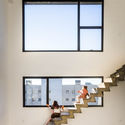
A new museum dedicated to the life and work of French fashion icon Yves Saint Laurent has opened in the Moroccan city of Marrakech. Designed by Studio KO, the building sits a short distance away from Jardin Majorelle – the home acquired by Saint Laurent and Pierre Bergé in 1980. With a large permanent exhibition space designed by scenographist Christophe Martin, showcasing the collections of it's namesake, the museum also features temporary exhibition spaces, a research library and archives, an auditorium, bookstore, and a terrace café.
https://www.archdaily.com/881893/studio-kos-yves-saint-laurent-museum-opens-in-marrakechAD Editorial Team
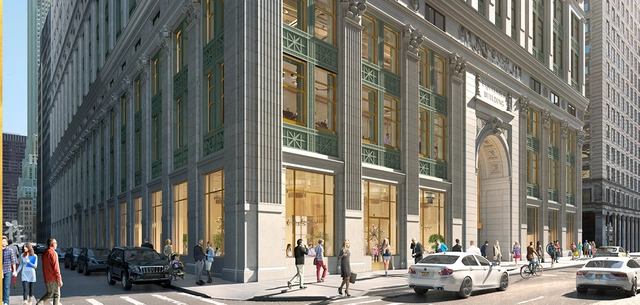
One of New York City’s original skyscrapers and the former largest office building in the world, the Equitable Building, is set to receive a $50 million renovation and restoration that will bring the historic structure up to 21st century standards.
Built in 1915 in New York’s Financial District by architect Ernest R. Graham, the 1.9-million-square-foot Equitable Building was a pioneer in the city’s skyscraper boom, spanning an entire Broadway block between Pine and Cedar Streets. A simple extrusion of the site footprint, the building was notorious for its overbearing relationship to the street – outcry over which eventually led to the creation of the city’s famous setback zoning laws.


.jpg?1508428562)
.jpg?1508386766&format=webp&width=640&height=580)
.jpg?1508386750 "© José Hevia")
.jpg?1508386830 "© José Hevia")
.jpg?1508386784 "© José Hevia")
.jpg?1508386896 "© José Hevia")
.jpg?1508386766)







.jpg?1508351746 "musée YVES SAINT LAURENT marrakech. Image © Nicolas Mathéus")