.jpg?1495155530)


.jpg?1495155530)
-
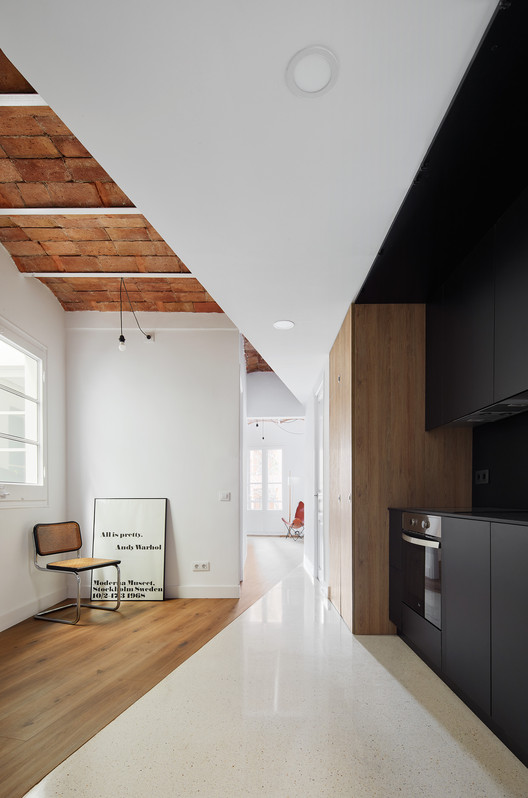
Architects: N+P Architecture
- Area: 240 m²
- Year: 2015
-
Manufacturers: Sto, Krone
-
Professionals: Møller & Jakobsen ApS, Skovbo Huse


When a city really becomes one with the air, water and sun I am sure that people will feel the vitality of this. To create cities where this is not lost is a very important message I want to convey to the world.
In this video from the Louisiana Channel, Japanese architect Hiroshi Sambuichi reflects on the Japanese city of Hiroshima—his home town—and the ways in which it has undergone a radical transformation following the atomic bombings of the Second World War. Known primarily for his interest and work in the field of sustainable design and building, Sambuichi describes how "the power of nature"—allowing flora and foliage, water and air to rapidly reclaim swathes of the built environment—has been central to the city's recent urban success.


.gif?1505970109)

The architectural consortium of Nouvelle AOM has been announced as the winner of the international competition for the renovation and redesign of Paris’ Tour Montparnasse, beating out finalist Studio Gang and a shortlist of top firms.
Lauded by the jury for its “powerful, dynamic and bold new identity,” the winning entry will introduce an entirely new vegetated facade system that will improve both the tower’s immediate surroundings and the neighborhood as a whole.
"This was a huge challenge, as the Tower isn't like any other," the jury explained. "Nouvelle AOM's project perfectly captures the spirit of the 21st century, giving the Tower a multifaceted identity revolving around attractive, innovative new uses. The Tower will breathe new life into the Montparnasse neighbourhood."




An engineer should design a structure that an architect would be ashamed to cover up.
In this video produced by PLANE—SITE and Spirit of Space for ArchDaily, two of SOM’s great minds take us through the firm’s most recent exhibition, "SOM: Engineering x [Art + Architecture]," currently on display in conjunction with the 2017 Chicago Architecture Biennial. Focusing on the intersection between engineering and architecture, the exhibition reveals the design process behind some of the firm’s greatest achievements through a range of sketches, models, sculptures and visuals.
Het Nieuwe Instituut (HNI) have announced WORK, BODY, LEISURE as the theme of the Dutch Pavilion at the 2018 Venice Architecture Biennale. Envisioned as "a collaborative research endeavor by a national and international network," Marina Otero Verzier—head of the Research Department at HNI and a member of the After Belonging Agency, curatorial team behind the 2016 Oslo Architecture Triennale—will act as the creative mediator of a series of collaborative contributions, pooling the expertise of "architects, designers, knowledge institutions, and the private sector."

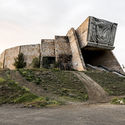
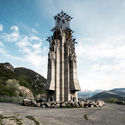
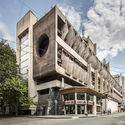
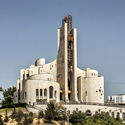
The Republic of Georgia’s past is defined by turbulence and a struggle for identity. A former republic of the USSR, Georgia is perhaps best known as the birthplace of Joseph Stalin. The nation's history has been anything but calm, and remnants of the architectural past provide a glimpse into the nation that was.
The country's remaining Soviet landmarks give Georgia an air of being caught between the past and the present. Italian photographers Roberto Conte and Stefano Perego capture this in their photo series, Soviet Architecture Heritage in Georgia, with a compilation of photos that highlights the existing Soviet heritage in Georgian architecture today.


C. F. Møller’s design to interconnect and root the campus within the city wins VIA University College in Horsens, Denmark. The proposed 30,000 square meters proposal and 5,000 square meters Innovation House was selected amongst three strong projects, according to the adjudicators’ report in a forward-thinking scheme that develops a strong dialogue between the academic and urban spaces.

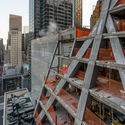
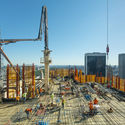
The latest rendering for Pritzker Prize-winning architect, Jean Nouvel's 53W53 has been released in anticipation for its completion next year as construction reaches the 58th floor out of the proposed 82. Capturing the entire design of the new landmark, the render provides a look to the tapering structure distinguished by its sculptural quality and the three floors of gallery space in the tower’s base adjoining the Museum of Modern Art as part of their expansion.
As 53W53 grows in front of New York’s eyes, the concrete skeleton currently standing forms the basis for the exposed structural system referred to by Nouvel as ‘diagrid’ as the tower’s silhouette is an ode to the iconic buildings that already grace the horizon in New York.