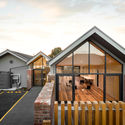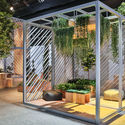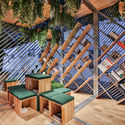




-
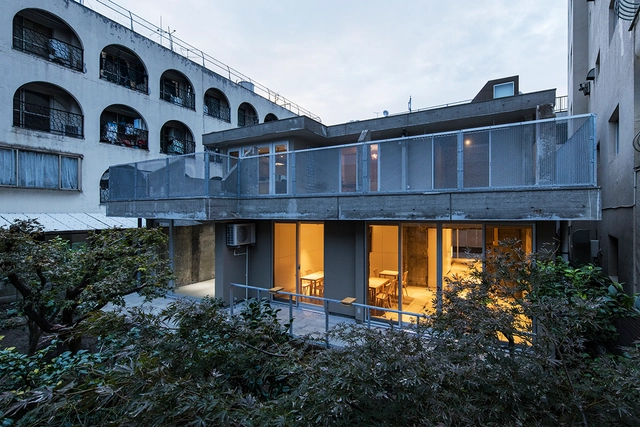
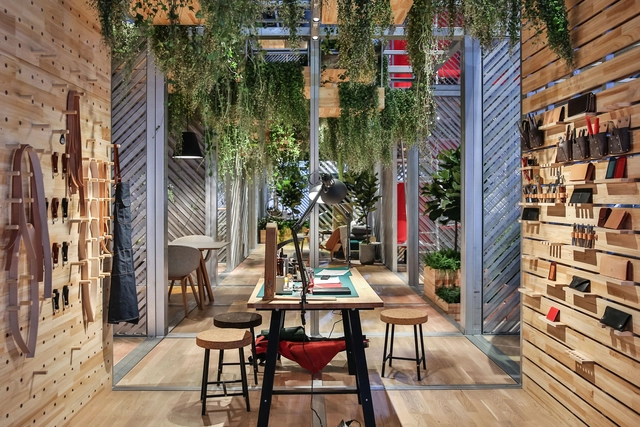
Architects: Schemata Architects
- Area: 100 m²
- Year: 2017
-
Manufacturers: ERCOL, HAY, Ishinomaki Laboratory
-
Professionals: TANK



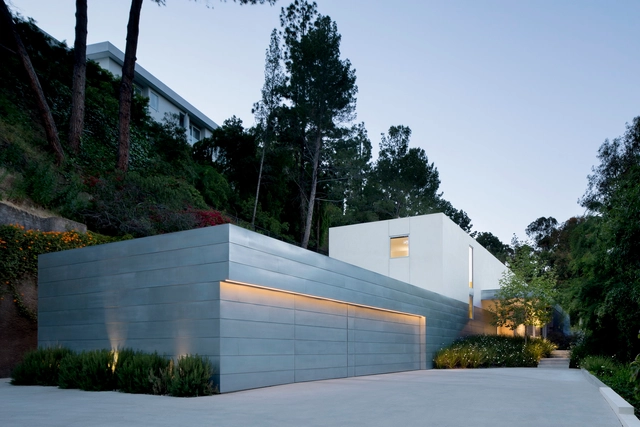
New renderings released by developer Palisades have revealed the interiors of MAD Architects’ upcoming Beverly Hills residential village, the Gardenhouse.
With construction on the project well underway, the images show how the interior spaces, designed by Rottet Studio, will interact with the architecture created by MAD. Inspired by close-knit hilltop villages, the development at 8600 Wilshire Boulevard will feature 18 individual villas that look in onto a shared courtyard.

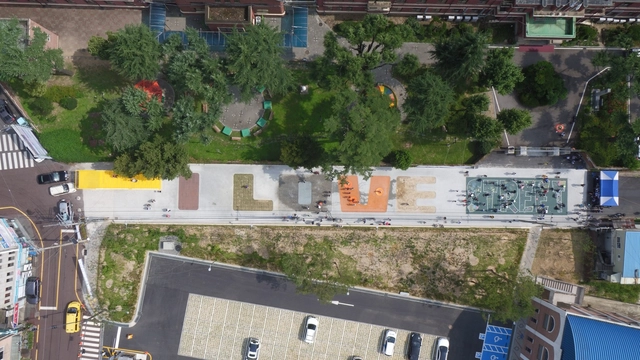
MVRDV has collaborated with Korean school children to complete a new permanent urban installation tor the third edition of the Gwangju Biennale Foundation’s Gwangju Folly Festival.
Aimed at exploring how architecture contributes to urban regeneration through both decorative and functional means, the I LOVE STREET was developed through a participatory process that asked students from Seosuk Elementary School to contribute drawings expressing their desires for the street. The end result was a graphic, sensory-stimulating design featuring zones in multitude of materials including grass, fountain, sand, wood, a trampoline and a giant chalk board.
.jpg?1511989021)
In order to be successful in any field, professionals must stay ahead of the curve—though in architecture nowadays, technology progresses so quickly that it’s difficult to be on the front lines. Virtual Reality can transport architects and their clients into unbuilt designs and foreign lands. Smart Cities implement a network of information and communication technologies to conserve resources and simplify everyday life. Responsive Design will give buildings the ability to be an extension of the human body by sensing occupants' needs and responding to them.
With the technology boom, if architects want to stay in the game they will inevitably have to work alongside not only techies but scientists too. Neuroscientist Colin Ellard works “at the intersection of psychology and architectural and urban design.” In his book, Places of the Heart: The Psychogeography of Everyday Life, Ellard examines how our technology-based world impacts our emotions and behavior to try to figure out what kind of world we should strive to create.
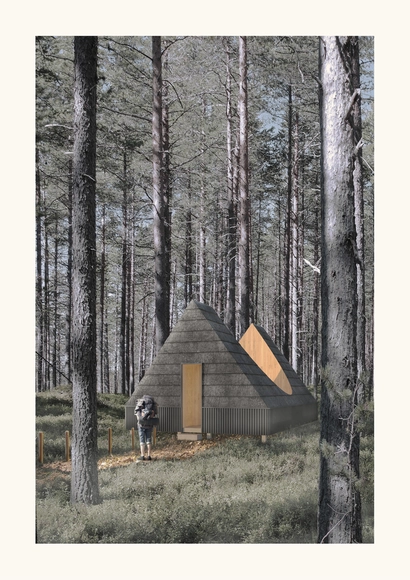
Bee Breeders have announced the winners of the Amber Road Trekking Cabins competition for the Latvian Baltic Coast. The competition sought proposals for low impact, transient and inhabitable infrastructure to support a planned hiking network along vast topographies of the Latvian Baltic Coast. The winning projects considered the various landscape elements of the site including pine trees, dunes, and white sand beaches while responding to programmatic requirements - economy, constructability, environmental sensitivity and utilitarian function.
The competition collectively provokes reflection of ecological conservation and its prescience in contemporary cultural and social practice, serving as an economic alternative to the commercialized, industrialized landscape definitive of global capital interests.


.jpg?1511614757)


With the 3rd Call for Ideas the Future Architecture platform invites multi-disciplinary emerging creatives who work on transformative projects and ideas for the future of architecture to apply for participation in the European Architecture Program in 2018.
The Future Architecture platform acts as a key platform for exchange and networking for European architecture and integrates some of Europe’s most important architectural events. The platform enables architecture museums, festivals, producers, publishers, agencies, academic institutions and multi-disciplinary emerging professionals to easily connect and build joint projects.
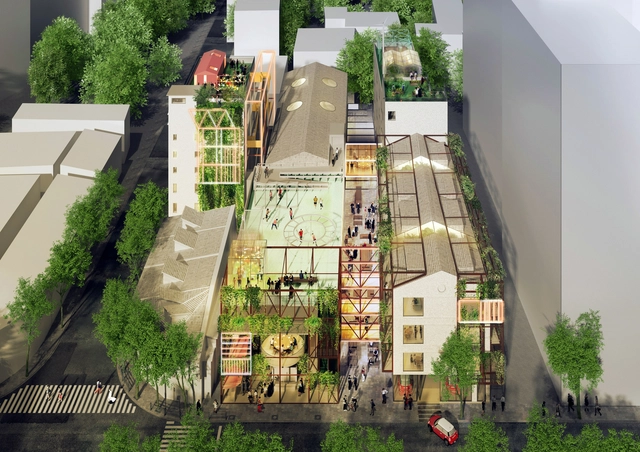
MINI LIVING has revealed plans for its first building-scale project: the transformation of a cluster of six buildings at a former paint factory in Shanghai into an mixed-use “urban hotspot” and co-living facility with space for living, working and socializing.
Partnering with Chinese project developer Nova Property Investment Co., MINI LIVING will fill the industrial shells of the existing buildings with a range of adaptable, program-rich spaces including apartments, rentable workspaces and shared-service areas that will enable “maximum personal flexibility and optimum use of space.”




Architecture firm Penda has created "Urban Nest," a new small living concept in collaboration with BMW China's MINI LIVING group for the recent Shanghai Mini Life Exposition. The installation is constructed from a series of 3 by 3 by 3 modules housing different program elements that can be combined to create a variety of flexible living arrangements.


























.jpg?1511614918 "© Ligang Huang")
.jpg?1511614981 "© Ligang Huang")
.jpg?1511615259 "© Ligang Huang")
.jpg?1511614960 "© Ligang Huang")
.jpg?1511614757)