Created by the Union International des Architects (UIA)in 2005, World Architecture Day is celebrated on the first Monday of October, aiming to highlight and remind the world of the architecture's collective responsibility in designing the world's future cities and settlements. To celebrate, ArchDaily's editors have chosen stories from the year so far that have interested, excited, or inspired them. Read on to see the stories.
https://www.archdaily.com/903015/world-architecture-day-2018-our-editors-celebrate-with-their-favorite-stories-and-projectsAD Editorial Team
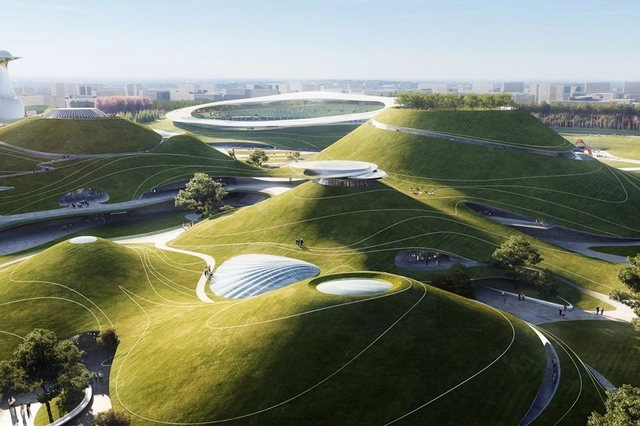
Quzhou Sports Campus. Image Courtesy of MAD Architects
MAD Architects have officially begun construction on the QuzhouSports Campus in China. Led by the Ma Yansong, the team designed the campus as a futuristic landscape with mountains and a lake conceived as a sunken garden. The design connects to the historic city as a surreal, ethereal and tranquil landscape. The 700,000 sqm sports campus combines the functions of a sports park with natural and organic forms to embrace thousands of years of history and culture in Zhejiang.
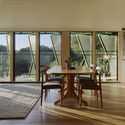
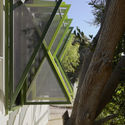
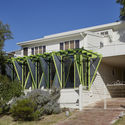
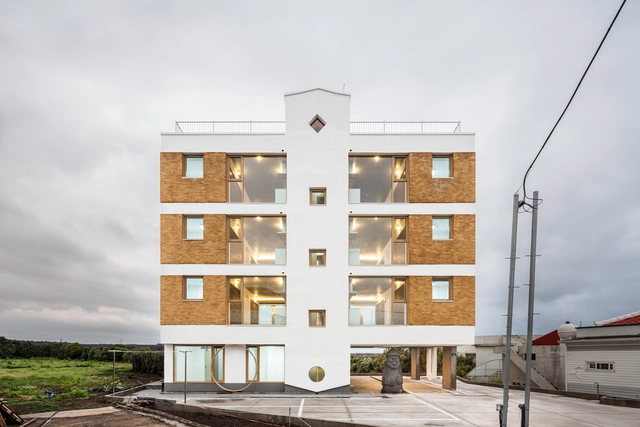
The shortlist for the 2018 Architectural Photography Awards have been revealed, bringing together 20 atmospheric images of the built environment. Categories this year ranged from a “portfolio of an individual building to a single abstract: with a professional camera or on a mobile phone.”
The 2018 edition saw a record number of entries, with photographs from 47 countries, including the UK (28%), USA (20%), Germany (6%), and China (5%). The 20 photographs were selected from four categories: exteriors, interiors, sense of place, and buildings in use.
https://www.archdaily.com/903008/shortlist-for-the-2018-architectural-photography-awards-revealedNiall Patrick Walsh
Barricades in the streets of Bordeaux during the May 1968 protests in France. ImageCourtesy of Wikimedia
This article was originally published as "What Marchers Today Can Learn from the May 1968Protests in Paris" on CommonEdge in May 2018. In the 50 years since the historic and worldwide protests of 1968, much has changed. But today's political climate seems equally volatile, with seismic changes threatening social and political establishments across the globe. Lessons from the past are, to borrow the phrase of the moment, more relevant than ever.
American friends recently sent an email: “What’s going on with the French political system? Why all the strikes? What about the endless protest marches? We’d like to visit you in Paris, but we’re a little wary.”
Zaha Hadid Architects has won an international competition for the design of the new Sverdlovsk Philharmonic Concert Hall in Yekaterinburg, Russia. A melting pot of Eastern and Western cultures, talents, and industries, the strategic Ural city hosts a Philharmonic Orchestra which has performed in more than 20 countries, while based in the existing 1936 Sverdlovsk Philharmonic building.
For the design of the Ural Philharmonic Orchestra’s new home, Zaha Hadid Architects “echoed the physical aspects of sound waves” to create an inspirational venue meeting the orchestra’s growing program, and to create a new public plaza for all citizens.
It's not easy to find theory in the implementation of architectural models: a practical model that allows you to analyze and showcase the organization of material elements according to a particular process. They also allow you to detect and modify the key elements of a project while also addressing the project's executive procedures.
Together with architectonic construction details, the development of the constructive facets is pushed to the background up until the ultimate steps of the design process, but this is also when we identify what is appropriate for a certain stage in the process in order to facilitate a seamless execution.
In the search to bring ourselves closer to the presentation and utility of architectural models, we invite you to take a look at a series of examples:
Over the past few months, Quintana Roo's coast has been overtaken by an invasion of seaweed that has put the locals to work cleaning up the beaches as the weeds wash ashore. The work is an exhausting day-to-day ordeal and while the cause of the invasion is still unknown, many point to the changes in climate impacting the Atlantic Ocean.
Currently, over 60 tons of seaweed has been gathered from the coast and locals are already putting the plants to good use as raw materials for biodigestors, cosmetics, plastics, fertilizers, and pharmaceuticals. However, another use for seaweed has recently come to the public's attention.
Walk into a room bathed in cozy, inviting light and you’ll feel instantly at ease. Walk into the same room buzzing with harsh fluorescents, and your teeth may start to grind.
Why?
In 2014, a Journal of Consumer Psychology study found that the more intense the lighting, the more affected and intense the participants’ emotions were — both positive and negative.
The study included six experiments that examined the link between emotion and ambient brightness. Feelings of warmth increased when participants were exposed to bright light with hints of reddish hues. A sensation of angst increased when bluer light dominated.
And the brighter the light, the more intense the participants’ emotions became. Both the intensity and the color of the light affected people’s moods.