-
Architects: Omar Gandhi Architect
- Year: 2018
-
Manufacturers: Subzero/Wolf, Caesarstone, Escenium HAUS, Farrow and Ball Paint, Hunter Douglas, +2
-
Professionals: Norm Li AG+



The landscape of the United Kingdom is littered with historic castles reaching back centuries. Once proud structures commanding the surrounding countryside, many stately houses, castles, and churches have since collapsed into ruin. While the ruins evoke a sense of magic and curiosity in their own right, a study into how these castles looked in their heyday is a worthy venture.
With this in mind, Onward and NoeMam Studios have joined forces to digitally reconstruct six ruined castles across England, Scotland, Wales, and Northern Ireland. The series of gifs sees the castles fluidly re-emerge from the landscape, retelling the sense of place by showing “the true splendor enjoyed and defended by yesteryear’s barons, queens, and kings.
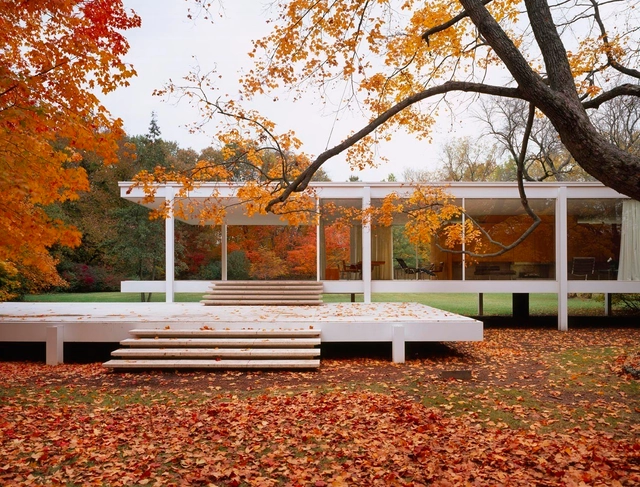
This article was originally published on CommonEdge as "Was Modernism Really International? A New History Says No."
I taught architectural history in two schools of architecture during the 1980s and 1990s. Back then it was common for students to get a full three-semester course that began with Antiquity and ended with Modernism, with a nod to later twentieth-century architecture. My text for the middle section was Spiro Kostof’s magisterial History of Architecture: Settings and Rituals. With many centuries to cover, he spent very little effort in dealing with the twentieth century. In the last third of the course, students read texts such as Towards a New Architecture by Le Corbusier and Reyner Banham’s Theory and Design in the First Machine Age. My colleagues and I felt that we offered students a pluralistic and comprehensive review of key developments in the history of the built environment.

.jpg?1542719332&format=webp&width=640&height=580)
The latest Apple Store designed by Foster + Partners has opened on the Champs-Élysées in Paris, occupying the grounds and courtyard of a historic Parisian apartment. The ornate Beaux-Art building has been appropriated by “carefully interweaving several layers of history with contemporary, light-filled and inviting spaces.”
The design is the result of a close collaboration by Foster + Partners and Apple’s chief design officer Sir Jonathan Ive, which has produced Apple Stores around the world including Piazza Liberty in Milan, Michigan Avenue in Chicago and Regent Street in London.
.jpg?1542589175&format=webp&width=640&height=580)
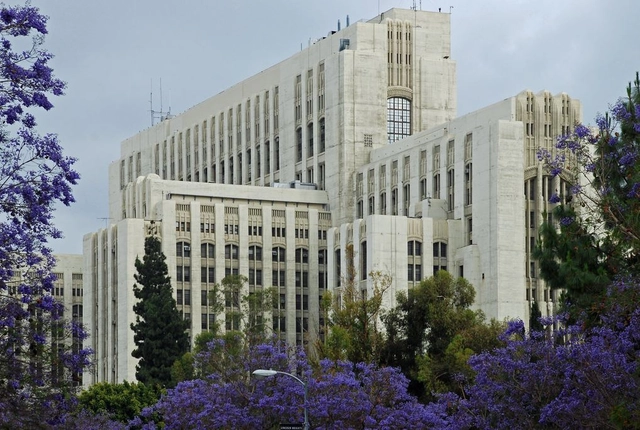
Los Angeles County Board of Supervisors have decided to move forward with a plan to reuse L.A. General Hospital as affordable housing for high-need populations. The plan aims to provide homeless residents and low-income tenants with new living units inside the 1930s-era hospital. The board approved a motion to study the feasibility of reusing the structure and to craft a strategic plan that would bring the project to life. As the “birthplace of emergency medicine,” the Art Deco–style building includes 1.5-million-square-feet of space that could be used for the housing project.






__by_Karl_Henrik_Nostvik__1967-1973._Image_©_Iwan_Baan__.jpg?1542624862)
__by_Henri_Chomette_and_Roland_Depret__1973-1978._Image_©_Iwan_Baan__.jpg?1542624833)





.jpg?1542719332)

.jpg?1542599850 "© Fernando Guerra | FG+SG")
.jpg?1542599770 "© Fernando Guerra | FG+SG")
.jpg?1542599757 "© Fernando Guerra | FG+SG")
.jpg?1542588123 "© James Silverman")
.jpg?1542587919 "© James Silverman")
.jpg?1542587868 "© James Silverman")
.jpg?1542587807 "© James Silverman")
.jpg?1542587696)