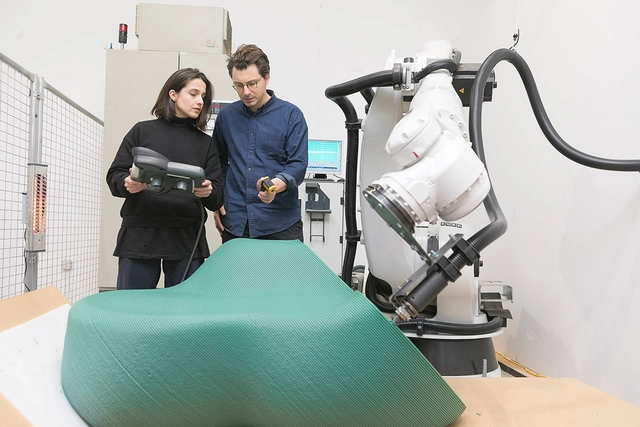
The New Raw has launched the Zero Waste Lab in Thessaloniki, a research initiative where Greek citizens can upcycle plastic waste into urban furniture. Part of the larger Print Your City project, the project utilizes a robotic arm and recycling facilitates to create custom furniture pieces that close the plastic waste loop. The initiative aims to use flakes from recycled products to redesign public spaces within the cities.
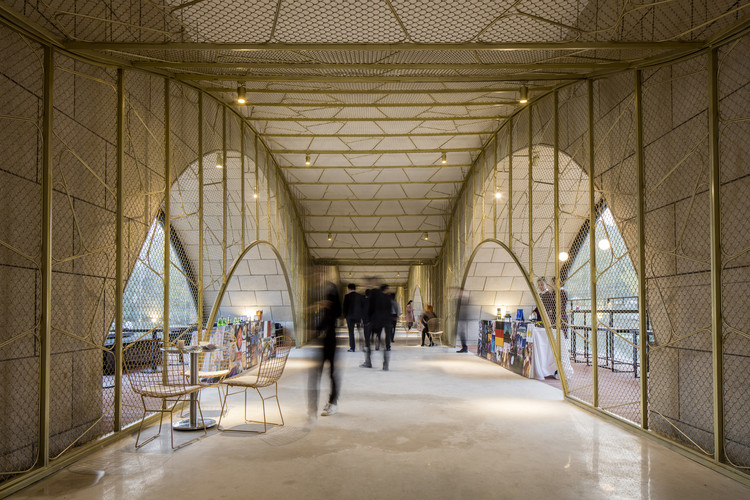
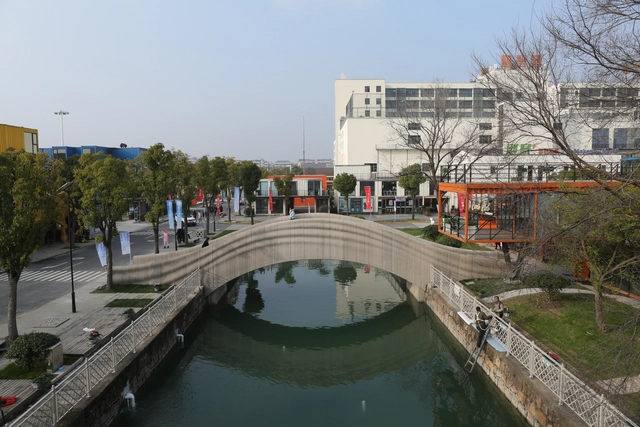
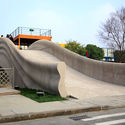
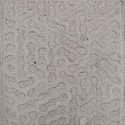
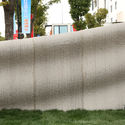
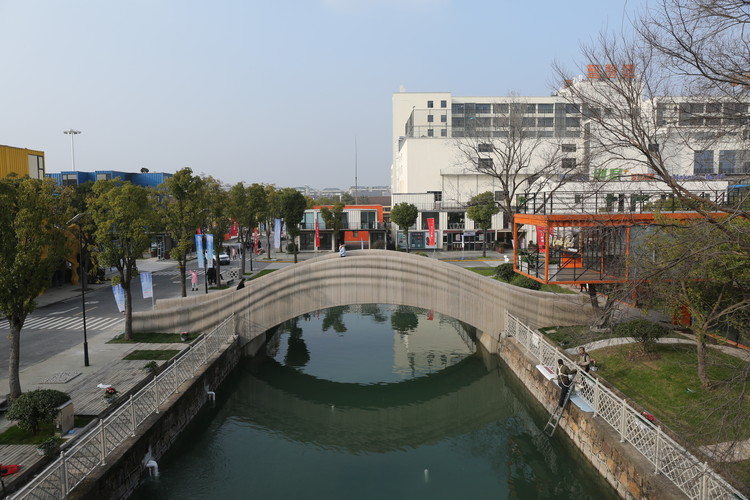
The world’s longest 3D-printed concrete pedestrian bridge has been completed in Shanghai. Designed by Professor Xu Weiguo from the Tsinghua University (School of Architecture) - Zoina Land Joint Research Center for Digital Architecture, the 26.3-meter-long bridge was inspired by the ancient Anji Bridge in Zhaoxian, China.
The single-arch structure was created using a 3D printing concrete system developed by Professor Xu Weiguo’s team, integrating digital design, cost efficiency, smart technology, and architectural dynamism. Enclosing the 3.6-meter width, the bridge’s handrails are shaped like flowing ribbons on the arch, creating a light, elegant movement across the Shanghai Wisdom Bay pond.
"Kaira Looro Competition" is an international architecture competition aimed at raising awareness of the international community towards emerging architecture in developing countries. The new edition of the competition has as its theme is to create a pavilion for the promotion of universal peace which inspires contemplation, reflection, and prayer for those who unjustly lost their lives. The competition is organized by the Nonprofit Organization “Balouo Salo” engaged in Africa for humanitarian projects of architecture and support of disadvantaged communities, with the collaboration of the University of Tokyo, Kengo Kuma & Associates, Direction de la Culture de Sedhiou, Conseil Municipal de Sedhiou and others relevant parts.
The European Commission and the Mies van der Rohe Foundation have announced the 40shortlisted works that will compete for the 2019 European Union Prize for Contemporary Architecture – Mies van der Rohe Award. The Prize, for which ArchDaily is a media partner, has seen a jury distill 383 nominated works into a 40-project-strong shortlist, celebrating the trends and opportunities in adaptive reuse, housing, and culture across Europe.
https://www.archdaily.com/909537/shortlisted-projects-announced-for-the-eu-mies-award-2019Niall Patrick Walsh
Illinois Institute of Technology (IIT) invites applications for the position, Dean of the College of Architecture. Located on the historic IIT campus in Chicago, the College of Architecture (IITCoA) is one of the world's most renowned architecture schools. Building upon its unique legacy as a center of rigorous thinking and making, IITCoA is focused on the future of practice and scholarship in an increasingly interconnected and urbanized world. With more than 500 students and 80 faculty members from around the world, IITCoA directly embodies the potentials of the contemporary metropolis.
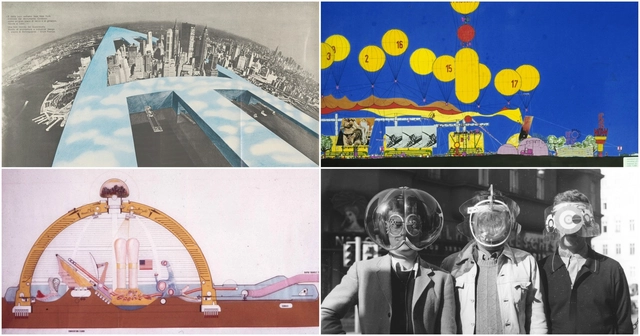
The first moon landing, widespread anti-war protests, Woodstock and the hippies, rural communes and environmentalism, the Berlin Wall, the women’s liberation movement and so much more—the tumultuous decades of the Sixties and Seventies occupy an unforgettable place in history. With injustices openly questioned and radical ideas that set out to unseat existing conventions and practices in various spheres of life, things weren’t any different in the architectural world.
The grand visions dreamt up by the modernists were soon challenged by utopian experiments from the “anti-architecture” or “radical design” groups of the 1960–70s. Reestablishing architecture as an instrument of political, social, and cultural critique, they drafted bold manifestoes and designs, experimented with collage, music, performance art, furniture, graphic design, zines, installations, events, and exhibitions. While certain individuals from this era like Cedric Price, Hans Hollein, and Yona Friedman remain important to the realm of the radical and the unbuilt, the revolutionary spirit of these decades also saw the birth of various young collectives. For eccentricity at its very best, read on for a (by no means exhaustive) list of some groups who dared to question, poke, expand, rebel against, disrupt and redefine architecture in the 60s and 70s.
https://www.archdaily.com/880253/9-of-the-most-bizarre-and-forward-thinking-radical-architecture-groups-of-the-60s-and-70sZoya Gul Hasan
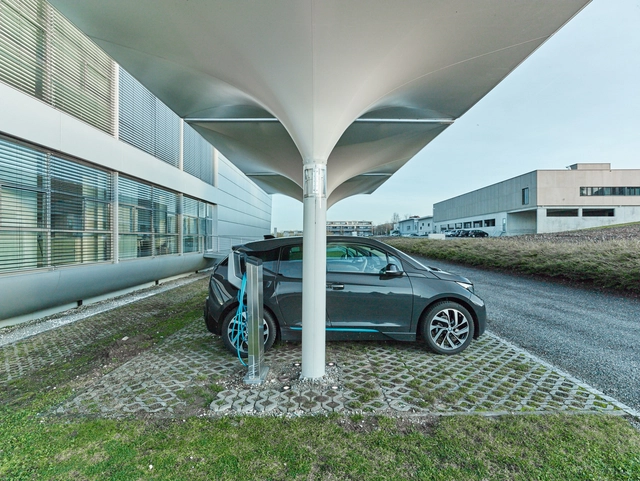
In recent years, solar energy has become a very popular method to power electric vehicles. This emerging technology has motivated the development of new architectural typologies. An evident evolution of traditional gas stations, it could be foreseen that solar-powered charging stations will begin to significantly grow in numbers in our cities in both public and private spaces.
https://www.archdaily.com/897606/energy-harvesting-charge-a-car-in-3-hours-at-this-solar-powered-electric-stationAD Editorial Team





















.jpg?1547157765 "© Norbert Tukaj")