

-
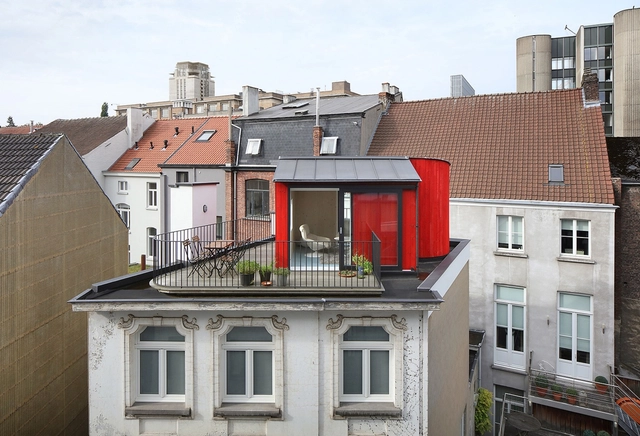
Architects: Dierendonckblancke Architecten
- Area: 141 m²
- Year: 2016
-
Professionals: Tech 3, UTIL Struktuurstudies


.jpg?1561180124&format=webp&width=640&height=580)
While the United States’ green-building industry was still relatively slow in the early 1990’s, Herman Miller, who are known for their architectural experimentation, decided to construct a new facility for Simple, Quick, Affordable (SQA), a company that bought used office furniture to refurbish them and sell them to smaller businesses. To do so, they chose to build sustainably, a design approach that was not yet utilized in the region.
Designed by New York architect William McDonough, the 295,000 sq ft building (approx. 90,000 sqm) was built in Holland, Michigan in 1995. The facility’s design qualities, such as storm-water management, air-filtering systems, and 66 skylights, helped set the standards for the U.S. Green Building Council LEED Certification.

.jpg?1560984019)
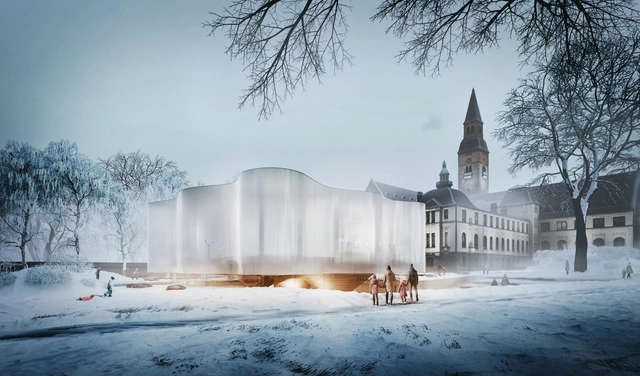
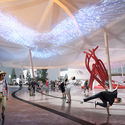
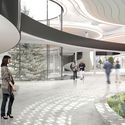
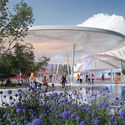
Hey5 has unveiled its design for the National Museum of Finland, an entry for a recent international design competition. The scheme is titled “Suppa,” inspired by the typical Finnish landform where a hollow is created by the melting of buried blocks of glacial ice. The ambition behind the proposal was to create a bold object containing a flexible organizational system to host the museum's demanding international exhibitions.
Thermal comfort becomes very evident when it is not attended to. When thermal conditions are adequate in one location, our body is in balance with the environment allowing us to perform activities normally. On the other hand, when a space is too hot or too cold, we soon see changes in our mood and body. Dissatisfaction with the thermal environment occurs when the heat balance is unstable, that is when there are differences between the heat produced by the body and the heat that the body loses to the environment.
_2655.jpg?1561371788&format=webp&width=640&height=580)
For those around the world unable to attend the opening of Junya Ishigami’s Serpentine Pavilion in London, photographer Nikhilesh Haval of nikreations has published a virtual tour of the structure. Similar to previous productions of Frida Escobedo’s 2018 Pavilion, BIG’s 2016 Pavilion, and SelgasCano’s 2015 Pavilion, the virtual tour allows viewers to experience the “free space” philosophy that defines the pavilion, playing with our perspectives of the built environment against the backdrop of a natural landscape.

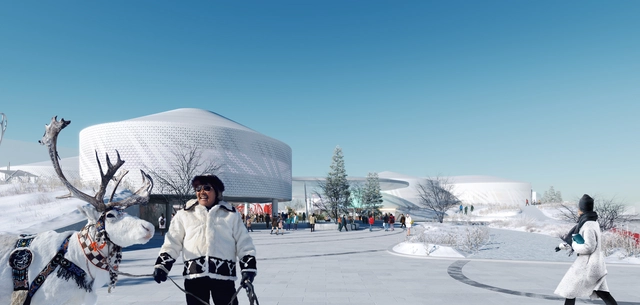
Russian practice Atrium Architects and Vostok+ have designed a new learning commons and public space in Yakutsk, the world's largest city built on continuous permafrost. Sited in the Republic of Sakha, the design is part of the largest administrative-territorial unit in the world with a territory of more than 3 million square kilometers in the far east of Russia. Building in a region known for diamonds and extreme climate, the project reinterprets Yakutsk's unique culture atop the frost.
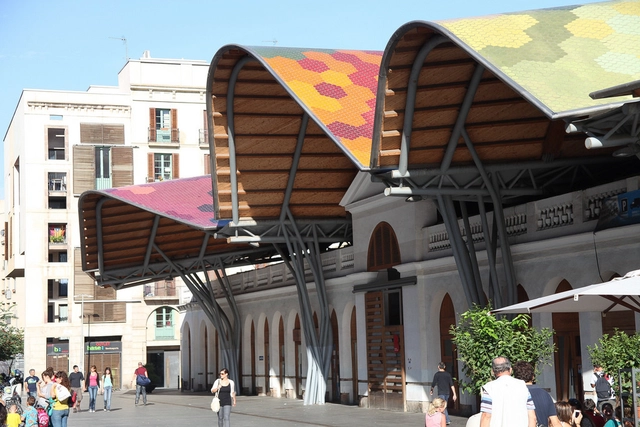
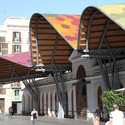
Benedetta Tagliabue (born 24 June 1963) is an Italian architect known for designs which are sensitive to their context and yet still experimental in their approach to forms and materials. Her diverse and complex works have marked her Barcelona-based firm EMBT as one of the most respected Spanish practices of the 21st century.
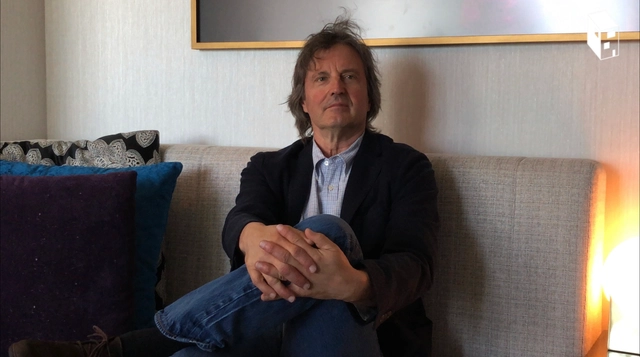
During the recent AIA Conference in Las Vegas, ArchDaily had the opportunity to interview Tom Kundig, Principal at Olson Kundig who has been designing and building for the firm for the last 30 years.
Having been raised in a mountain context, Tom relates strongly with the landscape and its natural elements, acknowledging the weathering of materials as something valuable and poetic. In this conversation, Tom explains the importance of context in each project, particularly the contrast and dispersion of buildings as a meaningful response to the landscape. He also addresses the importance of technology and communication as part of a new design process that we must all start to integrate, as well as open source initiatives.
Keep reading to see the video and complete interview.

You're an architect so you know organization is key. You think you’re on top of all the categories, rules and folders in Outlook that you've created to get by. You file away all of your emails by project and category, but time and again, your email search function fails you and finding any file is a nightmare.


.jpg?1560851416)


The AJ Architecture Awards highlight the very best projects across a range of key categories – from community schemes and cultural projects to masterplans and workplace designs. All architects – regardless of size or scale of practice – are invited to enter their completed UK projects built between January 2018 and July 2019.
The expert judging panels will visit all finalists to meet the architecture teams and capture a true understanding of the challenges involved in bringing each building to life. In addition to stand-out design, our judges will consider each project in detail, examining how it has met or exceeded the brief, how it has promoted client or community engagement, and how it has excelled in the use of space or sense of place.
.jpg?1560983755 "© Fernando Guerra | FG+SG")
.jpg?1560983783 "© Fernando Guerra | FG+SG")
.jpg?1560983626 "© Fernando Guerra | FG+SG")
.jpg?1560983557 "© Fernando Guerra | FG+SG")
.jpg?1560984019)











.jpg?1560851433 "© Lv Lin")
.jpg?1560851282 "© Lv Lin")
_室内.jpg?1560851187 "interior. Image © Lv Lin")
.jpg?1560851320 "© Lv Lin")
.jpg?1560851416)