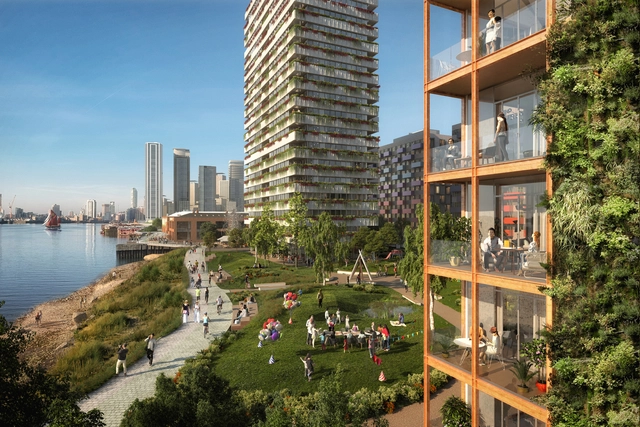
Regeneration specialist U+I submitted plans for Morden Wharf in June 2020, comprising 1,500 new homes, employment spaces, and a landscaped park along 275m of the River Thames. Located on Greenwich Peninsula in London, the mixed-use scheme designed by OMA includes more than six acres of the high-quality public realm, 12 high quality, and tenure-blind residential buildings, as well as commercial, retail, and community spaces.
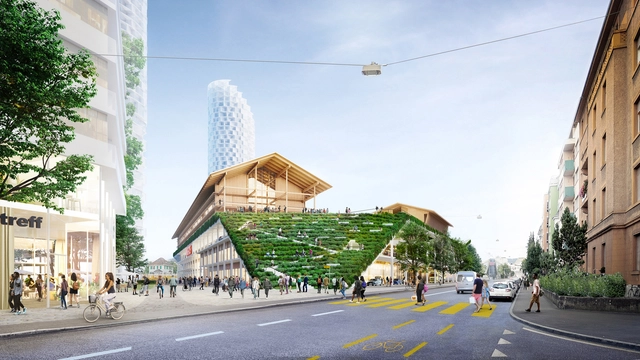
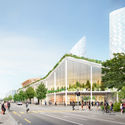
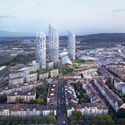
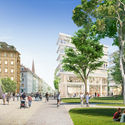
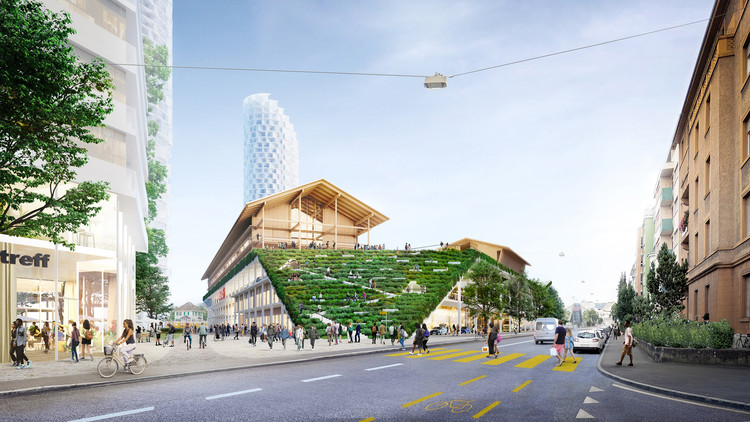
Herzog & de Meuron have designed Switzerland's first middle school placed on the roof of a shopping center in Basel-Stadt. The MParc Dreispitz shopping center will accommodate a Sekundarschule (middle school) for 600 students as part of the overall transformation of Dreispitz Nord. The design aims to set a precedent for future urban developments as the school becomes a central part of the site's overall master plan.
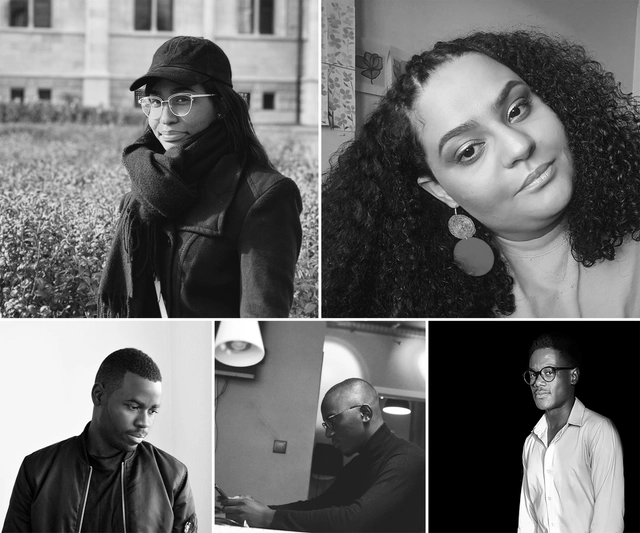
Grupo BANGA. Em sentido horário: Yolana Lemos, Kátia Mendes, Gilson Mendes, Mamona Duca e Elsimar de Freitas. Image Cortesia de Grupo BANGA
Investing in virtual projects has probably never been more timely, after all, we have been partially deprived of contact with the concrete world. Exploring the singularities of the present moment and the power of online engagement, a group of architects from Angola started an ambitious work: pursuing a new identity for Angolan architecture.
Formed by Yolana Lemos, Kátia Mendes, Mamona Duca, Elsimar de Freitas, and Gilson Menses, Grupo BANGA is responsible for the project Cabana de Arte (Art Hut), which combines the efforts of young architects and artists from Angola in virtual works that seek to bring visibility to emerging professionals and bring architecture closer to people's daily lives.
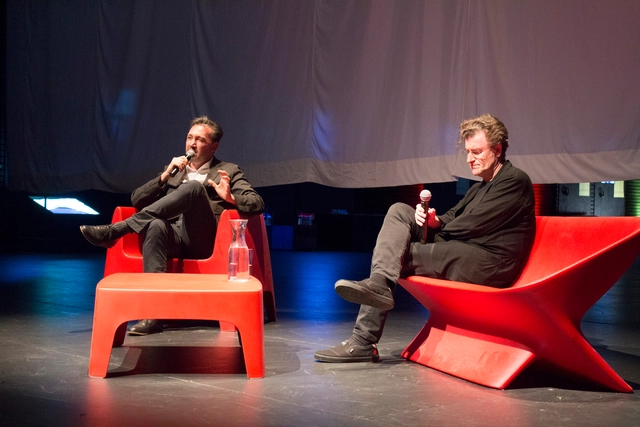
This article is based on a lecture given by Chilean artist and architect Alfredo Jaar at the 20th Architecture and Urbanism Biennale in Valparaiso, Chile, on October 26, 2017.
It's June of 1980. Alfredo Jaar, a recent dropout of the University of Chile's architecture program, walks through the center of Santiago carrying two large signs. He grabs a spot in the shade next to a kiosk and intercepts passers-by to ask them his questions. In the midst of a military dictatorship, Jaar wants the people to vote, but not for the constitutional plebiscite or in the democratic elections. He doesn't even have paper or pencil for them to vote with. There's no line to mark on. His campaign centers on a mint--white and round--like a casino raffle ball.
Jaar's questions are loaded ones. "Are you happy?" (¿Es usted feliz?) he asks. "How many people in Chile do you think are happy?" "How many people in the world?"
The COVID-19 Pandemic is a disruptive moment for our world, and it’s poised to spur transformative shifts in design, from how we experience our homes and offices to the plans of our cities. The webcast series Design Disruption explores these shifts—and address issues like climate change, inequality, and the housing crisis— through chats with visionaries like architects, designers, planners and thinkers; putting forward creative solutions and reimagining the future of the built environment.





_-_Vista_da_Pra%C3%A7a.jpg?1601059705 "Projeto arquitetônico virtual para a exposição \"Tchitundu-Hulu, a história resgatada\". Image Cortesia de Grupo BANGA")
_-_Planta_de_Cobertura.jpg?1601059767 "Planta do projeto para a exposição \"Mfwanana, Dialetos da Terra\". Image Cortesia de Grupo BANGA")
_Eu_sou_o_sol_-_as_marcas_perpetuadas_em_mim_(2)_-_Sala_de_Exposi%C3%A7%C3%A3o.jpg?1601059792 "Projeto arquitetônico virtual para a exposição \"Eu sou o sol - as marcas perpetuadas em mim\". Image Cortesia de Grupo BANGA")


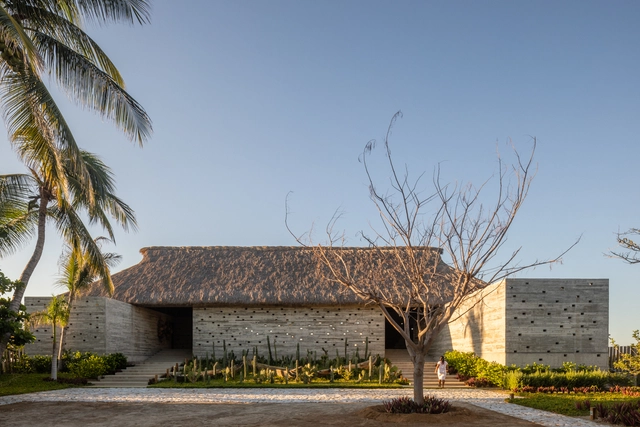



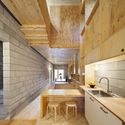





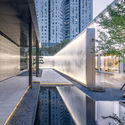
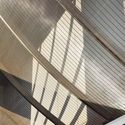


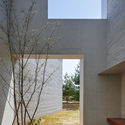
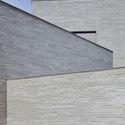
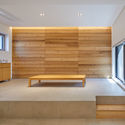


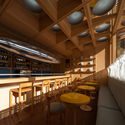


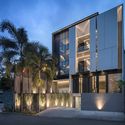






_Davit_Ruiz_.jpg?1601491755)
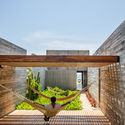
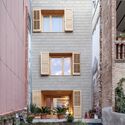
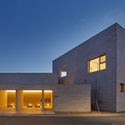
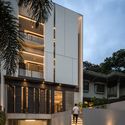
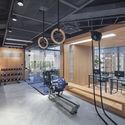
_Davit_Ruiz_.jpg?1601491783 "© Davit Ruiz")
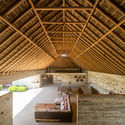
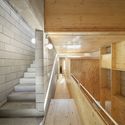
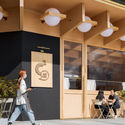
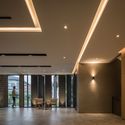
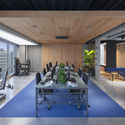
_Davit_Ruiz_.jpg?1601491810 "© Davit Ruiz")
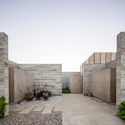
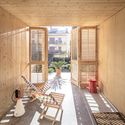
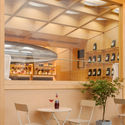
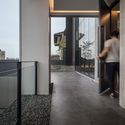
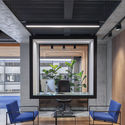
_Davit_Ruiz_.jpg?1601492122 "© Davit Ruiz")
_Davit_Ruiz_.jpg?1601491990 "© Davit Ruiz")
_Davit_Ruiz_.jpg?1601491755)



.jpg?1608739567&format=webp&width=640&height=580)

.jpg?1608739567)