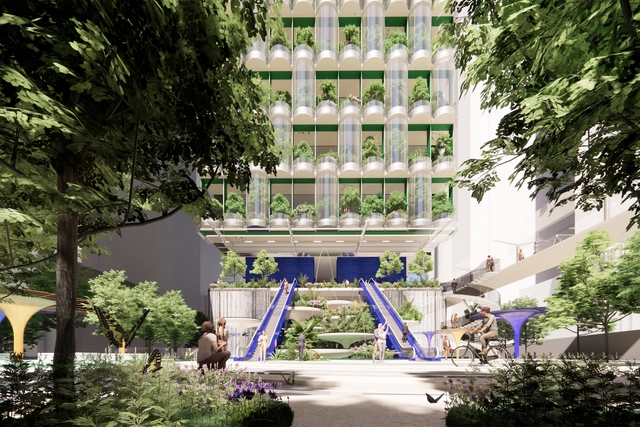
MVRDV and Hyde Park BV have unveiled their design proposal of Hoofddorp's Station Quarter, a project that aims to transform the area around the existing station into an ecofriendly and affordable urban district. The masterplan will offer 8,500 housing units and renovated train, bus, and metro stations, providing a solution to the housing shortage and access to public transportation without compromising the quality of living.
The 26th UN Climate Change Conference of the Parties (COP 26) debuted yesterday in Glasgow, bringing together more than 190 world leaders, with the aim of accelerating action to reach the goals of the Paris Agreement and UN's Convention on Climate Change. Leading architecture organizations and figures are attending the two-week summit to show the AEC's industry's commitment to reduce carbon emissions and urge decision-makers to implement clear targets to achieve global climate goals.
Jacob K. Javits Convention Center in New York City, April, 2020. New York National Guard. (U.S. Air National Guard photo by Major Patrick Cordova)
Cities have always been a stage for transformations. The directions, the flows, the different ways of using the spaces, the desires, all change and give way to new places and needs. Such richness provides the city with an innovative and mutable character, but it also implies demand for more flexible architecture in terms of the functional program and structure. Especially during the past year, we have witnessed - at breakneck speed - great changes in the cities and urban spaces. The pandemic brought new paradigms that suddenly disrupted long-established norms. Houses became offices, offices became deserts, hotels turned into health facilities, and stadiums turned into hospitals. Meanwhile, architecture has had to reveal its flexibility to support purposes that could not be foreseen. This adaptability seems to have become the key to creating spaces that are coherent with our current lifestyle and the speed of modern times.
If you haven't seen Respect, I highly recommend it. The Liesl Tommy-directed biographical film based on the life of American singer Aretha Franklin visually takes us back to the 1960s through a successful set work. Here, Production Designer, Ina Mayhew had the job of creating a series of locations where color palettes undoubtedly evoke more than emotions: Her suburban home from her childhood in Detroit, the sassy jazz clubs of New York City, her luxurious Upper West Side apartment, and finally her ultramodern home in Los Angeles.
What is an architecture critic? And what makes a critic in the 21st century? Throughout history, critics were the select few who were chosen to describe and evaluate architecture while we waited for their rave reviews or disappointments before we validated our own opinions. Their thoughts and words became design canon and heavy-handedly shaped our profession. This mindset and culture only further contributed to the idea that architecture is an “elitist” practice where a few set the rules and the rest must learn them. While architecture will always have named critics, just as other forms of art and culture have theirs, there’s recently been a push for architecture to transform itself into a profession that designs for the masses and is equally critiqued by the masses.