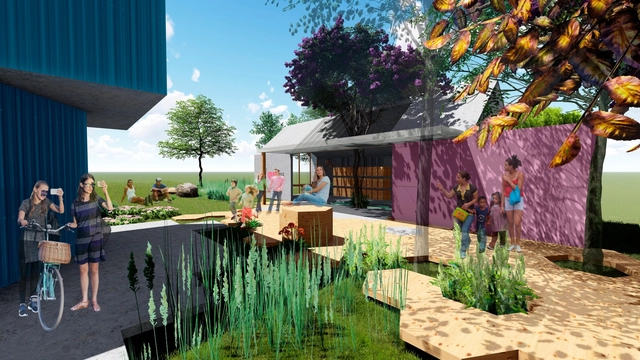
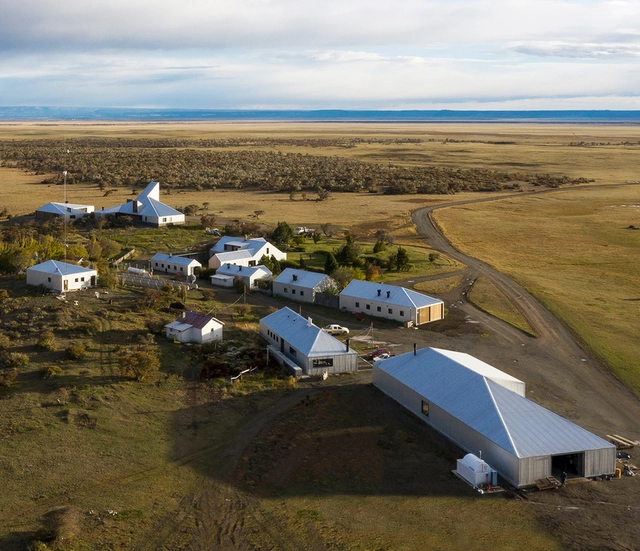
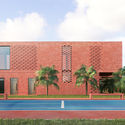
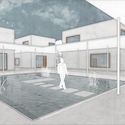
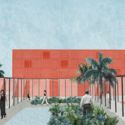
Edifício sede dos meliponários. Image Cortesia de Equipe de projeto
This “unsolicited architecture” project is driven by the pursuit of professional practice that makes an active contribution, an ethical commitment to promoting the field of architecture and urbanism, and a desire to address pressing local and global challenges through a distinct, positive, and multidisciplinary approach.
in 2019, the Bauhaus turned 100 and a crop of museum buildings sprang up for the celebration.
In 2019, two museums bearing the name Bauhaus appeared on the German culture circuit. Angling to capitalize on the design school’s centennial, the Bauhaus Museum Weimar was first out of the gate, opening in early April; a few clicks behind, the Bauhaus Museum Dessau followed suit in early September. A third project, the much-delayed extension to Walter Gropius’s 1979 Bauhaus- Archiv/Museum für Gestaltung in Berlin, did not manage to keep pace and isn’t expected to open for a couple more years yet.
While 2019 saw the completion of great works of architecture, it has also been a busy year for unbuilt designs. Whether this consists of imaginary visions intended to broaden horizons and innovations, or practical projects intended for construction, ArchDaily has published a wealth of unbuilt projects throughout the year that have been recognized and celebrated by juries, peers, and institutions.
As the year draws to a close, we look back at the top competition-winning architecture of 2019. From built competition-winning entries from the world’s leading firms, to student and young architect entries which imagine the architecture of the future, the list offers an insight into what the architecture world has in store for the next year, decade, or even century.
In Latin American countries, the most common method for distinguishing rural areas from urban spaces is based on analyzing the number of residents in a given zone, classifying as "rural" any locality with a population under 2,000. In these contexts, low density and scattered development typically allow the natural landscape to predominate over the built environment.
Professionals registered with the Council for Architecture and Urbanism (CAU) are invited to participate in the 2020 Census of Architects and Urban Planners. Much like the 2012 Census, this survey aims to map the profile of the architecture and urbanism sector as well as inform CAU's initiatives. In addition, it will update the data collected in the first survey, which saw participation from 90% of registered professionals at the time.
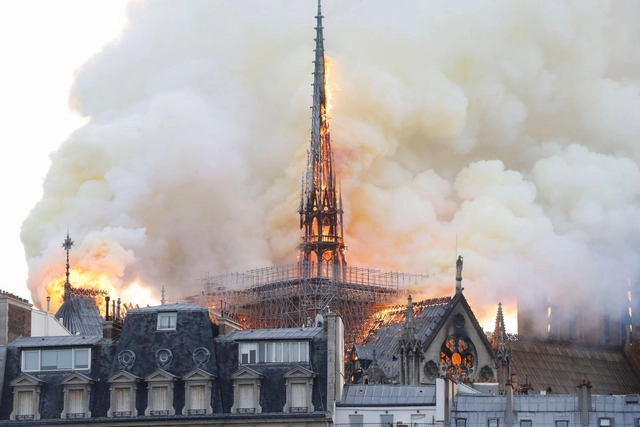
As 2019 winds down, the media has started its annual ritual of taking stock, compiling lists, looking back. In the architecture world, the year’s biggest news story was arguably the Notre-Dame fire. The image of the cathedral’s burning roof—a wrenching sight—filled TV and computer screens around the world and occasioned an outpouring of grief, especially in France, where the building holds a central place in the nation’s collective consciousness. It was an architectural tragedy as well as a cultural one. No doubt: the April inferno struck at the very heart of France.
Images taken from Nicola Tartaglia, Nova scientia, second book, Distantia del transito, 1558
What happens when the sensor-imbued city acquires the ability to see – almost as if it had eyes? Ahead of the 2019 Shenzhen Biennale of Urbanism\Architecture (UABB), titled "Urban Interactions," ArchDaily is working with the curators of the "Eyes of the City" section at the Biennial to stimulate a discussion on how new technologies – and Artificial Intelligence in particular – might impact architecture and urban life. Hereyou can read the “Eyes of the City” curatorial statement by Carlo Ratti, the Politecnico di Torino and SCUT.
https://www.archdaily.com/931663/how-does-architectural-design-change-when-the-city-becomes-equipped-with-the-most-recent-advances-in-artificial-intelligence-alessandro-armando-giovanni-durbiano-for-the-shenzhen-biennale-uabb-2019Alessandro Armando and Giovanni Durbiano
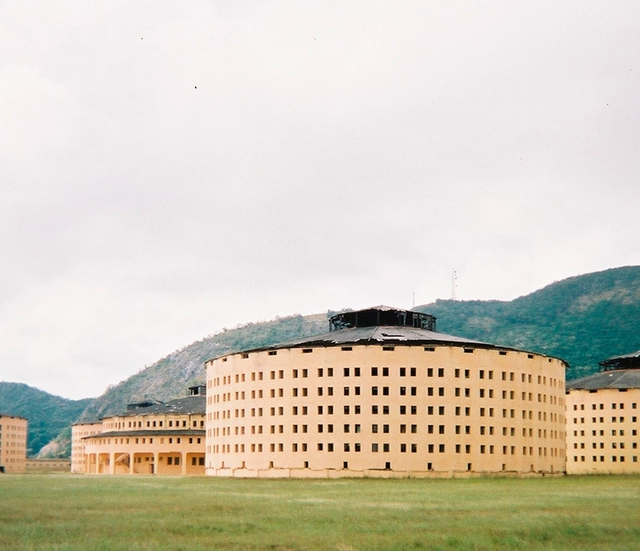
Natural disasters, mass migrations, economic crises, or simply the passage of time can leave significant architectural works—and even entire towns—abandoned to decay, losing their habitability either partially or completely. Recognizing that these buildings form part of our recent history, a growing number of photographers, historians, and urban explorers (urbex) are venturing out in search of these modern ruins.
Roma 212 is a multidisciplinary studio dedicated to architectural design, ephemeral installations, interiors, and urban planning. Its philosophy centers on experimenting with new materials, forms, and processes, aiming to renew and rethink architecture as a cultural catalyst.
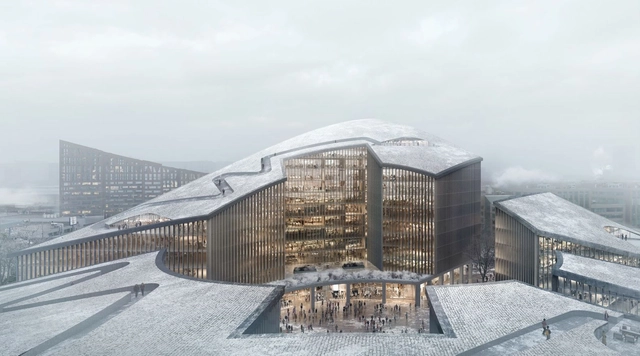
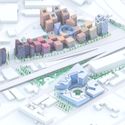
ODA has won an international competition to create MAZD, a 3 million square feet master plan in Moscow, Russia. The project puts in place a large mixed-use development intended to stimulate industrial zones just outside of the city.
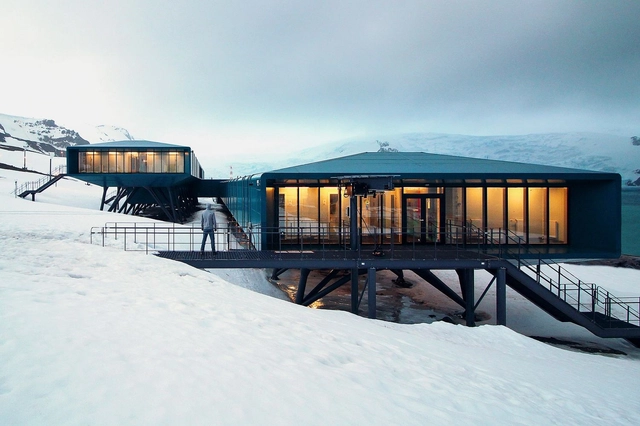
Estação Antártica Comandante Ferraz. Image Cortesia de Estúdio 41
Nearly eight years after the project's inception, the Comandante Ferraz Research Station, Brazil's Antarctic research base designed by Curitiba-based firm Estúdio 41, will soon be inaugurated. With construction completed since March of last year, the official opening is scheduled for this January.
Archstorming has announced the winning designs for a preschool in Mozambique. Participants were challenged to design a school for disabled children in Xai-Xai. and the winning proposal will be built with the help of the NGO Somos del Mundo and the local initiative Estamos Juntos. Judges selected the five winners and ten honorable mentions.
It is only a matter of time until algorithms take the wheel. While the first autopilot system for vehicles was developed 3000 years ago by sailors attaching weather vanes to tillers, the last 10 years have seen unprecedented growth in interest and effort towards AV (autonomous vehicles). Today, autonomous vehicle tests are underway in 36 US states, while it is estimated that the technology could replace 90% of vehicles in cities such as Lisbon, Portugal and Austin, Texas.
https://www.archdaily.com/931640/how-will-autonomous-vehicles-impact-citiesNiall Patrick Walsh
Peripheria Films has shared with us their audiovisual piece developed for the exhibition "The Cathedral of Malaga, an Unfinished Symphony," curated by Juan Manuel Sánchez La Chica and Adolfo de la Torre (marinauno arquitectos).
The video traces the construction process of this unfinished building over time—a classic of Andalusian architecture in Spain.
For over 80 days of protest, our streets and buildings have been covered daily in slogans, posters, illustrations, and an endless array of visual material referencing the social demands of a country that claims to have awakened from a 30-year slumber. Meanwhile, public monuments throughout Chile are being tagged, altered, destroyed, or removed from their original sites, becoming a primary target for protesters—or, as the newspaper El Mercurio1 puts it, for “vandals.”
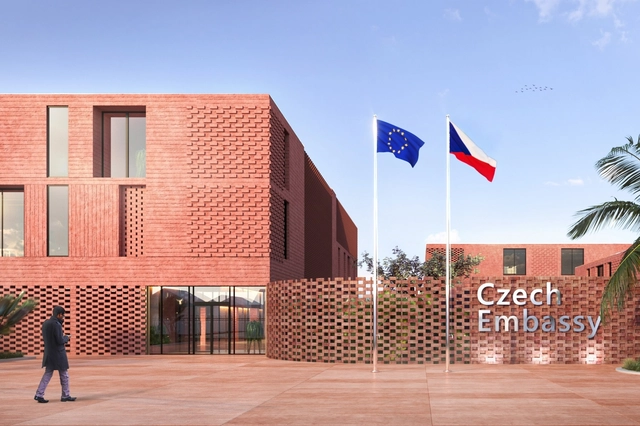
The Inspireli Awards have announced the winners of the student competition for the Czech Embassy in Addis Ababa. The fourth year of the competition offered students a unique opportunity to design in Ethiopia. This special competition category was announced by the Ministry of Foreign Affairs of the Czech Republic in cooperation with the Faculty of Civil Engineering CTU in Prague, Department of Architecture.
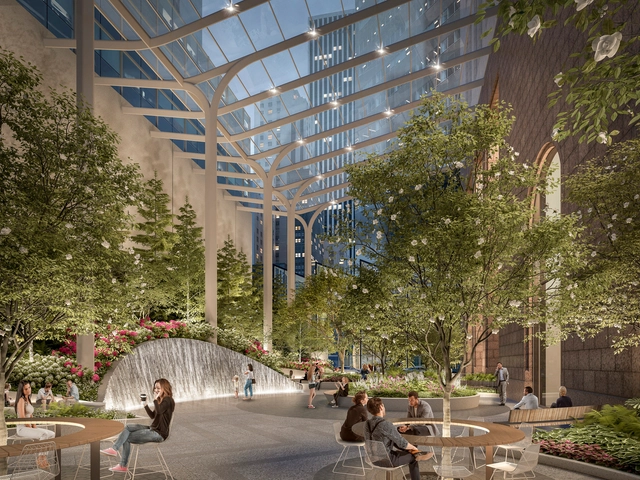
The New York City Planning Commission approved unanimously the design for 550 Madison Garden created by Snøhetta. The project that re-imagines the privately-owned public space will move forward, after also having received, earlier on, the approval from Manhattan Community Board.
On September 28, 2019, the Shanghai Urban Space Art Season (SUSAS) opened along the 5.5-kilometer southern section of the Yangpu Waterfront and the former site of the Shanghai Shipyard (including the shipyards and the Wool and Jute Warehouse). Under the theme of "Encounter," this year's art season unfolded across two main sections: "Space Art" and "Planning and Architecture." In this interview, Zhang Ming, Chief Architect of SUSAS and Principal Architect of Original Design Studio, elaborates on the design of the shipyards and the 5.5-kilometer waterfront public space while sharing his broader reflections on the overall design of Shanghai's waterfront.
https://www.archdaily.com/1123391/zhang-ming-architects-move-everyone-with-their-professionalism-redefining-urban-space韩爽 - HAN Shuang
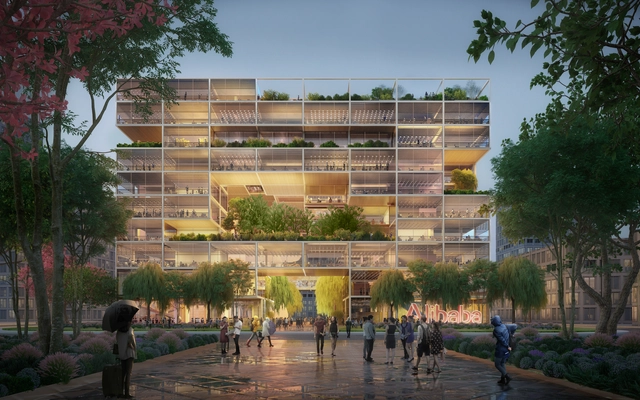
British international studio Foster + Partners has won the competition to design the headquarters for Alibaba, in Shanghai. The newest building of the e-commerce giant will take a unique form generated by an algorithm that combines major aspects of the project.
Last April, Mayor Bill de Blasio of New York announced plans to introduce a bill that would ban the construction of new all-glass buildings. Part of a larger effort to reduce citywide greenhouse emissions by 30 percent, other initiatives included using clean energy to power city operations, mandatory organics recycling, and reducing single-use plastic and processed meat purchases. The announcement came on the heels of the city council passing the Climate Mobilization Act, a sweeping response to the Paris Climate Agreement that included required green roofs on new constructions and emissions reductions on existing buildings.
https://www.archdaily.com/931309/de-blasios-glass-skyscraper-ban-could-mass-timber-and-transparent-concrete-take-its-placeLilly Cao
As part of the interventions that occupied Sesc 24 de Maio and its surroundings during the 12th International Architecture Biennale of São Paulo, the firms Vão and Adamo Faiden, from Brazil and Argentina, respectively, proposed a mirror installation on the building adjacent to the esteemed Sesc. Located at the level of its 11th floor, the intervention establishes a series of intersecting visual dialogues between the buildings, their occupants, and the urban landscape.
In 2018, Chilean researchers Teodoro Dannemann, Boris Sotomayor-Gómez, and Horacio Samaniego published the results of a study in Royal Society Open Science that, by anonymously tracking the "footprint" of 350,000 mobile phones during working hours, visualized urban segregation in Santiago.