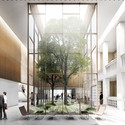
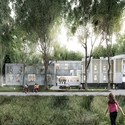
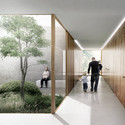
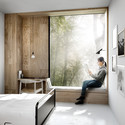
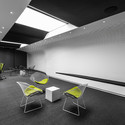
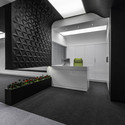
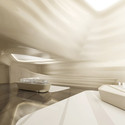
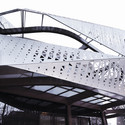
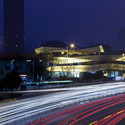
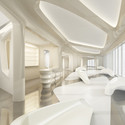
WE architecture and CREO ARKITEKTER A/S have won one of three prizes in the first phase of an invited competition to design a new Moscow Medical Center. Combining the functionalism of today's healthcare with the humanistic qualities of past architecture, the proposal introduces a facility fine-tuned for those inside.
Videos
Shipyards aerial view. Image Courtesy of Populous
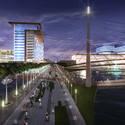
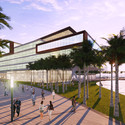
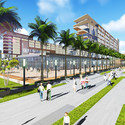
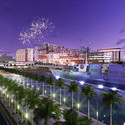
Populous' has released plans to redevelop Jacksonville, Florida’s riverfront Shipyards district into a massive recreation and entertainment hub. Unveiled by the Jacksonville Jaguars' team owner Shad Khan and president Mark Lamping, the property will be injected with life to better stimulate economic activity in the area and make the forgotten plot a bustling destination for locals and tourists alike.
Read on after the break for more information and an animation of the Shipyards vision.
Exterior rendering showing the rotating pixel facade. Image Courtesy of Paolo Venturella Architecture
Paolo Venturella Architecture has been commissioned to design a proposal for an Italian office building. The inventive structure uses existing contextual information, such as the grid of the city and an abandoned soccer field on which it sits, to drive its parametric design. The resulting building not only makes use of an otherwise forgotten plot of land, but fits precisely into the urban fabric of the existing city layout, using its grid to shape the building.















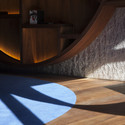
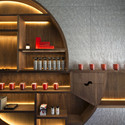
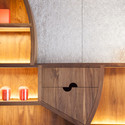

.jpg?1425437290&format=webp&width=640&height=580)
.jpg?1425437238 "© Federico Cairoli")
.jpg?1425437209 "© Federico Cairoli")
.jpg?1425437048 "© Federico Cairoli")
.jpg?1425437170 "© Federico Cairoli")
.jpg?1425437290)