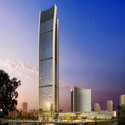
Woods Bagot has shared their design for a destination hotel in Zhejiang, China. The Wenling Sheraton, sited between two waterways, is scheduled to be completed in 2019. Woods Bagot says that views of the wetlands and mountains of Wenling will "ensure a quality guest experience" which includes waterfront dining, an observation deck and a pedestrian promenade.
Richard Meier & Partners has unveiled designs for their first project in Bogota: Vitrvm. Conceptualized as two towers united at the base, the new 13-story residential development will provide 36 apartments along Septima Avenue in the north section of the city.
“The project is contextually inspired by the beauty of its immediate surroundings,” described the architects. “It aims to reflect and to engage the beautiful gardens and large trees at the Chico Park and the Seminario Mayor,” one of the largest and most important seminaries in Colombia.
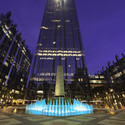
The design of PPG Place, by Philip Johnson and John Burgee, melds the notion of the modern corporate tower with a neo-gothic monument. Clad in almost a million square feet of glass manufactured by the anchor tenant PPG industries, the architects ingeniously rethought accepted practices in curtain wall design to create "the crown jewel in Pittsburgh's skyline." (1) The 1.57 million square foot complex was one in a series of high profile corporate projects completed during Johnson's controversial foray into postmodernism.
Jeffrey A. Kenoff, Audrey Choi, Edwin Lau, Peter Gross, Ciara Seymour, Gary Stluka, Benjamin Albury; Bernard Chang; Hanna Chang; Saera Park; Shang Chen; Sarah Smith; James Kehl; Sandra Choy; Thomas Coldefy; Javier Galindo; Onur Gun; Heejin Kim; Yoojung Kim; Ming Leung; Luis Llull; Manon Pare; Charles Portelli; Samuel Schmitz; James Siow; Kristin Speth; Donald Springer; Kyle Steinfeld; Scott Wilson, James von Klemperer, Paul Katz
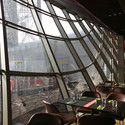
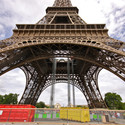
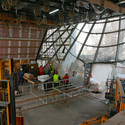
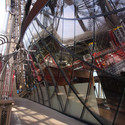
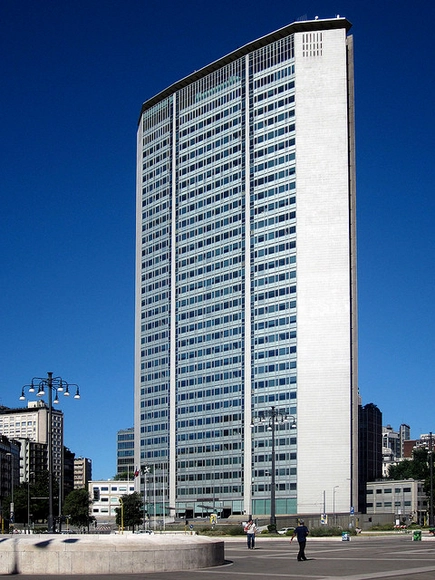
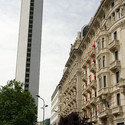
In contrast with its traditional Milanese surroundings, the Pirelli Tower is one of the earliest examples of Modernskyscrapers in Italy. Affectionately called "Il Pirellone” (The Big Pirelli), the 127 meter tower stood as Italy’s tallest building from 1958 to 1995. The design of the structure, led by architect/designer Gio Ponti and engineer Pier Luigi Nervi, featured a tapered plan—as opposed to the conventional rectilinear volume which was prevalent in America—encouraging greater creative freedom during a time when skyscrapers typically lacked experimentation.




















.jpg?1393901270&format=webp&width=640&height=580)
.jpg?1393901561 "© Matteo Piazza")
.jpg?1393901855 "© Matteo Piazza")
.jpg?1393901448 "© Matteo Piazza")
.jpg?1393902946 "© Matteo Piazza")
.jpg?1393901270)
























.jpg?1392935132 "© Pedro Pegenaute")
.jpg?1392935131 "© Pedro Pegenaute")
.jpg?1392935200 "© Pedro Pegenaute")
