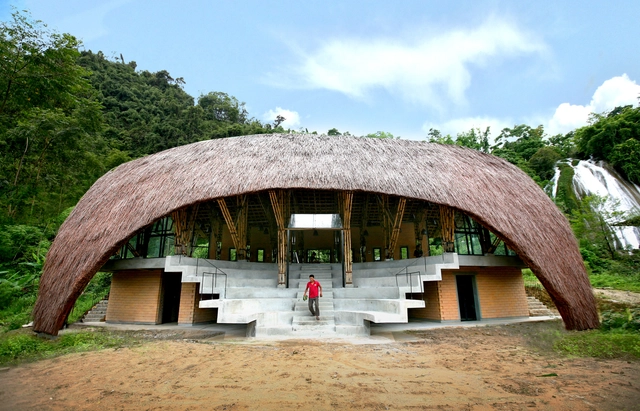
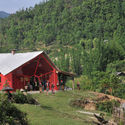
This year the United Nations World Tourism Organization (UNWTO) has been looking at tourism as a way to create jobs and opportunities in rural areas under the banner of Tourism and Rural Development.
Rural based Architecture and traditional edifices play an important role in showcasing local heritage building and craftsmanship. It can also offer jobs and prospects outside of big cities particularly for the communities that might otherwise be left behind.
As levels of pollutant emissions have increased over the years, awareness has also grown regarding actions that can be taken to minimize the damage caused to the planet. As a way to promote waste reduction or prevention, the 3 R's rule is created: reduce, reuse and recycle. These actions, together with sustainable consumption standards, have been promoted as a means to protect natural resources and minimize waste.
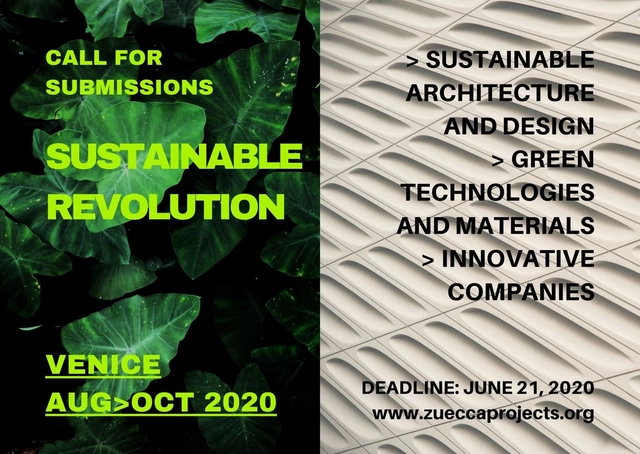
As a reaction to the unprecedented moment that we are all experiencing, Zuecca Projects has decided to launch its first-ever Open Call, on the theme of Sustainable Architecture and Design.
Sustainable design is more than water, energy and carbon. For architecture, it is deeply rooted in an understanding of life cycles and systemic cultural change. Over the last thirty years, the word "sustainability" began to lose its weight as it transformed into a loosely defined buzzword. But the ideas behind the umbrella term have grown and expanded, and in turn, iconic new buildings are being designed to rethink what the future holds.
In a predominately urban world that constantly has to deal with complex problems such as waste generation, water scarcity, natural disasters, air pollution, and even the spread of disease, it is impossible to ignore the impact of human activity on the environment. Climate change is one of the greatest challenges of our time and it is urgent that we find ways to slow down the process, at the very least. Toward this end, our production, consumption, and construction habits will have to change, or climate change and environmental degradation will continue to diminish the quality and duration of our lives and that of future generations.
Although they seem intangible and distant, these various energy inefficiencies and waste issues are much closer than we can imagine, present in the buildings we use on a daily basis. As architects, this problem is further amplified as we deal daily with design decisions and material specifications. In other words, our decisions really do have a global impact. How can we use design to create a healthier future for our world?
Nothing is more rational than using the wind, a natural, free, renewable and healthy resource, to improve the thermal comfort of our projects. The awareness of the finiteness of the resources and the demand for the reduction in the energy consumption has removed air-conditioning systems as the protagonist of any project. Architects and engineers are turning to this more passive system to improve thermal comfort. It is evident that there are extreme climates in which there is no escape, or else the use of artificial systems, but in a large part of the terrestrial surface it is possible to provide a pleasant flow of air through the environments by means of passive systems, especially if the actions are considered during the project stage.
This is a highly complex theme, but we have approached some of the concepts exemplifying them with built projects. A series of ventilation systems can help in the projects: natural cross ventilation, natural induced ventilation, chimney effect and evaporative cooling, which combined with the correct use of constructive elements allows improvement in thermal comfort and decrease in energy consumption.
It is truly odd how we always find ourselves in a bad mood at work and our productivity keeps decreasing as the week passes by. To be fair, we can’t keep blaming our colleagues, clients, or Monday for our rough day; sometimes it’s the chair we are sitting on, the fluorescent lighting above our computer, or the constant “chugging” sound of the printer near the desk.
Other than the fact that people spend about 70-80% of their time indoors, almost 9 hours of their day are being spent at work; and studies have indicated that the environmental quality of an office has short and long term effects on the comfort, health, and productivity of the people occupying it. While research on the comfort conditions of workplaces is still relatively minimal, we have put together a list of factors that have proved to be highly influential on the comfort of individuals in workplaces.
With the amount of information and technology we currently have, whether from academic research or from the manufacturers of construction products themselves, there is very little room for empiricism and experimentation when we design on the most diverse scales. Even worse is when design specification misconceptions can pose huge costs and headaches. However, long before construction and occupancy of the building, it is possible to clearly understand how the construction will function thermally, its photovoltaic power generation capacity, and even how much power will be required to cool and/or heat it. There are software, tools and applications that allow you to quantify all these design decisions to avoid errors, extra costs, unnecessary waste generation, and ensure the efficiency of all materials applied.
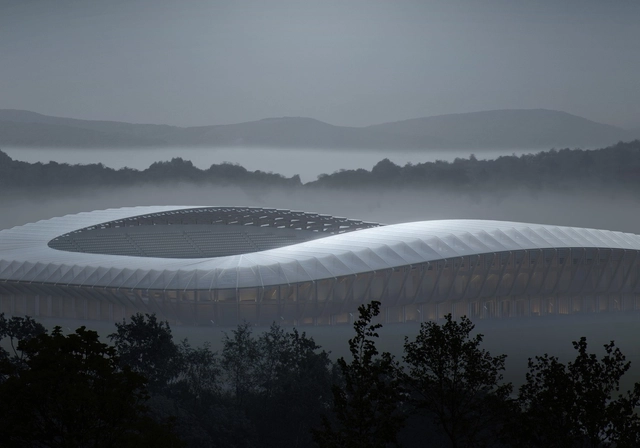
The world’s greenest football stadium, designed by Zaha Hadid Architects will be built in Gloucestershire, England after planning permissions were finally granted by the local council.
Human economic activities are naturally dependent on the global ecosystem, and possibilities for economic growth may be limited by the lack of raw materials to supply factory and trade stocks. While for some resources there are still untapped stocks, such as certain metals and minerals, there are others, such as fossil fuels and even water, with serious availability issues in many locations.
Building Information Modeling (BIM) is an increasingly common acronym among architects. Most offices and professionals are already migrating or planning to switch to this system, which represents digitally the physical and functional characteristics of a building, integrating various information about all components present in a project. Through BIM software it is possible to digitally create one or more accurate virtual models of a building, which provides greater cost control and efficiency in the work. It is also possible to simulate the building, understanding its behavior before the start of construction and supporting the project throughout its phases, including after construction or dismantling and demolition.
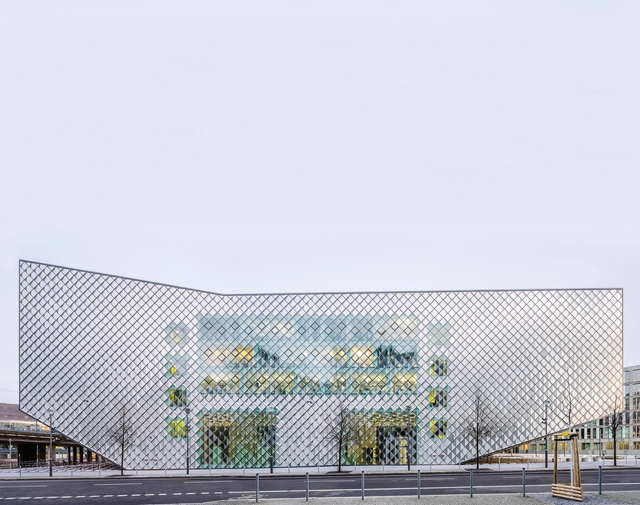
Facades are the interface between the interior and exterior of a building. They are the most striking and visible parts of a building, they protect it from external agents and are one of the main contributors to creating comfortable environments since it is where thermal gains and losses occur. Just like our skin, an extremely versatile organ of our body, it should be natural for it to be the part of the building which bears technology capable of becoming adaptable to the environmental conditions of the place where it is located.
In a study recently published by AIA, less than 13% of architectural firms have incorporated building performance as part of their practice. With buildings contributing 40% of total carbon emissions leading to climate change, just 25 projects are roughly equivalent to planting 1 million trees each year. In addition to that, teams that are able to showcase data-driven and performance-driven decision-making and feature an energy analysis in every pursuit are able to increase fees and generate more revenue. Although integrating building performance sounds like a no-brainer, it proves to be difficult at many firms, because in addition to the practical changes, it requires a culture shift. That culture shift can only happen if the tools are easy to use, accurate, and mesh well with current workflows. Right now is the perfect time to tackle these culture changes due to a few reasons:
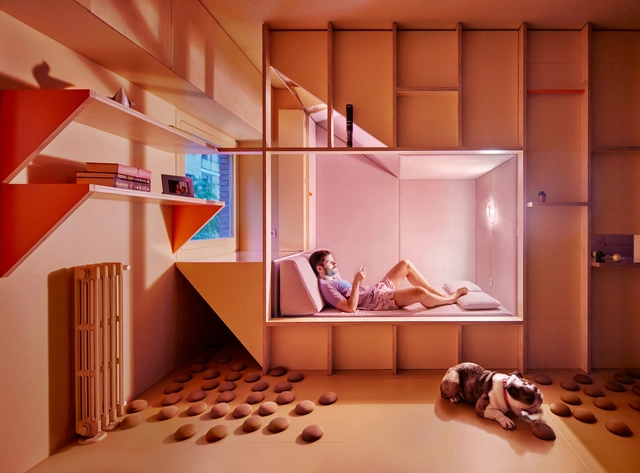
Un chico, su bulldog, un huerto y la casa que comparten / HUSOS. Image
It's very likely that you are reading this text in an interior space with the lights on. For most people, modern living entails spending most of the day in closed rooms, bathed in a sum of artificial and natural lights. Yet while artificial light has afforded mankind incalculable possibilities, it has also caused some confusion in our bodies, which have evolved for thousands of years to respond to the stimuli of sunlight in the day and darkness at night. This responsiveness to natural light is called the circadian rhythm or cycle, and describes the 24-hour biological cycle of almost all living beings. Circadian rhythms are primarily influenced by light reception, but temperature and other stimuli also play a role in the process.
European children spend approximately 200 days a year at primary school. Even though the academic year in most parts of the world is not as long as in Europe, the place where children and adolescents spend the most time, following their own homes, is usually in educational institutions. These can be places for learning, playing and socializing, and as sad as it may be, they can also be safer places for children living in environments of abandonment, hunger, and violence, providing them with opportunities and even meals. A United Kingdom-wide survey found that the differences in physical characteristics of classrooms accounted for 16% of the variations in learning progress over the course of a year. In other words, the better a classroom is designed, the better children perform academically. According to the study, the factors that most affect children are sunlight, indoor air quality, acoustic environment, temperature, the design of the classroom itself and the stimulation within it.
It is expected that within the next few of decades, Earth will have absolutely nothing left to offer whoever/whatever is capable of surviving on it. Although the human race is solely responsible for the damages done to the planet, a thin silver lining can still be seen if radical changes were to be done to the way we live on Earth and how we sustain it.
Since architects and designers carry a responsibility of building a substantial future, we have put together an A-Z list of every sustainability term that you might come across. Every week, a new set of letters will be published, helping you stay well-rounded on everything related to sustainable architecture and design. Here are the terms that start with letters G, H, and I.
Emmi Keskisarja & Janne Teräsvirta Arkkitehtitoimisto & Company Architects have designed a futuristic green vision for an island in Finland. Titled “Emerald Envisioning for Luonnonmaa 2070,” the scheme is set on Luonnonmaa island on the Finnish West archipelago coast, close to the city of Turku. The vision for the island is one where climate change and biodiversity decline are combated through a reimagination of the urban connection with nature.
It is expected that within the next few of decades, Earth will have absolutely nothing left to offer whoever/whatever is capable of surviving on it. Although the human race is solely responsible for the damages done to the planet, a thin silver lining can still be seen if radical changes were to be done to the way we live on Earth and how we sustain it.
Since architects and designers carry a responsibility of building a substantial future, we have put together an A-Z list of every sustainability term that you might come across. Every week, a new set of letters will be published, helping you stay well-rounded on everything related to sustainable architecture and design. Here are the terms that start with letters D, E, and F.



.jpg?1515030902)
_9546.jpg?1580726149 "BIG Offices. Image")




.jpg?1560778703&format=webp&width=640&height=580)