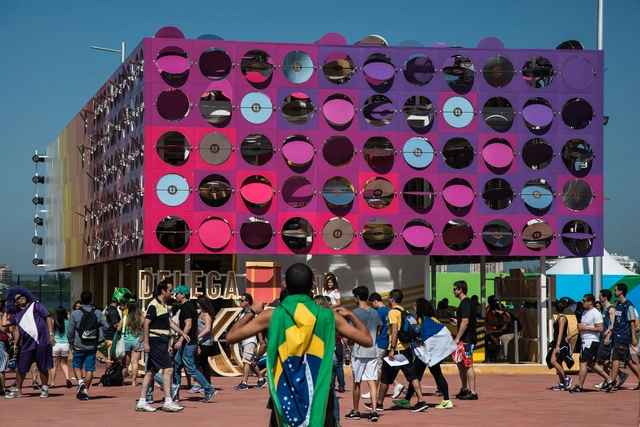
-
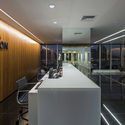
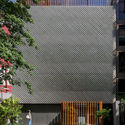
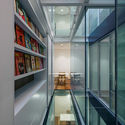
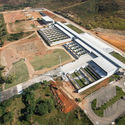
Architects: Reinach Mendonça Arquitetos Associados
- Area: 960 m²
- Year: 2014
-
Manufacturers: Carpete, Cortina Rolo, Cuba, Divisória retrátil, Divisórias Industriais, +9


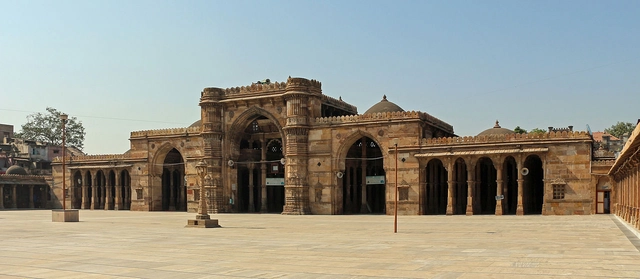
UNESCO’s World Heritage Committee, currently holding its forty-first annual session in the Polish city of Krakow, inscribed twenty new cultural sites on its World Heritage List, including the historic city of Ahmedabad in India, archaeological sites in Cambodia and Brazil, and a “cultural landscape” in South Africa. The Committee also added extensions to two sites already on the list: Strasbourg in France, and the Bauhaus in Germany. On the other hand, the historic center of Vienna was inscribed on the List of World Heritage in Danger as the Committee examined the state of conservation of one-hundred-and-fifty-four of its listed sites.

Cannon Design has unveiled its proposal for a mixed-use Cancer Hospital in Rio de Janeiro, Brazil. Originally envisioned as a “private hospital serving patients that can afford a high quality of health care,” the project transformed into a partnership between the public and private sector after preliminary feasibility studies determined the price of the site to be prohibitively high.
Thus, the project expanded to become a mixed-use complex with ownership shared between socially minded city government and private investors.

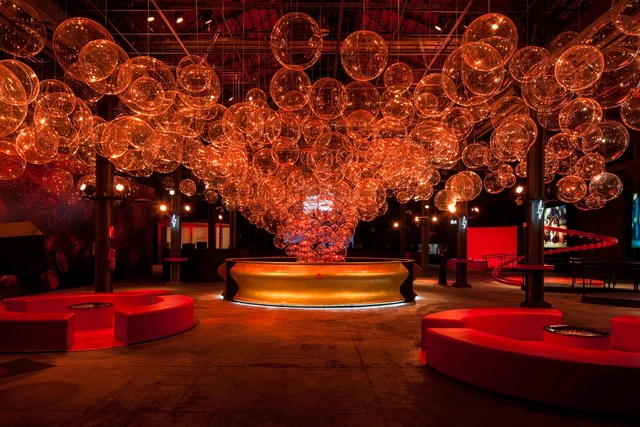
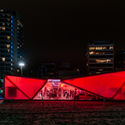
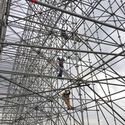
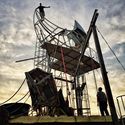
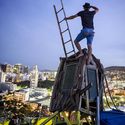
At the Rio 2016 Olympics, Studio GTM Cenografia developed a temporary installation for Nike. The space, inspired by containers and industrial sheds, occupies a total area of 600 square meters and was built in a metallic structure and wrapped in galvanized trapezoidal tiles. The cube used in the project is an installation from Brazilian artist and designer Muti Randolph, one of the pioneers of digital illustration in Brazil.
Our friends from ArchDaily Brasil talked with the architect Daltro Mendonça (GTM Cenografia) to find out more details on material choices and the execution of the project.

Just over a week ago in beautiful Rio de Janeiro the Olympic Games, the world's largest sporting event, came to an end. The Games, as well as the FIFA World Cup, have been a driving force for the city over the last six and a half years. In the wake of the frenzy caused by the much-anticipated event, Rio will have the Paralympics, which will take place between the 7th and 18th of September. But then what?
The word "legacy" being associated with major world events is nothing new. We see it used a lot when referring to the Olympics and the World Cup, and it’s come up time and time again in recent years when we look at the lasting effects these events have had on host cities like Barcelona (1992), Athens (2004), Beijing (2008) and London (2012). Essentially, the issue revolves around some fundamental questions: Who are the major beneficiaries of the "legacy" of the Olympic Games? Were the huge public investments worth it? Will there be any improvement for the general population? Can the equipment that was built be adapted for everyday use?


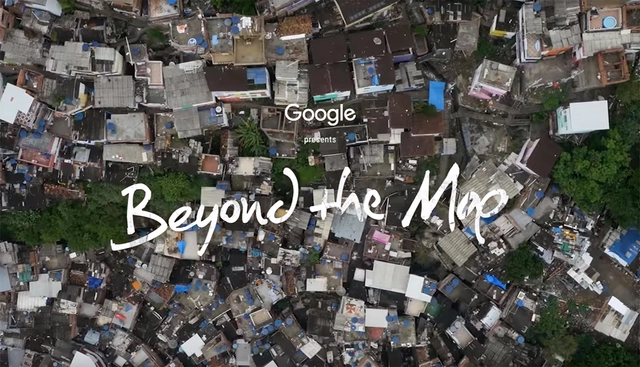
Google recently launched a new platform "Rio: Beyond the Map," showing Rio's favelas using 360º videos. The tool also includes panoramas more than three thousand images and historical exhibitions of Rio de Janeiro. The project integrates Google Arts & Culture, which brings art collections from around the world.

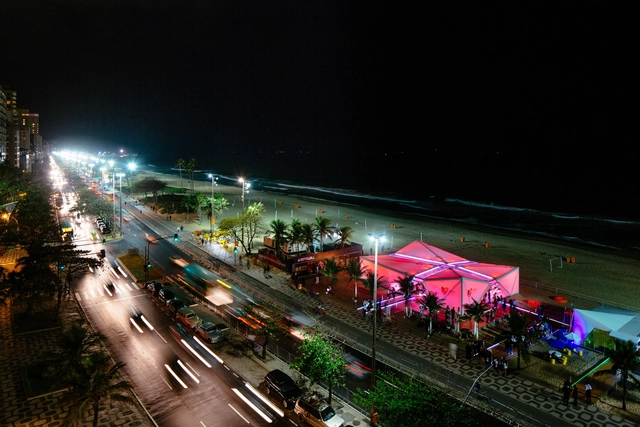
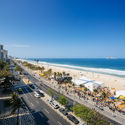
The Henning Larsen Architects-designed Danish Pavilion has opened to the public on Ipanema Beach to celebrate Denmark's participation in the Rio 2016 Olympic Games. The pavilion is the only national pavilion at the games, and contains displays featuring Danish companies and products. The design takes inspiration from the nation's seafaring and yachting traditions, while programmable LED lights allow the pavilion to resemble a number of different flags from bird's eye view.


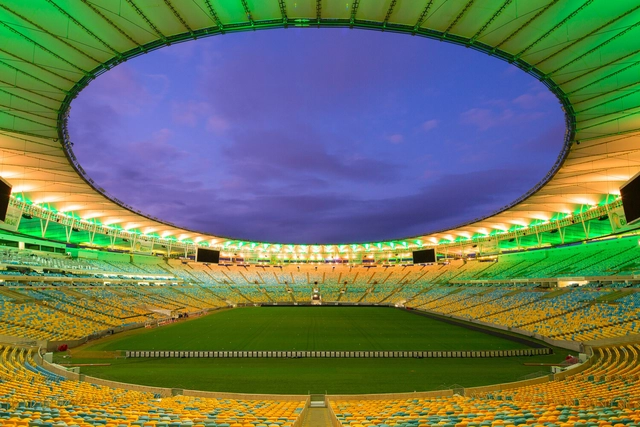
Rio de Janeiro is a city of sights and sounds. As diverse as its people is the collection of impressive architecture found in Brazil's second most populous city—from Eurocentric historical architecture to 20th century regionalist modern marvels, not to mention the city's growing crop of contemporary cultural venues. The combination of mountainous terrain, lush rainforest, and the ocean inspires many to create lively and unique architecture.

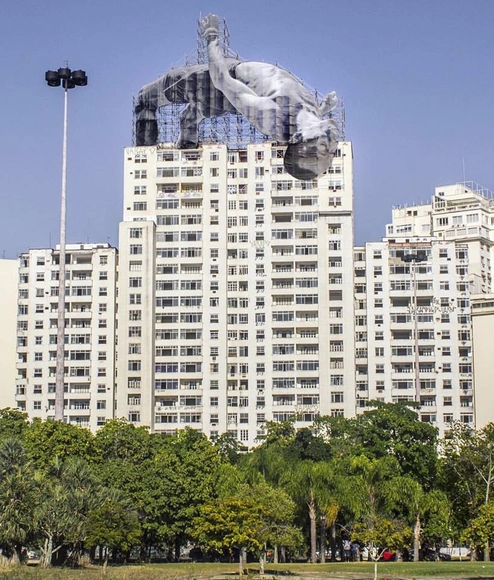
JR is an anonymous artist who owns the biggest art gallery in the world. His exhibits are available on the streets, free of charge catching the attention of people who are not typical museum visitors. His work is thought provoking and mixes art and act.
JR is known worldwide for projects such as Portrait of a Generation (2006), Women Are Heroes (2008), and Face 2 Face (2007). The latter is a piece which through portraits of people made with a wide angle lens, printed in large scale and pasted on city walls was able to generate a reaction from the public.

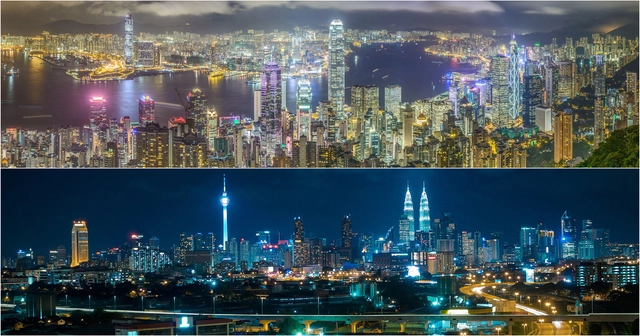
Photographer and filmmaker Joe Capra, known for Scientifantastic, filmed and produced the video '10328x7760 - The 10K Demo', which is exactly what the title implies, a timelapse video resolution in 10K of the city of Rio de Janeiro. For those who are not familiar with the technical specifications, this resolution is about 10 times higher than the traditional Full HD (1920 x 1080px), which is the maximum resolution of most monitors sold today.