What would you do with an old and empty building? Would you tear it down, leave it abandoned, or could you transform it into something new? Cities all around the world are wrestling with this very challenge. The question then becomes, what can architecture do about it?
Repurposing a building is not a simple task. Not only does it require keen sensitivity to identify and acknowledge the historical value of pre-existing elements – thereby deciding what will endure over time and what will be replaced by new features, consistent with the current program – but it is also a strategy that pushes the boundaries of design and embraces issues such as sustainability and resource efficiency. After all, we are speaking of recycling a structure, or parts of it, and this impacts both design and the environment.
When reflecting on recycling, sustainability, measures to take, and innovative technological solutions, one cannot help but think that there are also familiar approaches that should be taken into consideration. In fact, when examining the impact of the built environment on the climate, one notes that in many countries, 80% of the buildings that will exist in 2050 have already been built. The most effective form of sustainability may, therefore, be saving energy by eliminating or minimizing new constructions, and by avoiding the demolition of existing structures.
That is what adaptive reuse stands for: instilling a new purpose on an existing “leftover building.” Nowadays, the refashioning process is becoming essential because of numerous issues related to the climate emergency, plot and construction costs, a saturation of land, and a change in living trends.
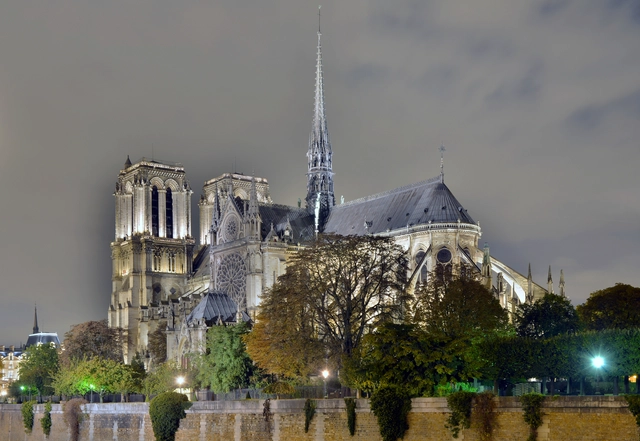
The spire of the Notre Dame cathedral, destroyed during the fires of 2019, will be restored according to the original 19th-century Gothic design, as reported by French President Emmanuel Macron. Built in 1860, to replace the original structure removed in 1792, the spire, not exactly a medieval structure, was designed by Eugène Viollet-le-Duc who found inspiration in the original architectural epoch of the Cathedral.
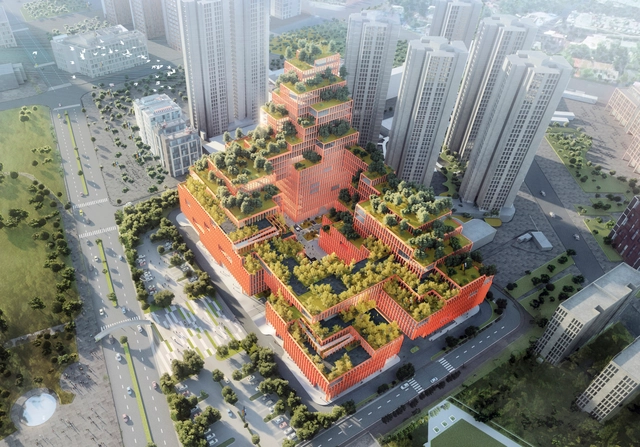
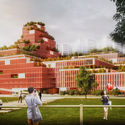
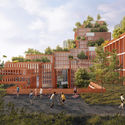
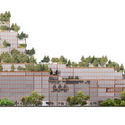
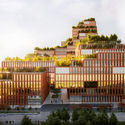
Stefano Boeri Architetti has won the international competition for the construction of the largest and most innovative Rehabilitation Centre in Shenzhen, China. With his Chinese office, SBA was selected by a jury composed of local and international figures such as Peter Cook and Sou Fujimoto. Planned to be built in the next three years, the project will put in place “a set of green terraces and overlapping spaces in a sustainable system combining nature, architecture and biodiversity and including internal gardens dedicated to rehabilitation”.
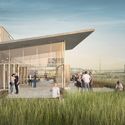
Exterior rendering of Menokin’s “The Glass House Project". Image Courtesy of Machado Silvetti
Menokin Foundation has begun construction on its “Glass House Project”, a new initiative in the preservation of historic landmarks. Protecting what remains from the 1769 house, the intervention will replace missing walls, floors, and sections of the roof with glass. Designed by Machado Silvetti, in collaboration with glass engineer Eckersley O’Callaghan, and landscape designer Reed Hilderbrand, the project will be developed in phases, to be completed in 2023.
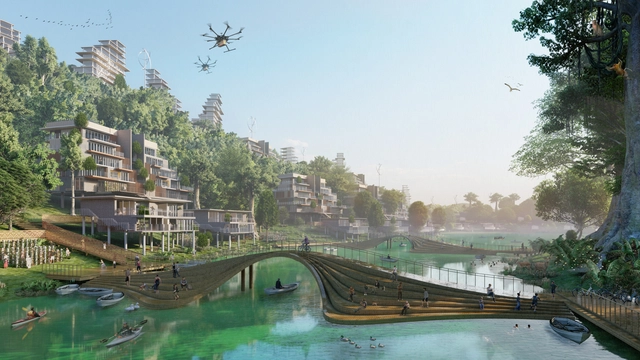
“The Infinite City” smart city design for Indonesia New Capital. Image Courtesy of AntiStatics Architecture
Presented part of international competitions, this week’s best-unbuilt architecture gathers award-winning projects submitted by our readers. Highlighting as usual diverse approaches from across the globe, ArchDaily is rounding up in this article, a curated selection of cultural, civic, and urban proposals.
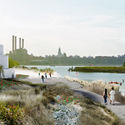
In Singapore, an adaptive reuse project transforms a power station into a creative industrial hub, while in Indonesia, a smart city design for the new capital generates an ecologically responsible environment. Moreover, Kjellander Sjöberg designs and develops an original city block in Stockholm, and TheeAe imagines a city hall for China. Other proposals include an entire reflective surface for a public square in Italy, a new city district in Tampere Finland, a University building in Warsaw, and a school for contemporary art in Vienna.
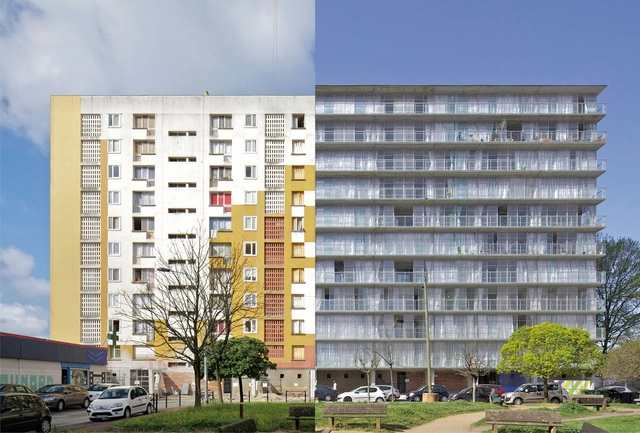
Last year’s granting of the Mies van der Rohe Award to a social housing refurbishment project brought into the spotlight a topic of interest for many European cities: the moral and physical rehabilitation of post-war housing blocks.
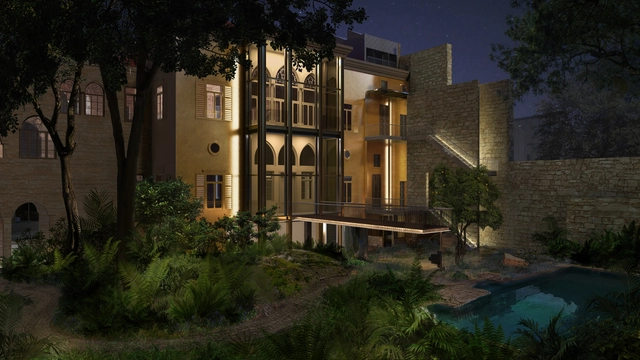
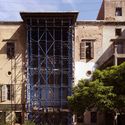
AKK Architects, an architecture practice founded by architect Annabel Karim Kassar, with offices in Beirut, Dubai, and London, is transforming a historical 19th-century Lebanese home into a contemporary family home. Bayt K was shortlisted for the WAF future projects awards under House category.
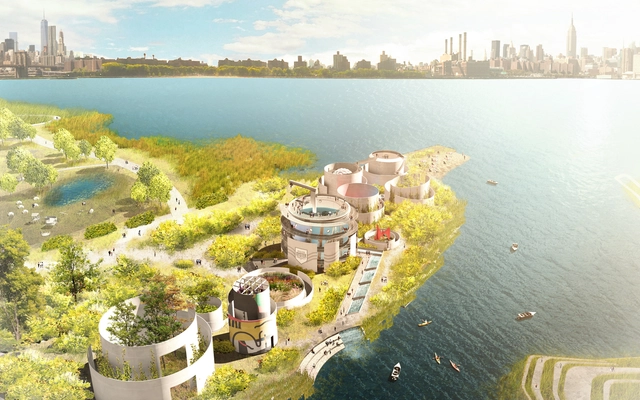
In New York, activists and professionals have been working for many years to try to save 10 decommissioned tanks, from demolition by putting forward alternative usage of these structures. Partnering with STUDIO V, an architectural firm and landscape architects Ken Smith Workshop, they came up with an inventive proposal that reimagines these industrial relics as a 21st-century park, a novelty in the traditional definition and configuration of public spaces.
China seems to be at the peak of a refurbishment fever. Not only hutongs in historic downtowns, but abandoned industrial factories are becoming new tech or cultural hubs, and even buildings in the risk of collapse are refurbished to extend their lifespan. Why is this happening? Who is investing? How could this happen in a country where you cannot buy properties?
In this edition of Editor's Talk, our editors from ArchDaily China share their thoughts on how in a fast-paced development process, such as the one China is going through, there is a refurbishment fever in its biggest cities.
The General Conference of the United Nations Educational, Scientific and Cultural Organization, at its 17th meeting held in Paris from October 17 to November 21, 1972, arose from the need to identify part of the priceless and irreplaceable of the nations, noting that cultural heritage and natural heritage are increasingly threatened with destruction, not only because of the traditional causes of deterioration but also because of the evolution of social and economic life that aggravates them with phenomena of alteration or destruction even more fearsome.
According to a statement published on the UNESCO page, the UNESCO World Heritage List is a legacy of monuments and sites of great natural and cultural wealth that belongs to all of humanity. The Sites inscribed on the World Heritage List fulfill a function of milestones on the planet, of symbols of the awareness of States and peoples about the meaning of those places and emblems of their attachment to collective property, as well as the transmission of that heritage to future generations.
“The greenest building is the one that is already built." (Carl Elefante, FAIA)
The world’s urban population will double by 2050, and cities need to come up with sustainable ways to accommodate this mass movement. We often see projects being built as quickly as possible to support growth, however, rapid growth often leads to cities and buildings that lack originality.
A smarter and more sustainable solution is to increase the density of existing centers, as well as to recover existing structures through refurbishment and repurposing. But, turning something old into something new is a challenging process — it requires a bold vision and a rigorous commitment to design.

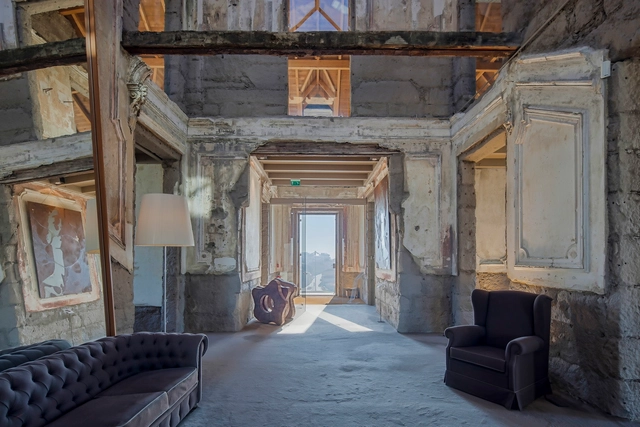
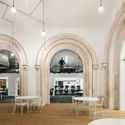
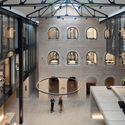
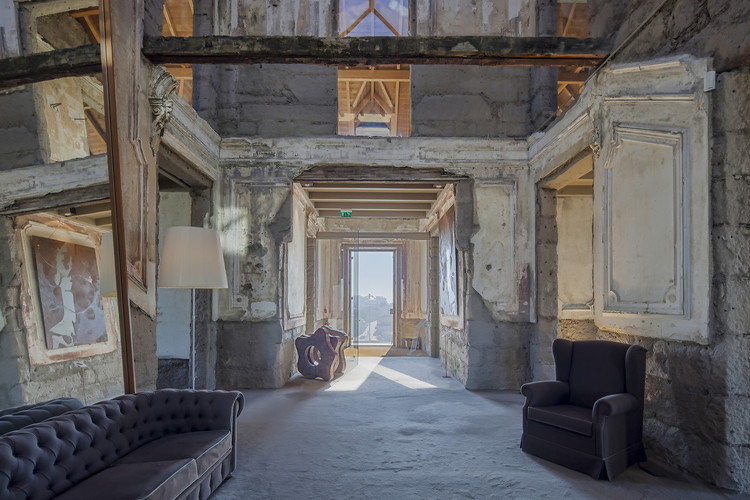





.jpg?1594644701 "April 2019. Image © Erieta Attali")

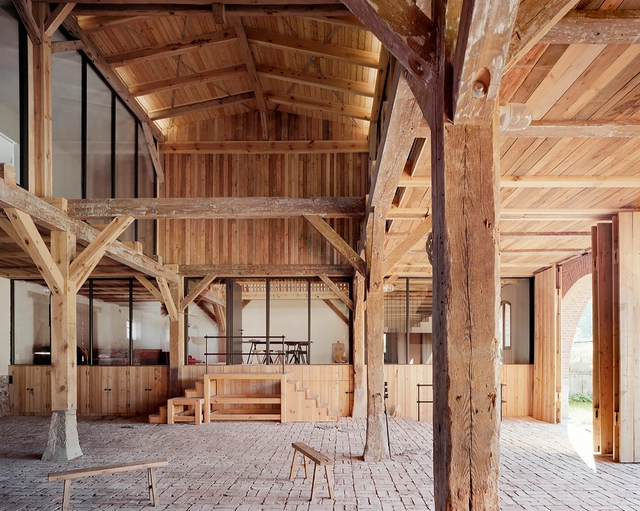




![Town House in Antwerp / Sculp[IT] - Extension, Facade, Door](https://snoopy.archdaily.com/images/archdaily/media/images/5584/2768/e58e/ce09/c200/0117/slideshow/sculp(IT)-Lalo-002web.jpg?1434724194&format=webp&width=640&height=580)
![Town House in Antwerp / Sculp[IT] - Extension, Kitchen, Facade, Beam, Table, Chair](https://images.adsttc.com/media/images/5584/280c/e58e/ce09/c200/011d/thumb_jpg/sculp(IT)-Lalo-036web.jpg?1434724357 "© Luc Roymans")
![Town House in Antwerp / Sculp[IT] - Extension, Door, Table](https://images.adsttc.com/media/images/5584/27e0/e58e/ce17/3700/0119/thumb_jpg/sculp(IT)-Lalo-025web.jpg?1434724313 "© Luc Roymans")
![Town House in Antwerp / Sculp[IT] - Extension, Facade, Handrail, Beam, Stairs](https://images.adsttc.com/media/images/5584/27e9/e58e/ce09/c200/011c/thumb_jpg/sculp(IT)-Lalo-027web.jpg?1434724323 "© Luc Roymans")
![Town House in Antwerp / Sculp[IT] - Extension, Garden, Door, Facade, Stairs, Handrail, Chair](https://images.adsttc.com/media/images/5584/2796/e58e/ce09/c200/0119/thumb_jpg/sculp(IT)-Lalo-012web.jpg?1434724240 "© Luc Roymans")
![Town House in Antwerp / Sculp[IT] - More Images](https://images.adsttc.com/media/images/5584/2768/e58e/ce09/c200/0117/medium_jpg/sculp(IT)-Lalo-002web.jpg?1434724194)


.jpg?1592208513&format=webp&width=640&height=580)