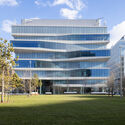
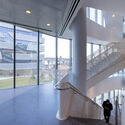
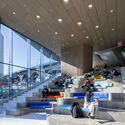
-
Architects: Drawing Agency
- Area: 900 ft²
- Year: 2022
-
Professionals: Clear Concept Construction

This article was originally published on Common Edge.
While Stephen Zacks’ new book, G.H. Hovagimyan: Situationist Funhouse, is ostensibly about the life and work of the artist, there’s an intriguing and seemingly topical subtext looming in the background: the role of art and culture on the development and redevelopment of cities. It’s a complicated and sometimes fraught issue, prone sometimes to simplistic, even binary thinking. Zacks, a friend and former colleague at Metropolis, has always had a more nuanced view of the issue. Last week I reached out to him to talk about the work of Hovagimyan, the historic lessons of 1970s New York, and why “gentrification” needs a new name.

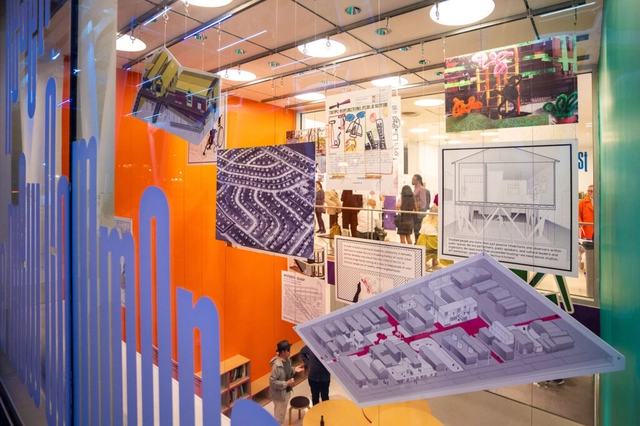
How can Universal Design bridge the divides that have left many Americans stranded in their own communities? In its latest exhibition, Manhattan’s Center for Architecture calls for a “reset.” On view until September 3, Reset: Towards a New Commons, displays projects that “encourage new modes of living collaboratively” and “more holistic approaches to inclusion.”


This article was originally published on Common Edge.
Once upon a time, long, long ago, I was lucky enough to get a summer job with Robert A.M. Stern while I was in graduate school. Stern’s new memoir, Between Memory and Invention: My Journey in Architecture (MonacelliPress, 2022), has prompted my own mini-memoir, with some relevant details not included in the book.
I arrived at the office in the early summer, not long after the dissolution of Stern & Hagmann and then Bob’s divorce. I found two young architects-to-be, a sweet but disorganized secretary-receptionist-bookkeeper, and Bob. The office grew during the summer and beyond—and today there are over 200 in the office, including 16 partners in Robert A.M. Stern Architects (aka RAMSA).


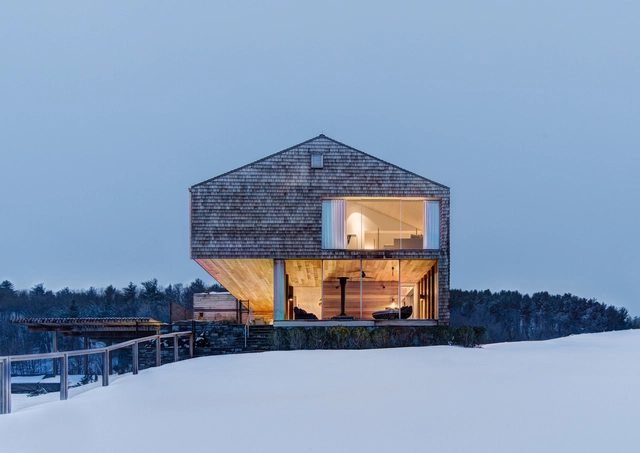
New York's residential design culture extends far beyond the Big Apple. The Hudson Valley is a region that stretches along the Hudson River from Westchester County to Albany. Known for its vineyards, orchards and farms, the river valley includes a series of small towns and remote homes. Today, these rural residences are being designed to explore the connections between people, nature and place.
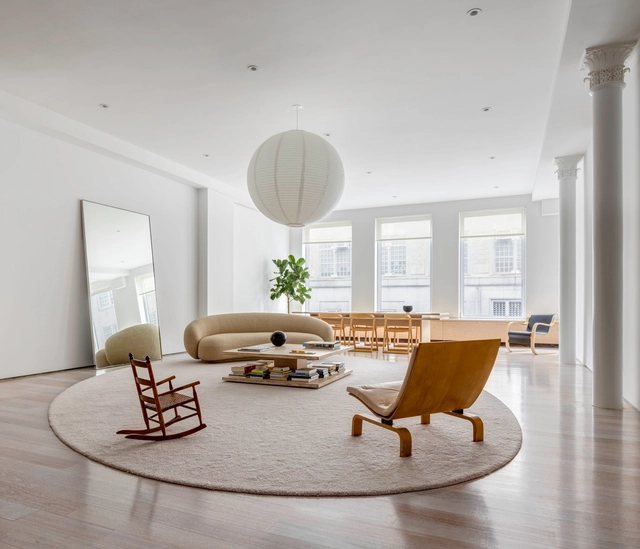

Foster + Partners revealed the design of a new skyscraper at 270 Park Avenue that will host JPMorgan Chase’s New York headquarters. The 60-story tower is set to be the city’s largest all-electric tower with net-zero operational emissions powered by renewable energy sourced from a New York State hydroelectric plant and is designed around high standards regarding wellness and hospitality. The project’s morphology creates extensive ground-level outdoor space with green areas and a public plaza, accompanied by various amenities geared towards the neighbourhood’s residents. Under construction since 2021, the project replaces SOM's Union Carbide Building, which became the tallest voluntarily demolished building in the world.

Over the past two decades, urban highways' social and economic ramifications have been brought into focus as a large part of this mid-century infrastructure comes to the end of its lifespan, prompting conversations over its role in contemporary urban planning. Freeway removal entails the replacement of the transport infrastructure with new urban developments, green amenities and alternative street grids to promote a healthier urban environment and smart growth. In some cases, the idea of removing highways is met with concern over the potential increase in traffic and gentrification of the areas adjacent to the road, but the pandemic has further exacerbated the need for quality public spaces and brought once again into question the hegemony of the car. The following highlights various highway removal projects, discussing how these interventions restore the urban fabric, reknit communities and recover urban spaces for city dwellers.


_StudioGang_AMNHl_032522.jpg?1648801718&format=webp&width=640&height=580)
New images have been released by Studio Gang showcasing the construction progress of the firm's American Museum of Natural History Expansion in New York. Dubbed as the Richard Gilder Center for Science, Education, and Innovation, the project will link together 10 museum buildings, improving circulation and creating one monumental campus of exhibition galleries, state-of-the-art classrooms, an immersive digital theater, and a redesigned library.
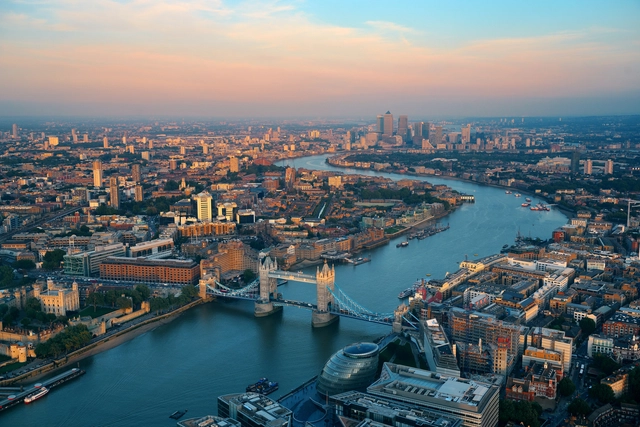
Global Finance's ranking of the world's best cities to live in, during 2022 has just been released. Centered on 8 different parameters that calculate and compare the quality of life of people living in urban areas such as economy, culture, population, environment, etc., this year’s edition also took into consideration Covid-19 deaths per thousand for each country, to reflect the new reality we live in. With data from the Global City Power index, Johns Hopkins University, Statista, and Macrotrends, the list seeks to have a complete vision, putting together traditional metrics with new factors.
Claiming the first position is London, U.K, a city that although didn’t get high rankings in its Covid-19 metrics, still topped the list, mainly due to its scores in culture, accessibility, and population growth. Tokyo was selected for the second position, showing weakness in one parameter, population, as its numbers have been declining for the past 10 years. Shanghai followed next, in the third position, because of relatively low Covid-19 death figures and strong population growth. Singapore and Melbourne came in 4th and 5th positions.
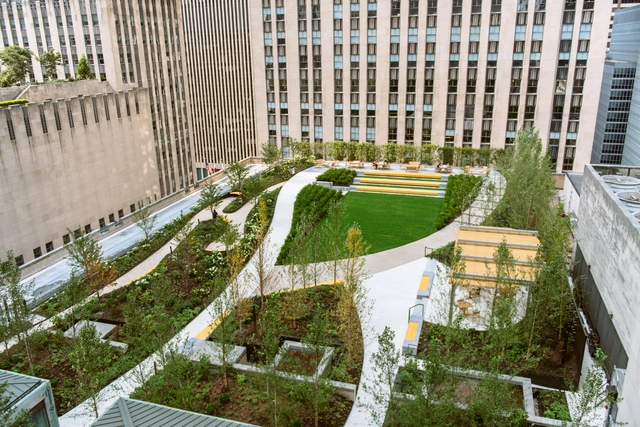
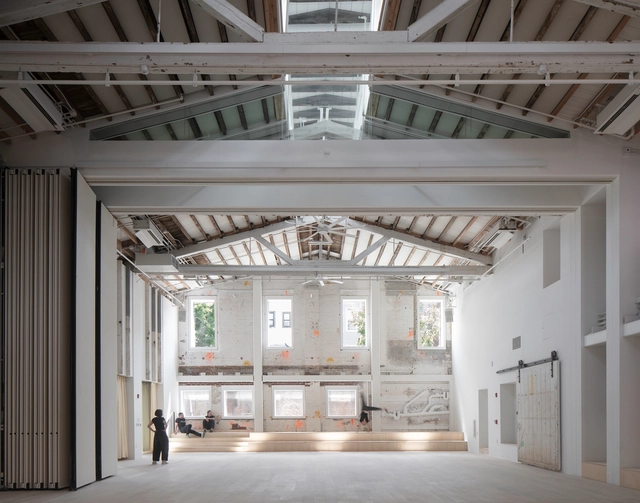
The climate crisis has reshaped contemporary architecture. Sustainability has become a central guiding force in design, and in turn, architects are rethinking how to build today. For CO Adaptive Architecture, addressing the climate crisis begins with a process oriented practice. Together, Ruth Mandl and Bobby Johnston have created a firm that embodies how a values-based approach can tackle the most pressing issues of our time. The result is elegant and impactful architecture brought to life with poise and finesse.
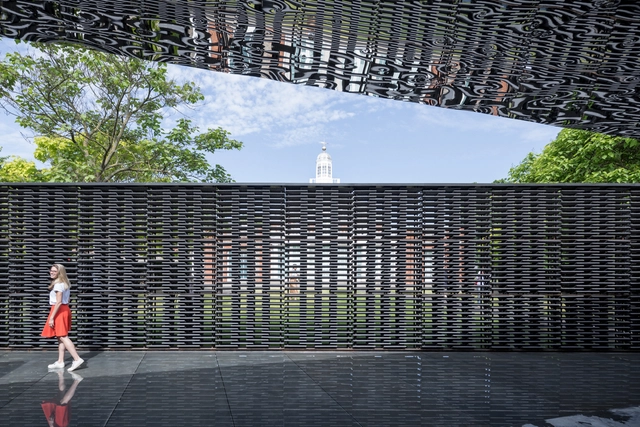
The Metropolitan Museum of Art in New York has selected Mexican architect Frida Escobedo to design the new $500 million modern and contemporary art wing. The Met does not have, until now, a thematic area that would house pieces corresponding to this temporality in art.
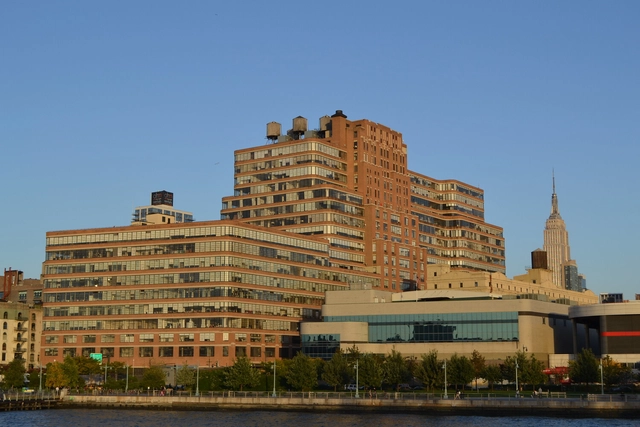
David Adjaye Associates has been commissioned to design an exhibition with rare and previously unreleased work of Jean-Michel Basquiat, to be hosted at the Starrett-Lehigh Building in West Chelsea, New York. "Jean-Michel Basquiat: King Pleasure" is the first show organized by the artist's family after his death and will feature over 200 paintings, drawings and artefacts, together with recreations of Basquiat's New York art studio and the Michael Todd VIP Room of the Palladium nightclub, for which the artist created two paintings.

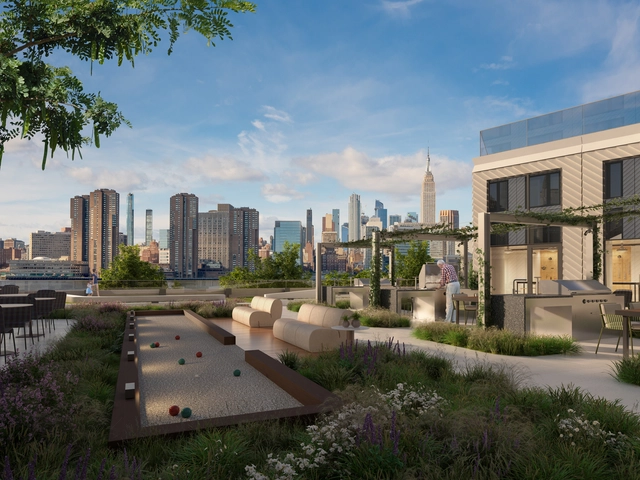
As OMA New York / Jason Long's Greenpoint Landing residential towers near completion, new renders have been released that showcase the amenities, interior spaces, and landscape of the project. Developed by Brookfield Properties and Park Tower Group, the Eagle + West Towers feature 745 units of mixed-income housing, 8,600 sq. ft. of retail space, along with recreational amenities such as a pool, lounge, gym, workshops, and test kitchen.
This article was originally published on Common Edge.
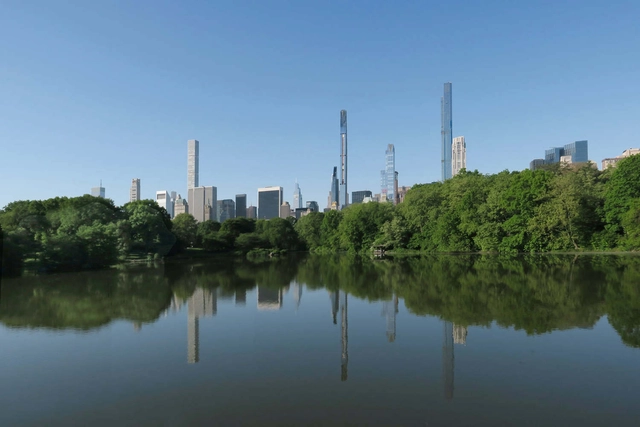
Recently, the Nobel laureate economist Paul Krugman wrote in the New York Times about the causes of unaffordable housing in New York City. He blamed the crisis on a few things, including a powerful financial “monoculture” in the city, NIMBYs, and the city itself blocking new construction. That last element, however—that the city blocks new construction—is an increasingly popular myth that needs examination.


Seven decades after designing Lever House, SOM returns to the iconic modernist building to resume its restoration, continuing its long-lasting stewardship of the project. SOM previously revisited the building in 2001, restoring its façade using high-performance materials while preserving the original architectural image. This time, the intervention concerns the ground floor and the third level terrace, as well as the mechanical systems, to significantly improve the building’s energy performance. When complete in 2023, the renovation will become an important example of extending the life of the midcentury built environment.


_Studiogang_AMNH_Exterior_032522.jpg?1648801573 "© Neoscape, Inc./© AMNH")
_StudioGang_AMNH_Vivarium_20220323.jpg?1648801887 "© Neoscape, Inc./© AMNH")
_StudioGang_AMNH_Central_Exhibition_032522_61_.jpg?1648801779 "© Neoscape, Inc./© AMNH")
_Studiogang_AMNH_Exterior_Entrance_032522.jpg?1648801585 "© Neoscape, Inc./© AMNH")
_StudioGang_AMNHl_032522.jpg?1648801718)