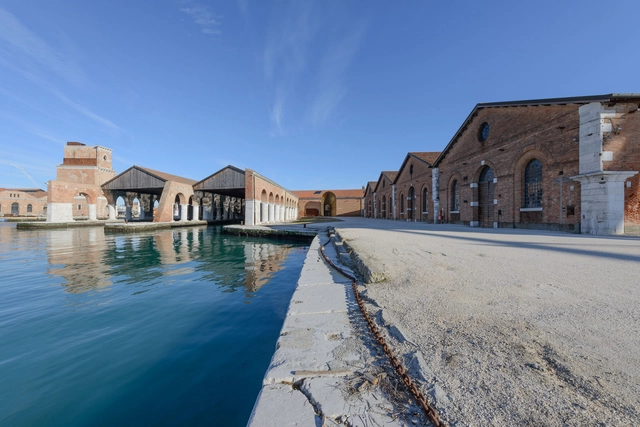
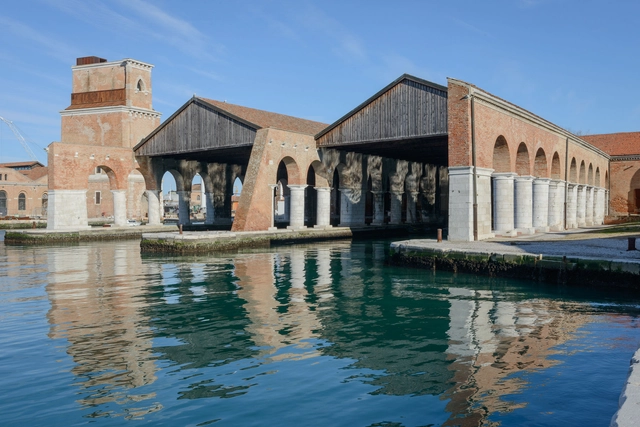
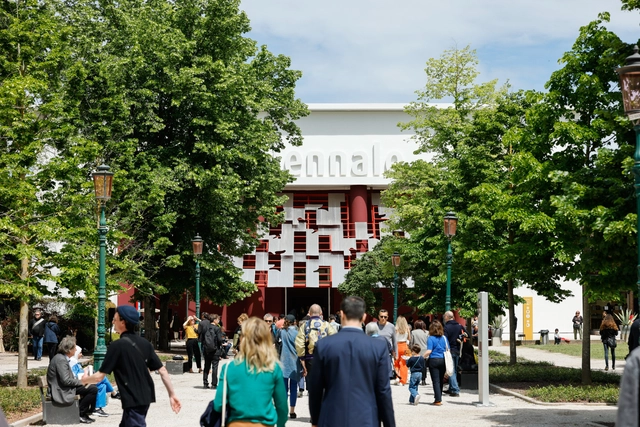
The 2025 edition of the VeniceArchitecture Biennale is hosting a total of 65 National Pavilions. Among them, four countries, Azerbaijan, Oman, Qatar, and Togo, will be participating for the first time. The exhibition will unfold across three main locations: 26 pavilions at the Giardini, 22 at the Arsenale, and 15 spread throughout Venice's city center. The exhibition will bring together over 750 participants, forming interdisciplinary and multi-generational teams, and is anticipated to be the largest in the Biennale's history.
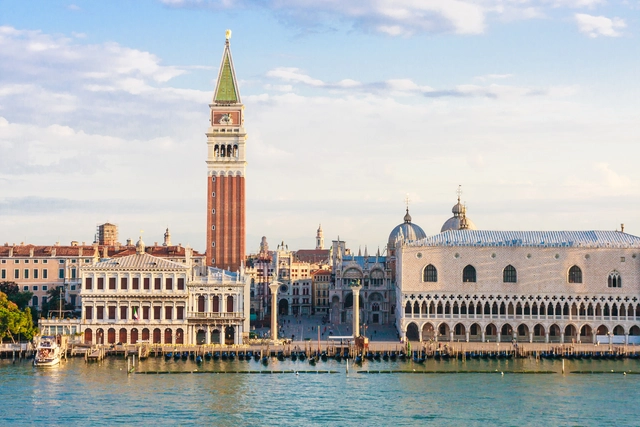
Built on a cluster of 118 small islands in the shallow Venetian Lagoon, the city of Venice, Italy, has captivated the imagination of architects and tourists alike. The area has been inhabited since ancient times, becoming a major financial and maritime power during the Middle Ages and Renaissance, as proven through the rich architecture that characterizes the city to this day. With influences from the Byzantine, Gothic, and Renaissance styles, the city represents a palimpsest of architectural narratives, overlapping and influencing each other. In recent years, Venice has become a major attraction for architects drawn to the La Biennale di Venezia, the most important Architectural Exhibition featuring national pavilions, exhibitions, and events to explore new concepts and architectural innovations.
Beyond the Biennale, Venice itself is an open-air museum for architecture lovers. While the city is best known for its historical buildings, Modernist and contemporary interventions add a new layer of interest, with many contemporary architects working with the historical fabric, like OMA's intervention and rehabilitation of Fondaco dei Tedeschi, or David Chipperfield's renovation of Procuratie Vecchie, one of the buildings that define Piazza San Marco. In addition to what the city has to offer, the site of the Venice Biennale is also marked by interventions by famous architects such as Carlo Scarpa, Sverre Fehn, and Alvar Aalto, made permanent due to their outstanding qualities.
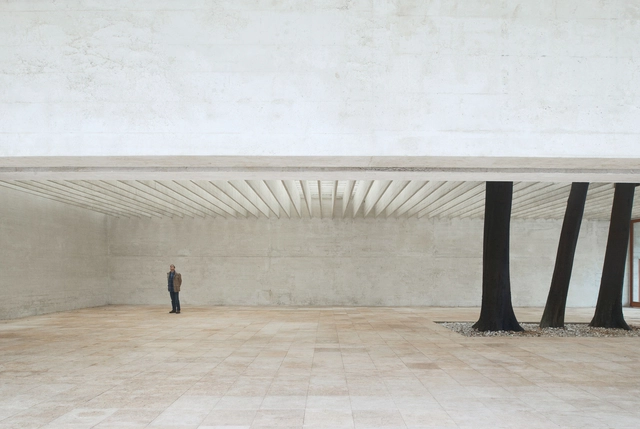
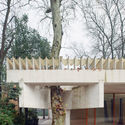
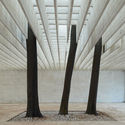
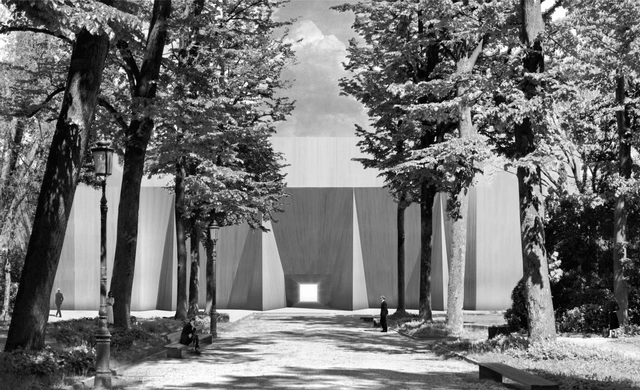
As a result of the ideas competition organized by the governments of Sweden, Finland, and Norway in 1958, Sverre Fehn's Nordic Pavilion won first prize, becoming one of the most significant works of his career and one of the most outstanding Scandinavian architectural achievements during the mid-20th century. Designed to create a space at the Venice Biennale for the biennial exhibitions of these countries, Fehn's proposal addressed several key architectural challenges—ranging from its integration with the site and incorporation of pre-existing elements to the handling of physical boundaries and uniform natural lighting. His design explored the interaction between architecture and trees, the flexibility in the exhibition space, the filtering of light, the connection between interior and exterior, the concept of movement through space, and the display of artworks.
During a live presentation for the 19th International Architecture Exhibition, curator Carlo Ratti offered a glimpse into the programming of this year's edition. The 2025 Venice Architecture Biennale will include 66 National Pavilions, with 4 countries represented for the first time: the Republic of Azerbaijan, Sultanate of Oman, Qatar, and Togo. The exhibition, divided between the Giardini (26), at the Arsenale (22) and in the city center of Venice (15), explores the theme of "Intelligens. Natural. Artificial. Collective", gathering over 750 participants, including individuals and organizations forming interdisciplinary and multigenerational teams. According to the numbers released, this year's edition is shaping up to become the largest Architecture Biennale held in Venice.
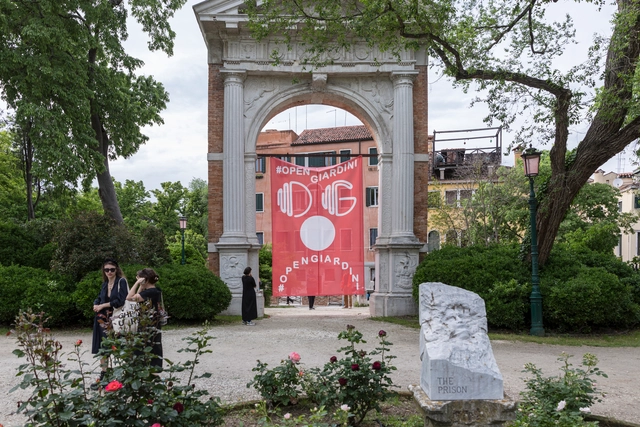
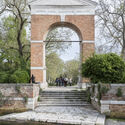
The Unfolding Pavilion is a recurring exhibition and editorial project by Daniel Tudor Munteanu and Davide Tommaso Ferrando that aims to highlight previously inaccessible but architecturally significant spaces. Now in its fourth edition, the exhibition is dedicated to the Giardini della Biennale, the Venetian garden that became the main location for one of the most important architecture exhibitions worldwide, the Venice Biennale. Through a series of site-specific interventions and photographs by Laurian Ghinițoiu, the Unfolding Pavilion #OPENGIARDINI set out to explore the paradoxical state of this public space that is not publicly accessible.
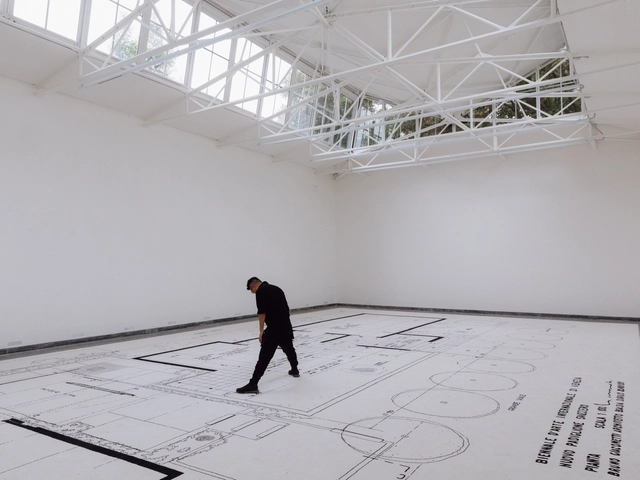
Taking a broader perspective on architecture, the exhibition shifts its focus towards the discipline rather than just the profession. It’s not “about building buildings per se”, explains the curator to ArchDaily. Instead, it seeks to question our conventional understanding of architecture, and with that, architectural exhibitions. The 2023 Biennale is a laboratory in every sense of the word, a global platform of experimentation, and a space to explore new ideas in the absence of spaces that allow us to do so. "It borrows its structure and format from art exhibitions, but it differs from art in critical ways which often go unnoticed", states Lesley Lokko in her initial statement.
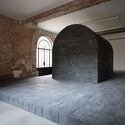
For the 18th International Architecture Exhibition – La Biennale di Venezia, the Pavilion of Ukraine presents an exhibition titled “Before the Future,” focusing on the paradox of “building a future from a collapsing present.” The intervention reimagines two spaces, one in Arsenale and one in Giardini, to evoke protective structures that have become emblematic of feelings of safety while under threat for Ukrainian society. The curatorial team, composed of Iryna Miroshnykova and Oleksii Petrov, of the Kyiv-based architectural office ФОРМА, and Borys Filonenko, independent curator, art critic, and lecturer, set out to work with specialists from numerous fields to further explore the theme “Laboratory of the Future.”
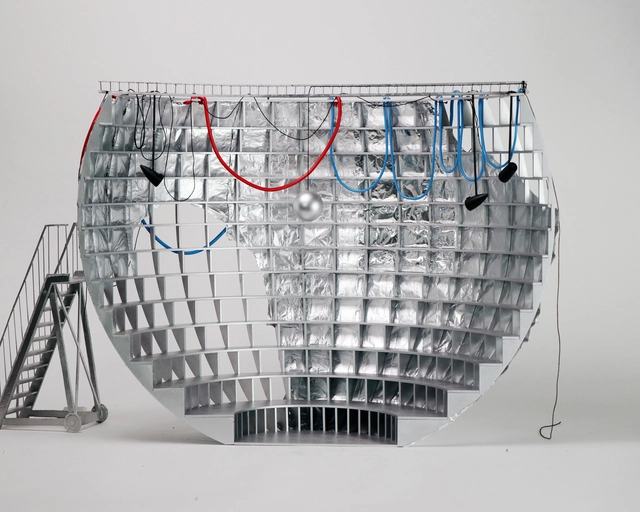
The project “Ball Theater” has been chosen to represent the French Pavilion at the 18th International Architecture Exhibition of La Biennale di Venezia. As a response to the world of thought and experiment proposed by Lesley Lokko’s theme of “The Laboratory of the Future”, the French team aims to create a place of celebration and collective experiment by transforming the pavilion into a performance space. The curatorial team is composed of Muoto, an architectural practice founded in Paris by Gilles Delalex and Yves Moreau, in partnership with Georgi Stanishev and Clémence La Sagna for the scenography, associate curator Jos Auzende, and Anna Tardivel for the programming. The pavilion will be open from May 20th until November 26, 2023.
In a short film exploring some of the National Participations at this year's Venice Biennale, Monocle Films take a considered look at how different countries have responded to the Biennale theme, Reporting From the Front in both explicit and more indirect ways. Visiting the Austrian Pavilion, the Nordic Pavilion, the Turkish Pavilion, the British Pavilion, the Irish Pavilion, the Australian Pavilion and the Romanian Pavilion, the film studies what discourses are being waged in the compressed geo-political world of the Giardini di Biennale.
Cloaked: Italian (Central) Pavilion. Image Courtesy of RAAAF
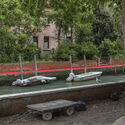
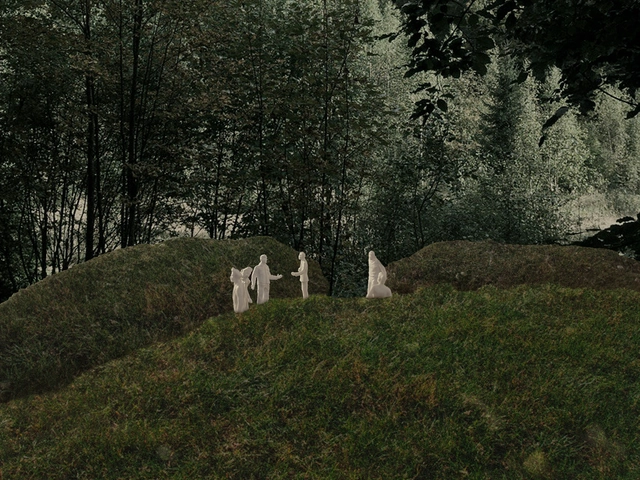
Few have ever considered what the Giardini—the park of national pavilions for the Art and Architecture Biennales in Venice—is like during the winter months. In light of the fact that, during their "off-season," the gardens are often left in a state of disrepair,RAAAF—a Dutch multidisciplinary studio based in Amsterdam, alongside architect Marcel Moonen—have proposed a series of installations in an attempt to "reclaim valuable public space" which sits at the heart of an often overcrowded city.
Norwegian architect and Pritzker LaureateSverre Fehn’s original drawings for the Nordic Pavilion in Venice are to be presented alongside Ferruzzi’s monochromatic photographs of the building in an exhibition at the National Museum of Architecture in Oslo. Venice: Fehn’s Nordic Pavilion documents the incredible task undertaken by Fehn who, at the age of thirty-four, won the competition to design the pavilion and subsequently won international acclaim when the building was completed in 1962.