I hope you have caught your breath after this year’s FIFA World Cup. France’s win in Moscow’s Luzhniki Stadium marked the end of an era; the last World Cup with a classic format. After the 2022 Winter tournament in Qatar, the competition will be expanded to 48 teams (rather than the current 32).
Al Thumama / Ibrahim Jaidah. Image Cortesía de Comité Supremo de Entrega y Legado
France took home the gold in this year's World Cup, however, in four years time, the world will turn its eyes to Qatar for another round of soccer mania. Preparations for the 2022 World Cup are already in full swing, with the construction and restoration of 8 stadiums that will host teams and fans from across the globe.
Get to know the 8 Qatar 2022 World Cup stadiums below.
When the Greeks carved stone steps into the side of a hill, they were aiming to create a seated area for people to rest and from which to have an excellent view of the stage at the amphitheater's center. over two millennia later, these objectives are still key to stadium design principles, however, with an ever-increasing global reach and the need for multiple functions, the goal posts for what makes a successful arena are always being moved. As you prepare to watch the 2018 World Cup hosted in Russia, take a look at this list of notable stadium designs in World Cup history which have influenced the evolution of stadium design.
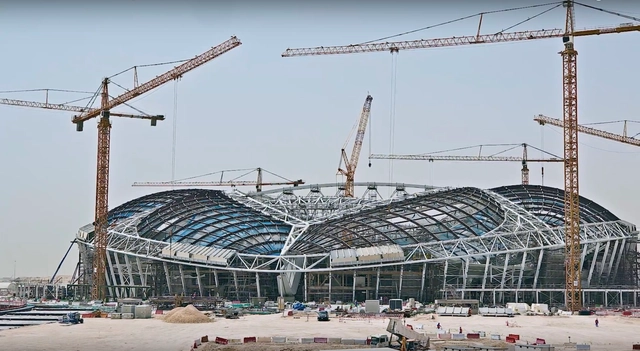
As the 2018 World Cup approaches, we architects can already look ahead to the next tournament. The 2022 FIFA World Cup in Qatar offers the most exciting opportunity in stadium design for decades, with the competition relying on an almost entirely new footballing infrastructure. Several world-renowned designers have submitted proposals, and the following set of newly released time-lapse videos show the progression of each stadium, as we approach four years to the competition’s start. Emphasising the structural shells, the videos highlight a sometimes overlooked facet of stadium design. To materialize the effortless magic of the initial renders - like those produced by Foster + Partners and Zaha Hadid Architects - phenomenal levels of engineering and problem solving are required, and in the early stages of construction, this becomes the visual focal point. Read on to see the beauty of these structural marvels, but be warned - you may develop World Cup fever.
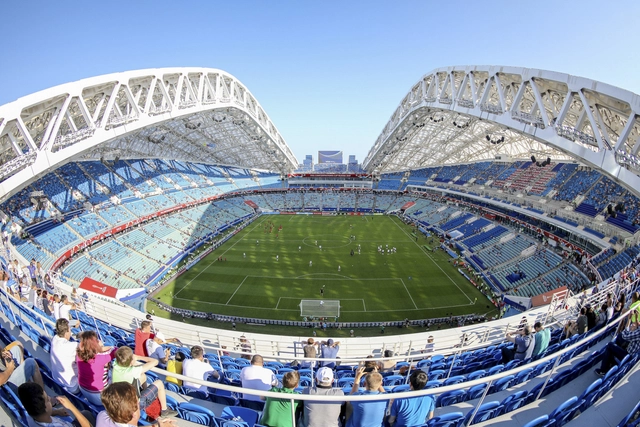
Every four years, millions of soccer fans tune in to watch the best national teams battle it out at the World Cup—all for a chance to call themselves the best soccer team in the world. The FIFA World Cup, much like the Olympic games, encourages a great deal of development in the host country, with the addition of stadiums, infrastructure, and other programs needed to support the mass of fans who will head to cheer on their country. This year, Russia will be hosting the event and will be spending an estimated 10 billion dollars in both building new arenas, and refurbishing their existing facilities. The 2018 tournament will host 65 matches across 11 cities in 12 of the most modern stadiums in the world. We've compiled a list that show these impressive stadiums and arenas, and offer a glimpse as to how they will be used long after the winner of the 2018 World Cup is crowned.
Check out the twelve stadiums that will host matches in the 2018 World Cup below.
Videos
Courtesy of The Supreme Committee for Delivery & Legacy
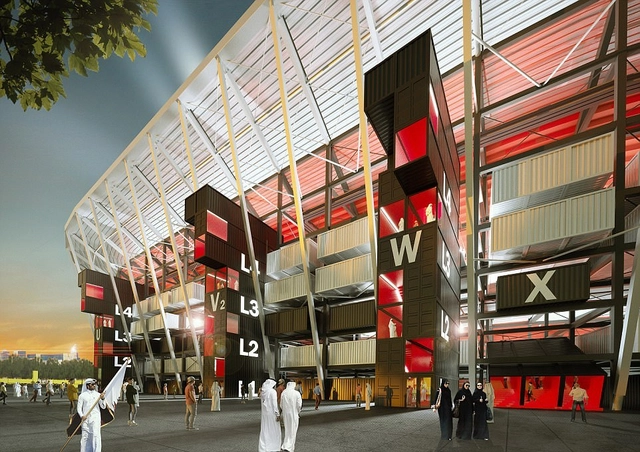
The design of the seventh stadium being constructed for the 2022 FIFA World Cup in Qatar has been revealed. Designed by Fenwick Iribarren Architects, the Ras Abu Aboud Stadium will be constructed from a series of modified shipping containers sitting within a steel framework, allowing it to be quickly assembled, disassembled and then reassembled in a new location following the conclusion of the event.
Videos
Courtesy of Supreme Committee for Delivery & Legacy
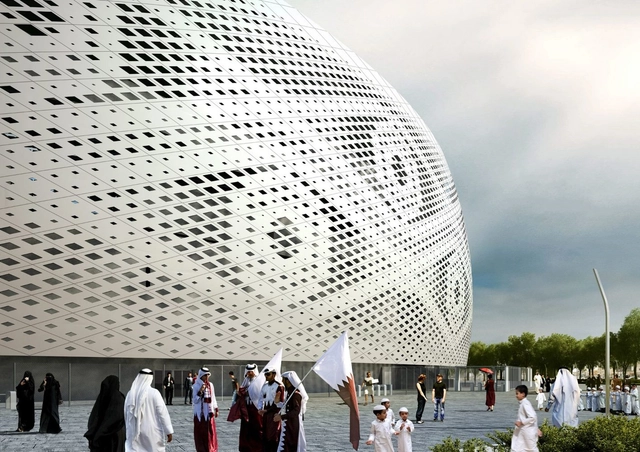
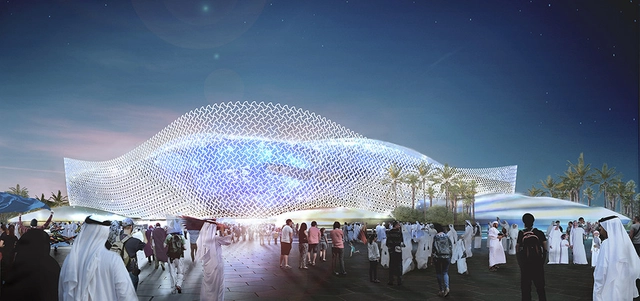
Designs have been revealed of the latest, and most central soccer stadium being constructed for the 2022 World Cup tournament in Qatar. Designed by Qatari architect Ibrahim M Jaidah and design consultant Heerim, the Al Thumama Stadium will feature a woven-pattern exterior skin inspired by the traditional ‘gahfiya’ cap worn by Arab men.
Qatar's Supreme Committee for Delivery & Legacy (SC) has unveiled the fifth proposed venue planned for the 2022 FIFA World Cup, this time designed by London-based Pattern Architects. Titled "Al Rayyan Stadium," the 40,000-seat Qatari-inspired structure will be built on the site of the former Ahmed Bin Ali Stadium, of which 90 percent of its materials generated from demolition are expected to be re-used for either public art projects or on the new stadium.
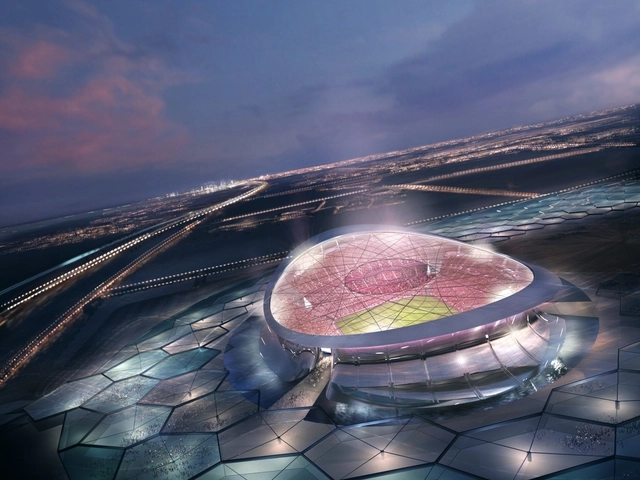
“It is an honor to design this centerpiece stadium – we are delighted to have won the international competition. This is an exciting step forward in stadium design – it will be the first to break the mould of the free standing suburban concept, and instead anticipates the grid of this future city, of which it will be an integral part,” said Norman Foster, founder of Foster + Partners.
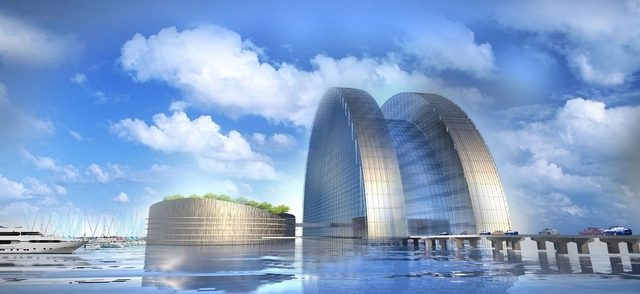
New York-based firm M Castedo Architects have unveiled their designs for the "Silver Pearl Hotel", a 1000-room luxury resort and conference facility for the Qatar 2022 World Cup located 1.5 kilometers off the Doha coastline. The $1.6 billion design consists of two 30-story semicircular towers connected by a full height, transparent climate controlled atrium, with unimpeded views of the sea beyond. Access to the hotel will be provided by a four lane elevated causeway over the sea - or alternatively by private yacht or helicopter, say the architects.
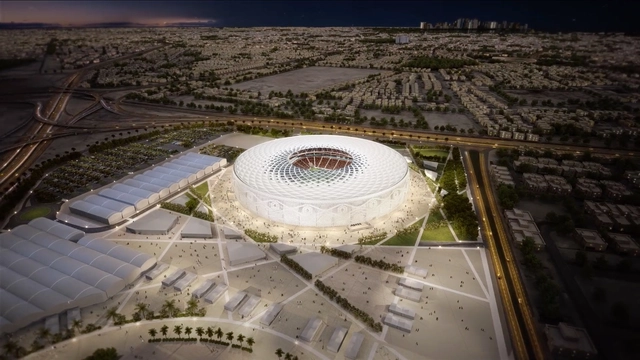
A new, 40,000-seat stadium has been unveiled in preparation for the 2022 FIFA World Cup. Planned for Qatar’s Education City, the home of Qatar Foundation for Education, Science and Community Development (QF), the “Qatar Foundation Stadium” is the fourth stadium design that has been released by the Supreme Committee for Delivery & Legacy (SC).
The structure is intended to reference Islamic architecture. Both the interior and exterior will be clad in translucent triangular panels whose color and patterns will shift throughout the day, depending on the position of the sun and influence of artificial illumination which will reflect the events happening from within the stadium.
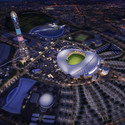
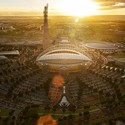
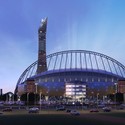
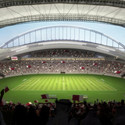
The Supreme Committee for Delivery & Legacy has released images of the third 2022 World Cup Stadium planned for Qatar. Revamping an existing 40-year-old stadium at Gulf Cup in Riyadh, the Khalifa International Stadium will be expanded to accommodate 40,000 spectators and equipped with an “innovative cooling technology” that will allow players to compete at a comfortable 26 degrees Celsius.
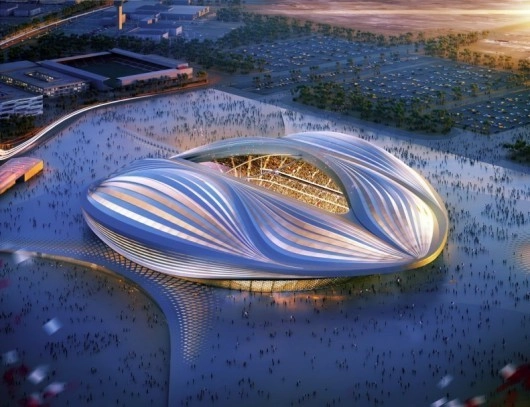
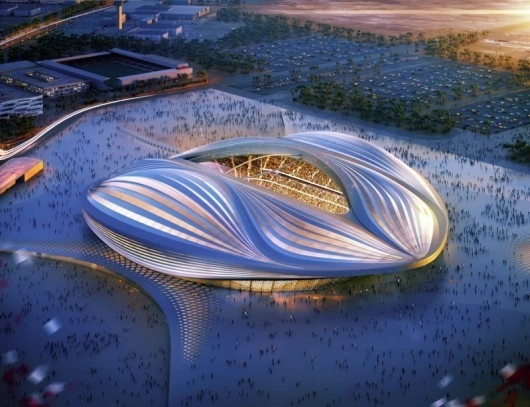
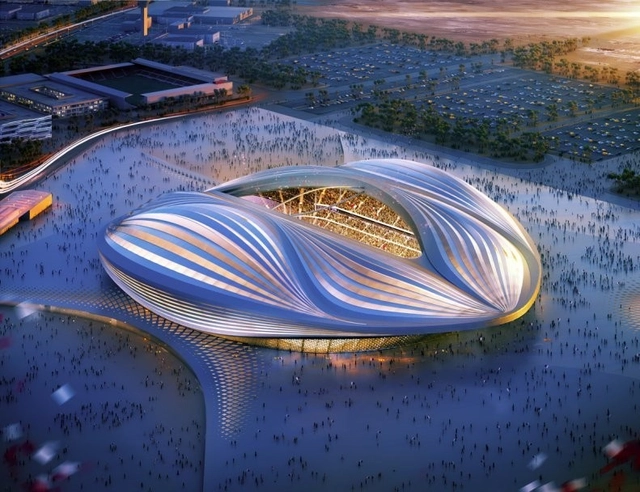
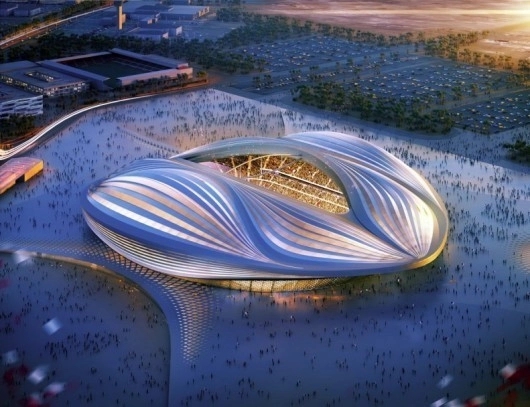
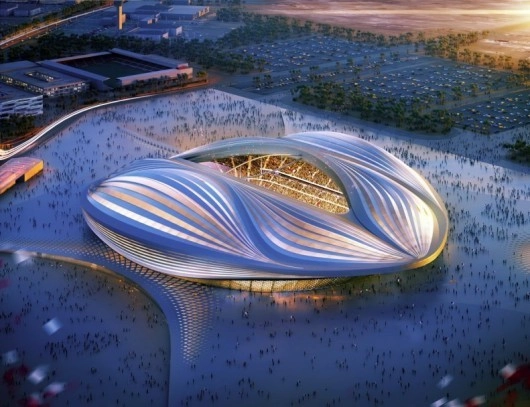
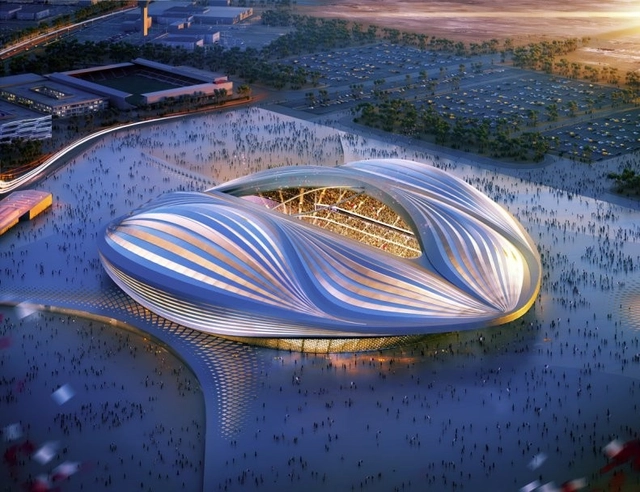
Zaha Hadid Architects' design for al-Wakrah stadium, the main stadium for the 2022 Qatar World Cup. Image Courtesy of ZHA
Zaha Hadid’s unfortunate comments in response to worker deaths on construction sites for the 2022 World Cup has made Qatar the eye of a storm that has been raging globally for decades. But it’s not just about Qatar. This has been an issue for as long as there have been construction sites and for as long as poor people have swarmed to them for a chance at a better life.
Construction booms and migrant construction workers have always been two sides of the same equation, both dependent on the other, and, by the twisted logic of the global economy, both are the reason for the other’s existence. No migrant labor pool = no global city = no fantastic architecture, or something to this effect.
The migrant workers are the silent collaborators in global architecture, the invisible, faceless, “untouchables” who make the cost-effective construction of these buildings possible.
Zaha Hadid set off a mini-shitstorm [the other day] when she declared that architects have “nothing to do with the workers” who have died on construction sites in Qatar, site of the World Cup in 2022. The Guardian had reported that nearly 900 workers had died in the past two years building the infrastructure required for the massive event. One of the projects under construction is Hadid’s Al-Wakrah stadium (above), a swoopy, curvilinear 40,000 seat facility that some critics likened to a vagina when the scheme was unveiled to the public. “It’s not my duty as an architect to look at it,” Hadid said, on the worker deaths. “I cannot do anything about it because I have no power to do anything about it. I think it’s a problem anywhere in the world. But, as I said, I think there are discrepancies all over the world.”
Her tone-deaf comments elicited a firestorm of predictable outrage, but I’d contend they had a near-truth about them. As I see it, Hadid had four possible courses of action, all of them limited in scope.
"I have nothing to do with the workers. I think that's an issue the government – if there's a problem – should pick up. Hopefully, these things will be resolved."
After the controversial lampooning of Zaha Hadid's Al Wakrah Stadium in Qatar, Anthony Flint of the Atlantic Cities casts a critical eye over how the internet, and the swarms of would-be architecture critics that reside there, have changed the way that buildings are designed. Tracking the trend for this form of criticism from Le Corbusier's "two pianos having sex" (aka the Carpenter Centre at Harvard) to the hyper-reactive culture of modern online criticism today, he looks at how architects - and PR companies - are responding. You can read the full article here.
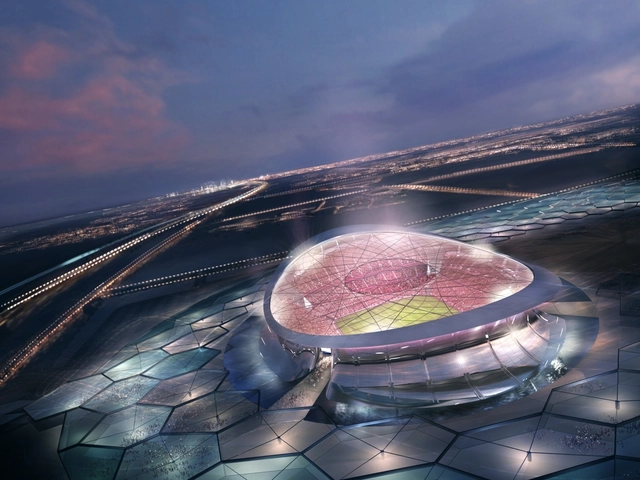
New details have emerged on Zaha Hadid Architects and AECOM’s 2022 FIFA World Cup stadium in Qatar. Scheduled to begin construction in late 2014, the 40,000-seat venue pulls inspiration from a local fishing boat - the Arabian dhow - to influence its overall design.












.jpg?1417710383 "Courtesy of SC")