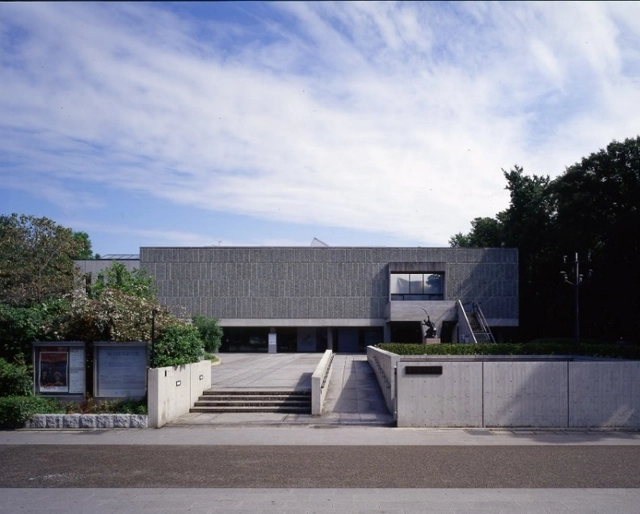
The Getty Conservation Institute has announced a workshop to address the care and conservation of three museums designed by Le Corbusier. The three museums are the only museums designed by the prolific architect. The workshop will be held in India, where two of the three museums are, with municipal corporations from Ahmedabad and Chandigarh serving as hosts for the event. The Foundation Le Corbusier, located in Paris, will also be assisting with the workshop.
Featured work of Fellows past and present (clockwise from top left): Kress Fellow Tim Frank (2015), Blinder Awardee Rebecca Ward (2014), and Fitch Fellow Paul Kapp (2017).
Since 1989, the James Marston Fitch Charitable Foundation has been in the vanguard of historic preservation practice and theory. The mission of the Fitch Foundation is to support professionals in the field of historic preservation, and to achieve this we provide mid-career grants to those working in preservation, landscape architecture, urban design, environmental planning, materials conservation, decorative arts, architectural design and history, and allied fields.
The Getty Foundation has selected 12 significant 20th century buildings to receive 2017 grants as part of its Keeping It Modern initiative, which aims to advance the understanding and preservation of modern architecture through a focus on conservation planning and research. Since its founding in 2014, the program has supported the preservation of 45 projects from around the globe.
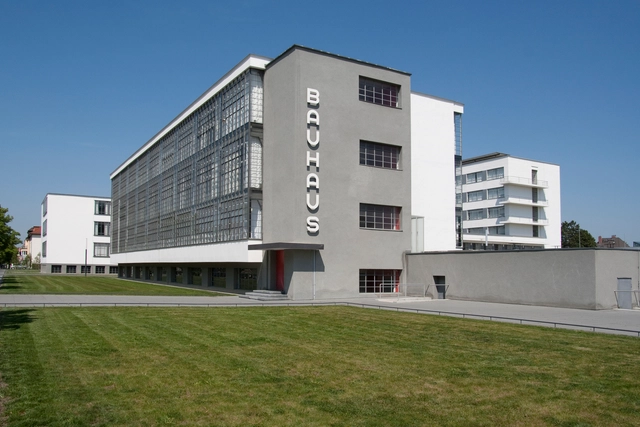
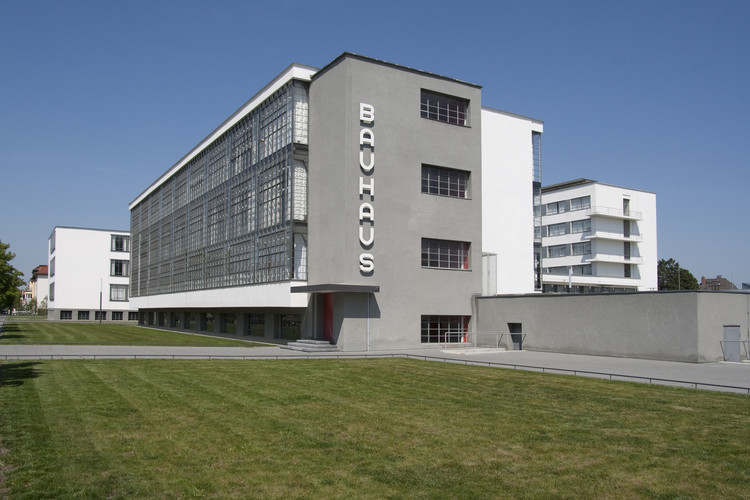
This year $1.66 million in grants were awarded to recognizable projects including the Walter Gropius-designed Bauhaus Building in Dessau; the Melnikov House in Moscow (the first Russian project to receive a grant); and Frank Lloyd Wright’s only skyscraper, Price Tower.
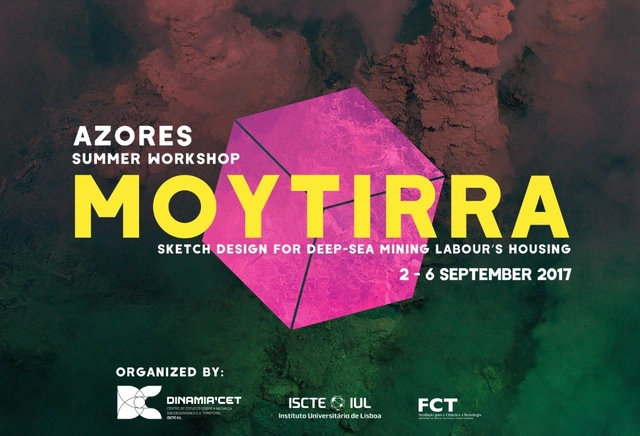
DINÂMIA’CET-IUL is delighted to announce the 1st Summer School on the Island of São Miguel in Azores.
“Moytirra 2017, Sketch design for deep-sea mining labour’s housing” includes Master-Classes, studio sessions and field trips, led by lecturers and researchers from ISCTE-IUL and University of Azores (Portugal), Northeastern and Dartmouth College (USA), Kuwait University (Kuwait) and University of Waterloo (Canada), with the support of local architectural offices. On 5th day, the final results of the workshop will be presented and discussed with the local community.
On the morning of April 24th, Delhi’s architecture community reacted in shock and disgust to the news that the city's Hall of Nations and the four Halls of Industries had been demolished. Bulldozers had worked through the previous night at the Pragati Maidan exhibition grounds in central Delhi, where the Indian Trade Promotion Organisation (ITPO) razed the iconic structures to the ground, ignoring pleas from several Indian and international institutions.
The Hall of Nations, the world’s first and largest-span space-frame structure built in reinforced concrete, holds special significance in India’s post-colonial history—it was inaugurated in 1972 to commemorate twenty-five years of the young country’s independence. The demolition was met with widespread condemnation by architects and historians alike, not just because of the loss of an important piece of Delhi's heritage, but also for the clandestine manner in which the demolition was conducted.
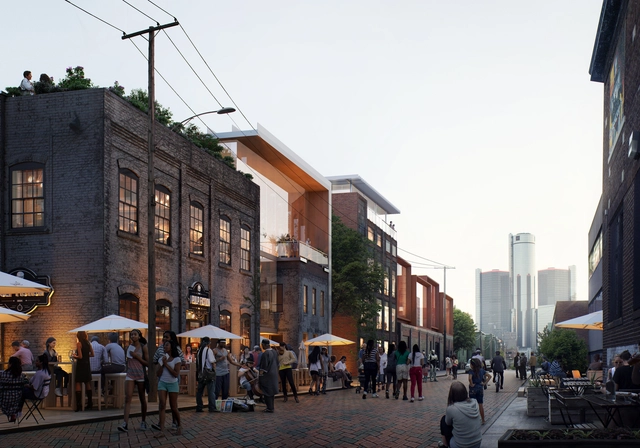
The Historic Stone Soap Building will be upgraded to a mixed-use development, increasing density and activity along the riverfront. Image Courtesy of City of Detroit
Chicago-based SOM’s plans for the redevelopment of the East Riverfront in Detroit, Michigan have been unveiled. The Detroit RiverFront Conservancy, Detroit Economic Growth Corporation, and City of Detroit Planning and Development Department will work together to deliver SOM’s plan to revitalize the former blighted industrial area. The framework plan involves improving community access to the riverfront, the design of a new riverfront parkland, and the conversion of a historic riverfront structure into a mixed-use development.
https://www.archdaily.com/806465/soms-inclusive-riverfront-set-to-revitalise-detroitNiall Patrick Walsh
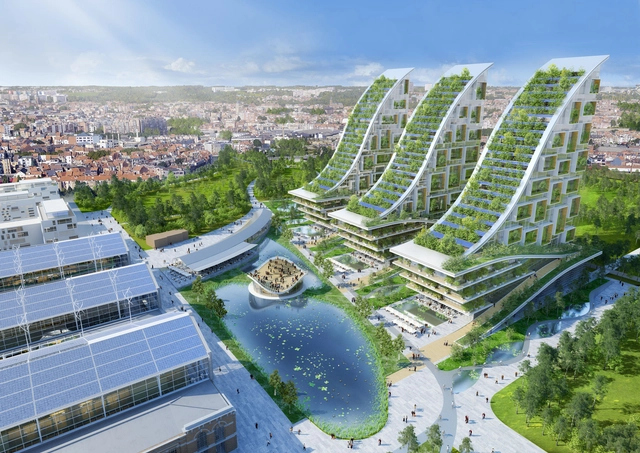
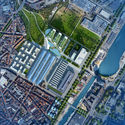
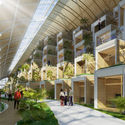
Vincent Callebaut Architectures has released plans for the development of a radical eco-neighborhood at Tour & Taxis, Brussels, Belgium. Covering an area of 135,000 square meters, the proposal will see the redevelopment of the early twentieth-century Gare Maritime, and the construction of three residential “vertical forests” reaching 100 meters in height. The architect’s ultimate vision is a neighborhood which embraces technological progress, sustainable building principles, and renewal of the built heritage.
Situated northwest of Brussels city center, and constructed in 1907, the industrial park at Tour & Taxis originally operated as a shipping and customs complex. Whilst the lifting of European customs borders has rendered its original function obsolete, the Gare Maritime (Marine Terminal) still embodies the architecture of the industrial era.
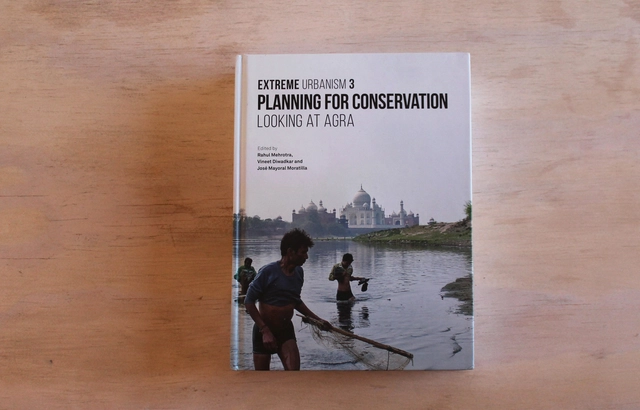
This volume presents the research and speculations produced by scholars, Loeb Fellows and graduate students at Harvard Graduate School of Design by looking at possibilities for the city of Agra in India and the agency of design between Architecture, Critical Conservation, Urban Planning & Design, and Landscape Architecture in heritage conservation, economic development, and the planning of medium-sized South Asian cities.
With UNESCO's recent announcement that 17 buildings by Le Corbusier are to be added to the World Heritage List, Monocle 24's Section D speaks to a number of organisations—including the Twentieth Century Society, devotees of Frank Lloyd Wright in Arizona, London's Victoria Albert Museum, and the Cooper Hewitt Smithsonian in New York City—in order to understand why architectural preservation is important, and who decides what’s worth saving.
The RIBA Future Leaders series delivers essential leadership training tailored to the needs and aspirations of architects in practice. It provides skills and insights for up-and-coming talent in architectural practices who will drive the future of the profession. Our seminars are delivered by thought-leaders and technical specialists. Delegates are encouraged to strengthen and share outcomes with our ‘Back in Practice Tool Box’ of useful resources and guidance.
Videos
Sergio Sebastian Architects, Archeological Space in Daroca, Spain
The Prize conceived and promoted by the Department of Architecture at Ferrara University and Fassa Bortolo company gives visibility to contemporary restoration and recovery projects (in this fifth edition of the competition only for professionals) of interest with a total prize money of 13.000 euros.
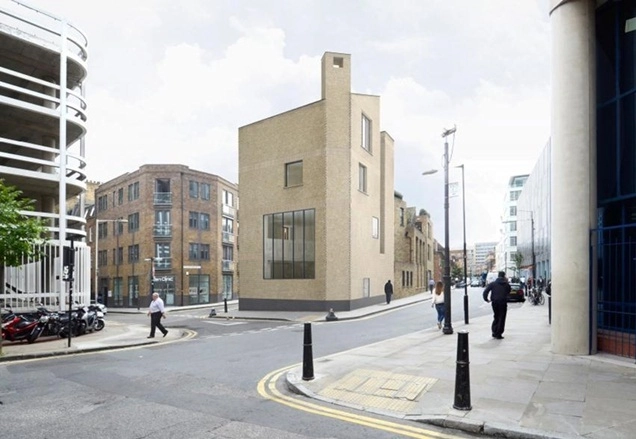
When news spread of Tracey Emin's plans to demolish a disused 1920s building in London's East End neighborhood, residents immediately objected. The artist, known for her conservation work in the area, has commissioned David Chipperfield to design a minimalist flat and studio on the site. However, despite the planning application's claim that the design will "greatly contribute to the character and appearance of the conservation area," the opposition isn't convinced.
“Tracey Emin is at present the owner of a locally listed building that is part of a historic streetscape of variety and charm,” said Save Britain's Heritage director Clem Cecil, who labeled Chipperfield's design "angular and blank." “She has done great conservation work with her other buildings nearby and this building deserves the same treatment.
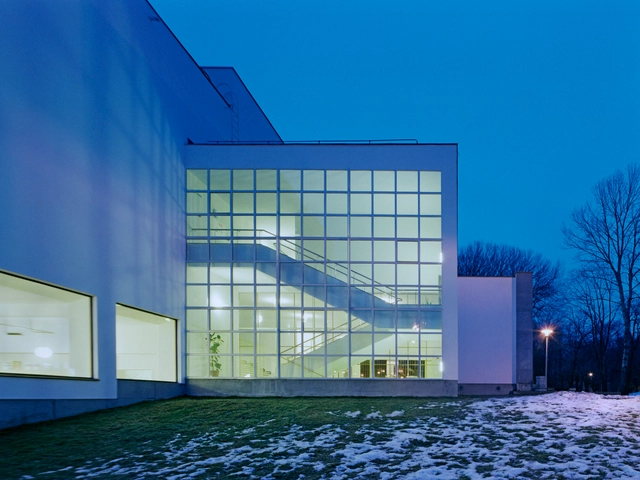
The 2014 World Monuments Fund/Knoll Modernism Prize has been awarded to the Finnish Committee for the restoration of Alvar Aalto’s seminal Viipuri Library in Vyborg, Russia. “Designed by Aalto and constructed between 1927 and 1935 in what was then the Finnish city of Viipuri,” stated WMF in a press release, “the library reflects the emergence of Aalto’s distinctive combination of organic form and materials with the principles of clear functionalist expression that was to become the hallmark of his architecture.”
A quote from Barry Bergdoll and more images, after the break.
The Getty Foundation has named the first 10 recipients of its philanthropic “Keeping It Modern” initiative, which aims to advance the understanding and preservation of 20th-century modern architecture. From Louis Kahn’s Salk Institute to Le Corbusier’s Parisian apartment, each recipient has been chosen for their architectural significance and potential to advance conservation practices related to modern architecture.
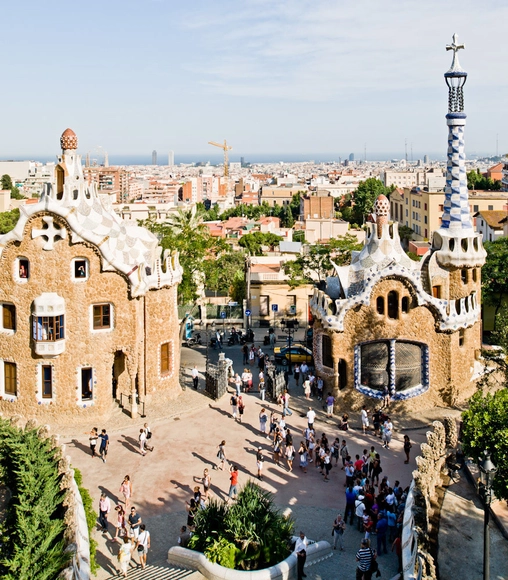
From Gaudí-designed pavilions in Barcelona, Spain to the Tenyuji Temple in Ogatsu, Japan, nine "at-risk" historical monuments will receive funding for preservation works, thanks to a $1.5 million grant from American Express to the World Monuments Fund (WMF). The nine sites were all included on WMF’s 2014 Watch list, and include Pokfulam Village in Hong Kong (SAR), China; the churches of Saint Merri and Notre-Dame-de-Lorette in Paris, France; the Farnese Aviaries in Rome, Italy; Tenyuji Temple, in Ogatsu, Japan; Fundidora Park in Monterrey, Mexico; the Güell Pavilions in Barcelona, Spain; the House of Wonders in Stone Town, Zanzibar, Tanzania; Battersea Power Station in London, United Kingdom; and Sulgrave Manor in Sulgrave, United Kingdom.
This is the second portion of a $5 million, five-year grant from American Express to support WMF. "The longstanding support of American Express to the World Monuments Watch has resulted in preservation work at more than 150 sites in over 60 countries," said WMF President Bonnie Burnham in a press release. "The sites on the 2014 Watch that will receive support are extraordinary places whose preservation will benefit both local populations and visitors from around the world."
Read on after the break for a description of the sites.
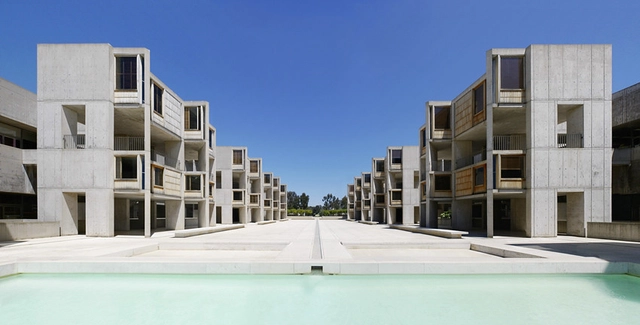
The Getty Conservation Institute (GCI) is partnering with the Salk Institute to help develop techniques for conserving one of Louis Kahn’s finest works. Overlooking the Pacific coast in La Jolla, California, Kahn took advantage of the peaceful surroundings and natural light when he designed the Salk Institute site. However, these same marine elements also provide unique conservation challenges for the concrete and wood structure, particularly for its teak window walls, the Getty Trust reports.
Part of the GCI’s Conserving Modern Architecture Initiative, the project will determine the condition of the teak and develop recommendations for its treatment and long-term conservation. “Partnering with the Salk Institute on this conservation challenge will assist in developing new approaches for practitioners in conserving other icons of modern architecture, which makes it a terrific project for us,” said Susan Macdonald, Head of Field Projects at the GCI.
Read on after the break to learn more about the conservation initiative.
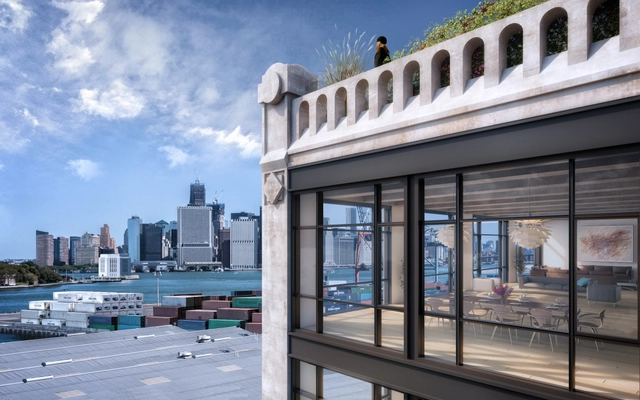
AA Studio have revealed their plans for the development of Brooklyn's iconic New York Dock Company building, transforming the 230,000 square foot structure into a mixed-use complex of six commercial spaces on the ground floor, 70 residential loft apartments, and a rooftop deck and gardens above.
The design aims to be as faithful to the original structure as possible, retaining the existing poured concrete columns and walls and exposing the high concrete ceilings. As one of the earliest structures to use the technology, the retention and celebration of these features is a key aspect of the building's conservation.