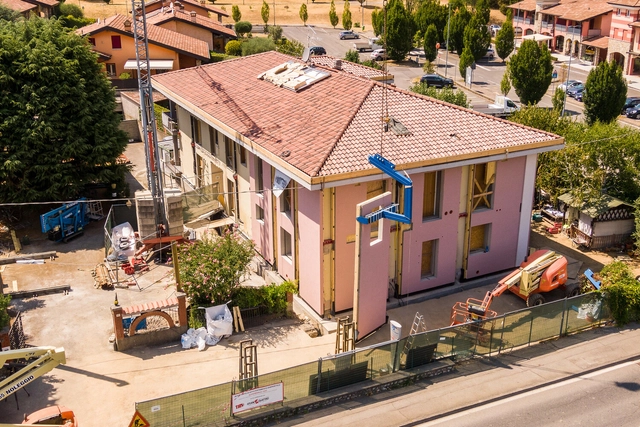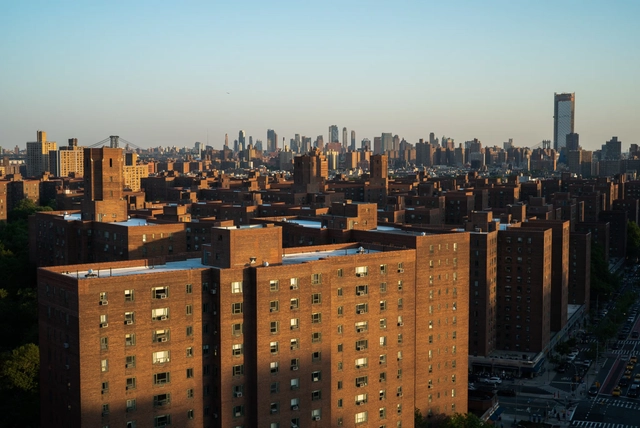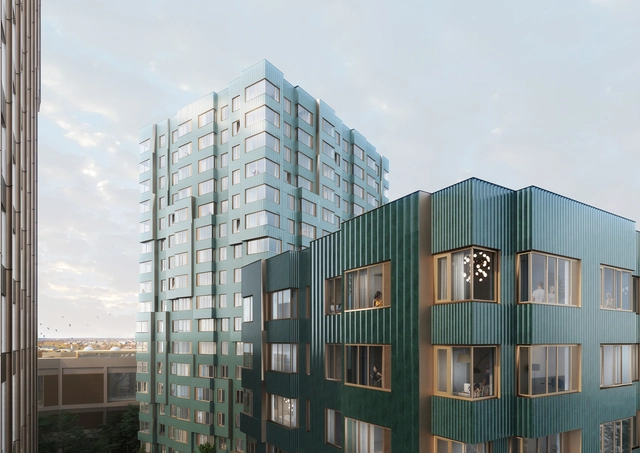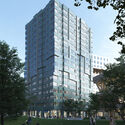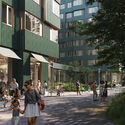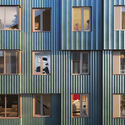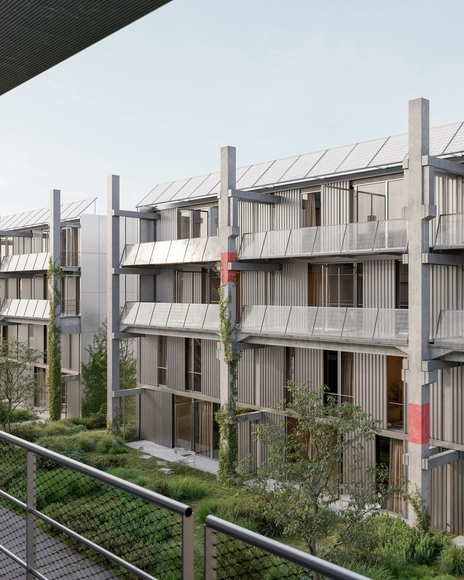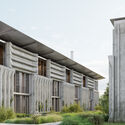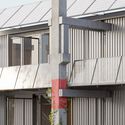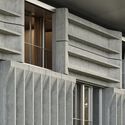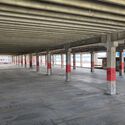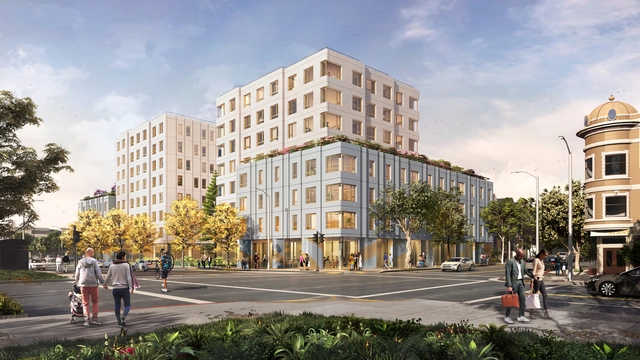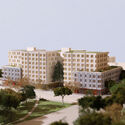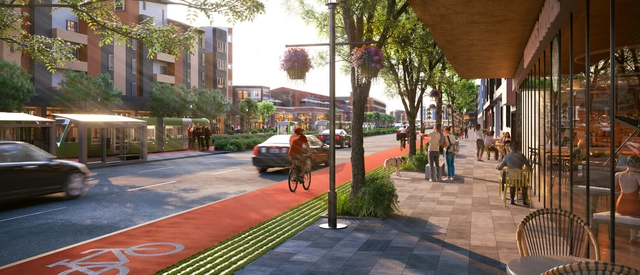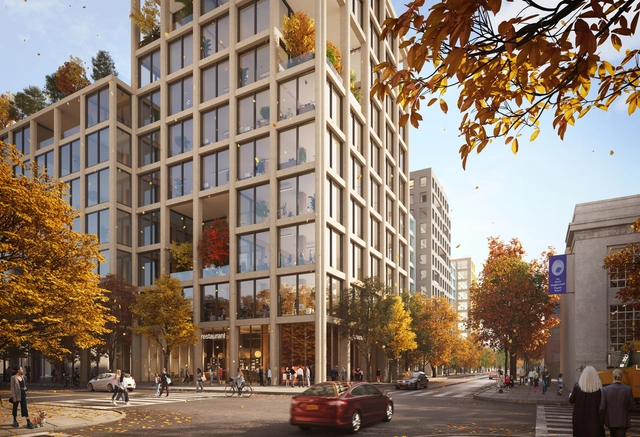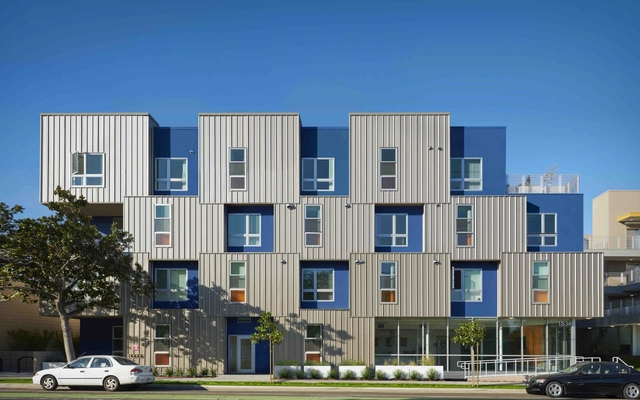
The result of a collaboration between OMA / Jason Long and Y.A. studio, the joint development of 730 Stanyan in the Haight Ashbury neighborhood of San Francisco broke ground. Upon completion, the 8-story building will accommodate 160 units of deeply affordable homes and amenities for low-income people, including formerly unhoused families, and homes and amenities for people with low incomes in San Francisco, including families, formerly unhoused families, and Transitional Age Youth (TAY). The project is scheduled to be completed in the Fall of 2025.
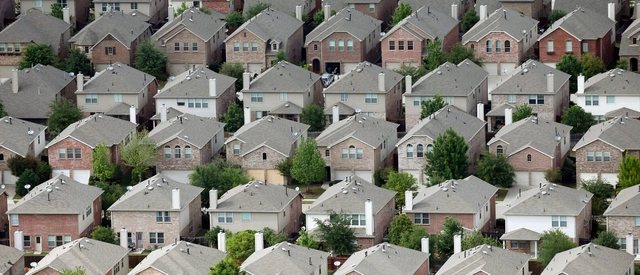
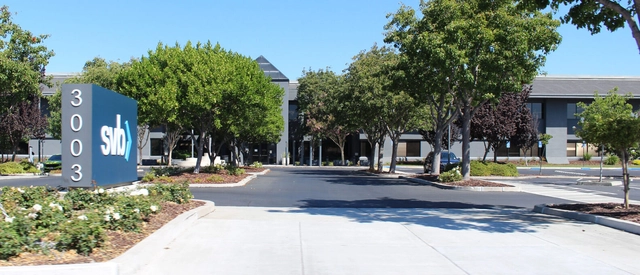
One of the principles of comedy is that you “punch up.” If you have to make fun of someone or something, make sure it’s more prominent than you, and deserving. You can’t get much higher than Santa Clara, California, and you can’t get much more deserving. Santa Clara is, arguably, the city at the heart of Silicon Valley, a globally famous urban region that is so ill-defined as to deny its own existence. Those ranch houses and corporate headquarters represent a distinctly 21st-century brand of power. And a distinctly 20th-century brand of urbanism.

Ice caps are rapidly receding; one of America’s two political parties is actively undermining federal authority; despite new materials and additive manufacturing, most houses constructed today are built much as they were several generations ago; the pathological suburbanization of the nation continues unabated. In the face of this and more, it seems, “the center cannot hold.” Such were several of the issues that prompted Keith Krumwiede, a soon-to-be fellow at the American Academy in Rome (AAR) at the time, to argue in 2017 that if a single detached house for every family is at the core of “The American Dream,” then we need a new dream.
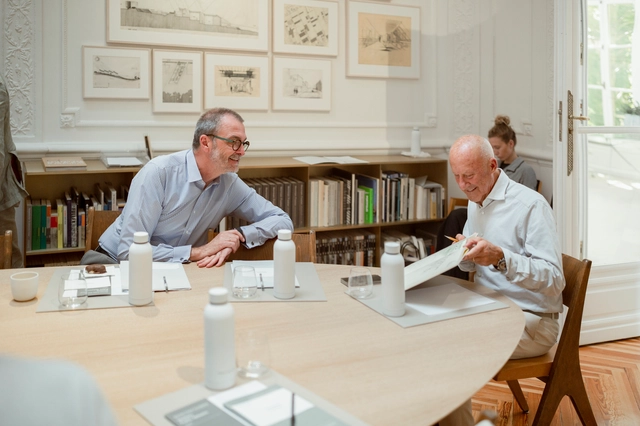
Christophe Levy, Scientific Director at Holcim and Lord Norman Foster. Image Courtesy of Holcim & Norman Foster Foundation
During the 2023 Architectural Biennale in Venice, Holcim and the Norman Foster Foundation will announce the start of their Essential Houses Research Project. Through this collaboration, the Norman Foster Foundation created necessary housing to give displaced communities safety, comfort, and welfare while allowing them to live in temporary settlements for over 20 years. To make sustainable buildings accessible to everyone, Holcim constructed these necessary homes using various green products, such as Elevate Insulation Boards and ECOPact low-carbon concrete.
Architect and planner Peter Calthorpe has a new book coming out, Ending Global Sprawl: Urban Standards for Sustainable Resilient Development. But when I called Calthorpe last week to interview him about it, he was more interested in talking about something else: last year’s passage in California of AB 2011, the so-called “Affordable Housing and High Road Jobs Act of 2022.” That’s legislation intended to significantly increase housing production by allowing construction on commercially zoned property. Calthorpe had an active hand in crafting many aspects of the bill, which is scheduled to go into effect on July 1.
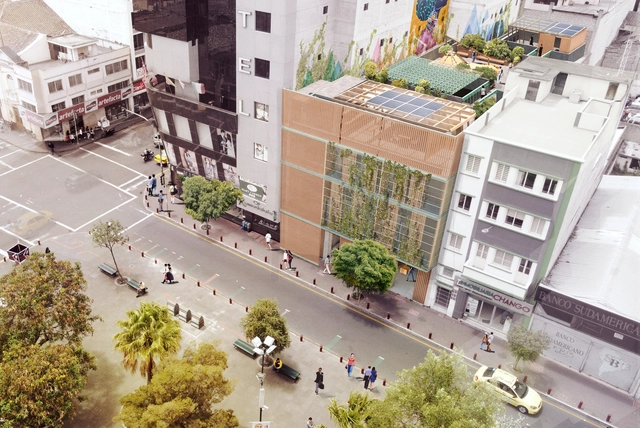
RAMA Estudio has won a competition organized by the Ecuadorian Ministry of Urban Development and Housing (Miduvi) to transform public buildings into social housing. "Casa Cevallos" seeks to give a new face to the Miduvi Tungurahua building, located in front of the Cevallos Park in Ambato, Ecuador, incorporating 16 apartments for 45 inhabitants through 7 adaptable typologies.
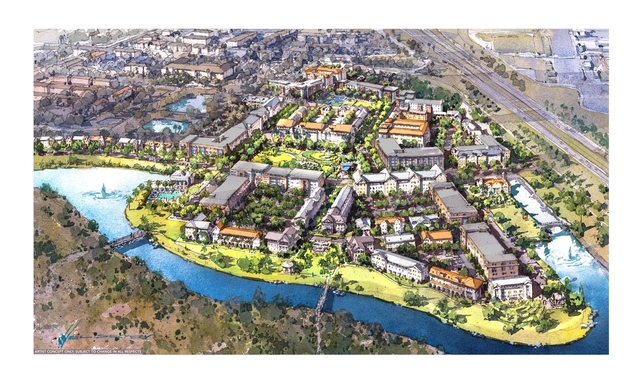
Community development proposals in Disney World come from back days. One of Walt Disney's last visionary projects was the Experimental Prototype Community of Tomorrow (EPCOT), a center for American enterprise and urban living. Disney advocated that the problems of cities were the most critical issues facing society and planned a city that could develop in a controlled manner, contrary to the urban expansion in the USA during the first half of the last century. After Disney died in 1966, the "EPCOT" concept was abandoned as the company was uncertain about the feasibility of operating a city. Fifty- five years later, after a thorough search, Walt Disney World chose The Michaels Organization for its experience in building and managing attainable housing communities.
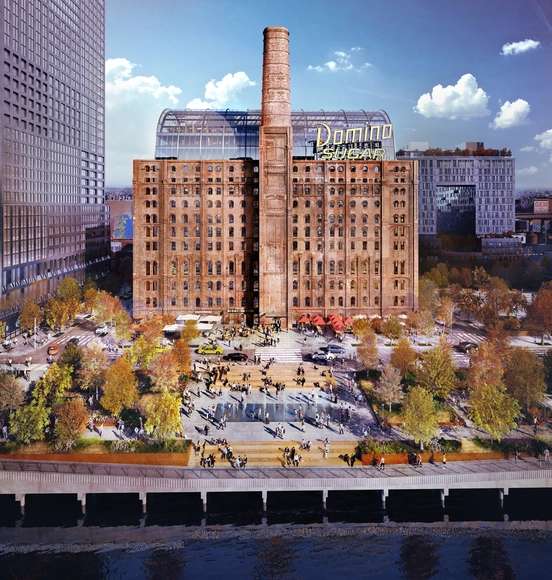
Domino Refinery. Image Courtesy of Practice for Architecture and Urbanism (PAU)
Adaam James Levin-Areddy and Vanessa M. Quirk, the hosts and producers of the Uncertain Things podcast, interview people from diverse backgrounds and a wide range of expertise to ask the question: “now what? What is happening and how did we get here?”. In this episode, they talk with urbanist, architect, and professor Vishaan Chakrabarti, founder of Practice for Architecture and Urbanism, to seek to understand how the cities got so expensive. Together they delve into the affordability crisis, the detrimental effect of progress, and what we need to do to have better cities.
According to the World Population Clock, the human population reached 8 billion on November 15th. According to the UN, this milestone represents a celebration of human longevity due to improvements in public health and medicine, but it also comes with warnings about inequality, limited access to food and resources, and environmental damage. Despite the impressive number, the annual World Population Prospect report shows that the global population is growing at the slowest rate since 1950, and it predicts a continued deceleration in the second half of this century.
As more than half of the worldpopulation lives in cities, an estimated 55.7%, according to UN-Habitat’s latest reports, the urban challenges are growing exponentially. The UN expects this number to increase to 68% by 2050, with close to 90% of this increase taking place in Asia and Africa. Accelerated urbanization can pose significant risks, such as increasing inequality, poverty, sectorized development, social exclusion, and pollution. In this context, a well-balanced urban agenda becomes crucially important in achieving inclusive, safe, and sustainable cities.
Brink Tower by Mecanoo was just granted planning permission and construction works are planned for mid-October 2022. Located in Amsterdam, the Netherlands, the 90-meter-high building, developed by Xior Student Housing and DubbeLL – winners of the competition for this tower together with Mecanoo Architecten in 2020- will offer a mixed program, including spaces to live, work, and relax in a healthy environment. The residential tower is set to create an" energy-positive, green, and inclusive neighborhood" and contribute to the development of Overhoeks in North Amsterdam.
LaBoqueria is an architecture studio in Barcelona that has the experience of multiple local and international collaborations. This global, multidisciplinary and participative perspective allows them to have a renewed and different vision of architecture.
Focusing on social, economic and environmental aspects, they seek to approach their projects in a comprehensive way, bringing together the different people involved in the process. Among their works are the housing building La Balma carried out together with the architects' cooperative Lacol; the Reformation of premises together with Marta Peinado Alós; and the Ca's Bouer House together with Jordi Queralt.
ArchDaily, interested in collaborative and participatory processes through the theme Democratization of Design, conducted an interview with LaBoqueria to learn about their main inspirations, challenges and visions.
Fortunately, architecture has the power to solve numerous issues of the modern world and how we live in it, and there are infinite ways of doing so. However, not all architecture is effective in providing solutions while also being sensitive and thought-provoking. With a portfolio that is getting richer every year, SO–IL, an architecture practice based in New York City, has proven that buildings can actually do this and much more.
Access to adequate housing is a human right. But with prices rising dramatically, incomes not growing proportionally and ineffective public policies, the lack of secure, affordable homes is fueling an ongoing global housing crisis. In fact, 90% of 200 polled cities were found to be unaffordable to live in, with the impact of COVID-19 only worsening the situation and forcing much of the world’s population to settle for precarious living conditions. This is only expected to aggravate in the not-too-distant future; by 2025, the World Bank estimates that 1.6 billion people will be affected by the housing shortage.
Mayor of New York, Eric Adams, expressed his support for a state bill that would make it easier for the city to convert underutilized or vacant hotels into affordable and supportive housing. The mayor urges New York state legislators to unlock a critical tool in combating the affordable housing crisis and tackling homelessness in the process. The conversion framework proposed by the bill would allow authorities to create affordable housing units at two-thirds of the cost and one-third of the time necessary for ground-up construction.
New York Wheel, Staten Island. Image Courtesy of Perkins Eastman
The New York City Department of Housing Preservation and Development (HPD) has released a Request for Proposals (RFP) seeking plans to build 100 percent affordable housing in Stapleton on the North Shore of Staten Island. The City-owned site provides over 100,000 square feet of land for affordable housing, community amenities and other improvements as part of the island's mixed-use development.
The City of Los Angeles has launched a $100,000 housing design challenge for low-rise developments. The competition asks architects and landscape architects to imagine "appealing and sustainable" models of low-rise, multi-unit housing. Organized by the Mayor’s Office and Chief Design Officer Christopher Hawthorne, the initiative aims to create new paths to home-ownership and housing affordability in Los Angeles.
3609-13 S. Saratoga Starter Home*, completed in 2019 by OJT. Image Courtesy of Office of Jonathan Tate
Architect Jonathan Tate was living and working in Memphis, Tennessee, when Hurricane Katrina ensnared New Orleans in 2005. Instinctively drawn to the Big Easy, he later moved there for the opportunity to observe the reconstruction effort and investigate architecture’s role in it.