This fall, the teams will travel to Detroit for site visits and community meetings, as well as to meet with faculty and students at the University of Michigan’s Taubman College of Architecture and Urban Planning. Curators Cynthia Davidson and Monica Ponce de Leon hope to have selected a team that produces creative and resourceful work to address the social and environmental issues of the 21st century.
Short answer: No. Don’t confuse the responsibility of proposing solutions with the power to execute them.
Long answer: Few things have changed the role of the architect as radically as when many people lost faith in the idea of authority in the 1970s. Nothing was the same after that. Numerous star architects born around the turn of the last century, such as Alvar Aalto, had become a fixture in the architectural firmament, but fell hard to earth when the society that had held him aloft suddenly turned its back on all establishment figures. The revolt against the status quo changed the rules of the game for architects and politicians in particular. And the loss of authority soon led to the loss of self-confidence, but that’s nothing to grumble about now. The days when an architect could lead the way by pointing are long gone; now it’s essential to be enthusiastic and encourage everyone to come together. That works best if architects believe in themselves.
https://www.archdaily.com/772586/is-the-architect-an-authoritarianRasmus Wærn & Gert Wingårdh
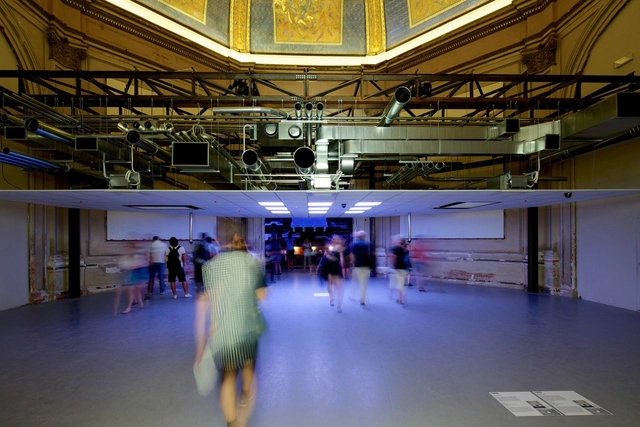
Long answer:Ceilings have devolved from being the focal point of a room to being a zone for mechanical equipment. In all the world’s greatest spaces we’ve always looked up in awe. Where our gaze was once met with fantastical vaulted ceilings, remarkable truss structures, or distinctive decorative treatments, today we typically find acoustic tiles, ductwork, and fluorescent strip lighting. Having abandoned the ceiling as a canvas for creativity with the dawn of the technological era, we’ve had a hard time taking it back. Today, it’s hard to compete with all that mechanical equipment when all you’re arguing for is a blank white surface. But a compelling vision of a space designed to make the ceiling its primary feature can enchant even the most pragmatic minds. There is good reason to be stubborn: since we seldom rearrange or redecorate the ceiling the way we do the rest of a space, what we create overhead lives a long life.
https://www.archdaily.com/772585/what-is-the-worst-thing-about-architecture-todayRasmus Wærn & Gert Wingårdh
Expressions of interest can be submitted in the form of short concept proposals for the theme and visual language of the exhibition. "The proposals should contribute an acute observation of contemporary British architecture," says the council. "You might critically analyze architectural practice or exemplary work where architecture makes a difference. We are also interested in the means by which these observations will be expressed and communicated to a wide audience, and the discussion that they will generate between professionals and the public."
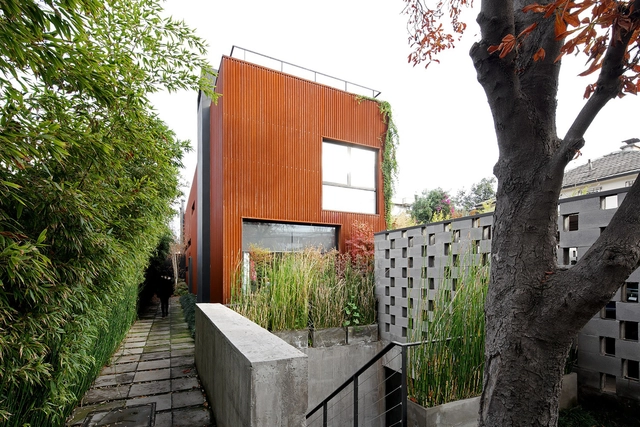
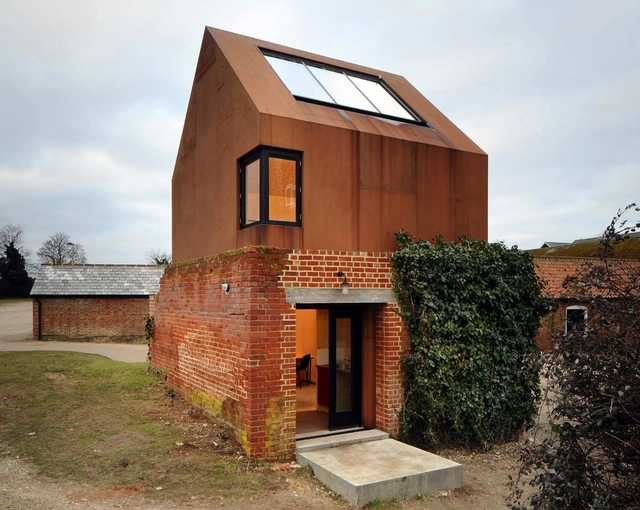
One of the most interesting trends in architectural materials of recent years is the increase in use of weathering steel - more commonly referred to by its trademark name, Cor-Ten. Thought the material has been around for decades, first being used for architectural purposes in the Eero Saarinen-designed John Deere Headquarters in 1964, the material has seen a surge in popularity in the last decade or so, being used in everything from individual houses and tiny kiosks, to SHoP's design for the Barclays Center in Brooklyn, which used a staggering 12,000 weathering steel panels.
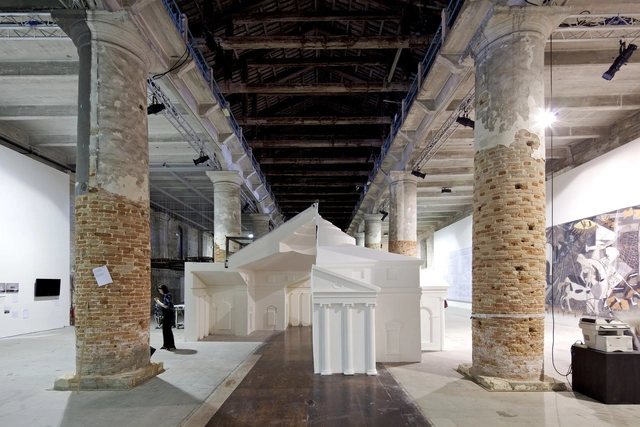
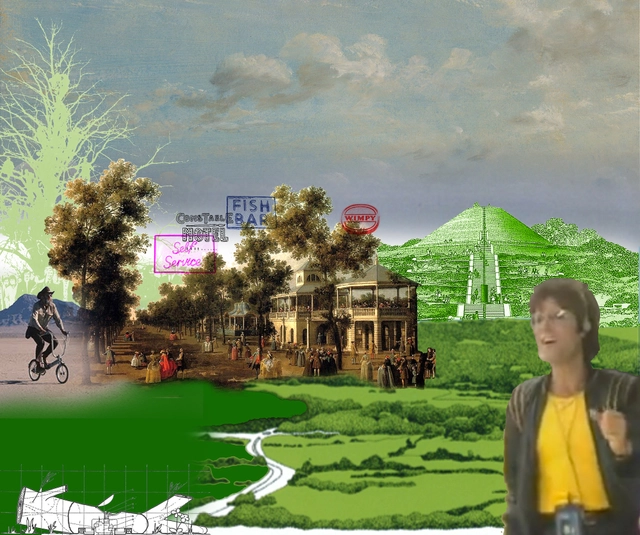
A ClockworkJerusalem, the exhibition showcased in the British Pavilion at last year's Venice Biennale, will make it's UK debut at London's Architectural Association (AA) next month. Commissioned by the British Council and curated by Sam Jacob, co-founder of FAT, and Wouter Vanstiphout, partner at Dutch practice Crimson Architectural Historians, the exhibition shines a light on the large scale projects of the 1950’s, 60’s and 70’s by exploring the "mature flowering of British Modernism at the moment it was at its most socially, politically and architecturally ambitious - but also the moment that witnessed its collapse."
Lateral Office'sArctic Adaptations exhibition, which was recognised with a Special Mention at the 2014 Venice Biennale, will travel make its debut in Canada at the Winnipeg Art Gallery this week before heading to Whitehouse, Vancouver, and Calgary. The exhibition "surveys a century of Arctic architecture, an urbanising present, and a projective near future of adaptive architecture in Nunavut" though interactive models, photography, and topographical maps of the twenty five communities of the area, as well as Inuit carvers’ scale models of some of the most recognised buildings in the territory. In addition, it proposes a future of adaptive and responsive architecture for Canada's northern territories.
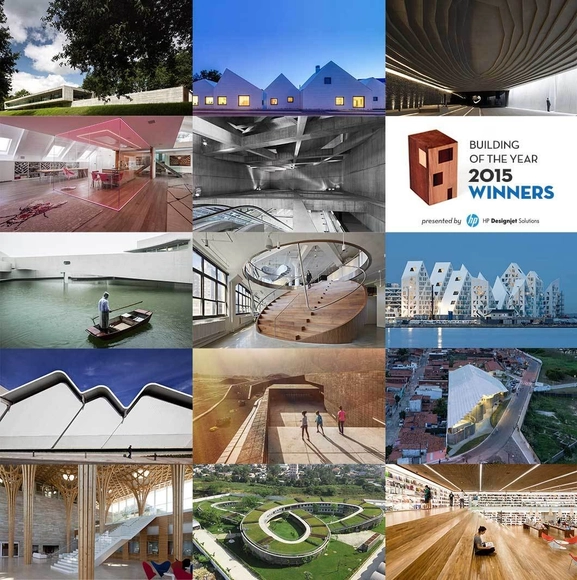
With our annual Building of the Year Awards, over 30,000 readers narrowed down over 3,000 projects, selecting just 14 as the best examples of architecture that ArchDaily has published in the past year. The results have been celebrated and widely shared, of course, usually in the form of images of each project. But what is often forgotten in this flurry of image sharing is that every one of these 14 projects has a backstory of significance which adds to our understanding of their architectural quality.
Some of these projects are intelligent responses to pressing social issues, others are twists on a well-established typology. Others still are simply supreme examples of architectural dexterity. In order that we don't forget the tremendous amount of effort that goes into creating each of these architectural masterpieces, continue reading after the break for the 14 stories that defined this year's Building of the Year Awards.
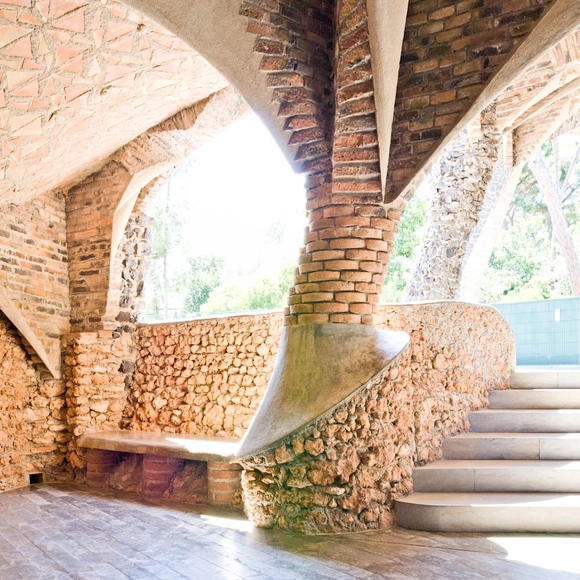
As one of the most ubiquitous forms of construction, it can sometimes be easy to overlook the humble brick. However, this prosaic building method can also be one of the most versatile materials available to architects, thanks to the experimentation of countless architects who, for centuries, have worked to create new forms of expression with the simple material. In this round up, we celebrate architects who, with their architectural classics, have expanded the possibilities of brick craft: Antoni Gaudí's fantastical vaulting at Colònia Güell and Alvar Aalto's experimental brick patterning at his house in Muuratsalo; the powerful brick piers of Kevin Roche and John Dinkeloo's Knights of Columbus Building and the Catalan vaults of Porro, Garatti and Gattardi's National Arts School of Cuba; and finally, what brick round up would be complete without the brick-whisperer himself - Louis Kahn and his all-brick fortress for the Indian Institute of Management.
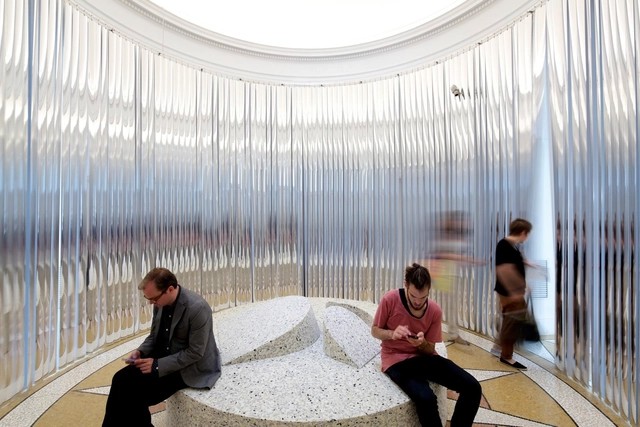
In the late 20th and early 21st centuries, one of the major changes within cities around the world has been the rise of so-called "privately-owned public space," a development which has attracted the attention of many urbanists and is still being widely debated. However, for MONU Magazine, the increasing prevalence (and arguably, acceptance) of such privately owned spaces for public use gives us an opportunity to discuss another aspect of public space: interior urbanism. With the rise of the shopping mall and the increasingly diverse functions required by buildings such as libraries, interior spaces now resemble exterior public spaces more and more.
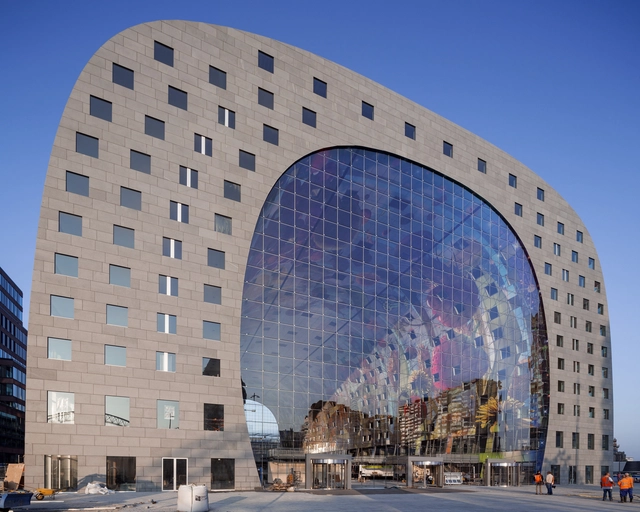
The following interview is an excerpt from the 21st issue of MONU Magazine, in which MONU's Bernd Upmeyer and Beatriz Ramo interview MVRDV founder Winy Maas, discussing the concept of interior urbanism in the work of MVRDV, in particular in their Rotterdam Markthal, Glass Farm and Book Mountain projects.
.jpg?1440642748&format=webp&width=640&height=580)