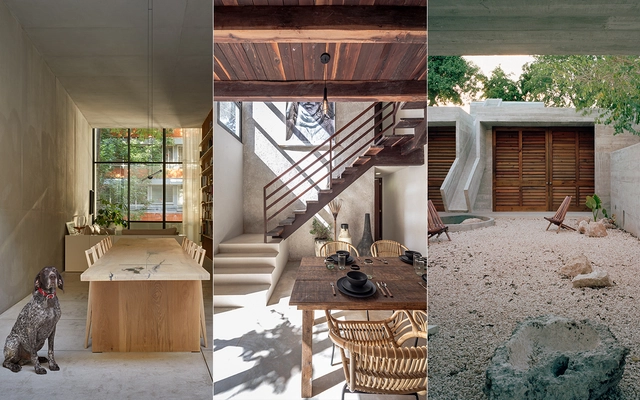
Luis Young

BROWSE ALL FROM THIS PHOTOGRAPHER HERE

Beyond Emergency Shelters: Modular and Vernacular Architecture in Post-Earthquake Reconstruction

Subscriber Access | 
Audio available

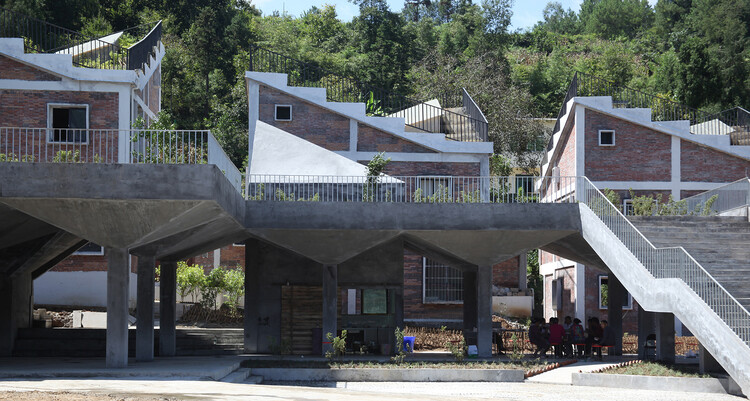
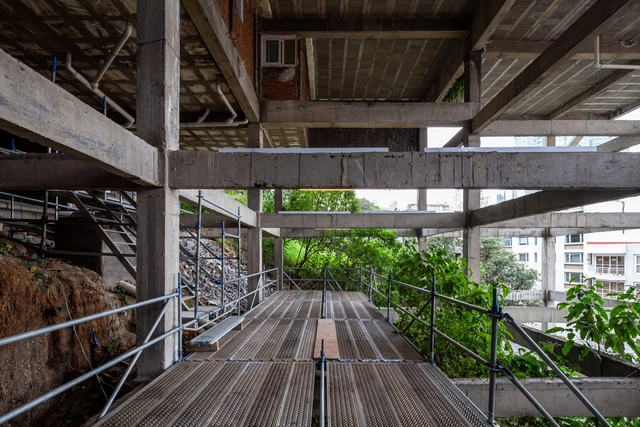
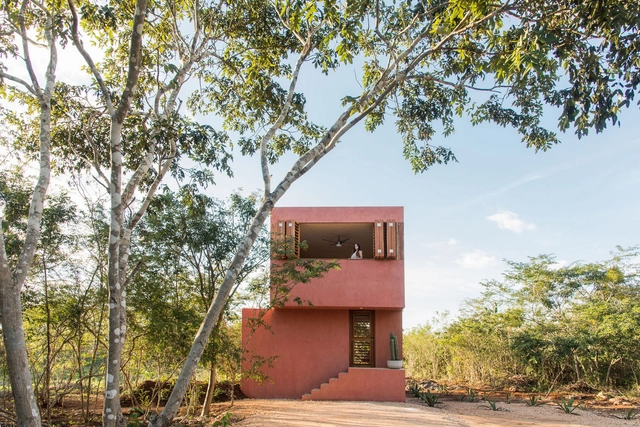
On June 24, 2026, a severe seismic event consisting of two major earthquakes with magnitudes of 7.2 and 7.5 struck north-central Venezuela just 39 seconds apart. The widespread destruction was concentrated along the country's northern coast, heavily impacting the capital city of Caracas and the neighboring state of La Guaira, where fragile urban infrastructure and vulnerable housing stock led to the collapse or severe damage of thousands of residential structures. This disaster mirrors previous devastating events observed during other major seismic events, including the 2008 Wenchuan earthquake and 2011 landslides in Sichuan, the 2014 Ludian earthquake in Yunnan, and the 2017 earthquake across central Mexico. When high-magnitude natural disasters damage entire communities, architects have the opportunity to help by proposing post-disaster architecture with strategic recovery models. Rather than relying on generic, standardized emergency shelters, conscious architectural design can deliver low-cost, rapidly deployable residential infrastructure that preserves human dignity through culturally contextual and dignified spaces.

Beyond Emergency Shelters: Modular and Vernacular Architecture in Post-Earthquake Reconstruction - Imagem 1 de 4Beyond Emergency Shelters: Modular and Vernacular Architecture in Post-Earthquake Reconstruction - Imagem 2 de 4Beyond Emergency Shelters: Modular and Vernacular Architecture in Post-Earthquake Reconstruction - Imagem 3 de 4Beyond Emergency Shelters: Modular and Vernacular Architecture in Post-Earthquake Reconstruction - Imagem 4 de 4Beyond Emergency Shelters: Modular and Vernacular Architecture in Post-Earthquake Reconstruction - More Images+ 3

These are the architectural design projects from the "Jóvenes Creadores 2020 - 2021" program for FONCA

Subscriber Access | 

These are the architectural design projects from the Jóvenes Creadores 2020 - 2021 program for FONCA - More Images+ 39

Every year, the National Fund for Culture and the Arts (FONCA), through the National System of Art Creators (SNCA), recognizes those who represent excellence in national culture through the Jóvenes Creadores Program. By providing grants, the program supports the creative and training processes of young Mexican artists, fostering favorable conditions for the development of original, significant, and positive creative projects.

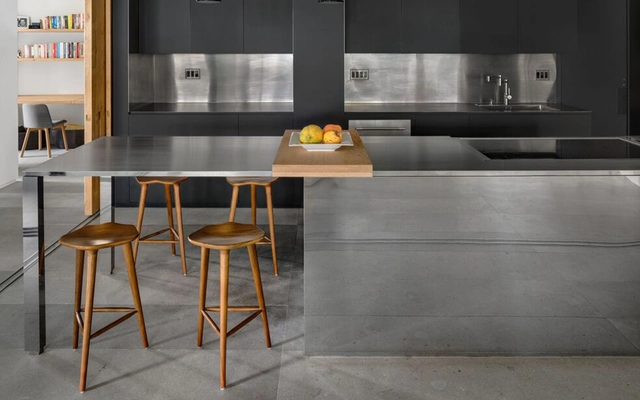
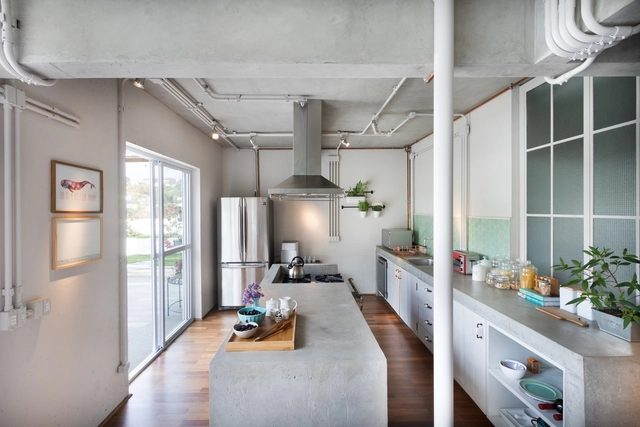
Mexican Interiors: 19 Kitchens with Central Islands and Auxiliary Bars in Apartments

Subscriber Access | 

Over the years, interior design has evolved in response to changing needs, and above all, to the experiences it seeks to evoke for the user. Over the last two years, we have witnessed a radical shift and a heightened interest in this field, as the pandemic forced us to pay closer attention to how we configure the spaces we inhabit. This has brought about much more holistic designs aimed at user well-being, combining colors, sensory experiences, technology, and natural elements that promote health.

6 young photographers offer new perspectives on Teodoro González de León's Tamayo Museum

Subscriber Access | 

As part of an initiative by LIGA, an independent space founded in Mexico City in 2011 to promote contemporary Latin American architecture through exhibitions, publications, events, lectures, and workshops, the exhibition “Registro: Museo Tamayo” opened on April 21 as part of the LIGA-ARCHIVOS initiative. This iteration presents a reinterpretation of the building designed by architect Teodoro González de León and built in 1981 in the First Section of Chapultepec Forest.

Meet the 15 finalists of the 2022 Obra del Año Award

Today is the day to discover the finalists of ODA2022: the award for the best Spanish-language architecture. Our expert jury—meaning you, our readers—has selected 15 of your favorite projects from nearly 1,000 architectural works built across Latin America and Spain.

This award has become a true tradition, now in its 14th edition. It is an invitation extended to all our readers to recognize the works published during 2021 that inspired them and represent the identity of their local contexts in a globalized planet, shaping the way architecture is made in Latin America and Spain within an increasingly heterogeneous and multicultural world.

Starting today, and until next Wednesday, March 30, at 11:59 PM (GMT -3), you can explore each of the finalists in detail and vote for the work that best represents the Spanish-language architecture that inspires us, defines us, and leaves a mark on us. Discover all the finalist projects below.

The 2022 Obra del Año Award is brought to you by Dornbracht, renowned for its leading architectural designs, which can be found internationally in bathrooms and kitchens.


BY Architecture Gallery presents its first exhibition "Preludio" in Mexico City

Subscriber Access | 

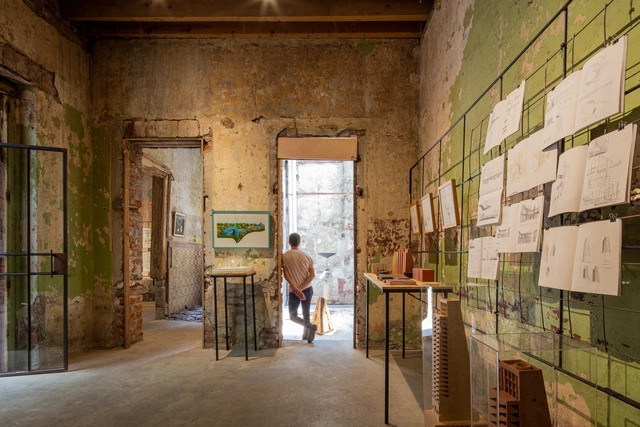
As part of a new initiative led by Francesca Borgonovo and Luis Young in Mexico City, "Preludio"—the inaugural exhibition of BY Galería—was presented from August 25 to September 3 at Proyecto Público Prim. This space arises from the question: "Is it possible to materialize architectural thought?"

Núcleo: An Oasis of Tropical Plants for the 2019 Polanco Flower and Garden Festival

Núcleo: An Oasis of Tropical Plants for the 2019 Polanco Flower and Garden Festival - Featured Image
© Zaickz Moz

Núcleo: An Oasis of Tropical Plants for the 2019 Polanco Flower and Garden Festival - More Images+ 6

The Flower and Garden Festival FYJA is an event held in Mexico City that brings together landscape architects, architects, artists, designers, artisans, gardeners, and students. In each edition, participants create a route featuring various activities and exhibitions, offering everyone—from experts and enthusiasts to the curious—the chance to engage with horticulture and experience the benefits of plants.

Discover all the details about the installation 'Dichotomies of Power' by Dellekamp / Schleich

Subscriber Access | 
Discover all the details about the installation 'Dichotomies of Power' by Dellekamp / Schleich - Featured Image
© Derek Dellekamp

Discover all the details about the installation 'Dichotomies of Power' by Dellekamp / Schleich - More Images+ 14

As part of the exhibitions featured in the 2019 Abierto Mexicano de Diseño, the firm Dellekamp / Schleich presented the installation Dicotomías del Poder at the Museo Numismático Nacional in Mexico City. The exhibition runs from October 9 to November 17, Tuesday through Sunday, from 10:00 AM to 4:00 PM.

Architecture in Mexico: Houses to Understand the Territory of Nayarit

Subscriber Access | 

Architecture in Mexico: Houses to Understand the Territory of Nayarit - More Images+ 4

Nayarit is a state located in western Mexico, bordered by the states of Sinaloa, Durango, Zacatecas, and Jalisco, and facing the Pacific Ocean. With an area of 27,815 km², it is the country's ninth-smallest state. Its capital and most populous city is Tepic. Other notable localities include Nuevo Vallarta, Valle de Banderas, Ixtlán del Río, San Blas, Santiago Ixcuintla, Acaponeta, Compostela, Jala, Santa María del Oro, Rosamorada, Xalisco, San Pedro Lagunillas, Tecuala, and Huajicori.

PALMA: "Quality in housing spaces is not only a human right, but a basic necessity"

Subscriber Access | 

PALMA: Quality in housing spaces is not only a human right, but a basic necessity - More Images

The National Social Distancing Campaign (Jornada de Sana Distancia) in Mexico began on March 23, 2020, but a couple of weeks prior—even as the Federal Government recommended continuing normal activities—social media users were already opting to replicate the European model and self-isolate. Right away, some architecture firms made the decision to close their physical offices and transition to a remote work model, while others took a few more weeks to do so. However, this period of social and physical (spatial) distancing is experienced differently in every household. Over the months that this pandemic has unfolded, it has exposed not only the inequality regarding basic needs in dense urban areas, but also the fragility of our established social order. Whether at a macro or micro scale, all these experiences occur within and are influenced by the built environment, making architecture both arbiter and active participant in this equation.

44 apartments with balconies and terraces in Mexico City that connect with the outdoors

Subscriber Access | 

44 apartments with balconies and terraces in Mexico City that connect with the outdoors - More Images+ 40

One of the most critical factors in architectural design is the site's specific climate. While this can present challenges in extreme conditions—requiring insulating materials to adapt to shifting environments—Mexico's privileged climate works in the architects' favor. It allows them to create microclimates and spaces that blur the boundary between indoors and outdoors.

The 10 most influential projects on the @archdailymx Instagram account

Subscriber Access | 

In a year defined by physical distancing, social media has taken on an even greater role in how we connect and stay informed. Our Instagram accounts have surpassed all previous reach records, bringing our audience the very best of what we publish on our website: projects, articles, interviews, and news from the architectural world, inspiring new ideas and tools for a better future for our cities.

PALMA presents "Vacío", a temporary installation in Mexico City

Subscriber Access | 

PALMA presents Vacío, a temporary installation in Mexico City - More Images+ 6

Vacío is a temporary intervention that seeks to redefine the boundaries and experience of the space in which it is located. It is crucial to understand the environmental impact of ephemeral projects. 
To construct this void, we used four floating curtains made of repurposed sheets of paper collected from other architecture firms, bathed in indigo to erase the drawings, texts, and prints of their previous life. 
The installation's lightness allows the airflow to constantly reshape the defined geometry of the prism. Inside, the space mutates and interacts with visitors, almost compelling them to move as the floating sheets seem to breathe.  

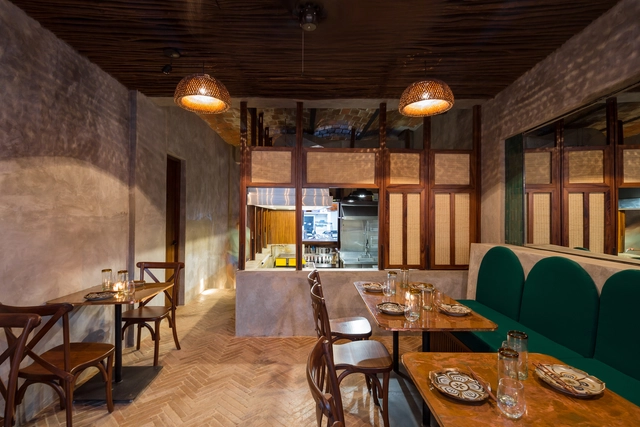
Achara Restaurant / PALMA

Achara Restaurant / PALMA - More Images+ 13

  • Architects: PALMA
  • Area Area of this architecture project Area:  80
  • Year Completion year of this architecture project Year:  2018

When Art Came First: Spatial Experiments That Shaped Architecture in Latin America

Subscriber Access | 
Audio available

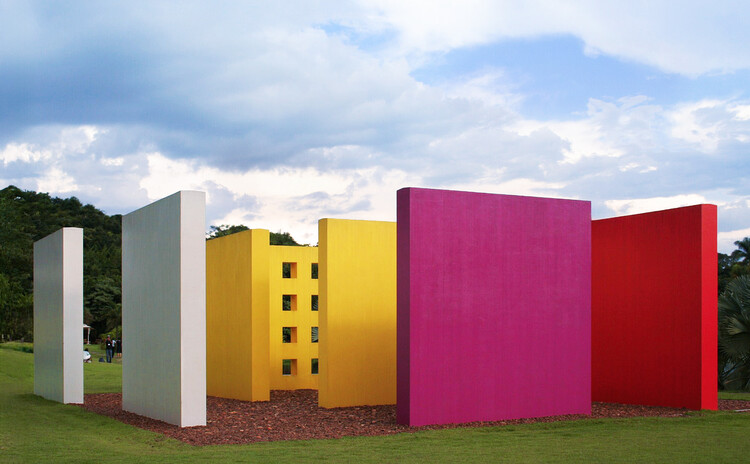
Many of the spatial ideas we now associate with contemporary architecture, collective use, and bodily experience did not originate in buildings alone. In Latin America, these ideas were often explored first through art, at a moment when artists were actively questioning how space could be occupied, shared, and experienced beyond traditional forms.

During the mid-20th century, the region underwent rapid urbanization and profound social change. Architecture was increasingly expected to respond to public life, collectivity, and new ways of inhabiting space. At the same time, art offered a more flexible ground for experimentation, one less constrained by function, regulation, or permanence. As a result, many spatial questions were tested through artistic practices before becoming part of architectural thinking.

When Art Came First: Spatial Experiments That Shaped Architecture in Latin America - More Images+ 11

Colibrí House / Estudio Libre MX

Colibrí House / Estudio Libre MX - More Images+ 7

Ciudad de México, Mexico
  • Architects: Estudio Libre MX
  • Area Area of this architecture project Area:  376
  • Year Completion year of this architecture project Year:  2025

Sector 02 Irrigation Module Offices / 3ME Arquitectura

Sector 02 Irrigation Module Offices / 3ME Arquitectura - Exterior Photography, Office Buildings, Facade
© Luis Young

Sector 02 Irrigation Module Offices / 3ME Arquitectura - More Images+ 13

Salvatierra, Mexico
  • Architects: 3ME Arquitectura
  • Area Area of this architecture project Area:  723
  • Year Completion year of this architecture project Year:  2019
  • Manufacturers Brands with products used in this architecture project
    Manufacturers:  Interceramic, NOVACERMAIC

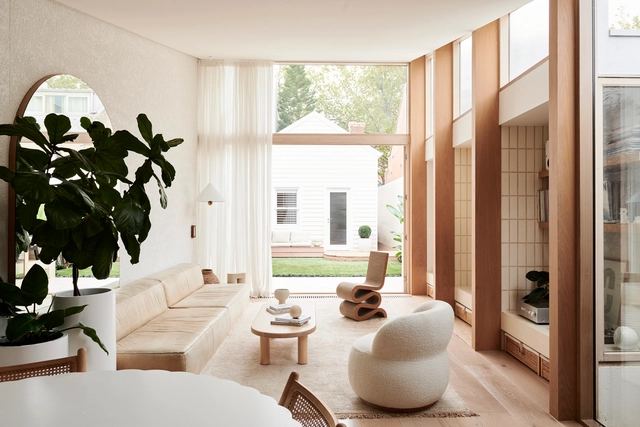
Are Living Rooms Still Relevant? 16 Projects that Explore how these Private Gathering Spaces Adapt to the Contemporary Home

Today, architecture has become - or is in the process of becoming - more flexible and individualistic to accommodate people's diverse lifestyles and spatial needs. With this adaptation, the residential typology has changed and living rooms have become endangered. Many insist on the need of having a space dedicated to relaxation and leisure, while others claim it is simply a waste of space and money. This debate raised an important question: do we still need living/sitting rooms? In this interior focus, we will look at how living rooms evolved through the years, and how architects readapted and integrated the concept of “gathering space” in contemporary residential architecture.

Are Living Rooms Still Relevant? 16 Projects that Explore how these Private Gathering Spaces Adapt to the Contemporary Home - More Images+ 16