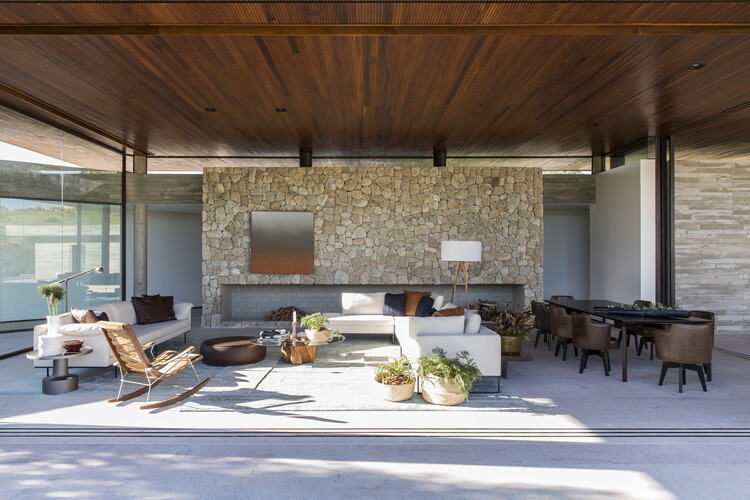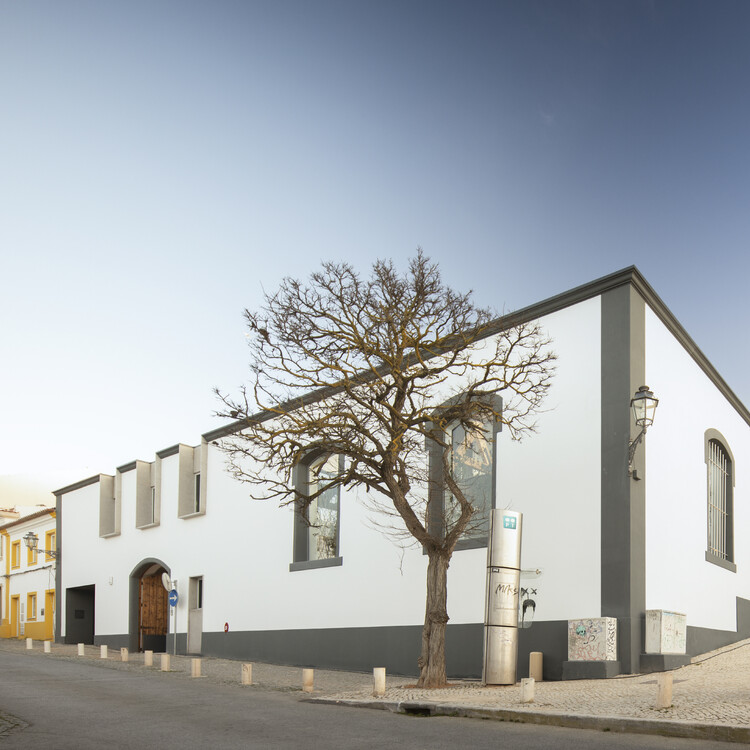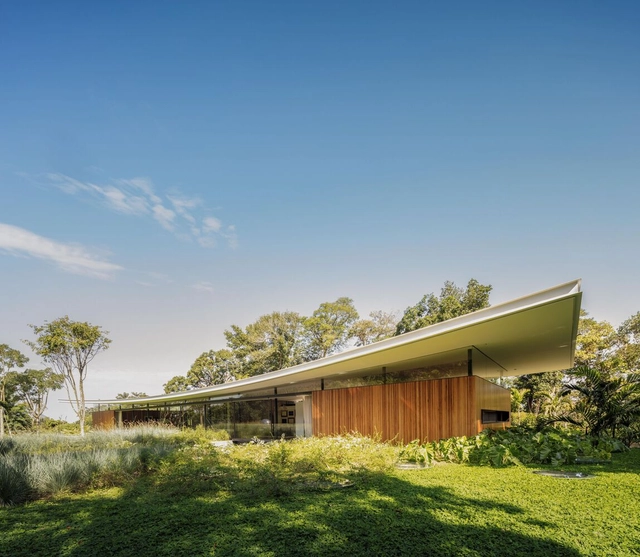


-
Architects: Bernardes Arquitetura
- Area: 3385 m²
- Year: 2018
-
Manufacturers: Archdesign, BW Assoalhos, Eleve, Eurocentro, M3, +3
-
Professionals: Greenwatt, Studio Iluz
Ancient builders had deep knowledge about environmental conditions and the physical needs of humans in their search for shelter. Regardless of technological advances and the evolution of our perception of the world around us, this kind of knowledge and relationship with our surroundings can still be applied today and adapted to our current context. Natural stone, when used in architecture shows just that, as we explore its many different styles and applications.

No País dos Arquitectos is a podcast created by Sara Nunes, who is also responsible for the architectural film production company Building Pictures. The podcast aims to profile the professionals, projects, and stories behind leading contemporary Portuguese architecture. With just over 10 million inhabitants, Portugal is a highly fascinating country in this professional field, and its architectural production far outstrips its population or territorial scale.
In its first episode, Sara spoke with architect João Luís Carrilho da Graça about his Lisbon Cruise Terminal, and then welcomed João Mendes Ribeiro for a conversation on heritage, adaptive reuse, and landscape architecture, centered on the rehabilitation of the Coimbra Botanical Garden greenhouse. The third episode featured architect Inês Lobo and focused on the Public Library and Regional Archive of Angra do Heroísmo. Below, you can listen to and read the conversation from the fourth episode, with Carlos Castanheira about the Treetop Walk project.
.jpg?1620736723)

With the goal of getting to know the architects, projects, and stories behind landmark Portuguese architecture, Sara Nunes, from the architectural film production company Building Pictures, launched the podcast No País dos Arquitectos, where she talks with leading names in contemporary Portuguese architecture.
In this week's episode, Sara talks with Tiago de Mota Saraiva, from ateliermob, about the rebuilding of seven homes affected by the 2017 Pedrógão Grande wildfire. Catch up on previous interviews from the podcast No País dos Arquitectos and read the transcript of the interview with Saraiva below:

Portugal is a fascinating country when it comes to architecture. With a population of just over 10 million, its architectural output far exceeds what its population or territorial scale would suggest, and this art is not only a part of but deeply rooted in the national culture. With the aim of exploring the architects, projects, and stories behind landmark Portuguese architecture, Sara Nunes, from the architectural film production company Building Pictures, launched the podcast No País dos Arquitectos, where she talks with leading figures of contemporary Portuguese architecture.
These conversations offer a chance to discover the people, behind-the-scenes moments, processes, and references of prominent architects. For the first episode, Sara talks with none other than João Luís Carrilho da Graça about his design for the Lisbon Cruise Terminal, completed in 2018. Read the full interview or listen to the podcast below.

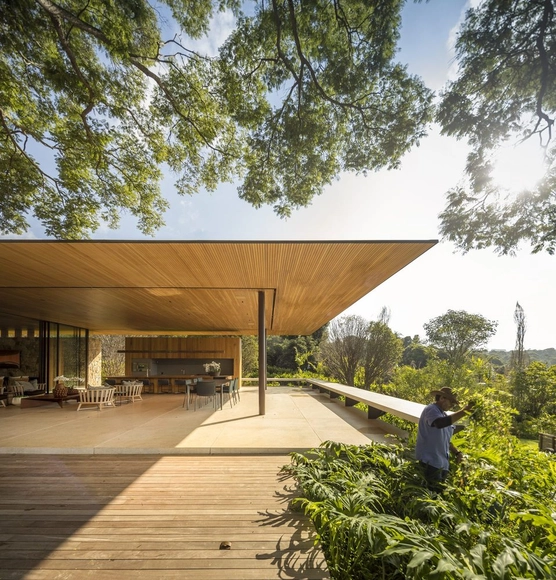
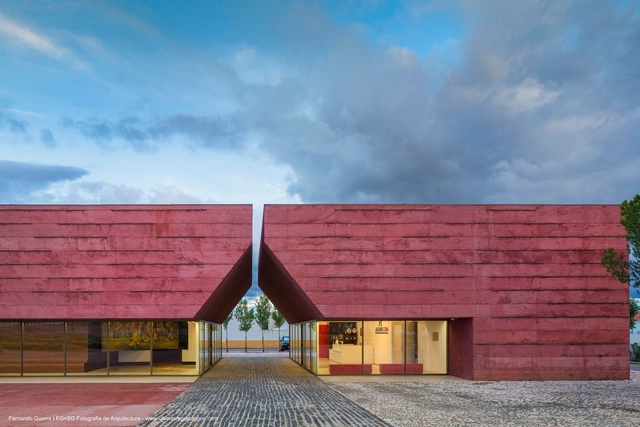
When we think of concrete, the color gray generally comes to mind. The traditional mixture of concrete, which comprises cement, gravel, sand, and water may vary in color depending on elements and admixtures but naturally varies from light to dark gray. However, compounds that add pigment to the mixture are becoming increasingly prevalent and popular, as they infuse the concrete with hues more stable than paint. These shades result from the addition of oxides: yellow, red and their derivations (eg. brown) are obtained with the addition of iron oxide; chromium and cobalt oxide create the greens and blues, respectively. For black concrete, it is common to use black iron oxide and carbon oxide combined with pozzolanic cement.