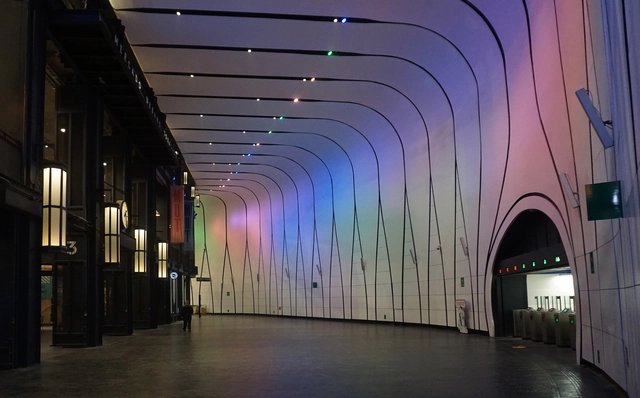
Santiago de Chile's metro system is undergoing a major connectivity upgrade. On the surface, construction has begun at several stations across the city, including two new exits at Tobalaba station that connect to the new MUT Mercado Urbano de Tobalaba. Below ground, equally significant changes are taking place: the extension of Lines 2 and 3, and the announcement of Lines 7 and 9.
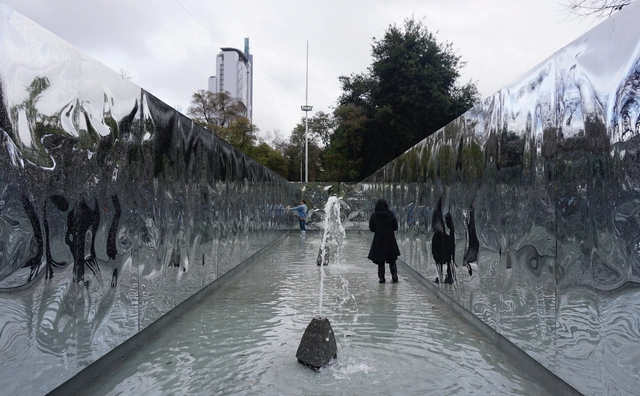
From July 11 to 16, the La Fuente Pavilion is open to the public in Balmaceda Park in Santiago, Chile. This new public space installation, designed by architect Camilo Palma (Abarca+Palma), invites visitors to engage in "contemplation and tranquility around the stimuli and sensations of water." The structure, composed of mass-produced, prefabricated building elements, sits atop the original 1931 fountain designed by Oscar Prager, Sergio Larraín, and Jorge Arteaga.
To experience the public space firsthand, ArchDaily visited the installation on a rainy day.
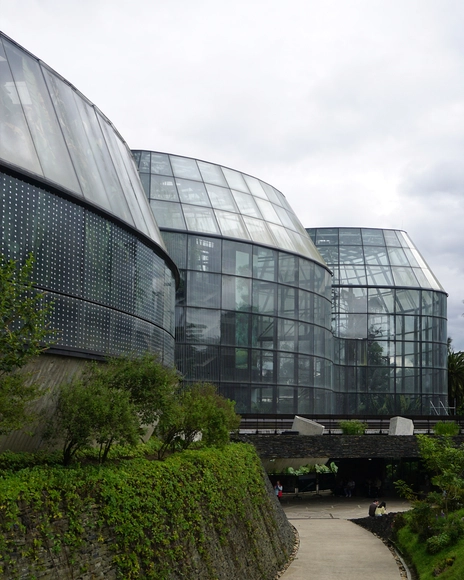
Almost a decade ago, news flooded Colombian media: the announcement of the winning project for the Tropicario of the Bogotá Botanical Garden. Today, we want to bring you all the information we have compiled since then, both about the competition won by DARP and the construction process - up to its inauguration in 2021 and its evolution in recent times.
We hope this architectural journey helps you to know every step, every decision, and every detail that contributed to its realization. Understanding that its true legacy lies in how it transforms lives, inspires communities, and endures over time.
Sebastián Bravo leads Oficina Bravo, an architectural practice founded in Santiago de Chile that has been developing projects with a clear strategy: to contribute to the city by efficiently using architectural, economic, and constructive resources through renovation and remodeling. Among their projects are spaces that openly interact with the immediate context, including works of patrimonial, administrative, and residential value such as Casa Compañía and Zagreb Office, as well as a large series of gastronomic and commercial spaces such as Felix Café and Apolo Helados.
Due to its design process and its ability to transform and restore spaces, Oficina Bravo was selected by ArchDaily as one of the best new architectural practices of 2023. They make a point of talking with clients, understanding them, and involving them in the process. This, they say, is the only thing that ensures that the ideas behind the project survive with dignity.
We have selected seven coffee and ice cream shops in Santiago that were designed by Oficina Bravo, while also conducting an interview to get to know their inspirations, working methods, and future projects. The result is a true daily guide for you to enjoy their work, their design process, and a good cup of coffee.
The Association of Young Architects of Catalonia (AJAC) of the Architects' Association of Catalonia (COAC) has announced the 22 selected projects in the 13th edition of the AJAC Awards—a recognition for young architects under the age of 40.
February 20th marks a new edition of the World Day of Social Justice. The theme, "Overcoming barriers and unlocking opportunities", is a perfect occasion to reflect on the importance of equity in all areas of society - and especially from architecture and urbanism. And yes: they both have a fundamental role in building accessible cities and are important tools for addressing the challenges of economic inequality and social exclusion.
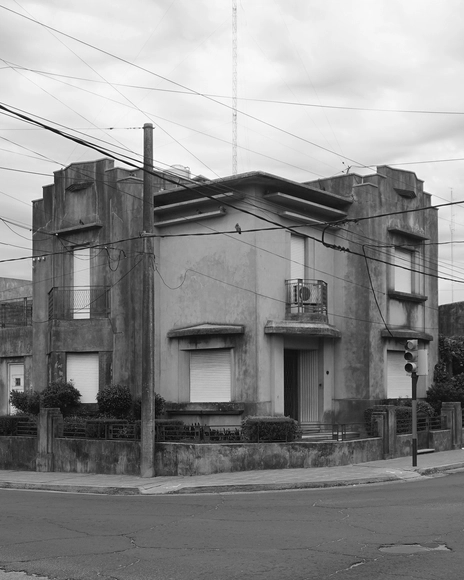
Alejo Martínez, one of the main builders of Argentine modernity, turned the city of Concordia into a reference of the South American modernist movement. His extensive work on houses, such as Casa Péndola Díaz from 1925, Casa Marcone from 1928, or Casa Camaño from 1930, "changed the typology of the 'chorizo' house to compact housing, where straight volumes stand out, staggered from each other, and with terraces".
Mar del Plata is an obligatory reference to the Argentine modern movement. At the same time, it is the setting for many architectural classics that have been victims of neglect for years.
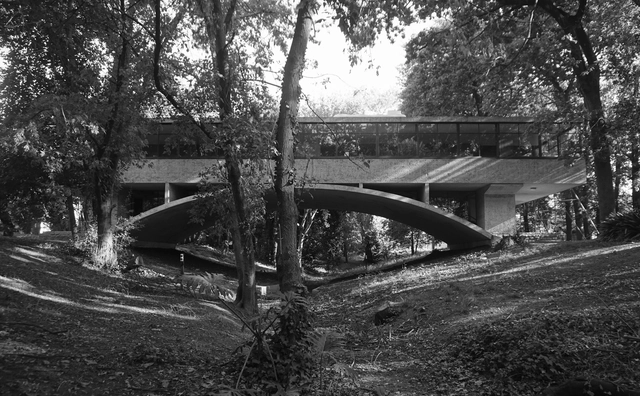
Magalí Marazzo, director of the municipality's Department of Works and Urban Planning and member of the National Monuments Commission, has taken charge of the situation by completing the restoration project of a paradigmatic work of 20th-century architecture: The House on the River.
Pérgola y Plaza de Acceso diseñada por Solano Benítez. Image Cortesía de BID
As perimeter walls are dismantled, a new layout is taking shape on the runway of Mendoza's former airfield. This adaptive reuse initiative, driven by the Inter-American Development Bank (IDB) and the municipal government, seeks to repurpose the vacant 72-hectare site to explore and develop a more open, inclusive, and carbon-neutral city. The master plan focuses on strategies addressing environmental and climate sustainability, efficient energy, water, and sanitation management, housing, mobility, and accessible public spaces, alongside social inclusion and local development. The plan envisions the integration of infrastructure, parks, green spaces, commercial and dining uses, a technology and innovation hub, and the development of new single-family and collective housing models: "the housing of the future."
The official presentation of the project to Mendoza government authorities, IDB representatives, students, and other guests took place on the site of the former airfield. For this occasion, renowned Paraguayan architect Solano Benítez was invited to design and construct an entrance pergola for the "city of the future." The structure aligns with the urban project's circular economy framework, blending craftsmanship and prefabrication to "transition from traditional construction dependent on high-embodied-energy systems toward reusing materials with lower energy expenditure," according to IDB architects and urban planners Felipe Vera and Matías Lince. Grounded in exploring the tectonic potential of brick—the quintessential material of Paraguayan construction—Benítez's work focuses on delivering efficient, local architectural solutions that prioritize the intelligent use of materials.
https://www.archdaily.com/1136107/solano-benitez-on-the-city-of-the-future-in-mendoza-to-build-with-the-least-amount-of-matter-and-energyFabian Dejtiar + Paula Pintos
Mar del Plata is an obligatory reference to the Modern Movement in Argentina. Not only for being the scene of some architectural classics such as the House on the River, the Parador Ariston, or the Terrace Palace but also for the Cementerio Parque designed by Horacio Bucho Baliero and Carmen Córdova in the 1960s.
Vicuña Mackenna 20 (VM20), located steps from the Baquedano Metro station in the heart of Santiago, is a new project by the University of Chile. It aims both to become a hub for artistic and cultural outreach and to impact the public space recovery plan in the capital's central area.
Biennales, exhibitions, and architecture focused festivals provide a platform for opening debates, conducting research, and driving innovation, but they can also contribute to the incremental changes that shape the image and the character of a city. Through temporary installations and experiments, this type of events have the opportunity to open lines on inquiry into the quality of urban spaces, inviting visitors and residents to slow down, break away from their daily routine and interrogate their local environments. The effects might not be immediate, but by cumulating these impressions and moments of contemplation, architecture and design festivals can have a long-lasting impact on the cities that welcome them.
From January 14 to 22, 2023, the XXII Chile Architecture and Urbanism Biennial will finally take place in the area surrounding Palacio de La Moneda, Santiago. The theme of this edition, "Vulnerable Habitats," seeks to address the country's urgent challenges surrounding the housing deficit and access to housing, along with the vulnerability of cities and territories reflected in their public spaces, heritage, and environmental issues.
The Architects Association of Chile along with the Ministry of Cultures, Arts, and Heritage, organizers of this event—which held its previous edition in 2019—have recently announced the results of their open calls: 50 works and projects will be part of the National Architecture Exhibition, and 36 initiatives will join the Meetings and Debates Program. See the complete list below.
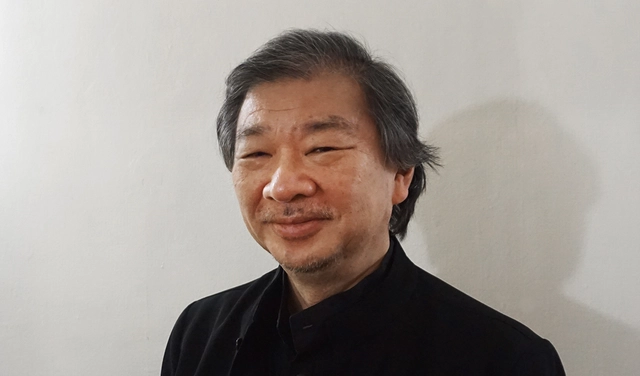
From the 21st to the 25th of September, the Mextrópoli Festival + XII Ibero-American Biennial of Architecture and Urbanism took place in Mexico City. As part of the event, ArchDaily spoke with 2014 Pritzker Prize winner Shigeru Ban about the central theme "Inhabiting at the margins", a proposal that sought to make visible the work of those who are providing solutions to the growing social, environmental, and economic needs at the margins of the system.
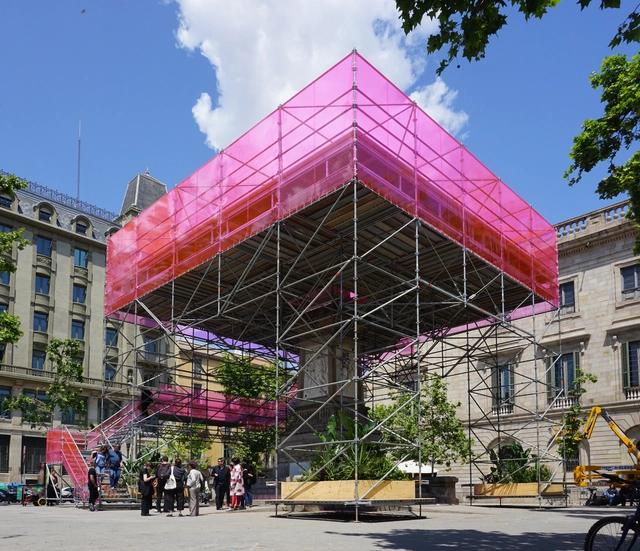
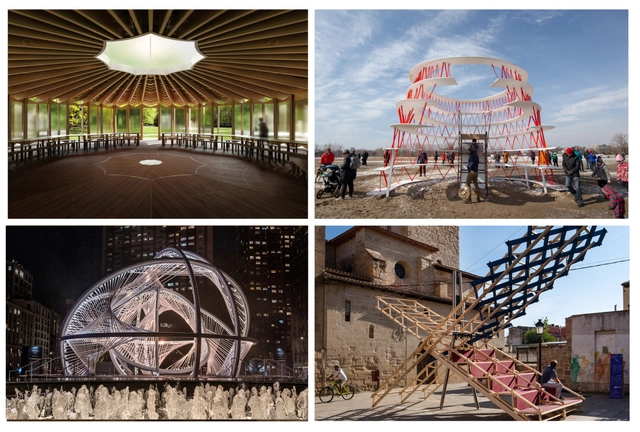
Staged stories on community and identity, ephemeral architecture showed that in 2022 it doesn't have to be permanent to be powerful. A direct and popped-up public installation can shift from preparation to action, reclaiming and defining what makes a community unique. Highlighting installations to acknowledge linguistic diversity in NYC, a giant table to celebrate culinary in Barcelona, and a large-scale net in Dubai to represent the local culture, among others, these initiatives seek to understand ways in which local and regional expressions can help cities to be more equal and diverse.
Globalization has connected the world boundaryless. While it has also made information more accessible, it has led to homogeneity and identity crisis at melding unique societies and cultural expressions. Cultural differences are undeniable as globalization grows. Hence, as architecture produces common living standards, it can also highlight singularities. Festivals, installations, and pavilions, 2022 was the year to express local memories to be recognized and celebrated, setting Community and identity as central topics in ephemeral architecture throughout the year.
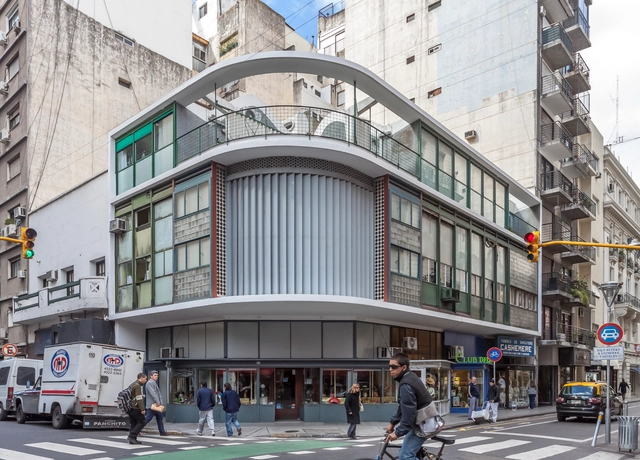
The building on the corner of Suipacha and Paraguay Streets in the city of Buenos Aires, designed by the Spanish architect Antonio Bonet, established from its realization the basis to begin certain reflections on international modern architecture in the Argentinian context of the 1930s.
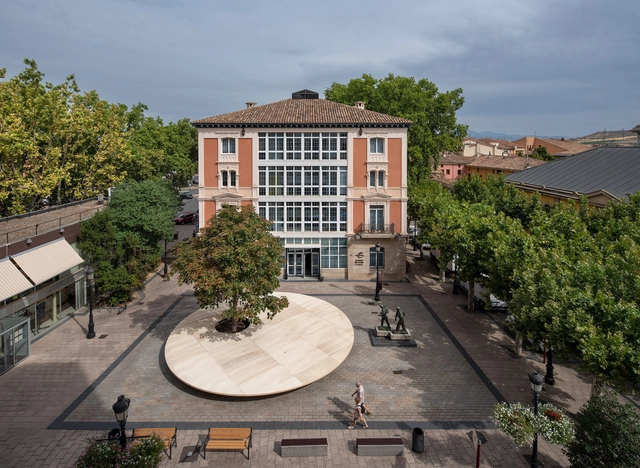
There is no need to worry about getting lost. Over its eight editions, the team behind the Concéntrico Festival has curated an extensive series of locations: new squares, interior courtyards, and hidden public spaces that speak volumes about the role of the urban fabric when discussing architecture in Logroño.
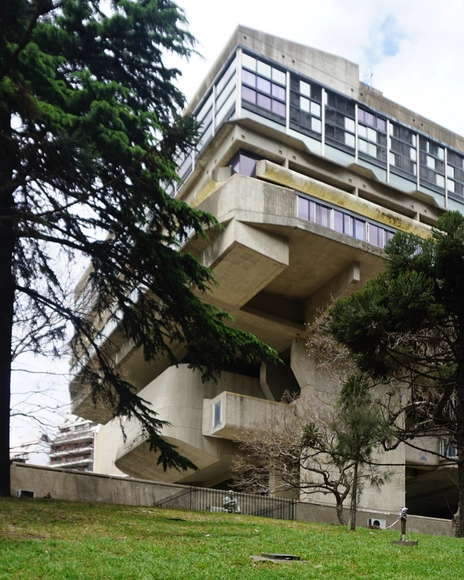
In the central Recoleta neighborhood of Buenos Aires, in a large lot between Austria Street, Agüero Street, and Del Libertador Avenue, stands the current building of the Mariano Moreno National Library, designed by architectsClorindo Testa, Francisco Bullrich, and Alicia Cazzaniga.
Built on the basis of the project that won first prize in a national competition in 1961, and completed in the early 1990s, it has become a landmark of modern Argentine architecture and an example of the variant of 20th century expressionism known as "brutalism".