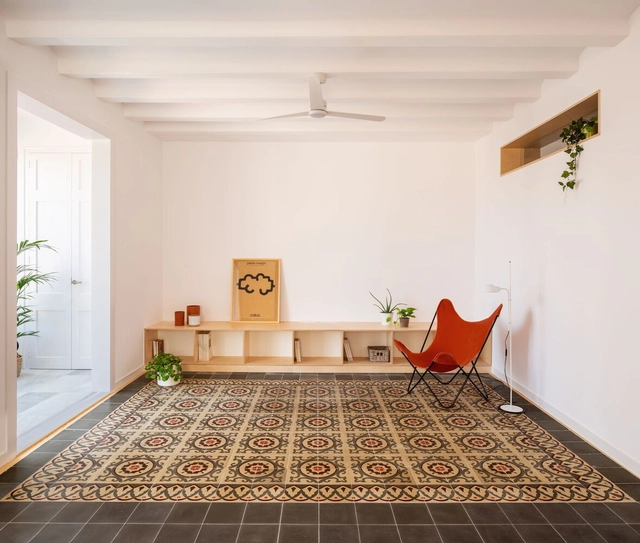
In the quest to preserve certain architectural, historical, and cultural features of original Catalan homes, apartment renovations are conceived as a means of connecting the past and the present through the recovery and/or restoration of coverings, flooring, carpentry, facades, and more. The history of ceramics in Spain has evolved over the years, experiencing periods of productive flourishing as well as decline. However, the expressive language, versatility, and adaptability of hydraulic tiles to tradition and the future stand out in homes' interior and exterior spaces with their wide combination of colors, textures, and patterns.
Guillaume Bontemps/Ville de Paris. Image Courtesy of Paris 2024 Olympic Games
The recent history of the city of Paris is entangled with that of the Olympic Games. In 1900, Paris hosted the second edition of the Games, starting a journey of urban adaptations and architectural developments that prepared the city for the event. Among the most important changes was the introduction of Line 1 of the metro, inaugurated in 1900 to link the locations of the Universal Exhibition with those of the Olympic Games in Vincennes. Just 24 years later, the city hosted one of the most influential editions of the Olympic Games. The event, the first to be broadcasted on the airwaves, contributed to a substantial rise in the popularity of the Games. It was also during this edition that the concept of the Olympic Village was born. Several of the infrastructures and venues built over a century ago are still in use in Paris, with some of them returning now as hosts of Olympic events.
According to the United Nations, indigenous people are "place-based" ethnic cultures that have not migrated from their initial homeland. In today's world, with human-caused climate change driving extreme weather events and a growing demand for authenticity and cultural diversity, architects are increasingly turning to indigenous knowledge systems not only as sources of inspiration but as viable solutions to adapt and respond to local and global challenges. As traditional custodians of the land, Indigenous communities possess a profound understanding of their ecosystems, locally available materials, cultural norms, and social constraints. This knowledge holds insights valuable for shaping contemporary architecture, helping it adapt to both the people and their environments.
Vernacular and indigenous practices are emerging as a foundation for architectural reimagining, informing spatial lays, the choice of materials, and building techniques while also allowing for the integration of innovation and contemporary expression. This careful blend of tradition and modernity can have a significant impact in terms of sustainability, as architects who adopt the indigenous approach to harnessing available resources can not only create structures rooted in their context but also minimize the ecological impact of the construction. Additionally, collaborating directly with Indigenous communities leads to projects that prioritize community participation, cultural sensitivity, and sustainable development.