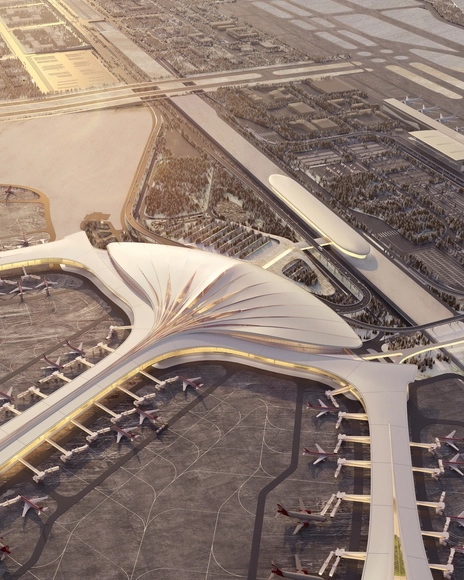
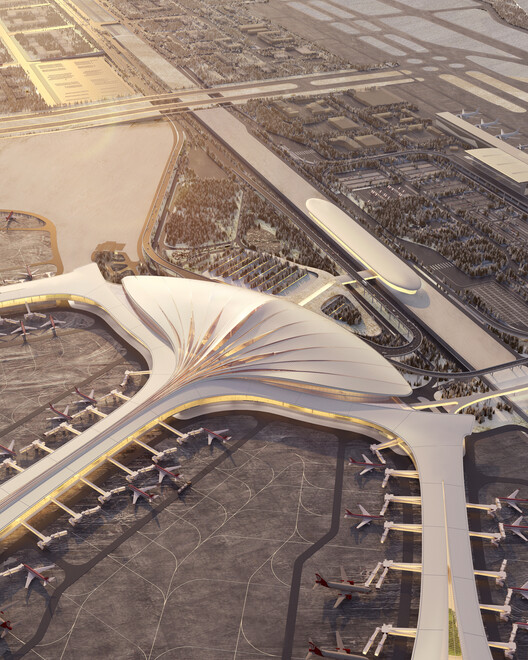
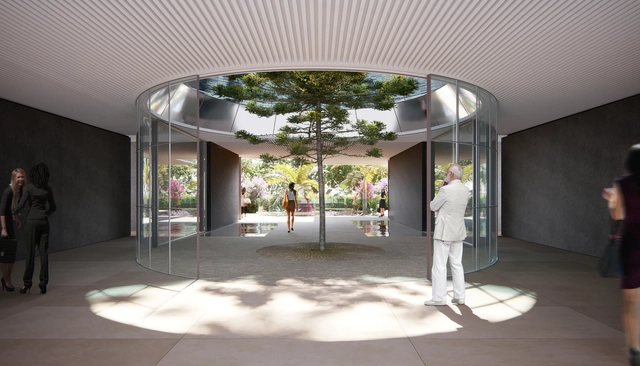
Following an international competition, MAD Architects, in collaboration with ChinaAirport Planning & Design Institute and Beijing Institute of Architectural Design, has revealed the design of the Changchun “Longjia” International Airport Terminal 3 in China. The new building is expected to accommodate 22 million passengers per year. After completion, the 270,000 square meters terminal will become the largest transportation junction in Changchun city and the Jilin Province.
Foster + Partners and Uruguay-based firm Ponce de León Arquitectos have unveiled The Edge, a residential project comprised of eight apartments in Montevideo's coastal landscape in Uruguay.
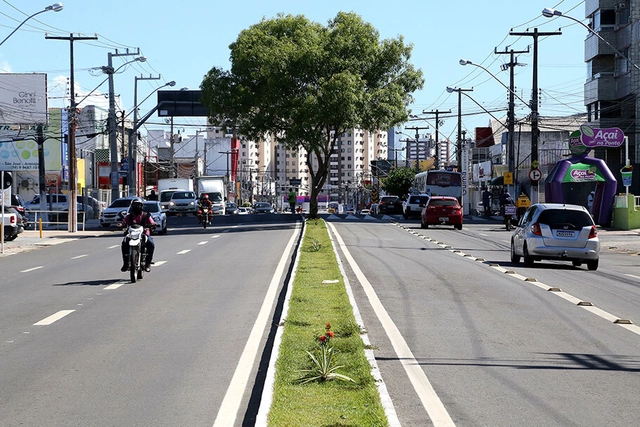
Recently, many Brazilian cities have turned to tactical urbanism as a way to intervene in the design of their streets, making them safer and more appealing—all at a low cost and on a short timeline.
The volume and nature of these interventions have been particularly remarkable in addressing the immediacy imposed by the pandemic in our cities. They seek to adapt street layouts to modes of travel that reduce the risk of transmission during daily commutes, even amidst scenarios of restricted activities.
The emotional and spiritual atmosphere one feels when entering centuries-old architecture is palpable. So while the degradation, and sometimes even intentional destruction, of ancient structures and environments, is regretful and possibly shameful, it’s often an all-too-unavoidable part of healthy urban planning, adhering to important health and safety laws and regulations.
Whenever these historic yet antiquated environments are refreshed and adapted for modern life, however, they’re often labeled as grotesque Frankensteinian versions of their once beautiful selves. When the transformation is treated with care and respect, however, the humble grandeur and contemplative scale of the settings can remain intact.
Suburbs have experienced a sort of renaissance over the last decade. During the COVID-19 pandemic, people fled urban cores in favor of open space and decentralized amenities. For some people, the word “suburb” or “suburbia” flashes images of manicured lawns and rows of identical homes, but what makes a successful suburb may have more in common with cities than you might think.
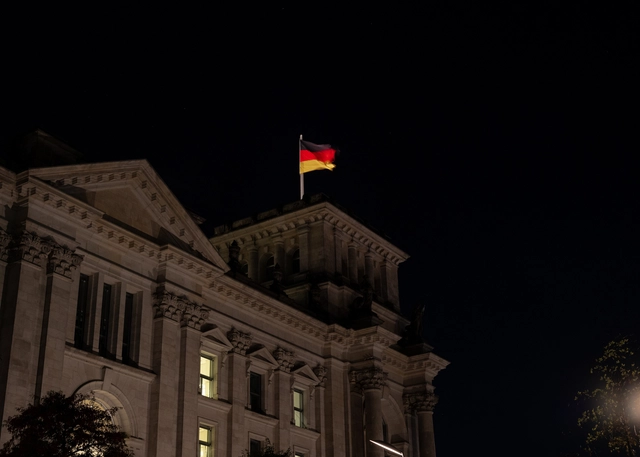
When capital cities like Paris and Berlin resolved to switch off lighting for public buildings and landmarks in July 2022 in order to save energy in the context of the Russian invasion of Ukraine, the cities created a ripple effect throughout central Europe. Images of dark iconic landmarks swept through the media and allowed politicians a momentary act of environmental demonstration. However, designers have started to question the sustainability of this ad hoc step. Seen from a broader perspective the impression arises that this alleged radical action has been part of a rather media-savvy campaign with small effect in cities at night. Further steps are necessary to reassess urban lighting that may have a major impact on energy saving and sustainability.
A major 7.8 magnitude earthquake hit central Turkey and north-west Syria this Monday, February 6, with a second 7.4 magnitude quake reported a few hours later in the same region, according to reports from the Guardian. Among the most affected areas is Gaziantep, located 150 miles from the border with Syria and 50 miles from the earthquake’s epicenter in Kahramanmaraş. Tremors were felt as far away as Lebanon, Greece, Israel, and the island of Cyprus. Authorities are still assessing the number of victims, as local and international rescue teams have been deployed to search for survivors. Early estimates report that over 1,700 buildings have collapsed or have been critically damaged, as confirmed by Turkey's Vice President Fuat Oktay.
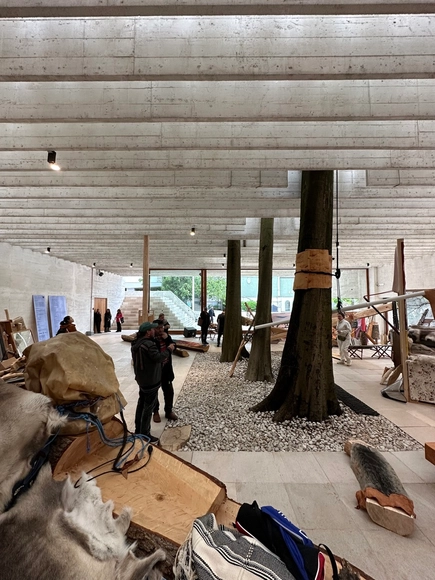
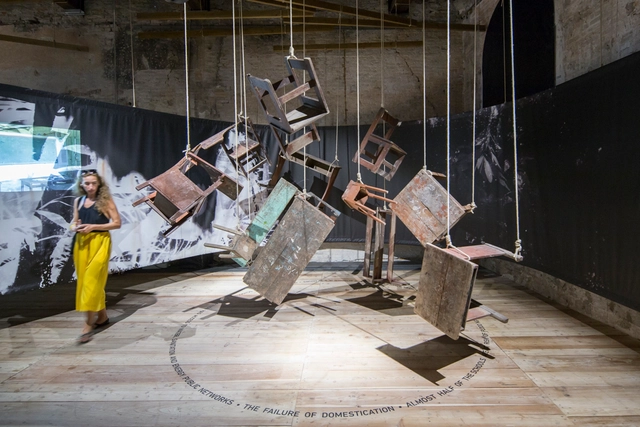
Courtesy of Media by Matteo de Mayda/ Courtesy of 18th International Architecture Exhibition – La Biennale di Venezia, The laboratory of the Future
For the 18th International Architecture Exhibition – La Biennale di Venezia, the Nordic Countries Pavilion, representing Finland, Norway, and Sweden, will showcase Girjegumpi, an itinerant collective library project initiated by architect and artist Joar Nango. For over fifteen years, Joar Nango has been assembling an archive of books and materials exploring Indigenous Sámi architecture and design, traditional building knowledge, activism, and decoloniality. The Girjegumpi first opened to the public in 2018, becoming a welcoming space for gathering and promoting the Indigenous culture. In 2023, the library will travel to Venice, where it will be presented in the Nordic Countries Pavilion, designed by Norwegian architect Sverre Fehn.
Videos
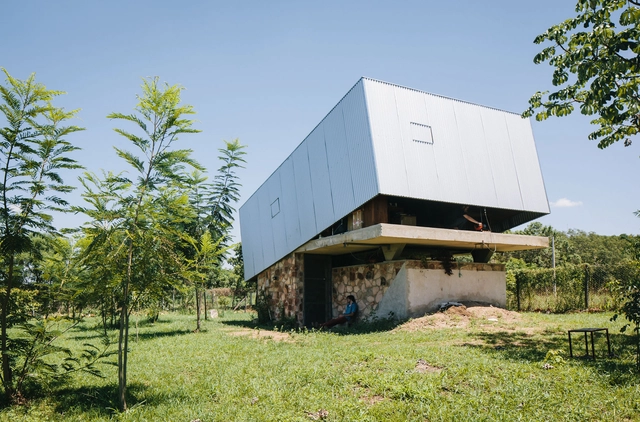
Caja Obscura / Javier Corvalán + Laboratorio de Arquitectura. Image
Through shapes, colors, and the elements on their facades, many architects have sought to bring a sense of movement to works that are otherwise physically static. Santiago Calatrava, Jean Nouvel, and Frank Gehry are only a few of the masters who managed to provide a dynamic effect to motionless structures, highlighting the work in context using formal strategies borrowed from the plastic arts. In other cases, however, architects have also opted for physically kinetic structures that could bring a unique aesthetic or functional dimension to the work.
For much of the world, this past year was spent within the confines of our homes, undoubtedly blurring the lines between our public, professional, and private lives and transforming our living spaces into places of work and productivity. This transformation of spaces and how they are used is nothing new in the world of architecture as countless spaces take on various roles beyond what they were originally designed for--a fact reflected in their layout, design, and the materials used within them.
With the rise of social media, we have entered an era of a multimedia "society of the spectacle," where the influence of images on the public grows year by year. Visually-driven media platforms are increasingly dominating the market, serving as an alternative form of travel that allows people to experience breathtaking scenes from around the world without leaving home. Dedicated to bringing design inspiration to the public, ArchDaily established its presence on Instagram years ago. In 2022, we expanded onto China’s Xiaohongshu (RED), hoping to share exceptional projects with a broader audience. As expected, the influence of star architects remains strong, while playfulness, aesthetics, and relevance emerge as key terms guiding reader interest. Here, we present the top 20 most-liked architectural projects of 2022 on ArchDaily’s official Xiaohongshu and Instagram accounts. Read on to discover the public's architectural preferences.
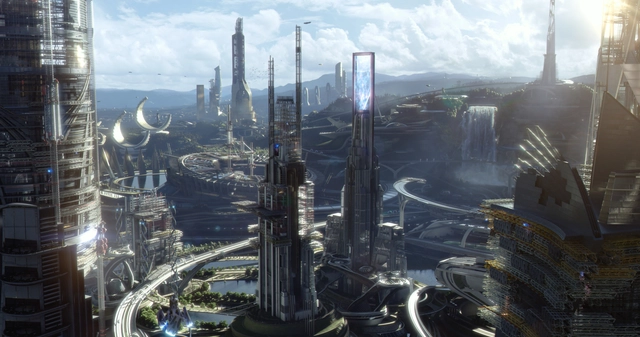
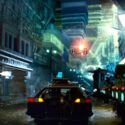
Futuristic city in Tomorrowland. Source: Wallpaper Abyss
Through set design, cinema reveals a vast array of cities, becoming a compelling medium for discussing their transformations. This art form allows directors to push the boundaries of their imaginative universes through constructed sets, visual and special effects, and the overall composition of the frame. In many films, directors present futuristic cities inhabited by their characters, environments that often appear entirely unprecedented to us. It is through the spectator's effort to understand and appropriate these scenographic spaces that the city truly reveals itself on screen.
Since 2016, the Patronato Cultural del Perú has been responsible for producing and organizing the Peruvian Pavilion at the Venice Architecture Biennale, promoting and representing the works and projects that reflect the country's architectural landscape.
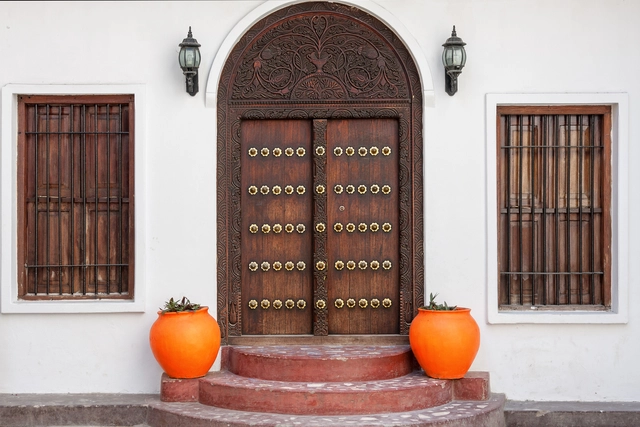
A defining feature of the architecture of the Swahili Coast—apart from its coral stone buildings and mangrove poles used to elaborate those structures—is undoubtedly the ornamented door so commonly found across this coastal area. Richly decorated, and historically often layered with meaning, these doors, apart from serving the more utilitarian function of an entrance, were also signifiers of status and wealth. From this Swahili Coast to the Arabian Peninsula, these doors of the coast are very much markers of their location, representative of trade and migration.
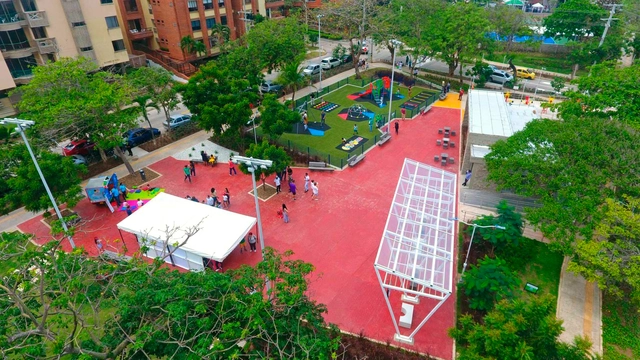
Samira Perez, a longtime resident of Barranquilla, Colombia, used to spend time and money on taxis to take her children to local shopping malls after school and on weekends. There, they would pass the time window-shopping at high-end stores, watching shows, and eating at restaurants.
The central role of the shopping mall in the lives of the Perez family is common in rapidly urbanizing Latin American cities, where, in the absence of accessible outdoor alternatives, malls often provide safe, clean social spaces. In Barranquilla, where malls are ubiquitous, a 2009 perception survey showed that 90% of residents were dissatisfied with the city's green and public spaces.
Women's studies officially began in China in the early 1980s. Women awoke and started to take bigger roles in society as it grew. Women had been working as architects for a century, but Lin Huiyin was not recognized as the country's first female architect until the 1920s due to the profession's tardy development in China. But nowadays, more and more female architects are filling crucial positions.
An indispensable item, windows are fundamental to bringing more comfort to a room. Besides the desired connection between the interior and exterior, it is through their openings that it is possible to provide natural lighting and ventilation to the rooms.
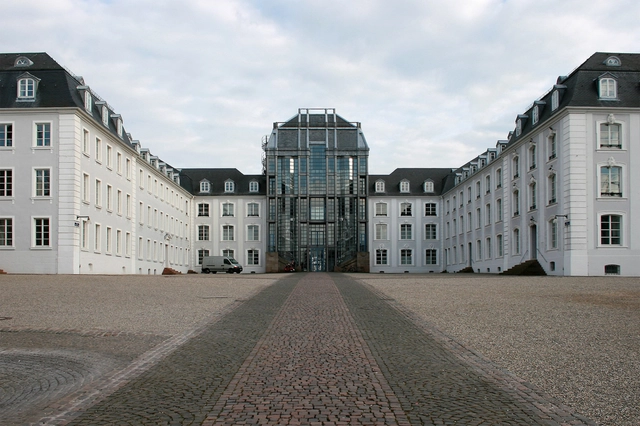
Saarbrücker Schloss – Place of the Invisible Monument. From Wikimedia Commons, the free media repository
The counter-monument 2146 Stones – Monument Against Racism / The Invisible Monument is an intervention carried out in 1993 on the square in Saarbrücken by Jochen Gerz and students from his class at the Hochschule der Künste Saar, in Saarbrücken, Germany. Executed in accordance with Gerz's constant practice of vigilance [1], the work is the result of a period of unrest in German artistic production that questioned the representational art of a post-war generation, as well as the search of those who lived through the events of World War II and the rise and fall of the Berlin Wall, amidst a national effort to evade the memories of the Holocaust.
https://www.archdaily.com/1136424/negative-past-the-construction-process-of-the-monument-against-racismFabiana Costa
A resident of Vitória might not think of the Jucu River Basin forests when pouring a glass of water. Uruguayans likely do not think of the Amazon Rainforest when they watch rain fall on city parks. And residents of Addis Ababa are probably not thinking of the Congo Basin when they eat injera, a traditional Ethiopian staple made from teff grain.
Yet, forests near and far affect the daily lives of these people more than they realize.
https://www.archdaily.com/1136051/how-forests-benefit-people-living-in-citiesSarah Wilson, John-Rob Pool, Mack Phillips e Sadof Alexander
I am a software engineer (commonly called a programmer). Creating software involves many different roles. Different companies have different roles and different names for them, but it typically involves software engineers, product managers, and UX (user experience) designers.
Each role has its own strengths and its own responsibilities. Product managers identify user needs and dictate what we should build. UX designers determine the look and feel of the product — the layout, different screens, copy, images, branding, etc. Software engineers handle the actual implementation: they solve the technical problems required to build the product.
The concept of the circular economy is increasingly prominent in discussions on architecture and urbanism—especially as cities are home to around 55% of the world's population and continue to grow. The goal of circularity is to reduce the environmental impact of current production and consumption models through the efficient use of material resources and waste reduction. But how can this idea actually be implemented in cities?
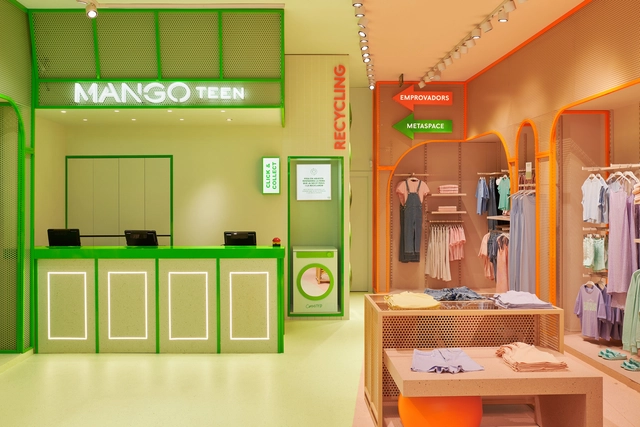
When one steps into a Starbucks, they almost instantly know they are in the famed coffeehouse, and not at a McDonald's. Apart from the uniformed staff and a giant sign at the door, there are countless other factors that make a Starbucks look like a Starbucks. Textures, materials, shapes, colors, layouts, furniture, and lighting all contribute to the experience of being in a branded environment. These elements are replicated globally to create an identifiable image. As economic patterns change, brands are looking at extending their identities into spatial experiences in order to better engage with their customers in their daily lives.
For architects and urban planners, perhaps the most difficult part of the city development process is dealing with the political strategies used in issues that, to us, should be purely a matter of urban planning. In the past, we imagined that cities were created and transformed solely through the architect's design, even though we knew that multiple forces have always been at play. In the case of Inhoaíba, located in the West Zone of Rio de Janeiro, the forces beyond architects and urban planners are, unfortunately, far more present than we would like, which has prompted me to write this piece.