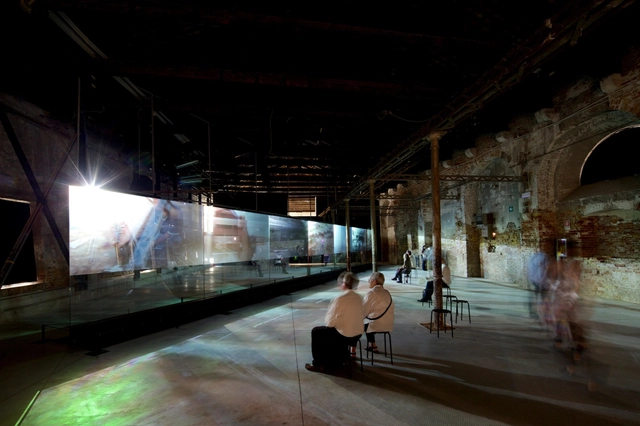
At its debut at the Venice Architecture Biennale 2014, Indonesia offers a peek into the country’s past 100 years of architectural history in its pavilion: “Craftsmanship: Material Consciousness.” Moving images projected onto glass panels tell Indonesia’s story through the development of six materials, traced over time: wood, stone, brick, steel, concrete and bamboo. See images of the pavilion and enjoy a statement from the curators after the break.
The series of earthquakes that began on 4 September 2010 altered the Canterbury landscape and had a huge impact on the people. Now it’s time to create a place to remember.
LEGO® Architecture Studio, a new concept of the LEGO Architecture line, makes his appearance in Italy in an innovative context of architecture and music. The LEGO Group chose Italy and the prestigious setting of the Sicilian "Villa Pennisi in Musica" event for the launch of the new set of building blocks.
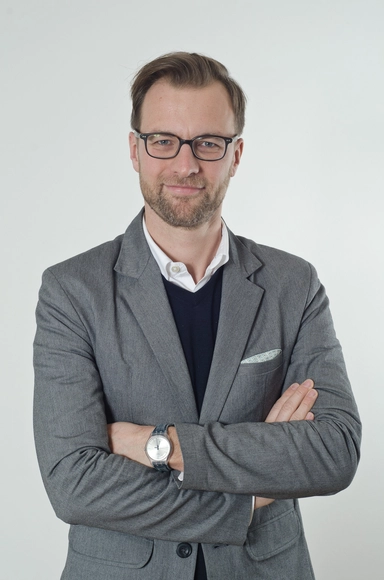
Martino Stierli, The Philip Johnson Chief Curator of Architecture and Design, MoMA. Image Courtesy of MoMA
Martino Stierli, a Swiss architecture and art history professor interested in "how architecture is represented in the media and intersects with art," has been named Barry Bergdoll's successor as the chief curator of architecture and design at the Museum of Modern Art (MoMA).
Rafiq Azam is the principal of SHATOTTO architecture for green living, based in Dhaka, Bangladesh. He will introduce us to his work and city, which is also home to works by Louis Kahn. Azam’s “green” is not about global ratings or the current sustainability trend. It is his response to the sky, water, and vegetation that surround him and his city. There is an apparent simplicity in Azam’s work that disguises and belies a complex fabric revealing the wonders of the cosmos.
While other cities in the United States are shrinking, the world's largest retirement community - The Villages - is booming. Completely devoid of crime, traffic, pollution, as well as children, the fastest growing metropolitan area in the country raises serious questions about the concentrated demographic's future infrastructural needs. After all, by 2050, the over-60 set is expected to almost triple to 2 billion. To learn more, check out this fascinating article on Bloomberg.
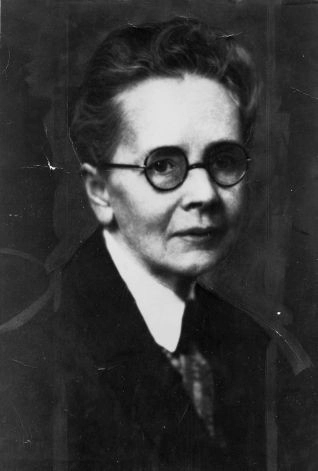
Julia Morgan is the eighth posthumous winner of the Gold Medal, which has been issued since 1907. Image Courtesy of The Chronicle
Considering Julia Morgan was overlooked for over 100 years and has been dead for over 50, naysayers may consider her recent accolade as the first woman to receive the AIA Gold Medal something of an empty gesture. However, the prestigious group of supporters who compiled her nomination package - among them Michael Graves, Frank Gehry, and Denise Scott Brown - would beg to differ. To find out how and why the trio championed Morgan's case, check out this article on SFGate.
Urban farming is nothing new, but Aprilli Design Studio's proposal for a completely open-air skyscraper does put a novel spin on the sustainable ideal. Instead of tacking greenery onto roofs and balconies, they incorporate agriculture into cities by dedicating entire buildings to the cause. To learn more about the tree-like design, check out Fast Company's article here.
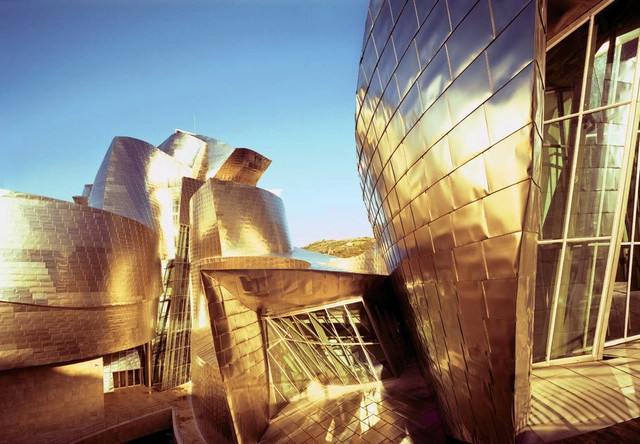
It is a curious fact that architects do not put their signature on buildings. While even a novice architecture enthusiast can pick out a Frank Gehry building in any given city, there is no physical statement within that building identifying Frank Gehry as the designer. But why not? This article by Planetizen asks explores this interesting question.
ECOWEEK in a non-governmental NGO with the mission to raise awareness on environmental issues and Climate Change and to promote the principles of sustainability. ECOWEEK has been organizing conferences and workshops across Europe that inspire and empower young architects to be active designers for the benefit of their communities.
The ECOWEEK International Conference & Sustainable Design Workshops is scheduled to take place in London in September 14-21, 2014. The event is expected to attract young architects, landscape architects, designers and architectural students from the UK and abroad.
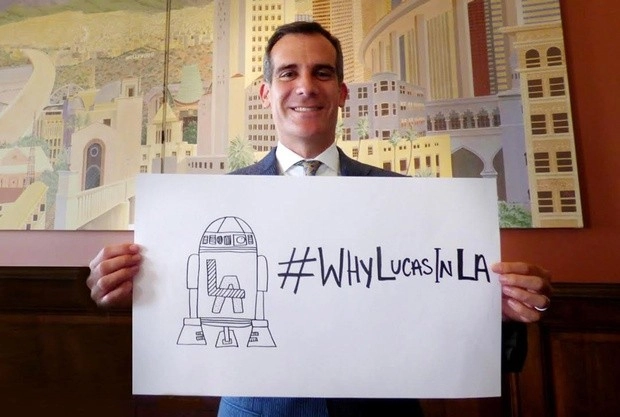
Los Angeles Mayor Eric Garcetti proudly displays his pro-Lucas Twitter hastag. Image Courtesy of City of Los Angeles
Before George Lucas found a home for his museum in Chicago, the mayors of other cities were desperately vying for the honor (see Los Angeles Mayor Eric Garcetti above). If they are still disappointed about losing out, a new study about the aftermath of building cultural centers might offer some consolation. To learn about the planning fallacies and negative outcomes often associated with these building types, check out CityLab's recap.
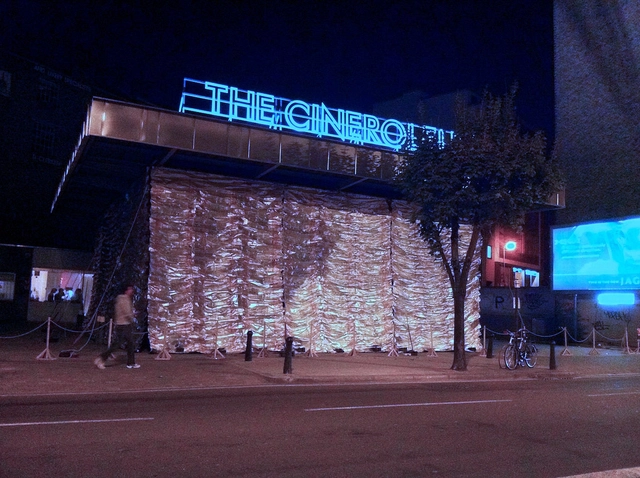
In his interesting profile of the young London-based practice Assemble, Rowan Moore of the Observer investigates the work of arguably the best collective of designers to emerge from 2010's "Autumn of Pop-Ups" - examining how they have stayed true to the more noble aspects of pop-up architecture despite the concept's increasing commercialization. From their first project, a temporary cinema in a petrol station, to their recent Yardhouse project in Stratford, Moore finds an architecture that values exuberance and fun, yet is mature and refined. You can read his article in full here.
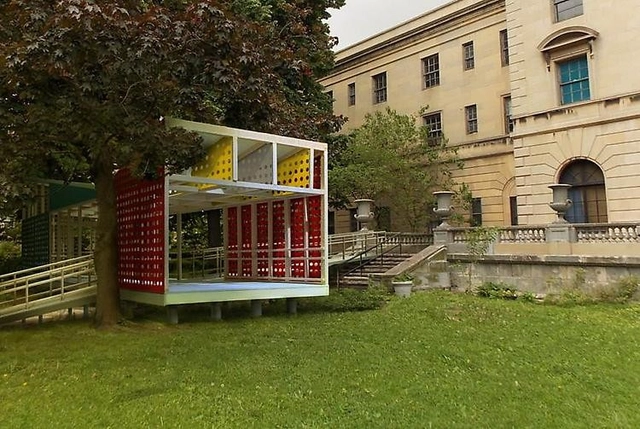
SuperPuesto is a temporary pavilion by Terence Gower commissioned by The Bronx Museum of the Arts in collaboration with the Andrew Freedman Home for Beyond the Supersquare, the first U.S. museum exhibition to examine the complicated legacies of modernist architecture in Latin America and the Caribbean through the perspectives of 30 contemporary artists. With the goal of providing an immersive space for visitors to experience the exhibition’s artistic and architectural themes, SuperPuesto also serves as an annex for educational and public programs related to Beyond the Supersquare.
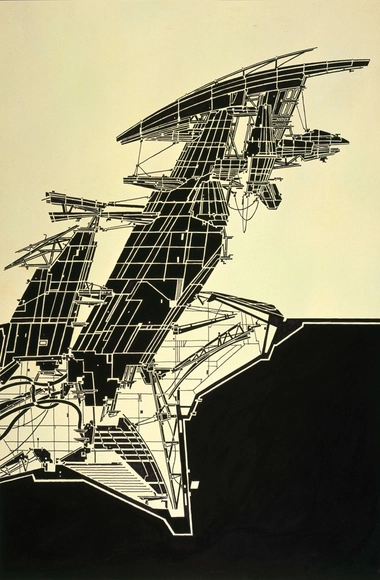
The Museum for Architectural Drawing presents Lebbeus Woods, ON-line, an exhibition of the finest works of architectural theorist, draftsman, educator and architect, Lebbeus Woods (1940–2012). Curated by his longtime friend and partner Christoph a. Kumpusch, the exhibition brings together a collection of Woods’ visionary works that have never been exhibited before. The intensely rendered architectural and urban environments produced early on in Woods’ career are exhibited together for the first time. These ink and pencil drawings cover a wide range of Woods’ research and re-imagination of cities both real and fictive and support Woods’ longstanding desire to show the capacity of architecture as a transformative and eloquent force.
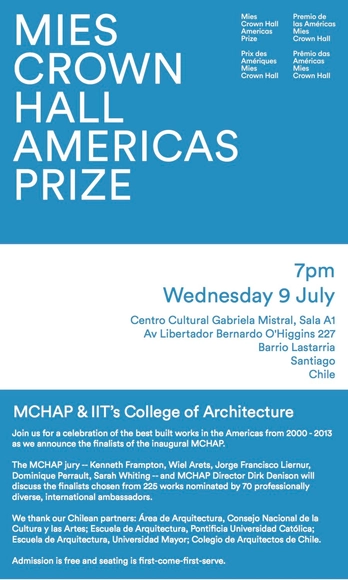
This July 9th, the winners of the inaugural Mies Crown Hall Americas Prize (MCHAP) - for which 36 outstanding projects have been shortlisted - will be announced in Santiago, Chile. Our editor-in-chief, David Basulto, has been named a founding member of the International Advisory Council of MCHAP, and ArchDaily will be covering the event. Read on after the break for details of the event.
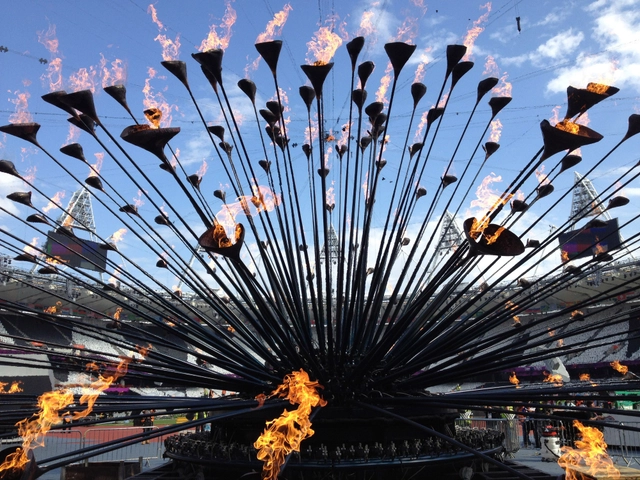
The Cauldron, designed by the internationally renowned Heatherwick Studio, is one of the most enduring and creative symbols of the London 2012 Olympic and Paralympic Games. 204 unique copper elements, each alight and representing every competing nation, were arranged in sublime concentric formation at the tips of slender mechanised steel stems. Slowly pivoting sequentially, they converged to form the Cauldron, in which the Olympic, and later Paralympic flame, would burn brightly for the duration of London’s summer of sport.