Cabinet of Curiosities / Donna van Milligen Bielke. Image Courtesy of Prix de Rome
The Dutch Minister of Education, Culture and Science Jet Bussemaker has awarded architect Donna van Milligen Bielke the €40,000 Prix de Rome Architecture 2014. A 2012 graduate from the Amsterdam Academy of Architecture, Van Milligen Bielke won the prize for her “radical and poetic intervention” - Cabinet of Curiosities - for the Hoogstraat in Rotterdam.
The Prix de Rome is the oldest and largest prize in the Netherlands for architects and visual artists under 40, previously awarded to alumnus Ronald Rietveld in 2006.
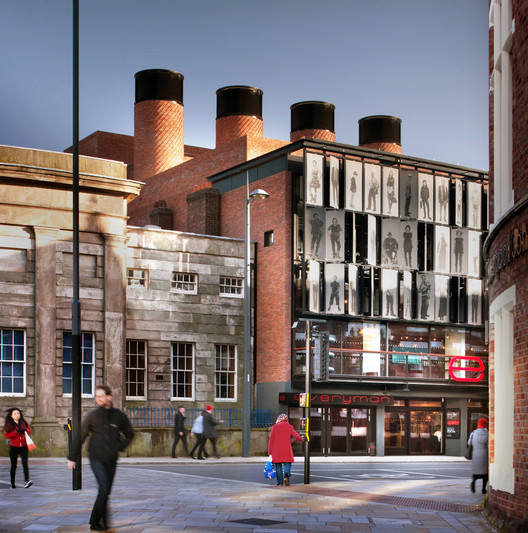
New Settlement Community Campus; NYC (2012) / Dattner Architects and Edelman Sultan Knox Wood
Judith Edelman, FAIA, an American architect and feminist who hoped to rid architecture of its “gentleman’s club” status, has passed away at 91. Starting her career in an era when hiring “girls” wasn’t the norm, Edelman’s work to elevate women in architecture has paved the way for many of today’s leading architects; She was the first woman ever elected to the executive committee of the AIA’s New York chapter and she helped co-found the Alliance of Women in Architecture in 1972. Edelman’s built work, also highly admired, ranged from affordable housing to schools and health clinics, mostly in the New York City area. You can read Edelman’s obituary here.
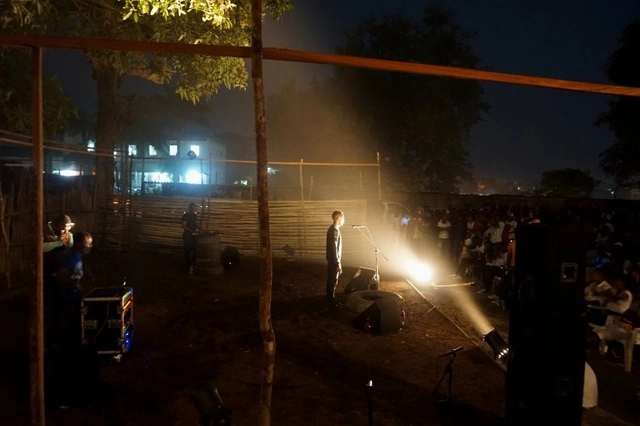
Studios Kabako, a Congolese performance and theater studio founded by Faustin Linyekula in 2001, has won the 2014 Curry Stone Design Prize, a $100,000 annual award that honors practitioners who use design to address critical social needs and strengthen communities. Studios Kabako was selected for establishing a series of cultural programs and urban interventions within the city of Kisangani as a way to help communities deal with the aftermath of civil war through dance and the arts. A video about Studios Kabako, after the break.
The Pärnu Municipal Government (in West-Estonia) announces an open architectural competition for the Rail Baltic Pärnu passenger terminal.
The aim of the architectural competition is to find the best comprehensive spatial solution for Pärnu’s Rail Baltic passenger terminal and its immediate surroundings. The hope is to commission the construction design project for the terminal and its immediate surroundings from the winner of the competition, and the intention is to also include the winner in drawing up the detailed master plan for the area.
All individuals or groups where one co-author and representative of the design team has a certificate of professional qualification as an authorized architect can participate in the idea competition.
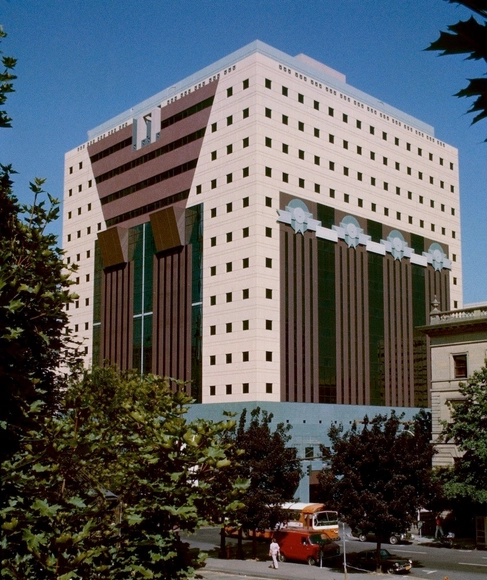
The Portland Building in 1982. Photo by Steve Morgan via Wikimedia Commons
Last week, Michael Graves attended a public conversation with Randy Gragg, director of The University of Oregon's John Yeon Center to discuss the Portland Building, America's first postmodern building. The discussion centered around the famed, 1980s building’s many problems - “dark, leaky and claustrophobic” interiors,” pedestrian-unfriendly parking garage, and more - asking Graves for his advice on whether the city should update it or tear it down. His response, “The whole idea of tearing the building down, it's like killing a child… I don't know how to react to that.” Read all of Graves’ responses to tenant complaints here on the Oregon Live.
The OISTAT Theatre Architecture Competition is an international ideas competition, aimed at students and emerging practitioners, which is organized every four years by the Architecture Commission of OISTAT (International Organization of Scenographers, Technicians and Theatre Architects). The theme of the 2015 competition will be the design of a floating theatre to be moored at a particular location on the river Spree in Berlin, Germany, but capable of being moved to other sites on the river.
The International Council of Societies of Industrial Design (Icsid) has announced the launch of the World Design Capital® (WDC) application cycle for the 2018 designation, which will mark the sixth cycle for this global initiative. Icsid invites design effective cities from around the globe to submit bids that showcase the impact of design in their city and demonstrate examples of design as a development tool.
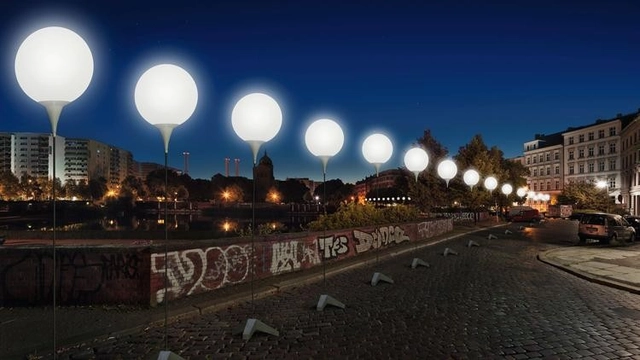
25 years ago on November 9, East German protesters torn down the Berlin Wall. To commemorate this moment, the German capital plans to line the wall’s original 9-mile stretch with 8,000 illuminated, white balloons. The installation, named lichtgrenze or “light frontier,” will be open November 7. On the 9th, the balloons will be simultaneously released into the air to music provided by the Staatskapelle Berlin orchestra.
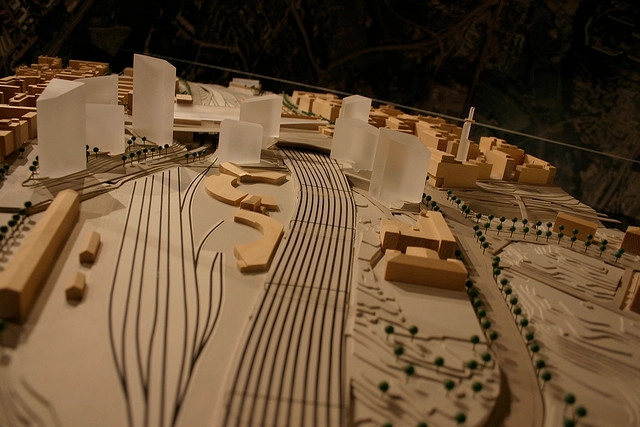
The city of Helsinki has announced plans for a design and build competition for a new commercial and residential district in Pasila, near the city centre. The competition, which calls for 8-10 buildings of 15 stories or more, will be part of the city's drive to make Pasila the "second centre of Helsinki," with a total of 150,000-200,000 square metres of residential and office space planned for the district. Read on after the break to find out more about the competition.
After the record breaking success of Fairy Tales 2014, with over 300 entries from 50 different countries, Blank Space is excited to announce that the second edition of the competition is now open for registration. The Fairy Tales competition invites architects, designers, writers, artists, engineers, illustrators, students and creatives to submit their own unique architectural fairy tales. The scale, location, and program of the submission is up to each entrant. A successful entry crafts a text narrative, along with 5 images, in the most spectacular way possible.
In partnership with La Sapienza University, Progetto Forti and Rome municipality, Young Architects Competitions (YAC) is launching a competition to redesign one of the treasures of Rome: Forte Portuense.
How can former military architecture be transformed into a leisure time and cultural focal point? The aim is to look for ideas worth triggering urban redevelopment, social cooperation and tourism.
This architecture will become part of a network of leisure time facilities a hair's breadth away from the very core of Rome.
In an interview with Shaunacy Ferro for FastCo Design, Daniel Libeskind looks back over his built works and discusses the significant 'emotional weight' imbued in many of his projects, from the Jewish Museum in Berlin to his masterplan for Ground Zero in New York City. When asked why he continually returns to projects such as Holocaust memorials - with the Canadian National Holocaust Memorial currently underway in Ottawa - Libeskind stated: "It’s not something that I choose very lightly, because it’s very difficult, but I believe that it’s very important." For him, creating these monuments is part of the act of doing "something that moves us beyond just the darkness and gives us something positive. [...] Even when it comes to the memory, you can’t just dwell on the irreversibility of the tragedy. You have to have something hopeful."
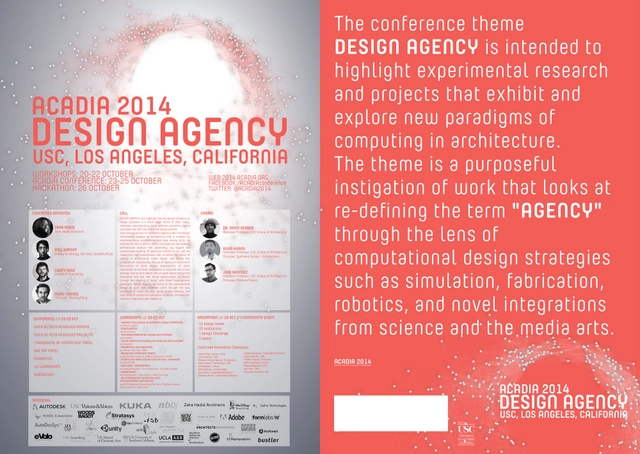
Thursday, October 23 will mark the opening of the Association for Computer-Aided Design in Architecture (ACADIA) 2014 Design Agency conference at the USC School of Architecture in Los Angeles. Hosted by faculty Alvin Huang, Jose Sanchez, and David Gerber, the conference will exhibit and share a broad spectrum of design and research that highlights innovation in architecture through a focus on design and computation. Headliners include Pritzker laureate Zaha Hadid, SimCity creator Will Wright and computational architect Mar Fornes.
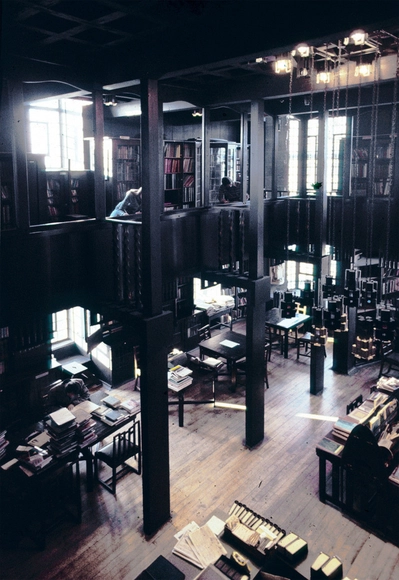
To repair the damage caused by May's devastating fire, the Glasgow School of Art is searching for a team to carry out the restoration of Charles Rennie Mackintosh's celebrated building. Following the overwhelming public support for restoration instead of a contemporary reinterpretation, the selected team will be required to return the building to its original condition over a predicted construction period of five years. More on the restoration after the break.
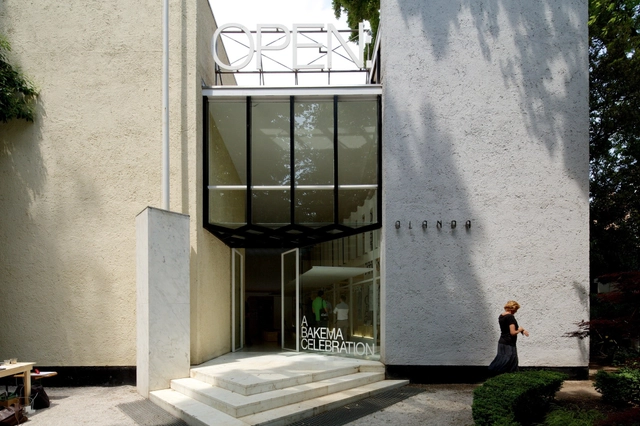
On November 20-21, AMO is hosting a discussion event at the Venice Biennale focusing on the past, present and future of Dutch architecture in which 30 young architects will be invited to present their agenda for architecture in the Netherlands for the next 10 years. Over the course of the two days, each participant will present will deliver a 7-minute presentation looking at architecture in 2024 to answer the question "where will you be and will you be doing?" Find out more about the event, and how you can be a part of it, after the break.
Maya Lin has been selected to receive the 21st Dorothy and Lillian Gish Prize, a $300,000 award presented annually to “a man or woman who has made an outstanding contribution to the beauty of the world and to mankind’s enjoyment and understanding of life.”
The artist and architect, who first rose to fame with her design for the Vietnam Veterans Memorial in Washington DC, was chosen from 100 nominees spanning across all fields of the arts. She was lauded for her “last memorial” - What Is Missing? - in which she has been developing for the past seven years in hopes to raise awareness about the degradation of our planet and rapid extinction of the world’s animals and plants.
In discussion with Christopher Hawthorne of the LA Times, Renzo Piano has taken his comments of modesty - verging on "self-deprecation" - to a new level. In response to questions about the design of the proposed Motion Picture Academy in Los Angeles he has said: "I don't think it will be that bad. [...] Actually, I'm struggling to do something good." Although Piano's design has previously been met with criticisms from Hawthorne, the Italian architect notes in this latest interview that "everything we've made at LACMA has been extremely complicated." The project, which has already seen a major alteration in the core design team, remains set to complete in 2015.