This guide covers a workflow that moves from project parameters to generated floor plans, 3D perspective views, exterior design exploration, and site context visualization, using AI tools in place of preliminary CAD and rendering work.
This guide covers a workflow that moves from project parameters to generated floor plans, 3D perspective views, exterior design exploration, and site context visualization, using AI tools in place of preliminary CAD and rendering work.
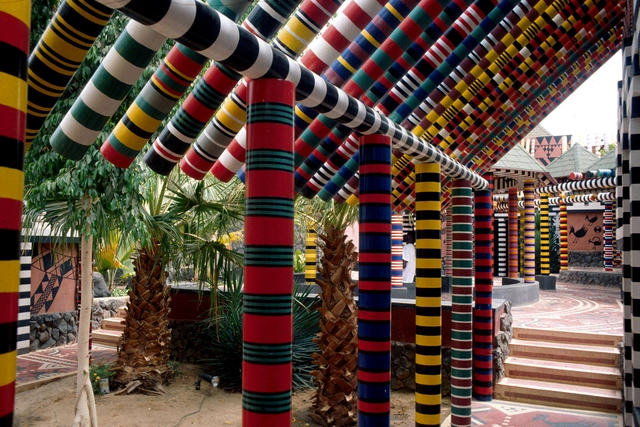
This article was originally published on CommonEdge as "African Architecture: Ornament, Crime & Prejudice."

Emporis has announced the results of its annual Emporis Skyscraper Award, recognizing the best new supertall buildings completed in the previous year. This year, the top prize was given to the Lotte World Tower in Seoul, South Korea, designed by Kohn Pedersen Fox Associates and Baum Architects. The tapered tower, South Korea’s tallest, also houses the world’s highest glass-bottomed observation deck, for architects who can handle the 1820-foot (555-meter) drop.

'Tis the season of holiday cheer, and with that comes the creative greetings from offices, museums, photographers and collaborators around the world! See our favorites below (or check out our best reader-submitted cards).
Here’s to a joyful, exciting, and architecture-filled 2018! See the best projects and articles published this year, here.

Whether it be the overly-dainty posture of scale model figures or the assumptions of being the in-house decorator, the portrayal of women in architecture is often one of subservience. Despite Despina Stratigakos' hands-on efforts behind Architect Barbie or the global impacts of the legacy of starchitect Zaha Hadid, there continues to be a lack of visibility of women in the profession.
In a recent article in the New York Times, writer Allison Arieff poses the echoed question that the architectural community keeps asking itself, "Where are all the female architects?" No longer an issue of uneven gender ratios in architectural schooling, the persistence of dwindling numbers of women principals at the top of firms simply does not resonate. She postulates, that perhaps more significant than the statistics, the real problem lies in the definition of success.





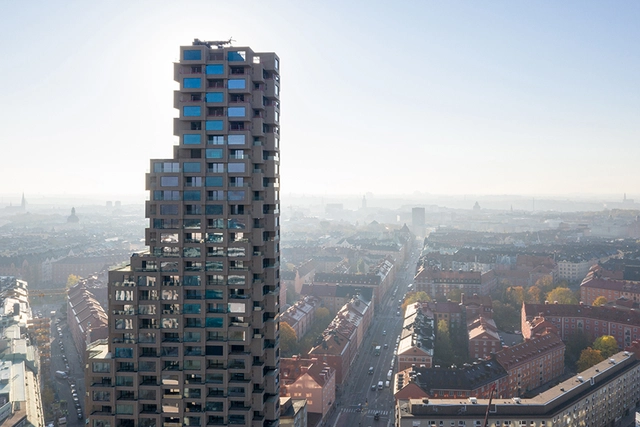
This article was originally published on Metropolis Magazine as "In His Latest Residential Building, OMA's Reinier de Graaf Doesn't Practice What He Preaches".
Last month in Stockholm, OMA partner Reinier de Graaf took a not-so-sly swipe at Bjarke Ingels: “I’m not a reincarnation of Harry Potter,” he said to a packed lecture theater at Stockholm’s KTH University.

ArchDaily is happy to announce our Media Partnership with @Oslo Architecture Triennale 2019! Throughout 2019 we will be sharing stories, interviews, and content related to the Triennale, which this year revolves around the theme of Degrowth. The interview below introduces Degrowth in the context of practice today - and hints at how this radical idea could irreversibly change how we value architectural production.
The world faces some significant challenges. The UN climate change report, which explained that we may have just 12 years and need “unprecedented changes” to avoid devastating effects from climate change, was released into a world that seemed to be plenty busy processing other things, such as rising economic inequality, increasingly partisan politics, escalating conflicts, and refugee crises, to name a few.

While the holidays bring with them a well-earned break for most architects, the creativity doesn't stop when the studio doors close. From gifts to greetings, designers bring their talents to the full range of holiday trappings - and we're here to share. This annual challenge, now in its fourth year, is our way of celebrating the inventiveness, originality, and artistry of ArchDaily readers from around the world. Below, our 50+ favorites from our readers:

Today the Board of la Biennale di Venezia named appointed Hashim Sarkis as the Curator of the 17th International Architecture Exhibition. Held bi-annually in the capital city of Italy's Veneto region, the 2020 edition of the Biennale will take place from May 23rd to November 29th.
Sarkis is the director of his practice Hashim Sarkis Studios (HSS), with offices in Boston and Beirut, and currently the Dean of the School of Architecture and Planning at the MIT. Sarkis was a member of the international jury of the Biennale Architettura 2016 curated by Alejandro Aravena, and participated with his firm in the Pavilion of the United States (Biennale Architettura 2014) and Albania (Biennale Architettura 2010).
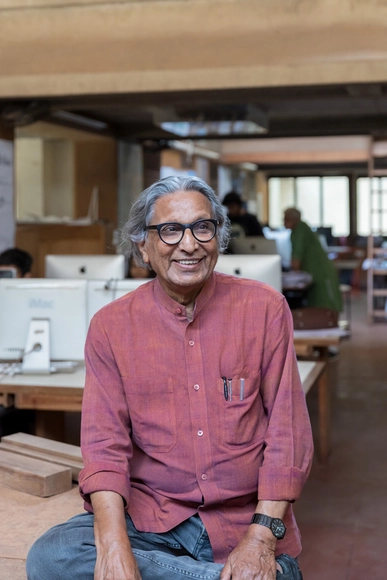
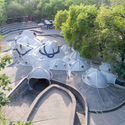
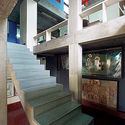
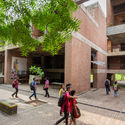
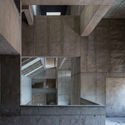
With the exhibition »Balkrishna Doshi: Architecture for the People« (30 March to 8 September 2019), Vitra Design Museum presents the first international retrospective about the 2018 Pritzker Prize laureate Balkrishna Doshi outside of Asia.
The renowned architect and urban planner is one of the few pioneers of modern architecture in his home country and the first Indian architect to receive the prestigious award. During over 60 years of practice, Doshi has realized a wide range of projects, adopting principles of modern architecture and adapting them to local culture, traditions, resources, and nature. The exhibition will present numerous significant projects

Labeled as "vandalism" and "murder" of an icon of postmodernism, Oslo-based firm Snøhetta's redesign proposal for Phillip Johnson and John Burgee's AT&T Headquarters was received with instantaneous backlash across the architectural community last year. Architect Robert A. M. Stern, marched alongside a protest outside 550 Madison Avenue, and even critic Norman Foster, who never claimed to have any sympathy for the postmodern movement, still vocalized his sentiments that "[the building] is an important part of our heritage and should be respected as such."
A rejection of the bland and cold functionality of Midtown's crystal skyscrapers, the AT&T building was intended to encourage a more playful approach architecture in the corporate world; the crazy socks beneath a three-piece suit. It was not without controversy. Upon its completion, the building was derided for its decorative and outsized pediment and occasionally dark interior spaces. Indeed, the building's arched entry spaces were among the only architectural elements to be met with praise from both critics and the public.

The holiday season may be one of joy, but there's always a little panic involved as well. You want to treat your loved ones to a gift they'll treasure and appreciate, but where to start?
Readers, ArchDaily has you covered. This year we've separated our choices in sections to help you find that perfect gift for the picky (budding) architect in your life. Our choices - and links to where you can find them - after the break:

This article was originally published by Autodesk's Redshift publication.
In East London, The Trampery on the Gantry is doubling down on the “creative” aspect of creative reuse. Part of the massive broadcast center used during the 2012 Olympic Games, the former HVAC gantry structure has been retrofitted by architecture firm Hawkins\Brown as an arts and media innovation hub.


This extract was originally published on Common Edge as "The Legacy of Christopher Alexander: Criteria for an Intelligent Architecture."
In his monumental four-volume book, The Nature of Order, Christopher Alexander talks about an intelligent architecture, responsive to human needs and sensibilities through adaptation to existing buildings and nature. This is a new way of viewing the world—a way of connecting to it, and to ourselves—yet it is very much the same as the most ancient ways of connecting.

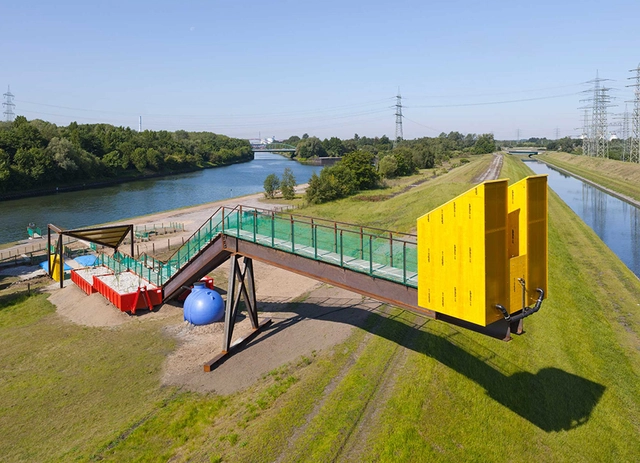
On a small strip of land between the Emscher River and the Rhine Herne Canal in Germany sits a rest stop whose colorful appearance belies its radical purpose. The structure’s artful design consists of pipes leading from two toilets and the Emscher (the most polluted river in Germany) that converge at a small community garden and drinking fountain. The garden is, in fact, a manmade wetland that collects, treats, and cleans the effluence from the toilets and river—making it drinkable.
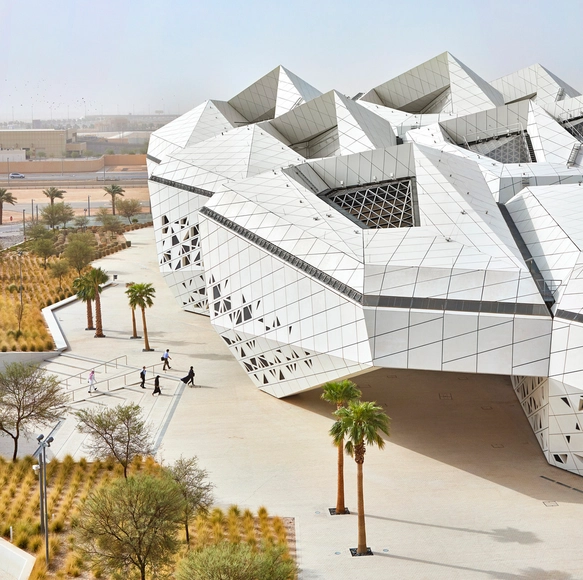
This article was originally published by Autodesk's Redshift publication as "Respect: Architect Zaha Hadid, Queen of the Curve."
In March 2016, when world-renowned architect Zaha Hadid died of a heart attack at age 65 in a Miami hospital, the news sent shockwaves through the architecture community.
The flamboyant British designer—born on October 31, 1950 in Iraq, educated in Beirut, and known as the “Queen of the Curve” for her swooping, elegantly complex designs—was a legend in her time. She had design commissions around the world, been awarded the Pritzker Prize in 2004 and the Royal Institute of British Architects’ gold medal in 2016, and transcended the old-guard strictures of a staunchly male-dominated profession.
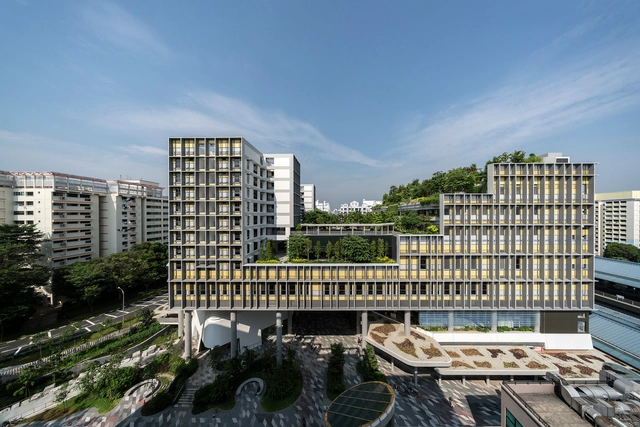
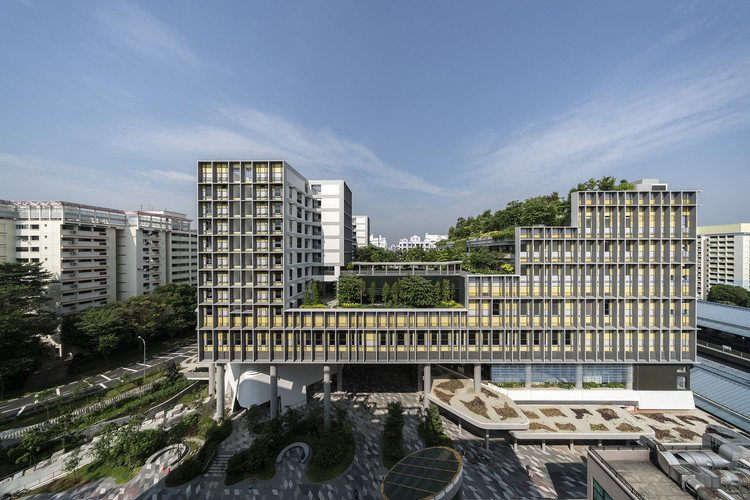
WOHA's Kampung Admiralty Singapore in Singapore has been named the 2018 World Building of the Year at the World Architecture Festival, concluding this year's three-day event in Amsterdam. The building, which combines dedicated senior-housing facilities with a broad mixed-use program and a lush green roof, was selected from a strikingly broad shortlist that included works from offices such as Sanjay Puri Architects, Koffi & Diabate Architectes, Heatherwick Studio, Spheron Architects, and INNOCAD.

Our world revolves. Not just literally, as it does around the sun, but in nature’s every aspect. Seasons cycle into each other (though more erratically each year), waves trace and retrace the beaches with the shifting tide, flowers open, close, and turn to follow the path of the sun. Even we are governed by these circular natural systems. Maintenance of our circadian rhythms, a human connection to light, is so essential to our health that it is a required element in many contemporary building codes.

This article was originally published on CommonEdge as "The Design Media Needs to Examine its Own Privilege."
Kate Wagner grew up in rural North Carolina. As a kid, her mom, who never went to college, worked in a grocery store deli and later in childcare. Her dad had a steady government job with a pension, and his time in the military meant he had the resources and benefits needed to get a college degree. Wagner describes her economic background as “one foot in the working class and one foot in the middle class, and it was always a negotiation between those two classes.” They were, she says, “just normal-ass American people.”

.jpg?1544343835 "Courtesy of LMNB & Snøhetta")
.jpg?1544343847 "Courtesy of LMNB & Snøhetta")