Rory Stott

Former ArchDaily's Managing Editor. BA in Architecture from Newcastle University, and interested in how overlooked elements of architectural culture —from the media to competitions to procurement processes can alter the designs we end up with.

BROWSE ALL FROM THIS AUTHOR HERE
↓

This Innovative Brick Sucks Pollution From the Air Like a Vacuum Cleaner

These days air pollution in some cities is a big problem, and as a result, buildings that help alleviate that problem are all the rage. In recent years though, designers have started to move beyond simply reducing a building's emissions and started to work with techniques that actually remove pollutants from the air, through systems such as Nemesi's "photocatalytic" facade for the Italy Pavilion at the 2015 Milan Expo which captures and reacts with pollution in the presence of light.

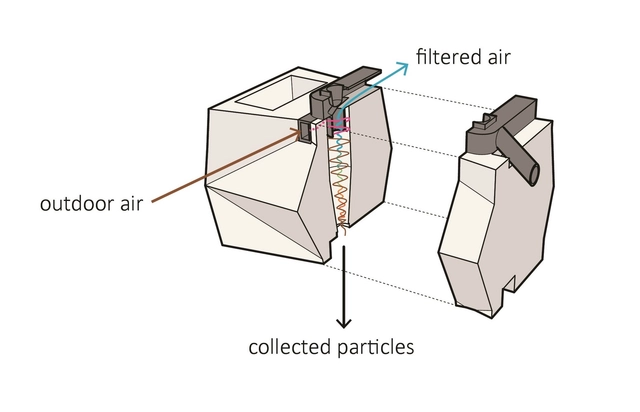
However, in most cases these new technologies have been chemical, only affecting the air that physically comes into contact with them. What if buildings could take a more active role in pulling in pollutants from the sky? What if they could work a little more like a vacuum cleaner? This was exactly the inspiration behind the Breathe Brick developed by Carmen Trudell, an assistant professor at Cal Poly San Luis Obispo's school of architecture and founder of Both Landscape and Architecture.


Subscriber Access

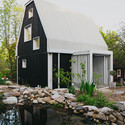
5 Things the Tiny House Movement Can Learn from Post War Architecture

One of the many problems with being deeply engaged in a niche subject such as architecture is that you can easily lose sight of what a "normal" person's perspective is on a topic. Through experience, we often assume that a rising trend that we notice on a daily basis has passed completely unnoticed by the general populace, and it's usually difficult to see when a topic has reached the critical mass to become a genuine social phenomenon. So imagine my surprise when I saw a joke about an architectural trend on a popular webcomic. Two months ago, Toothpaste For Dinner published an image of a character smugly telling his friend "that's cool... my Tiny House is a lot smaller, of course" as they tower over a comically small abode. Suddenly it became clear to me that the Tiny House movement was not just a curiosity for architects.

This realization leads to a number of questions: why are Tiny Houses such a big deal? What promise do they hold for society? And is there anything the movement is failing to address? These questions led me to conclude that, for better or worse, the Tiny House movement might just be the closest thing we have right now to a utopian housing solution - and if that's true, then the movement has a big task on its hands.

5 Things the Tiny House Movement Can Learn from Post War Architecture - Image 1 of 45 Things the Tiny House Movement Can Learn from Post War Architecture - Image 2 of 45 Things the Tiny House Movement Can Learn from Post War Architecture - Image 3 of 45 Things the Tiny House Movement Can Learn from Post War Architecture - Image 4 of 45 Things the Tiny House Movement Can Learn from Post War Architecture - More Images+ 5

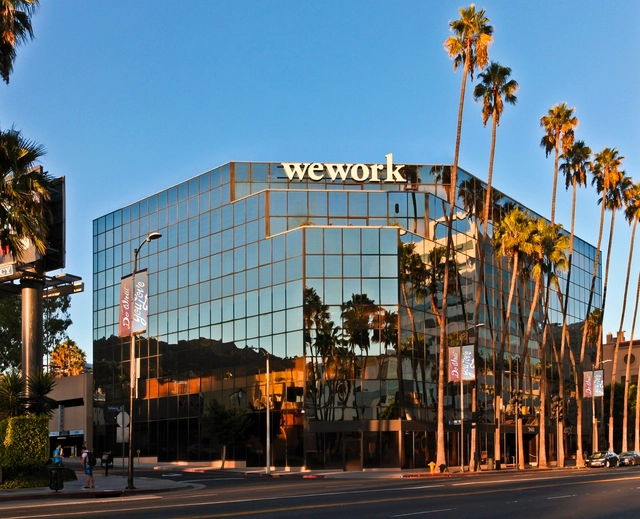
As WeWork Acquires CASE, the Future of Office Design May Start Today

"Buildings shouldn't just be a place where you go to do stuff. How can we enable the buildings themselves to be a positive contributor to the activities that happen within them?"

This is how David Fano, co-founder of New York consultancy CASE, explained the logic behind their acquisition by WeWork, the company that provides flexible coworking spaces for entrepreneurs and small businesses. Announced today, the merger could potentially mark a new chapter in the field of office design, as CASE proposes to bring their trademark attitude to Building Information Modeling (BIM) and other cutting edge technology to every space developed by WeWork.

Find out how this acquisition could change the face of Office design after the break.

As WeWork Acquires CASE, the Future of Office Design May Start Today - Image 1 of 4As WeWork Acquires CASE, the Future of Office Design May Start Today - Image 2 of 4As WeWork Acquires CASE, the Future of Office Design May Start Today - Image 3 of 4As WeWork Acquires CASE, the Future of Office Design May Start Today - Image 4 of 4As WeWork Acquires CASE, the Future of Office Design May Start Today - More Images+ 1

Subscriber Access

Selgascano's Serpentine and the ArchDaily Comments Section

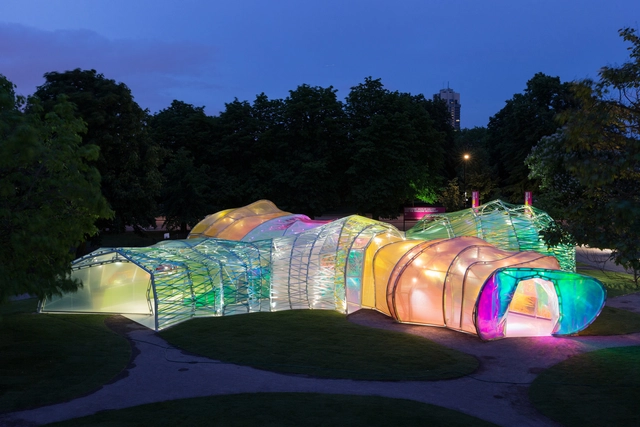
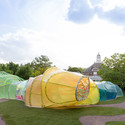
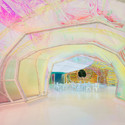
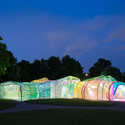
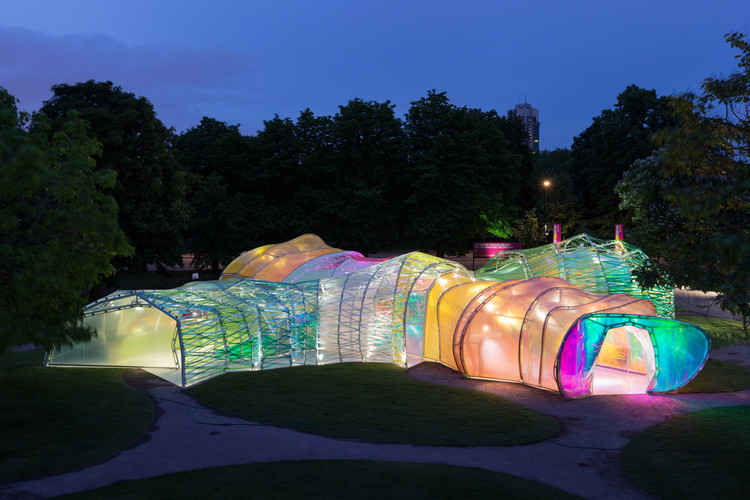
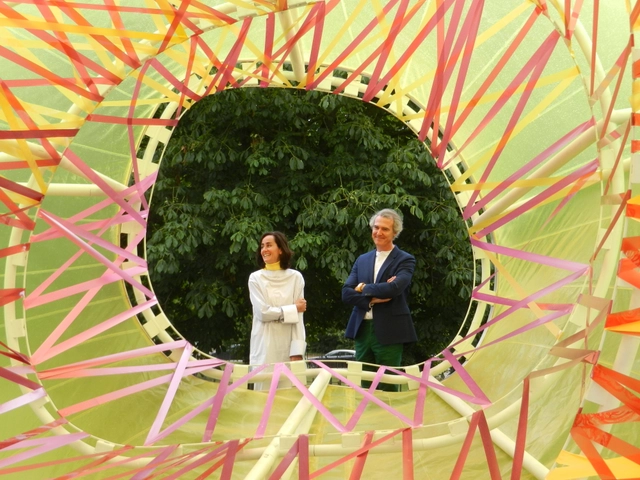
Photographer Nikhilesh Haval of nikreations has shared with us this virtual tour of the 2015 Serpentine Pavilion. Taking viewers through a series of 360-degree panoramas shot on a mercifully sunny day, the tour shows off the pavilion's striking colors to good effect and gives some indication of the complex and dynamic arrangement of the design's double skin.

For those won't get the opportunity to visit for themselves, Haval's virtual tour is a great way to experience SelgasCano's psychedelic space as it gives a reasonable impression of what it feels like to actually be there. I can say that with some authority because, since I last wrote about the pavilion, I got the chance to visit it myself - and what I found was completely different to the pavilion I might have expected had I been taking cues from our comments section. I'd like to talk to our readers about that directly, if I may.

See the Beauty in Programmable Materials in this Mesmerizing Video

In his TED Talk showcasing his work at MIT's Self Assembly Lab, computational architect Skylar Tibbits does an excellent job of explaining the functional possibilities of programmable materials and four-dimensional printing - from structures that assemble themselves in space, to infrastructure that can adapt itself to changes in demand. But there is one property of these materials that he fails to mention: they can be truly beautiful in action.

But in this video by Dana Zelig, a masters student in industrial design at Jerusalem's Bezalel Academy of Arts and Design, the beauty of these processes is placed front and center. Using nothing more than 12 sheets of shrinkable pre-stressed polystyrene taken from children's creativity sets, a home printer and an infra-red light, Zelig's "Traces" project has created a series of self-forming shapes that delicately transform in front of our eyes.

See the Beauty in Programmable Materials in this Mesmerizing Video - Image 1 of 4

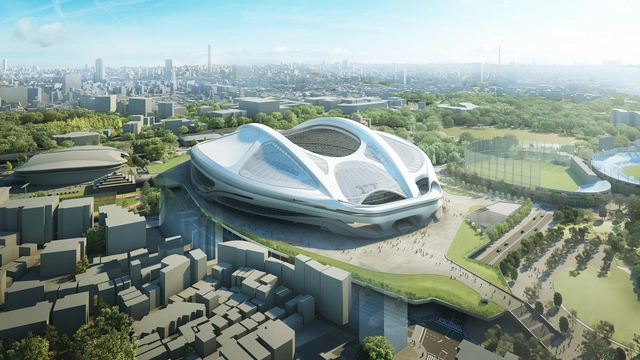
Zaha Hadid Architects Releases Full Statement on Scrapped Tokyo Stadium Plans

Following the news earlier this month that their design for Tokyo's 2022 Olympics stadium would be scrapped, Zaha Hadid Architects have released a comprehensive statement about the project's cancellation. Despite the many critics of the project's design - including Toyo Ito and Fumihiko Maki - it was ultimately the project's increasing costs that sparked its demise. However, the 1400-word statement from ZHA attempts to put distance between the firm and the claim by the Japan Sport Council (JSC) that much of the increase in costs was due to a complex design, instead arguing that "At every stage over the two years of development, the design and budget estimates were approved by the JSC" and adding a number of times that "ZHA worked proactively to reduce the estimated cost throughout."

Read on after the break to find out where ZHA pins the blame for the cost increases and to read the statement in full.

ABI Jumps Four Points in June, Equals Highest Mark Since 2007

After demonstrating a modest increase in demand for design services last month, the Architecture Billings Index (ABI) for June showed its largest single-month jump in almost four years, rising to 55.7 and falling just a tenth of a point short of matching its post-recession high of 55.8 in June of last year. As the American Institute of Architects (AIA) reports, the increased demand has been spurred by schools, hospitals, cultural facilities and municipal buildings, as the index for the institutional sector rose to a mark of 59.1.

A breakdown of regional and sector highlights, after the break.

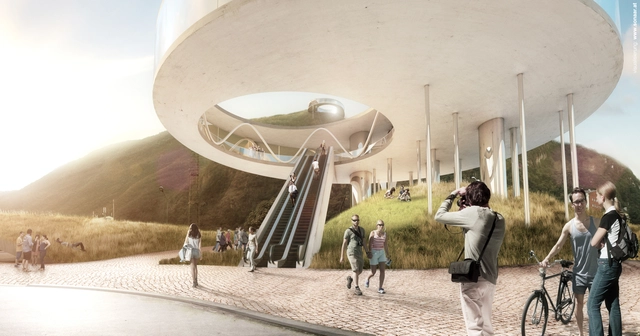
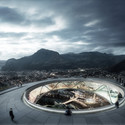
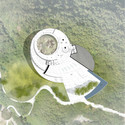
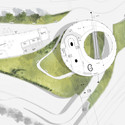
Snøhetta Selected to Design Cable Car for Bolzano in Italy

The Italian city of Bolzano, located in the foothills of the alps, has an intimate connection with the mountains that surround it. However, for almost 40 years, one of the most commanding views of Bolzano has been inaccessible, since the cable car which led up to the Virgolo mountain was closed in 1976. After winning an international design competition hosted by The SIGNA Group, Snøhetta has now been selected to replace that cable car, making the summit of Virgolo accessible once again and returning a valuable tourist asset to the city.

Snøhetta Selected to Design Cable Car for Bolzano in Italy - Image 1 of 4Snøhetta Selected to Design Cable Car for Bolzano in Italy - Image 2 of 4Snøhetta Selected to Design Cable Car for Bolzano in Italy - Image 3 of 4Snøhetta Selected to Design Cable Car for Bolzano in Italy - Image 4 of 4Snøhetta Selected to Design Cable Car for Bolzano in Italy - More Images+ 4

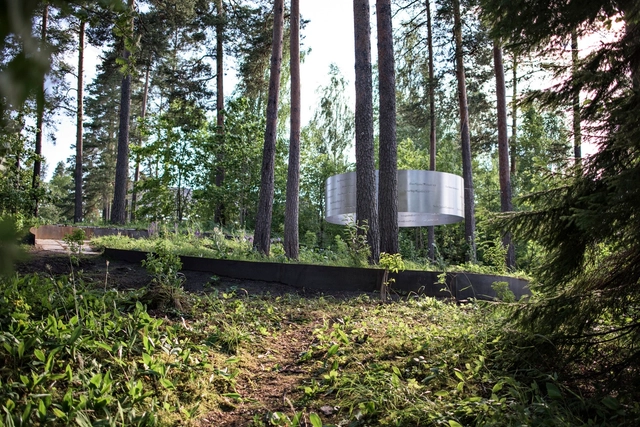
3RW's "The Clearing" Memorial Opens at Norway's Utøya Island on 4th Anniversary of Tragedy

Marking the fourth anniversary of the terror attack in Norway that left 77 dead, today the island of Utøya has opened "The Clearing," a memorial designed by Norwegian firm 3RW to commemorate the 69 victims of the shooting massacre on the island.

Subscriber Access

Introducing ArchDaily Essentials

Since it was founded in 2008, ArchDaily has gotten pretty big. At over 18,000 projects and over 33,000 total articles (to date), the number of pages, images and words that collectively form the ArchDaily website is mind-boggling. In our newsroom you'll often hear references to "the iceberg" - in other words, what you see on the homepage is just a fraction of ArchDaily, while the rest lurks beneath the surface, waiting to be discovered. As editors, one of our biggest challenges is to help you discover it.

We already have a few methods in place to enable this: on our Facebook page we often post older articles or projects that have proven to be popular in the past, and one of the biggest benefits of our recent platform upgrade has been a new, multifaceted search for projects that allows you, for example, to look for "Brick Houses in the United States by Frank Lloyd Wright" and narrow 18,000 projects down to just three.

This week, we're launching a series of articles that we hope will do something similar for some of our most informative and thought-provoking news and editorial articles: ArchDaily Essentials.

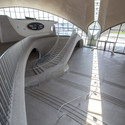
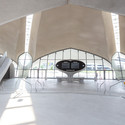
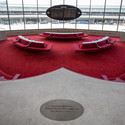
Photographer Max Touhey Gives a Rare Glimpse Inside Eero Saarinen's TWA Flight Center

Currently under renovation in order to turn its soaring shell into a hotel, Eero Saarinen's iconic TWA Flight Center has been off limits to the public since 2001. However last week, while a team of digital preservationists were making scans of the swooping curves of the building's interior, photographer Max Touhey was allowed access, camera in hand, to catalog the building's mid-century elegance. The photoset, published in full on Curbed NY, shows the building in a generally good condition considering its decade-long slumber. Read on after the break for a selection of these images.

Photographer Max Touhey Gives a Rare Glimpse Inside Eero Saarinen's TWA Flight Center - Image 1 of 4Photographer Max Touhey Gives a Rare Glimpse Inside Eero Saarinen's TWA Flight Center - Image 2 of 4Photographer Max Touhey Gives a Rare Glimpse Inside Eero Saarinen's TWA Flight Center - Image 3 of 4Photographer Max Touhey Gives a Rare Glimpse Inside Eero Saarinen's TWA Flight Center - Image 4 of 4Photographer Max Touhey Gives a Rare Glimpse Inside Eero Saarinen's TWA Flight Center - More Images+ 5

How Newlight Technologies Creates a Plastic From Air and Greenhouse Gases

The 20th century was an era of unbelievable change, with more revolutionary ideas and scientific developments than perhaps any era before it. But among the many developments in the material sciences, one stands as perhaps the most revolutionary: plastics. An experimental group of materials at the turn of the century, artificial plastics are so ubiquitous now that it's almost impossible to imagine life without them.

However, in the 21st century plastics have gained a bad reputation; commonly produced from oil, plastics are a non-renewable resource and, after spending decades or even centuries polluting our environment, most plastics will eventually degrade to release their carbon into the atmosphere. Recycling plastic will go some way to slow this problem, but with so many modern products relying on plastic - and our tendency toward increasing consumption showing no signs of slowing - recycling can only do so much.

But what if there was a way to use plastics to actually reverse the release of greenhouse gases? That's exactly what Newlight Technologies is attempting to do with their carbon-negative plastic, AirCarbon.

Subscriber Access

SelgasCano's Serpentine Pavilion: "Cheap Plastic Bag" or "Pop-Art Inflatable Funscape"?

We're just three days into the four-month display of SelgasCano's 2015 Serpentine Gallery Pavilion and the comments it has generated from ArchDaily readers have already been as colorful as the pavilion itself - with criticisms ranging from "worst Serpentine Gallery Pavilion ever" to "trash bag monster" and a few other comparisons that I'd rather not even repeat. This may surprise some people, but at ArchDaily we do actually read the comments section, and we get it: unless you're the brave and persistent soul who comments as "notyourproblem," who thinks "it must be exciting getting inside those tunnels," there's a good chance that you hate this pavilion - and I don't use the word "hate" lightly.

But is this violent dismissal warranted? In short, is SelgasCano's pavilion as bad as you probably think it is? Fortunately, we're not the only publication giving the pavilion extensive coverage: as usual the Serpentine Gallery has attracted a number of the UK's most well-known critics. Find out what they thought of the pavilion after the break.

SelgasCano's Serpentine Pavilion: Cheap Plastic Bag or Pop-Art Inflatable Funscape? - More Images

SageGlass Unveils Latest Developments in Smart Glass Technology

With the demands of sustainability today placing tight restrictions on performance metrics such as how airtight a building is, one of the sacrifices that often has to be made is user control. Windows are often no longer openable; shades and blinds often replaced with non-openable louvers. In recent years new technology such as smart glass (sometimes called "switchable glass) has promised a modicum of compromise, allowing windows to be tinted on demand. But smart glass is limited - it's either on or off, clear or tinted.

Until now, that is. At the AIA convention in May, SageGlass revealed a range of innovations that greatly increase the options available to designers when specifying smart glass.

Iwan Baan's Images of Selgas Cano's 2015 Serpentine Pavilion

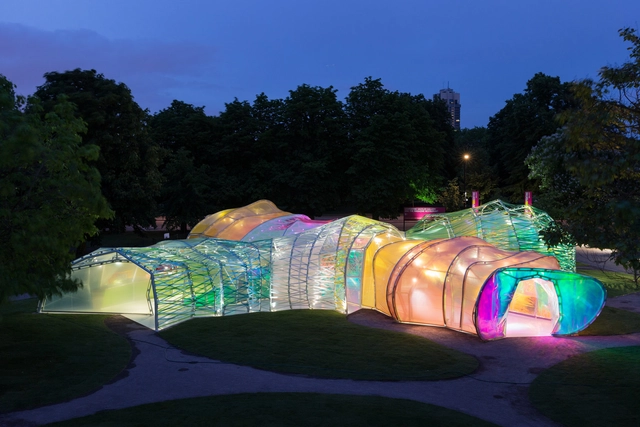
With the opening ceremony of SelgasCano's Serpentine Gallery pavilion earlier today, the Serpentine Gallery has released a set of images by Iwan Baan, capturing the riotous color explosion delivered by the pavilion's ETFE wrapping. Always one of London's most popular architectural attractions over the summer, this year marks the pavilion's 15th anniversary, and will be on display until October 18th.

Read on after the break for more images - and stay tuned to this posts for updates throughout the day!

Iwan Baan's Images of Selgas Cano's 2015 Serpentine Pavilion - Featured ImageIwan Baan's Images of Selgas Cano's 2015 Serpentine Pavilion - Image 1 of 4Iwan Baan's Images of Selgas Cano's 2015 Serpentine Pavilion - Image 2 of 4Iwan Baan's Images of Selgas Cano's 2015 Serpentine Pavilion - Image 3 of 4Iwan Baan's Images of Selgas Cano's 2015 Serpentine Pavilion - More Images+ 6

SelgasCano's 2015 Serpentine Gallery Pavilion Opens

The 2015 Serpentine Gallery Pavilion was revealed today in London, showcasing the colorful plastic design by SelgasCano to the public for the first time. Consisting of a minimal steel frame wrapped in multi-colored ETFE sheets and webbing, the design is encompassed by "secret corridors" which provide access to the main internal space, inspired by the multi-layered and sometimes chaotic network of the London underground.

SelgasCano's 2015 Serpentine Gallery Pavilion Opens - Image 1 of 4SelgasCano's 2015 Serpentine Gallery Pavilion Opens - Image 2 of 4SelgasCano's 2015 Serpentine Gallery Pavilion Opens - Image 3 of 4SelgasCano's 2015 Serpentine Gallery Pavilion Opens - Image 4 of 4SelgasCano's 2015 Serpentine Gallery Pavilion Opens - More Images+ 39

First Images Revealed of SelgasCano's Serpentine Pavilion In Progress

With this year's Serpentine Pavilion in London scheduled to open next week, the Serpentine Gallery has released construction images of SelgasCano's multi-colored plastic shelter. The images by NAARO show the double-skinned ETFE-coated structure taking shape, and give an impression of the spatial experience offered by the "secret corridors" which circumnavigate and provide access to the interior space.

First Images Revealed of SelgasCano's Serpentine Pavilion In Progress - Image 1 of 4First Images Revealed of SelgasCano's Serpentine Pavilion In Progress - Image 2 of 4First Images Revealed of SelgasCano's Serpentine Pavilion In Progress - Image 3 of 4First Images Revealed of SelgasCano's Serpentine Pavilion In Progress - Image 4 of 4First Images Revealed of SelgasCano's Serpentine Pavilion In Progress - More Images+ 13

LEGO Invests $150 Million in Sustainable Materials Research

LEGO Invests $150 Million in Sustainable Materials Research - Featured Image
LEGO recently made architecture news with their BIG-designed "LEGO House," a museum and "experience center". Image Courtesy of LEGO Group

LEGO has long been recognized by architects as a key inspiration in the world of creative building - but the Danish toy company's influence over the construction industry may be about to get a whole lot more direct. Yesterday, LEGO announced the establishment of its own sustainable materials research center, with an investment of 1 billion Danish Krone ($150 million US), which will search to find sustainable alternatives to the plastic used in their products and packaging.