Alastair Parvin, co-founder of WikiHouse gave his TED Talk last week (one of the many architecturally relevant talks at TED 2013). Although the video of his latest talk is not yet available, to whet your appetite we present you with his speech from last year at TED@London. In it he explains the conditions of architectural and material culture that led to the foundation of WikiHouse, an open source database of house designs that can be manufactured with a CNC cutter and assembled in a day.
Rory Stott
Former ArchDaily's Managing Editor. BA in Architecture from Newcastle University, and interested in how overlooked elements of architectural culture —from the media to competitions to procurement processes can alter the designs we end up with.
BROWSE ALL FROM THIS AUTHOR HERE
↓
Video: WikiHouse co-founder Alastair Parvin at TED@London
https://www.archdaily.com/340773/video-wikihouse-co-founder-alastair-parvin-at-tedlondonRory Stott
The Architecture Foundation and We Made That Launch "The Open Office"
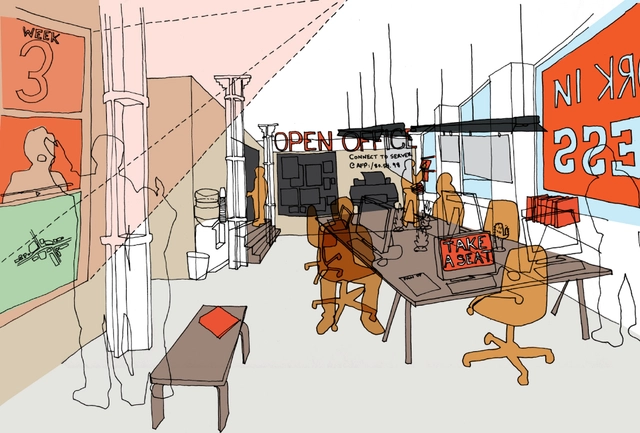
The Architecture Foundation has recently launched a month-long initiative named The Open Office. The scheme, which is described as “part 'Citizens Urban Advice Bureau', and part functioning practice” is the brainchild of London-based practice We Made That and will take place in the offices of The Architecture Foundation in Southwark, London until 22nd March. Operating on a walk-in basis, and displaying all work openly, The Open Office aims to engage and educate local communities on issues of architecture, urbanism and planning.
Read more about The Open Office scheme after the break.
https://www.archdaily.com/336164/the-architecture-foundation-and-we-made-that-launch-the-open-officeRory Stott
Non-Design: Architecture's (Counter-Intuitive) Future

Global architecture underwent a seismic shift in the 20th Century. Governments, keen to mitigate the impoverishing effects of rapid urbanization and two world wars embarked on ambitious social housing programs, pairing with modernists who promised that design could be the solution to social inequality and poverty. Today, the problems inherent in these mid-century tower blocks are well documented and well known, and these modernist solutions to poverty are often seen as ill-conceived failures.
If the 20th century was all about designing to solve social problems, then the 21st century has been about the exact opposite – not designing to solve social problems. These days, it is much more common to see architects praising the social order and even aesthetic of illegal slums, which in many cases provide their residents with a stronger community and higher quality of life than did many formal social housing projects of the past. The task of architects (both today's and tomorrow's) is to develop this construction logic: to use design and, rather counter-intuitively, non-design to lift these urban residents out of their impoverished conditions.
More on the social potential of non-design after the break...
https://www.archdaily.com/329356/non-design-architectures-counter-intuitive-futureRory Stott