After 2 weeks of voting in our 12th edition of the Building of the Year Awards, our readers, with over 150,000 votes, have narrowed down over 4,500 projects to just 75 finalists, representing the best architecture published on ArchDaily. With finalists from six continents, this award developed in partnership with Dornbracht demonstrates that the trust placed in us by our readers to reflect architectural trends from regions around the whole world creates challenges that we are eager to rise to.
Now that the finalists have been selected, the second stage of the Award is now underway to narrow down these 75 projects to just 15 winners, the best of each category.
The 2021 Building of the Year Awards is brought to you thanks to Dornbracht, renowned for leading designs for architecture, which can be found internationally in bathrooms and kitchens.
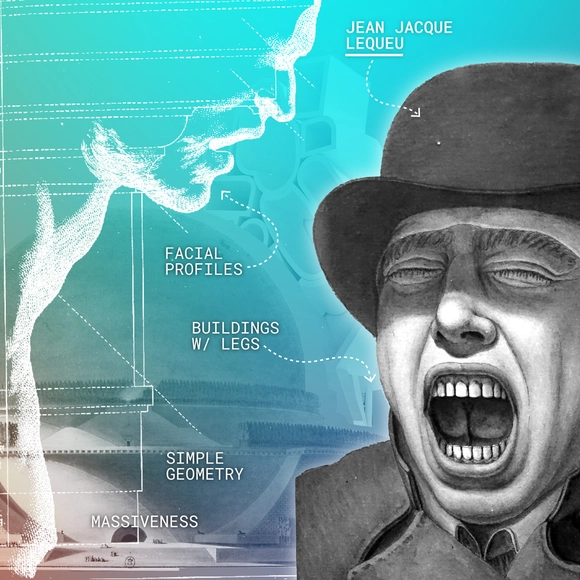
We’ve all commented on a building’s character before. An apartment might have it because of some special oak trim, or a building might not fit with the ‘character’ of its neighborhood. In this video, architectural designer and professor Stewart Hicks takes a close look at the meaning and origins of this elusive concept. Why do we use this word for both people and for buildings? Characters also occur in fiction, does that help explain how buildings tell stories? From the Enlightenment architects Ledoux, Boullée, and Lequeu, to the Beetlejuice house, to contemporary practices exploring what it might mean for a building to have a face or a posture, we get to the bottom of why architects might consider architectural character to be a good idea.
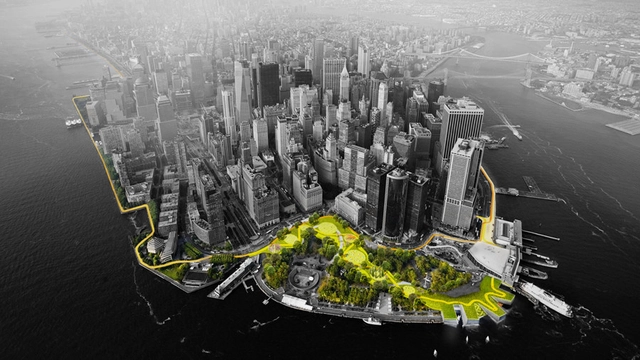
Render for The BIG U, "The Harbor Berm," an elevated path through the park. Image Courtesy of rebuildbydesign.org
The COVID-19 Pandemic is a disruptive moment for our world, and it’s poised to spur transformative shifts in design, from how we experience our homes and offices to the plans of our cities. The webcast series Design Disruption explores these shifts—and address issues like climate change, inequality, and the housing crisis— through chats with visionaries like architects, designers, planners and thinkers; putting forward creative solutions and reimagining the future of the built environment.
It has been a vibrant first week of voting for the Building of the Year Awards. With more than 100,000 votes, gathered up till now, this prize has shown to be, one of the most relevant and democratic in the architecture community… where YOU are the decision-makers, selecting the best architecture of the year.
By voting, you become part of an unbiased and distributed network of jurors that has elevated the most relevant projects over the past decade. Over the next week, it is your collective intelligence that will filter over 4,500 projects down to just 75 finalists.
The 2021 Building of the Year Awards is brought to you thanks to Dornbracht, renowned for leading designs for architecture, which can be found internationally in bathrooms and kitchens.
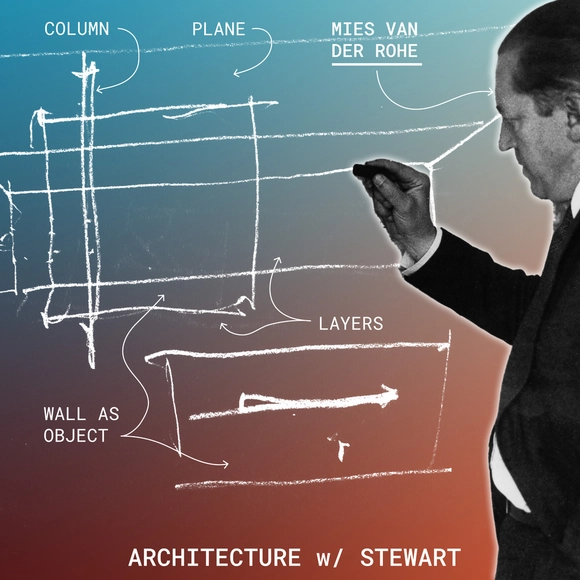
Ever wondered (or forgotten) the difference between open plans and free plans? In this video, architectural designer and professor Stewart Hicks breaks down what makes Open Plans a unique form of ‘open concept.’ It is part of a series that explores terms from real estate using contemporary, historical, and theoretical examples from architecture. In this case, the spatial strategies of Mies van der Rohe are explained, beginning with his early unbuilt houses, through the Barcelona Pavilion, to the Farnsworth House. Each one features a particular, but evolving, use of walls, columns, and roof planes that add up to what we call ‘Open Plans.’ Other videos in the series are dedicated to things like Free or Organic Plans and can help anyone sharpen their understanding of architectural concepts.
2020 was a challenging year for ArchDaily and for all of us. The changes and uncertainty that emerged around the globe allowed us to double down on our mission to provide information, knowledge, and tools to architects, leveling the access to architectural knowledge and working towards a more diverse, equitable profession. This includes the importance of building a community, for which the Building of the YearAwards has always been one of our flagship community-led initiatives.
This is why for the 12th consecutive year, we are tasking our readers with the responsibility of recognizing and rewarding the projects that are making an impact in architecture and in our built environment, with ArchDaily’s 2021 Building of the YearAwards. By voting, you are part of an unbiased, distributed network of jurors and peers that has elevated the most relevant projects over the past decade. Over the next two weeks, your collective intelligence will filter over 4,500 projects down to just 15 stand-outs for the best in each category on ArchDaily.
The 2021 Building of the YearAwards is brought to you thanks to Dornbracht, renowned for leading designs for architecture, which can be found internationally in bathrooms and kitchens.
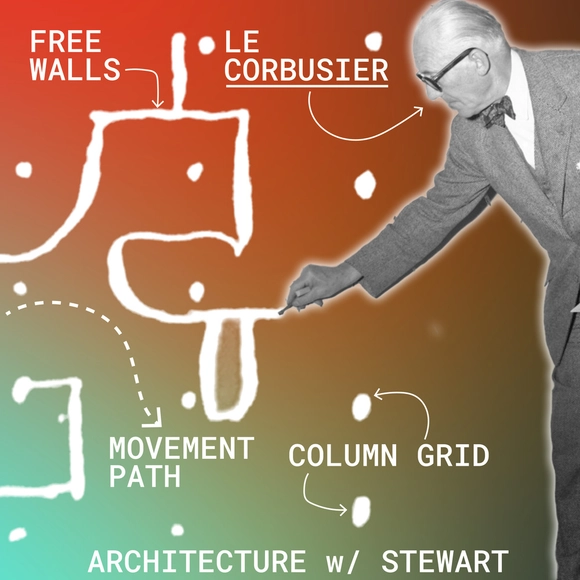
The term ‘open concept’ is popular with house-flipping television shows and real estate descriptions for lofts or contemporary style homes. However, the phrase is absent from the architect’s lexicon, likely due to a much more robust vocabulary and archive of precedents for describing the continuity of space in a domestic environment. This video is the second in a series that breaks down various ‘open concepts’ in architecture. The first video was dedicated to the ‘Organic Plan’ of Frank Lloyd Wright and this one takes a closer look at the ‘Free Plan’ of Le Corbusier. Through comparisons with Wright and supported with examples from the Five Points of a Modern Architecture, ‘Free Plans’ are presented as a unique way of understanding the coherence of space.
The Barcelona International Architecture Film Festival, BARQ. Festival is a film festival aimed at vindicating films on architecture as a specific genre and at deepening the relationship between architecture and the seventh art. Cinema uses architecture to show and create worlds that explore social realities, and architecture uses cinema to encourage reflection on the most current issues regarding the spaces we inhabit.
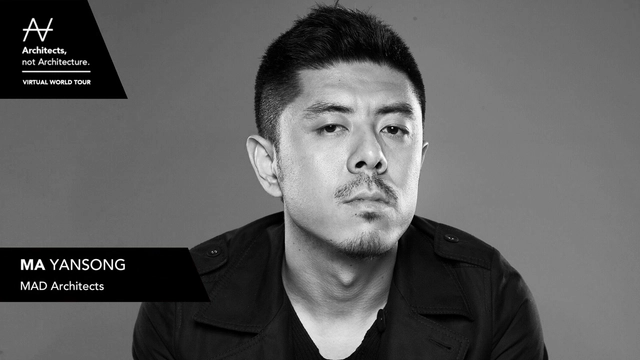
Architects, not Architecture is turning five and is celebrating it with a Virtual World Tour. With its new event series, „AnA“ brings the architectural community a bit closer together by taking participants on a tour around the globe to “visit” selected cities and virtually meet some of their most relevant architects.
The COVID-19 Pandemic is a disruptive moment for our world, and it’s poised to spur transformative shifts in design, from how we experience our homes and offices to the plans of our cities. The webcast series Design Disruption explores these shifts—and address issues like climate change, inequality, and the housing crisis— through chats with visionaries like architects, designers, planners and thinkers; putting forward creative solutions and reimagining the future of the built environment.
On 25 November, 10am CET,OMA, Hassell, WA Museum Boola Bardip, and the Netherlands embassy in Canberra will join a panel discussion with a focus on the architecture of the Museum.
Architectural visualizations have recently reached unthinkable levels, being a great source of inspiration and a fundamental part of the design process in architecture. This is why we are proud to announce the first edition of the ArchDaily Architecture Visualization Awards, where we will award the best of the year.
For us, visualizations have become a powerful tool that has helped us to think without limits about the design of our future cities, buildings, and structures. This is why we are proud to launch thanks to IPEVO, Cove.tool and Concepts the 1st edition of the Architectural Visualization Awards: to find the best talent from around the world and discover who is setting trends with their work and aesthetics, helping us to visualize the future of architecture.
The second edition of the Tbilisi Architecture Biennial (TAB), conceived under the name "what do we have in common" opens on Saturday, October 17, and will run through November 8th, 2020.
The COVID-19 Pandemic is a disruptive moment for our world, and it’s poised to spur transformative shifts in design, from how we experience our homes and offices to the plans of our cities. The webcast series Design Disruption explores these shifts—and address issues like climate change, inequality, and the housing crisis— through chats with visionaries like architects, designers, planners and thinkers; putting forward creative solutions and reimagining the future of the built environment.
The notion of “commons” unites open resources of any kind: natural, cultural, spatial, material and immaterial - of which ownership and access is shared. These common resources need to be maintained, as do the collection of practices that govern and preserve them. Yet Georgia‘s rapid shift to a neoliberal political system in the 1990s resulted in a new understanding of these commons - resources that are open for commodification and individualization. As finite resources, these commons need to be sustained, nurtured and managed by communities and professionals. Architects, urbanists and state institutions have a fundamental role to play in the reclamation of the commons - no more so than in Tbilisi.
Videos
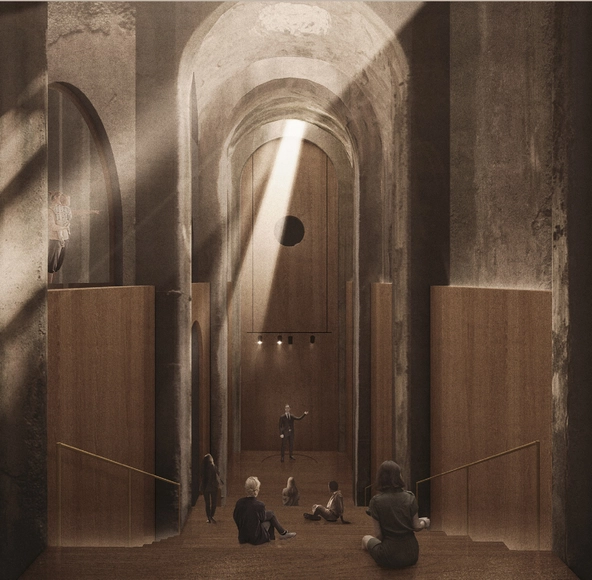
3rd Place - Maura Pinto, Piervito Pirulli. Image Courtesy of Re-Use Italy
Piscina Mirabilis is a Roman reservoir built by Emperor Augustus in the 1st century AD, in order to feed with drinking water the headquarter of his western Mediterranean war fleet. It was dug out a tuff hill, and it is based on a regular grid of pillars and arcs. The vaulted reservoir is 15 meters high, 72 meters long, 25 meters wide and features 48 brick pillars.
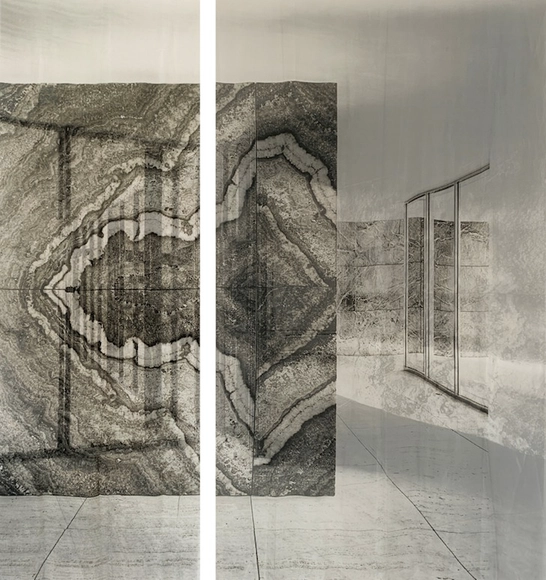
In the framework of the Barcelona Gallery Weekend, Fundació Mies van der Rohe and Ana Mas Projects present an intervention by artist Laercio Redondo, which explores History and its multiple narratives. The aim is to create a dialogue with space, through sculpture, photography, and a sound piece focused on the question of effacements in time and History, especially in relation to its construction and reconstruction. The intervention can be visited from September 16 to 27.
The planet is dying, and we are the reason why. If nature’s decline continues at its current pace, we stand to face increasing natural disasters, loss of biodiversity, and threats to public health. Waste is the largest contributing factor to this problem. And the built environment is one of the top producers of waste in the world—period. But innovation can save the planet.

.jpg?1602882859&format=webp&width=640&height=580)