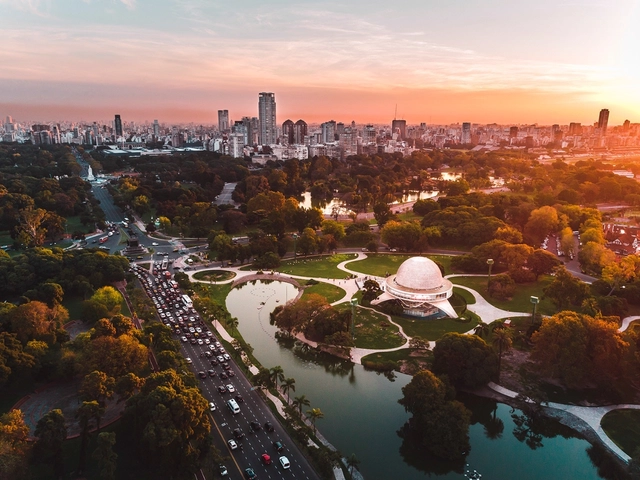
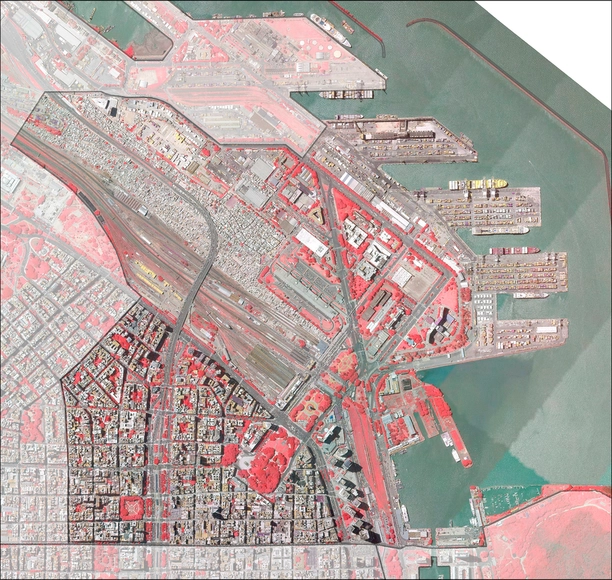
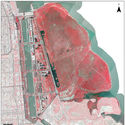
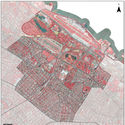
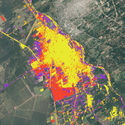
Vegetation cover Retiro. Image via Government of the Autonomous City of Buenos Aires are licensed under Creative Commons Attribution 2.5 Argentina License
Based on the photogrammetric analysis of the City of Buenos Aires, the General Directorate of Data, Statistics, and Urban Projection produced a "Vegetation Cover Report." This document offers a detailed survey of the city's entire vegetation surface, classified by neighborhood, using zenithal aerial imagery. An infrared sensor was used to capture images that highlight any type of vegetation in red—whether on absorbent or non-absorbent ground—with 100% accuracy.
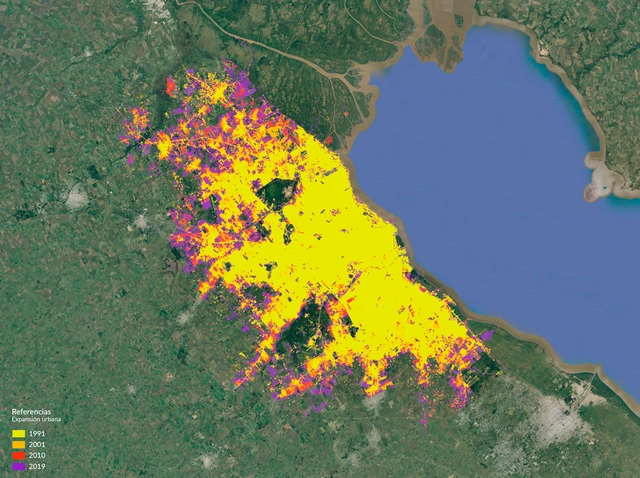
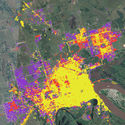
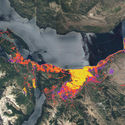
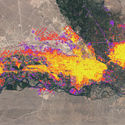
Buenos Aires Metropolitan Area / Land Consumption Per Capita (1991-2019). Image via Ministry of the Interior, Public Works and Housing, Government of the City of Buenos Aires, under CC BY 4.0 License
The Federal Urban Observatory (OFU) of the Ministry of the Interior, Public Works, and Housing of Argentina surveyed and mapped urban data for 16 cities across the country, which are home to 50% of Argentina's total population. Based on data collected over 28 years—between 1991 and 2019—this series of maps and graphs illustrates how each city's urban footprint expanded over time. Overall trends show a sharp increase in urbanized land area (77%) compared to moderate population growth (35%), resulting in a general 23% decline in population density. In other words, city growth has predominantly followed a pattern where land expansion far outpaces population growth.
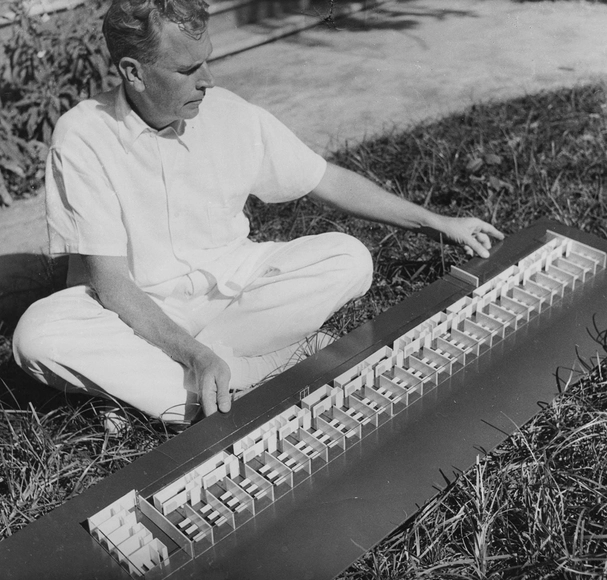
Amancio Williams con maqueta del proyecto para Tres hospitales en Corrientes. Image Cortesía de Archivo Williams - Director Claudio Williams
Discussions of Amancio Williams's architecture typically focus on his built work—the tangible side of his profession. Yet beyond being a great architect, he was a researcher, creator, avant-gardist, and visionary. Constantly studying the technical possibilities of his era, he approached his theoretical development and architectural thinking as if the field were a laboratory.
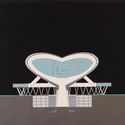
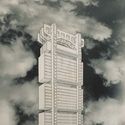
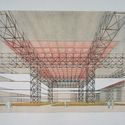
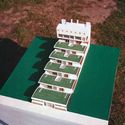
This is evident in the projects Williams developed for dwellings in space (1942), the hall for plastic spectacle and sound in space (1942), the Buenos Aires airport (1945) the suspended office building (1946) and the first city in Antarctica (1980), which we explore below.
On May 11 and 12, Rosario will host the second consecutive edition of "Open House," an open-door architecture festival for anyone interested in discovering the city's architecture and urban design.
The winners of the National Sustainable Social Housing Competition were recently announced. Organized by the College of Architects of the Province of Córdoba and promoted by the Municipality of Villa María, the competition aimed to foster debate around the role of architecture in social issues, discussing how the discipline can generate housing alternatives that offer positive solutions to Argentina's housing crisis while incorporating economic, social, and environmental sustainability principles.
The Night of the Museums is an annual cultural event held in the City of Buenos Aires. Since 2011, various public and private cultural spaces, foundations, and museums have opened their doors with special nighttime programming, allowing the public to visit them free of charge and enjoy their collections, exhibitions, and activities. The 2019 edition will take place on Saturday, November 2, from 8:00 PM to 3:00 AM, with a total of 280 cultural spaces, libraries, galleries, and museums participating.
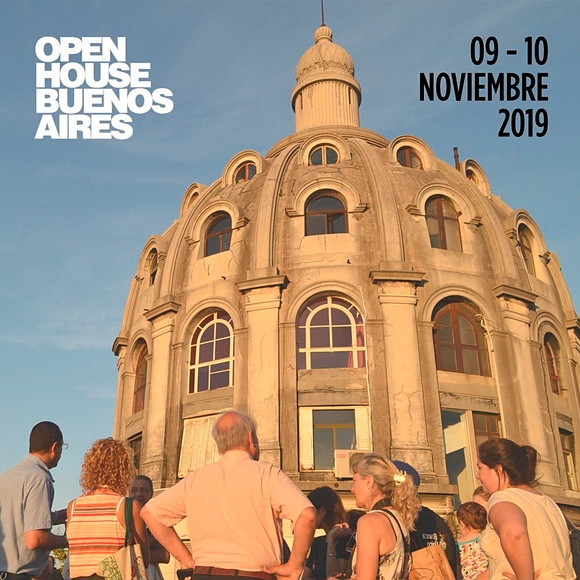
Have you ever been curious to see inside someone else's home? With this tagline, Open House Buenos Aires has announced the details of its seventh edition, an invitation and a unique opportunity to rediscover both the architecture of Buenos Aires and its stories and residents. Like every year, this festival offers free admission to numerous architecturally significant buildings that are normally closed to the public. Over the weekend of November 9 and 10, more than 140 buildings will open their doors, making the festival one of the year's most important cultural events.
The National Ideas Competition “Buenos Aires and the River,” organized by the School of Architecture, Design, and Urbanism of the University of Buenos Aires, was announced in late 2018, receiving ten preliminary proposals for the Costanera Norte Park and the Youth District. The competition aimed to find a comprehensive plan to revitalize and enhance the 59 hectares and 7.6 kilometers of the city's northern waterfront.
1° Premio - Expo 2023 Buenos Aires. Image Cortesía de Aisenson + ASN/nOISE
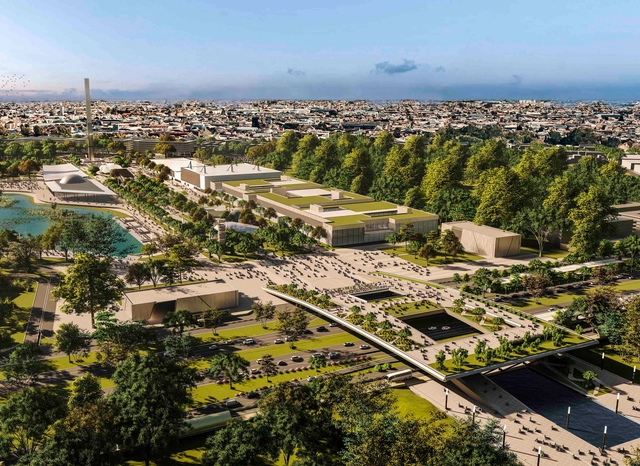
On September 25, the winners of the International Ideas Competition for the design of the new Public Space, Main Boulevard, and Connection Bridge to be built in Tecnópolis for Expo 2023 were announced. Organized by the Central Society of Architects (SCA) and the Association of Architectsof the Province of Buenos Aires (CAPBA), and sponsored by the Argentine Federation of Architect Entities (FADEA), this is the last of the six international competitions launched this year within the framework of Expo 2023. Across all competitions, a total of 199 proposals were submitted, with the participation of at least 2,000 architects and engineers from around the world.
1° Premio - Perspectiva Exterior. Image Cortesía de Arq. Gustavo Robinsohn
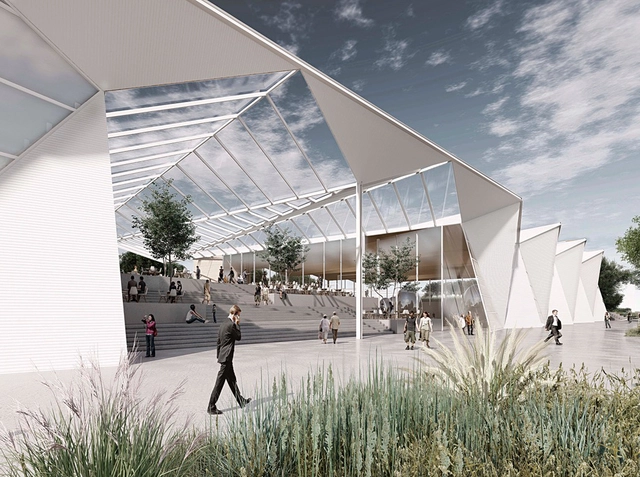
The results of the International Ideas Competition for the design of the Thematic Pavilions for Expo 2023 on the Tecnópolis grounds have been announced. Organized by the Sociedad Central de Arquitectos(SCA) and the Colegio de Arquitectos de la Provincia de Buenos Aires (CAPBA), and sponsored by the Federación Argentina de Entidades de Arquitectos (FADEA), the fifth of the six international competitions involved the design of two pavilions to serve as exhibition areas for the themes addressed by the Expo, creating ideal spaces to explore creative industries in an educational and entertaining way.
Today, architecture is a fertile ground for experimentation—a laboratory for testing solutions and building theory. It offers an opportunity to question paradigms, rethink contemporary ways of living, and understand our inherent cultural heterogeneity. Ultimately, it provides a space to enhance the critical value of design and investigate the current place of local practices within a global context.
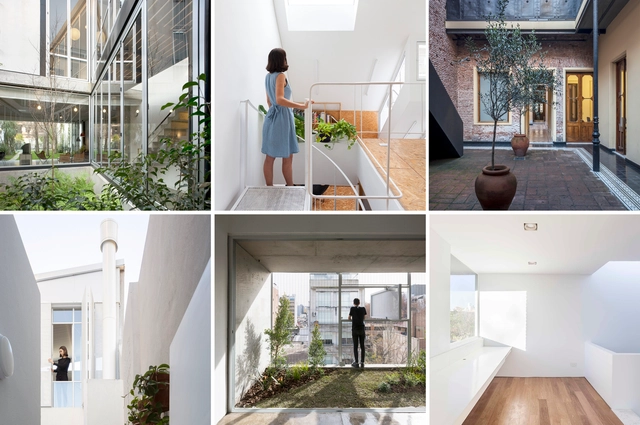
With a deep understanding of their territory and an exploratory spirit, these emerging firms approach the discipline in innovative ways. Many are defined by an open and evolving character, featuring a multidisciplinary makeup where architecture, urban planning, design, and art seamlessly merge. Below, we present six architecture firms based in Argentina whose work prompts us to reflect on contemporary needs, domesticity, objects, the city, and local production:
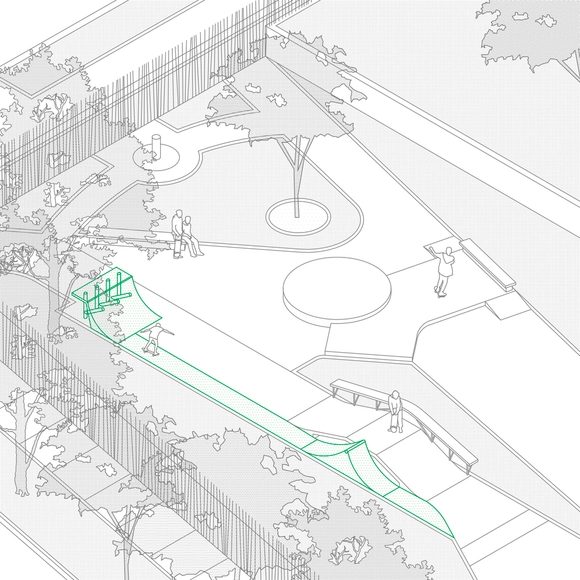
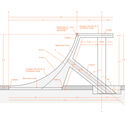
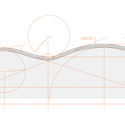
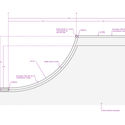
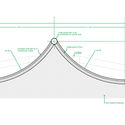
The following project, commissioned to architect Sebastian Castro Aedo alongside Bowlpark, proposes seven new interventions and a series of repairs to the skatepark originally designed by Plan Rampa in Parque Araucano. Located in a public park in the eastern sector of Santiago, in the commune of Las Condes, the project demonstrates various ways to activate specific areas, enabling new, more fluid ways of navigating the circuits.
In the new Urban and Building Code of the City of Buenos Aires, approved by the Legislature in late 2018, new strategies are presented for the city's planned growth and densification. One of the code's most notable elements, which this article reflects upon, enables the development of apartments with a new minimum floor area established at 21 square meters. The supposed affordability of these minimum micro-units seeks, under a political agenda, to double the urban population in the near future, betting on a densification that would increase the city's population from 3 million to 6 million inhabitants.
Buenos Aires, Argentina. Image via Gobierno de Ciudad Autónoma de Buenos Aires under CC BY 2.5 AR license
The Global Power City Index (GPCI) is an annual report that evaluates the conditions of the world's major cities and urban centers, ranking them according to their "magnetism," or their comprehensive power to attract people, capital, investors, and businesses from around the globe. In 2019, the index included three Latin American cities—Buenos Aires, Mexico City, and Sao Paulo—among the world's 50 most attractive for investment and talent.
This weekend, more than 140 buildings will open their doors to celebrate Open House Buenos Aires 2019, an international architecture and urbanism festival dedicated to showcasing works of great architectural, cultural, and heritage value, bridging the gap between the public, professionals, enthusiasts, and their city. On Saturday, November 9, and Sunday, November 10, numerous architecturally significant buildings—typically closed to the public—will open their doors to visitors, offering a unique opportunity to rediscover the architecture and history of the City of Buenos Aires.
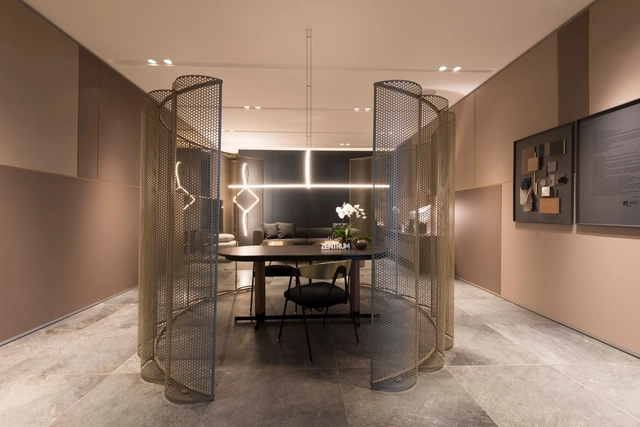
Pensar,decir,hacer by Zentrum Developers y Belary Constructora- Carolina Feller y Melisa Herc. Image Cortesía de Casa FOA
Casa FOA, the national architecture, interior design, landscaping, and industry exhibition, returns to the province of Buenos Aires after 11 years. Hosted at the Círculo de Olivos, the 36th edition will open its doors to the public from September 13 to October 20, marking its return to the Buenos Aires region for the first time since 2008, when Casa FOA dazzled at the Puerto de Frutos in Tigre.
via Government of the Autonomous City of Buenos Aires under CC BY 2.5 AR License
Just two months ago, the final phase of Parque de la Estación was inaugurated in Buenos Aires, a project that reclaimed underutilized land at the Sarmiento Railway's 11 de Septiembre station to create a public park. One of the most significant aspects of this urban revitalization project was the active role citizens played in the design and planning process, serving as a clear example of how public participation and co-creation can be powerful tools for designing high-quality public spaces that provide real solutions for local residents.




.jpg?1556847358&format=webp&width=230&height=230&crop=true)
.jpg?1556847671&format=webp&width=230&height=230&crop=true)