Courtesy of Lapyote Prasittisopin, Chanita Chuaysiri / Siam Research and Innovation
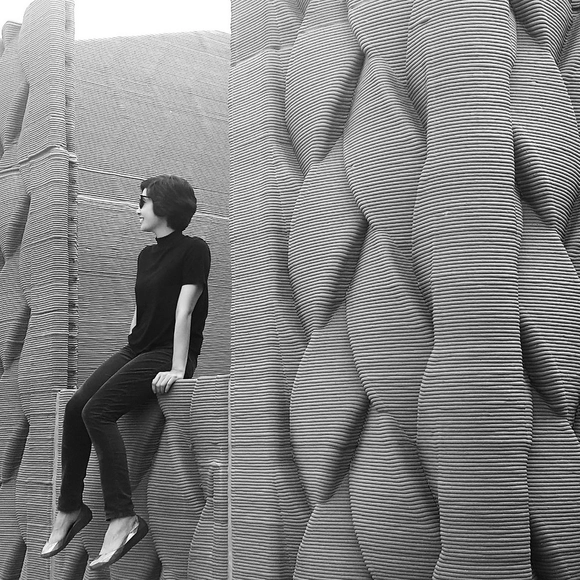
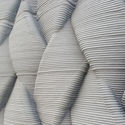
Siam Research and Innovation Company (SRI) is a Thailand-based cement manufacturer that has been developing innovations to push the limits of 3D printing in architecture. Their project 'Triple S' –developed in 2017– is based on traditional Thai craftsmanship to generate Surface, Structure, and Shelter in a single process; its specific artisanal form creating beautiful framework for structural purposes, easily building living spaces.
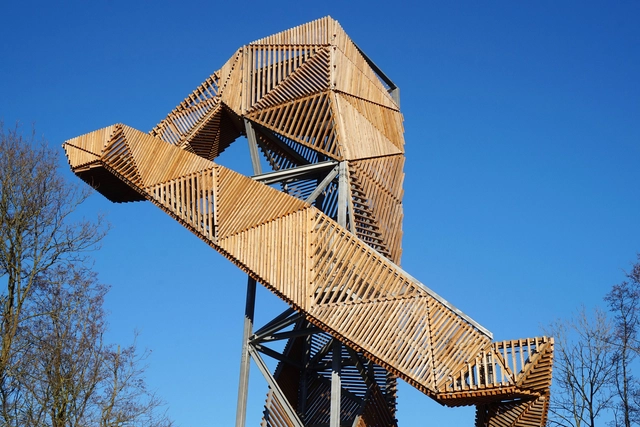
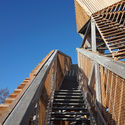
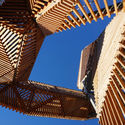
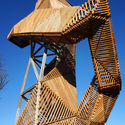
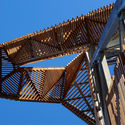
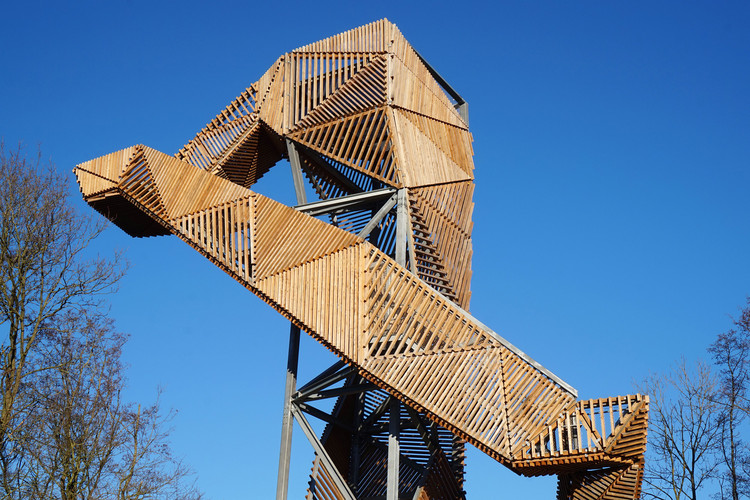
Ateliereen Architecten has proposed a metal and wood configuration for an observation tower in Peize, Netherlands. Their plan is to construct a resistant, permeable and playful structure.
The project is designed so that people climbing up the tower will have unique viewpoints. This tower is also easily assembled from screws and bolts.
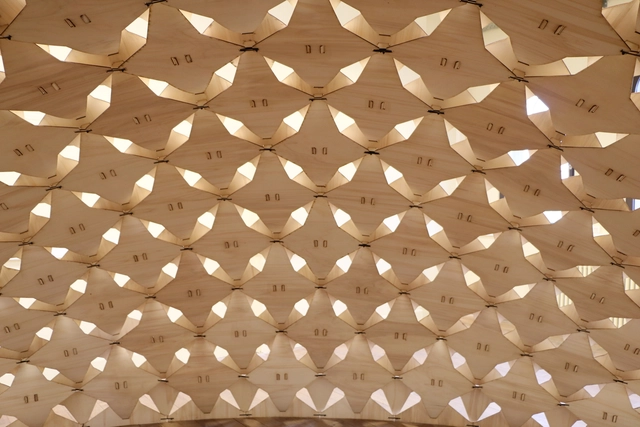
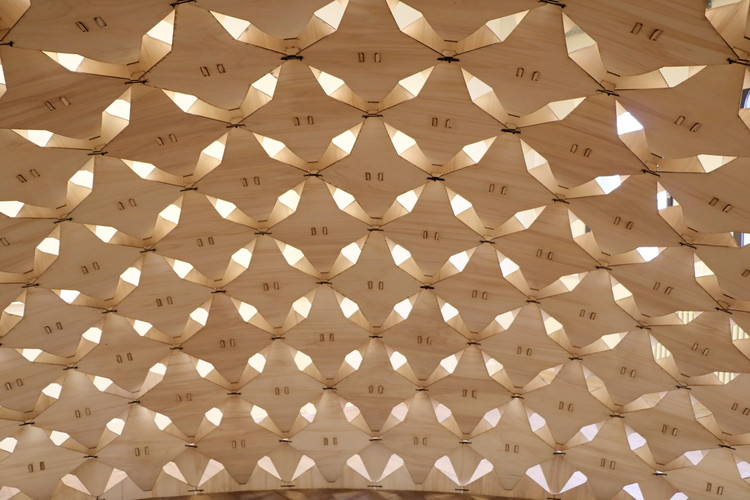
"Exoskeleton" is a pavilion that shows how Computer Aided Manufacturing can create rapid prototypes. This manufacturing process allows for real-scale construction and experimentation with limited resources.
In this project, a system of modules, designed with different dimensions, is put together with simple joints without nails or screws. This allows for different surfaces to be formed and for the pieces to be rotated and assembled at various angles and heights.
As part of our 2018 Venice Architecture Biennale coverage, we present the proposal for the German Pavilion at the 16th International Architecture Exhibition 2018 La Biennale di Venezia. Below, the participants describe their contribution in their own words.
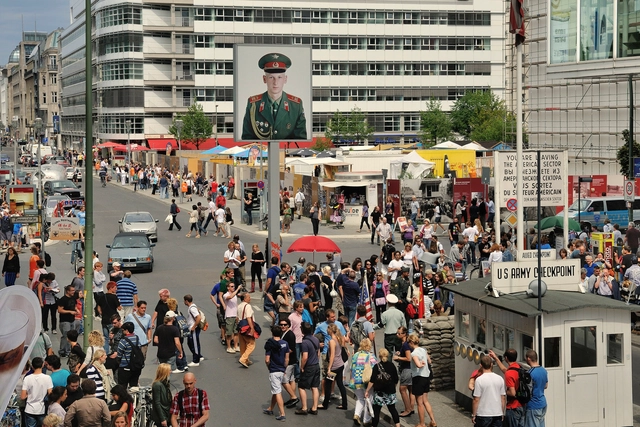
For 28 years, Germany has been united – exactly as long as the Berlin Wall existed (1961–1989). On the occasion of this parallel, GRAFT and Marianne Birthler are curating the exhibition “Unbuilding Walls” at the German Pavilion at the 16th International Architecture Exhibition in Venice.
https://www.archdaily.com/888748/unbuilding-walls-german-pavilion-at-2018-venice-architecture-biennale-to-probe-architecture-of-division-and-integrationAD Editorial Team
With nearly 100,000 votes cast during the last two weeks, we are happy to present the winners of the 2018 ArchDaily Building of the Year Awards. This peer-based, crowdsourced architecture award showcases projects chosen by ArchDaily readers who filtered thousands of projects down to the 15 best works featured on ArchDaily in 2017.
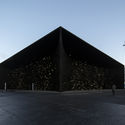
Asif Khan's Vantablack pavilion, the world's first super-black building, will open at the PyeongChang 2018 Opening Ceremony on 9 February 2018.
The Olympic pavilion is coated with Vantablack VBx2 carbon nanotubes and illuminated by thousands of tiny white light rods. These rods extend from the structure's parabolic super-black facade and create the illusion of a field of stars suspended in space. Looking at the building will be the closest experience to looking into space from a point on Earth.
Traditionally, Winter Olympics stadiums have stuck to a design that obscures the sky and protects against the elements in order to keep the guests warm. This year, the Pyeongchang 2018 Winter Olympics organizing team wanted to try something different. Guests will watch the three-hour opening ceremony at the PyeongChang Olympic Main Stadium – and it will be roofless.
Pyeongchang, located not too far from the border of North Korea, is notorious for one of the worst winters in the country. Temperatures in PyeongChang are forecast to reach minus 14 deg C (about 7 deg F), partly due to the powerful, biting winds that barrel down from Siberia and the Manchurian plain. This may be the coldest Olympics since the 1994 Olympics in Lillehammer, Norway. And because of the curious roofless architecture, the roughly 35,000 spectators will be completely exposed.
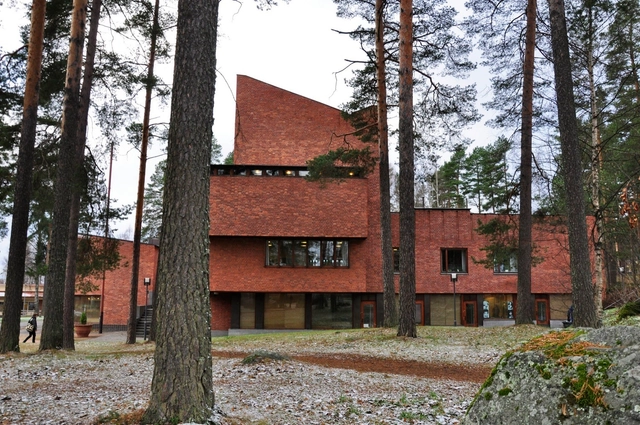
As one of the key figures of midcentury Modernism and perhaps Finland's most celebrated architect, Alvar Aalto (3 February 1898 – 11 May 1976) was known for his humanistic approach to Modernism. For his characteristically Finnish take on architecture, Aalto has become a key reference point for architecture in the Nordic countries, and his commitment to creating a total work of art left many examples of his design genius not only in buildings but also in their interior features, including furniture, lamps, and glassware design.
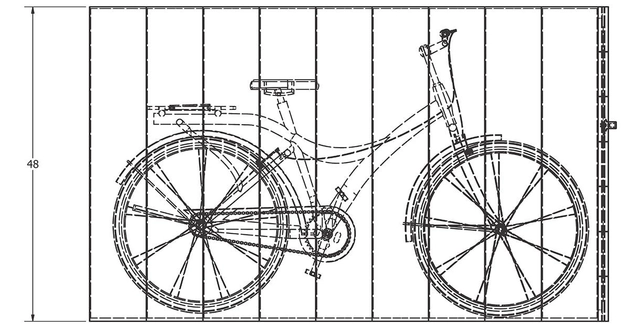
Designing public spaces without considering the circulation and parking of bicycles is no longer an option in today's world. Accessibility for the free traffic of cyclists must also be accompanied by adequate security conditions, incorporating these devices in the best possible way to parks, sidewalks, parking lots, and the streetscape as a whole.
Are you designing an urban space, or do the exteriors of your project require a correct link with the circulation of bicycles? Check these support elements that can help you to generate a better city for the urban commuter on wheels.
https://www.archdaily.com/887343/urban-equipment-for-public-spaces-helps-to-build-a-bike-friendly-cityAD Editorial Team
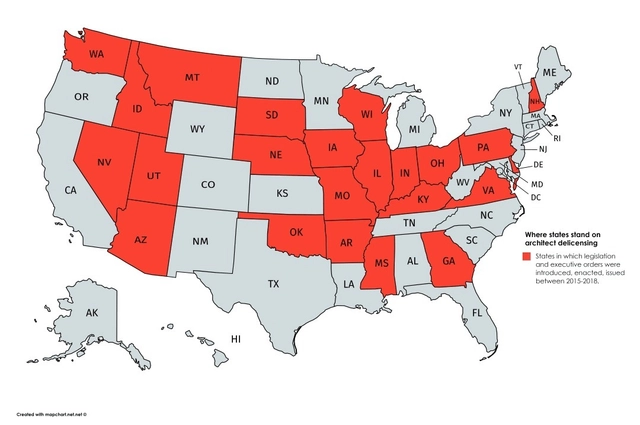
With a growing number of states choosing to rollback professional architectural licensure requirements, the American Institute of Architects (AIA) has issued a “Where We Stand” statement calling for the reinforcement of the practice, which they believe stand to “protect the health, safety and welfare of the public and shield consumers from unqualified practitioners.”
According to the AIA, over the past 5 years, legislative or executive actions have been taken in at least 25 states to impose the “least restrictive regulations” for professional licensure, with several states recommending the elimination of all licenses in the state.
https://www.archdaily.com/887865/aia-responds-to-actions-taken-by-25-states-to-reduce-architectural-licensure-requirementsAD Editorial Team
While architects are known for promoting sleek, clutter-free spaces, we have to ask: is this the best way to inspire creativity?Personal preference certainly plays a large part in how you respond to a stark table-tops with nary a stray pencil--maybe this is your nirvana. Or perhaps it’s theoretically preferable but once you have to sit down and work, you find yourself uninspired.
Author Tim Harford researched and compiled a number of examples for his book Messy in which “creativity, responsiveness, [and] resilience” were “integral to the disorder, confusion and disarray.” Do you agree? Or perhaps more importantly, what are you surrounded by when you’re in the zone and at your creative peak?
https://www.archdaily.com/887133/neat-and-tidy-or-messy-and-cluttered-which-inspires-more-creativityAD Editorial Team
Fact-checking website Snopes (also known as the internet's first fact-checking website) has now been debunking Urban Legends and setting the record straight when it comes to "questionable" and/or fantastic stories for 23 years. In its two decades of operation, it has amassed not only thousands of well-researched explanations to perplexing myths but has also garnered the praise of news outlets like The New York Times, CNN, and Forbes. So what can Snopes tell us about our dear profession? Get your facts right with our list of dubious (and some not-so-dubious) claims about architecture, buildings, and city design.
https://www.archdaily.com/886227/fact-check-which-of-these-architecture-rumors-are-actually-trueAD Editorial Team
After years of publishing projects and articles related to bamboo, we are strongly aware of its qualities as a construction material. But is it really an option that you would use into your next project? Despite widespread appreciation, bamboo seems to be a material that is rarely considered for use in everyday designs.
The team of Manasaram Architects and CGBMT asked themselves the same question. Together they are seeking to understand the current perceptions of bamboo and to discover its potential as a commonly-used material in the construction sector. To help in this pursuit, they have shared a survey with us which seeks to evaluate how often architects and building professionals use bamboo, the problems they face, and how informed they are about the material.
We would like to invite our readers to spare 10 minutes of their time to help us expand knowledge about the use of bamboo using the survey below. The results will be shared on ArchDaily once the study is complete.
https://www.archdaily.com/886269/is-it-possible-to-massify-the-bamboo-as-a-building-material-in-the-construction-sectorAD Editorial Team
The new three-story building, designed by Foster + Partners, would require the demolition of the existing Yarra Building, and would change the character of Federation Square, a popular public location for gatherings and events. But before being announced, the project was already fast-tracked through the first stage of planning approval, thanks to a partnership with the city.
https://www.archdaily.com/886618/melbournites-protest-plans-for-apples-first-southern-hemisphere-flagship-store-over-secrecy-of-approval-processAD Editorial Team
Ranking cities is a risky endeavor. How can one be objective and fair when this great earth and its 7.6 billion inhabitants would never come to anything close to a consensus? And yet global consulting firm Resonance Consultancy has taken on the challenge based on the opinions of the people they claim matter most: "a city's visitors and its residents."
Surveying the inhabitants and tourists about 23 different factors (that are then grouped into six key categories—Place, Product, Programming, People, Prosperity and Promotion), the methodology aims to be comprehensive in the ranking of quality of place and reputation. In the people category, for example, the surveyors looked at things like the immigration rate and diversity of a city, including number of Foreign-born Residents. Also taken into consideration was the amount of "stories" or "mentions" a city generates on web platforms like Facebook, Google and even TripAdvisor. And, most relevant to us architects, cities were scored on their quality of neighborhoods, landmarks and parks.
https://www.archdaily.com/886150/the-worlds-best-cities-2018AD Editorial Team
As we approach the end of the year, we would once again like to thank you all for making 2017 our best year yet. With your continued support, we are now reaching more architects around the globe than ever, and inspiring them in the creation of better urban environments for all.
On behalf of the entire ArchDaily team, we are excited to share this collection of 2017's most visited projects, products, and articles. Together with our curated selection of the year's most relevant and noteworthy articles and events, these represent the best content created and shared by ArchDaily over the past 12 months.
'Tis the season for offices, museums, photographers and collaborators from around the world to send us a bit of holiday cheer! See our favorites below (or check out our best reader-submitted cards).
When they aren't designing buildings or making sure their models and plans are neat and tidy, many architects channel creative energy into sketches (both hand-done and digital) that become small tokens of holiday cheer. This annual challenge, now in its third year, is our unashamed way of celebrating the inventiveness, originality, and artistry of ArchDaily readers from around the world. May you all enjoy the humblest and most thoughtful gift of all: an expression of holiday cheer.
Featured gif by Joanne Hanson
https://www.archdaily.com/885934/best-submissions-to-the-2017-architecture-holiday-card-challengeAD Editorial Team















.jpg?1515101128&format=webp&width=640&height=580)