Graphics, even before language and writing, were the first means of communication and significance for humanity. Drawing is the act of replacing reality with representation, that is, replacing objects with images encoded in each of the graphic representation systems.
In architecture, graphics stimulate the imagination and are the basis of project thinking since they do not only constitute our code of communication but configure our ability to express ourselves in disciplinary terms. In fact, at first, the drawing is constructed in the mind of the architect, before it looks for support from any type of instrument.
A call that comes from the cradle, creativity, the act of transforming ideas into materials, are some of the words to introduce Nitsche Arquitetos, which in its practice remains in a constant reinvention from the questions that are posed about space and life. Daughter and sons of artists Marcello Nitsche and Carmela Gross, siblings Lua Nitsche, Pedro Nitsche and João Nitsche founded the office that works on two fronts: architectural projects – headed by Lua and Pedro, architects trained at FAUUSP in 1996 and 2000, respectively – and works of art and visual communication – led by João, a visual artist who graduated from FAAP in 2002.
Still from 'Spirited Away' (2001). Image Courtesy of Studio Ghibli
Writers in film and animation, specifically pertaining to the genre of anime, endeavor to incorporate varied architectural backdrops to assist them in telling their stories, with influences ranging from medieval villages to futuristic metropolises. Architecture as a subject includes a wide array of elements to study, with each architectural era further inferring its context and history through its design alone. However, in film and anime, all of the contexts behind a building’s design can be condensed into a single frame, powerful enough to tell a thousand stories.
As the world spins deeper into the third year of a global pandemic with no sign of abating, a new space race is forming over our heads. Entry is open to all, and the tickets are literal. The Architect's Newspaper's Jonathan Hilburg explores how the world's richest men are charting new paths for the human species, and how the public are reacting to the future of private space tourism.
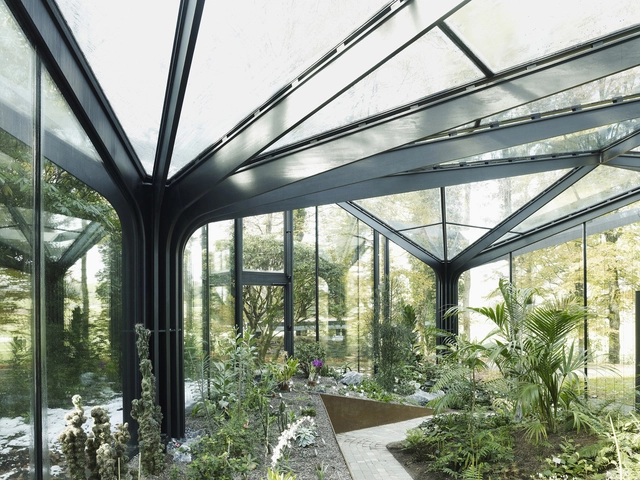
Few structures are as elegant and ingenious as greenhouses. Largely built with simple and straightforward designs, these minimalist shelters create airy and light-filled spaces that shape indoor climate. Dedicated to the cultivation of plants and crops, they are diverse projects combining programs and systems to emphasize sustainability, education and conservation. At their heart, greenhouses are about experience and discovery.
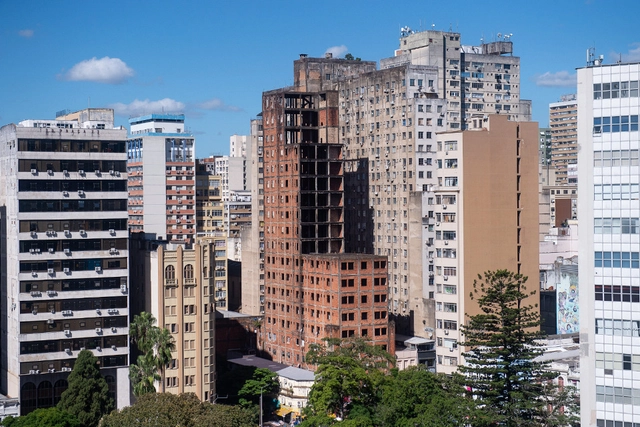
In the film Aquarius, directed by Kleber Mendonça Filho, the character Clara, played by Sônia Braga, refuses to sell her apartment—located in a condominium building—to a real estate developer. Her neighbors, on the other hand, accept the deal. In an article for Estadão, economist Pedro Fernando Nery views the case through a lens opposite to the cinematic narrative: instead of a hero resisting unscrupulous real estate capital with no respect for Recife's coastal landscape, Clara is actually the villain.
The Second Studio (formerly The Midnight Charette) is an explicit podcast about design, architecture, and the everyday. Hosted by Architects David Lee and Marina Bourderonnet, it features different creative professionals in unscripted conversations that allow for thoughtful takes and personal discussions.
A variety of subjects are covered with honesty and humor: some episodes are interviews, while others are tips for fellow designers, reviews of buildings and other projects, or casual explorations of everyday life and design. The Second Studio is also available on iTunes, Spotify, and YouTube.
This week David and Marina answer the question, “Should I go to architecture school?” The two cover the relevancy of college/university, the architecture school experience, if studying architecture is needed to practice architecture, if having a degree helps with getting a job, preparing for architecture school, choosing the right degree, the cost of architecture school, and more.
https://www.archdaily.com/979573/the-second-studio-podcast-should-i-go-to-architecture-schoolThe Second Studio Podcast
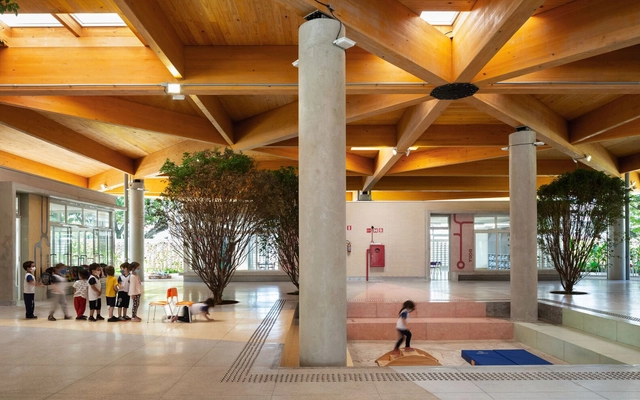
National School Day was celebrated yesterday, March 15, an important date to remember and value the role of educational institutions. Spaces that foster new perspectives, knowledge, exchanges, interaction, and play must be designed to rise to the challenge. While we have previously highlighted fifteen projects designed by Brazilian architects, today we take the opportunity to showcase some of the solutions and techniques adopted in recent years when approaching this program.
The new report from the Intergovernmental Panel on Climate Change (IPCC) paints a troubling picture: climate change is already affecting every corner of the world, and far more severe impacts lie ahead if we fail to halve greenhouse gas emissions this decade and immediately scale up adaptation measures.
https://www.archdaily.com/1131911/impact-of-climate-change-6-findings-from-the-2022-ipcc-report-on-adaptationKelly Levin, Sophie Boehm e Rebecca Carter
The Glass House, located on Ponus Ridge Road in New Canaan, Connecticut, was designed and built in the late 1940s as the home of its architect, Philip Johnson. Considered an icon of modern architecture, the house explores the boundaries between interior and exterior. One year after its completion, its mimesis, the Brick House, was built 25 meters in front of it, sharing the same length but only half the depth of the glass house.
https://www.archdaily.com/1132105/exhibitionism-and-seclusion-the-glass-house-complex-of-philip-johnson-and-david-whitneyHelena Ramos e Rafael Baumer
This week's curated selection of Best Unbuilt Architecture highlights designs submitted by established architecture practices, featuring conceptual works, competition entries and projects in different stages of development. From the transformation of a former mall into a healthcare facility in the United States, a masterplan for the redevelopment of a zoo in Canada to a brewery regeneration in China, the following explores a variety of designs by global architecture offices.
Featuring firms like Perkins +Will, Henning Larsen Architects, URBANUS or Mandaworks, this week's selection of unbuilt projects highlights worldwide interventions that illustrate a variety of ideas, from adaptive-reuse strategies, interventions in heritage sites and new models for public buildings.
Pricing architectural project work is a complex issue that is not usually addressed during one's formative school years, and it usually takes time for professionals to develop a good system that works for them and their clients. Issues such as scope of work, hours worked, project area and project complexity will influence the final cost of a job. In addition, another thing that can keep project professionals awake at night is how to charge clients in a way that is sustainable for the business and comfortable for future users of the designed space.
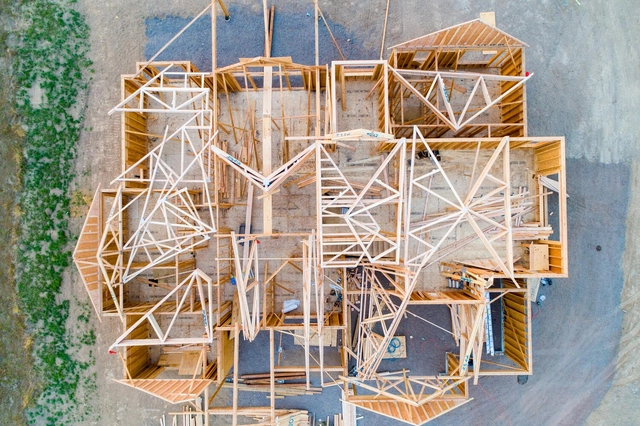
One of the first elements used by humans to build shelters, wood is a versatile material that, along with technological advances, remains a protagonist in the construction industry, being used in different ways and moments in a work.
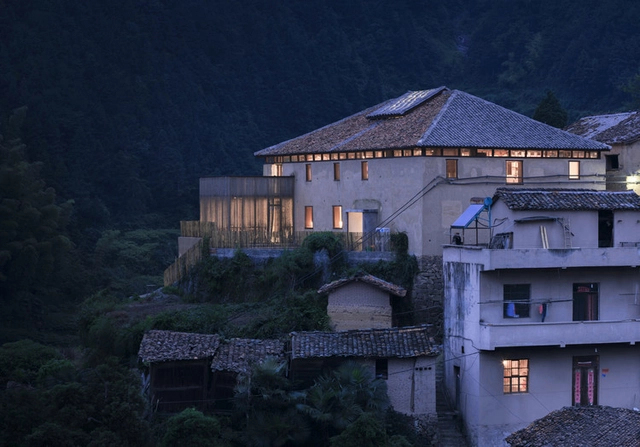
The immensity of China leads to the diversity of customs and climatic conditions. Each area has its own unique materials, construction methods, and climate adaptation measures. The regional characteristics of Chinese architecture are generally preserved in rural buildings. But we cannot overlook how contemporary technology may considerably improve the living and use conditions of rural buildings. What is the best way to create a balance between classic or inherent technology and new ones? How would the construction of rural architecture provide inspiration for the development of Chinese architectural cultural symbols?
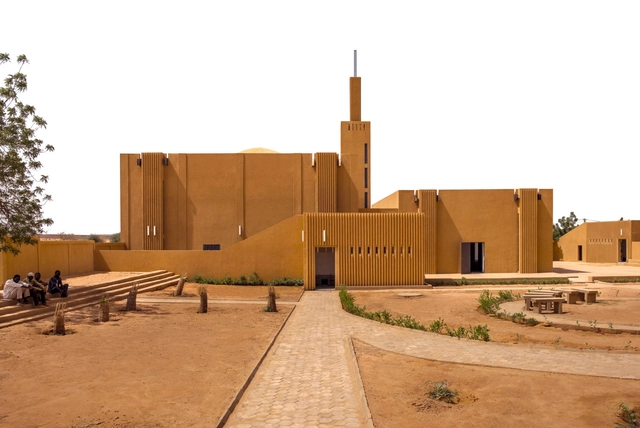
2022 Pritzker Architecture Prize winner Diébédo Francis Kéré reported the great solutions of Burkina Faso. Kéré insists to build comfortable buildings at a reasonable price; to make users happy and inspire them to dream of a better life. The pride of the local culture is reinforced by the use of local materials and traditional techniques. And then Kéré‘s works in other countries show cultural emblems of Burkina Faso, which are the consequence of his own cultural accumulation.
Compared to that of the West and East, awareness and knowledge of the architecture of sub-Saharan Africa—Africa south of the Sahara Desert—is scant. A new book intends to mitigate this oversight, and it’s a significant accomplishment. Architectural Guide Sub-Saharan Africa (DOM publishers, 2021), edited by Philipp Meuser, Adil Dalbai, and Livingstone Mukasa, was more than six years in the making. The seven-volume guide presents architecture in the continent’s 49 sub-Saharan nation-states, includes contributions by nearly 340 authors, 5,000 photos, more than 850 buildings, and 49 articles expressly devoted to theorizing African architecture in its social, economic, historical, and cultural context. I interviewed two of the editors—Adil Dalbai, an architectural researcher and practitioner specializing in sub-Saharan Africa, and Livingstone Mukasa, a native Ugandan architect interested in the intersections of architectural history and cultural anthropology—about the challenges of creating the guide, some of its revelations about the architecture of Africa, and its potential impact.
https://www.archdaily.com/979526/a-remarkably-comprehensive-new-guide-to-the-architecture-of-sub-saharan-africaMichael J. Crosbie
Grounded by the COVID-19 pandemic, the hospitality sector is re-grouping and looking for fresh ideas and stories. Image Courtesy of HD Expo + Conference
As the hospitality sector begins to reemerge after the global pandemic, fresh thinking, new strategies and innovation will be key – and all on show at HD Expo + Conference in Las Vegas, 26 to 28 April.
Sistema EKol® en Westin Los Cabos Resort. Image Cortesía de Westin Hotels & Resorts
The earliest mosaics date back to the 8th century BCE. Indeed, they were already used as decorative elements and paving in Ancient Greece and the Roman Empire. Yet, despite this long history, they remain as relevant as ever, continuing to set trends in contemporary design. Furthermore, in recent years, mosaic techniques have evolved alongside new technologies and advanced manufacturing methods, giving rise to various types of coverings with diverse formats, styles, colors, and properties adapted to a wide range of functions. Among these, glass systems stand out particularly for their beauty, versatility, and physical properties.
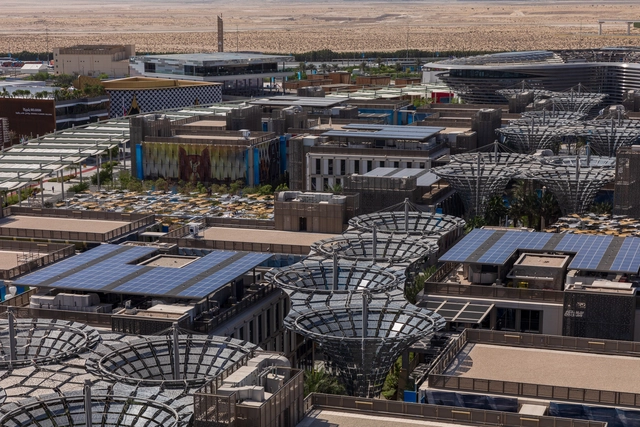
During the past two years spent photographing Expo 2020 Dubai, I was often asked by friends what exactly it was. To align with its closure on the 31st of March, I would like to address that question from two angles. Most readers will be aware that the expo is part of a tradition dating back to the 19th century - a Showcase for companies and countries, a tourist attraction, a testing ground for technical innovation. But it is also a collection of paradigm studies on opportunity, sustainability, and mobility, as well as a lucrative building project creating a new neighbourhood in the Emirates and a future means of dwelling. Perhaps this last frame of reference is the most interesting for it is what most distinguishes this expo from others.
You may have heard an architect colleague say that he chose to study architecture because of the numerous possibilities of action that this degree allows. The field of architecture is, in fact, very extensive, through which it is possible to embark not only on the most “traditional” attributions, but also to venture into various specificities that comprehend the role of the architect and urban planner.
The 8th March is a date set by the UN in 1975 to remember the struggle for equal rights and universal suffrage. This commemoration brings together the efforts of women who demanded their right to vote, work, professional training, hold public office, and fight discrimination in the workplace. This struggle is the fruit of the work of women who sacrificed themselves for the cause. Various events that we experience on a daily basis show that the social situation has changed. However, it is essential that both men and women commit themselves to progress and justice in order to make things happen.
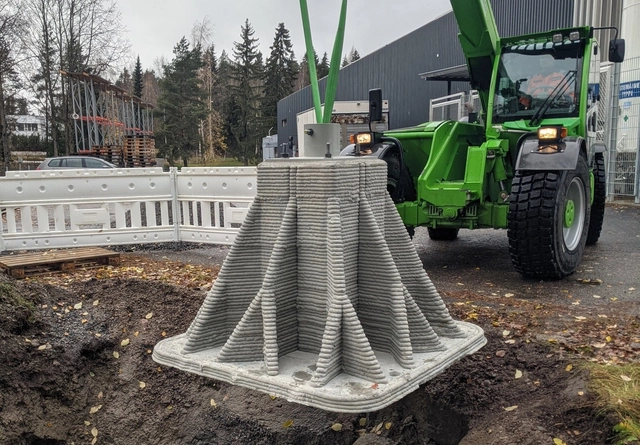
After water, concrete is the second most-consumed material on the planet and its production is substantially growing, expected to increase from 4.4 billion tons, reaching production up to 5.5 billion tons by 2050. Unfortunately, this comes at a huge environmental cost, accounting for almost eight percent of the global carbon emissions. With this estimated expected growth, stakeholders in the construction industry must work on integrating sustainable building materials and innovative processes.
This past January, the Municipal Government of São Paulo, one of Latin America's largest cities, released the results of its Census of the Homeless Population, presenting its socioeconomic characterization and a territorial profile. Recent GDP data, along with the census findings, demonstrate the impacts of the pandemic and the economic and political crisis on society, confirming what is being reflected across major Brazilian cities.
Once reserved for hospital environments or highly controlled laboratories, biosecurity has become a shared concern for many of us, especially considering that we spend most of our time indoors. With new outbreaks of the Covid-19 Delta variant detected in various states—driving a 9% increase in the epidemiological curve—families continue to seek the protection and resources needed to safeguard their spaces, ensuring sanitary safety against constant exposure to infections, viruses, and bacteria that pose potential health risks.
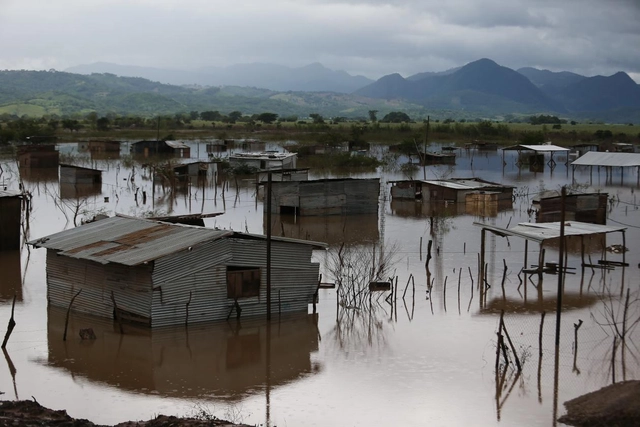
Flooding after a Category 4 hurricane in Nicaragua. The increased intensity of storms is linked to climate change. Photo: European Union, 2020/D. Membreño
High in the Andes, glaciers have retreated and shrunk under the effects of climate change. Around four million people depend on the glaciers for water, yet they have lost nearly a meter of thickness over the last 20 years.
https://www.archdaily.com/1132495/commitments-ambition-and-frustration-latin-americas-progress-on-climate-issuesAlex Simpkins, Caroline M. Rocha Frasson, Héctor Donado e Carolina Genin















.jpg?1647615056&format=webp&width=640&height=580)