Now more than ever, architecture is in need of innovation. The pandemic has made us fundamentally rethink the functioning of our cities, public spaces, buildings, and homes. Meanwhile, the recent Black Lives Matter and racial justice protests have us questioning architecture’s complicity in broader socioeconomic issues. These challenges are pressing, and we cannot put off changing architecture any longer.
The Cruel Pedagogy of the Virus – The pandemic has a tragic power of revelation. It exposes a series of paradoxes that were previously obscured or underestimated. In this sense, like any moment of crisis, it carries an educational dimension. Undoubtedly, given so many deaths—many of them preventable—this is a "cruel pedagogy of the virus," in the words of Portuguese sociologist Boaventura de Sousa Santos. Amidst the suffering, debates and proposals have proliferated through livestreams, articles, reports, petitions, research papers, action agendas, guides, denunciations, solidarity networks, and even self-governance initiatives in semi-abandoned peripheries. These discussions focus particularly on the Brazilian tragedy, which combines multiple crises tied to structural issues (such as inequality and racism) with a mounting crisis of reason—or simple common sense—shaping a macabre landscape of social regression, hatred, obscurantism, and genocide.
https://www.archdaily.com/1124284/architectures-of-distance-what-the-pandemic-can-reveal-about-architecture-and-urbanism-educationMariana Wilderom e Pedro Fiori Arantes
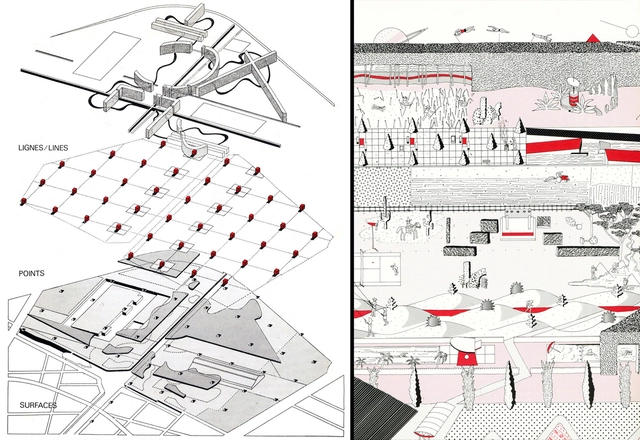
Boards developed by the teams led by Bernard Tschumi (left) and Rem Koolhaas (right) for the international competition of the Parc de la Villette in Paris, 1982-83. Courtesy of Bernard Tschumi Architects and OMA
Participating in architecture competitions can be a great opportunity to boost a firm, or to step away from the routine by developing ideas that wouldn't normally pass a client's scrutiny. However, to catch the jury's attention among hundreds of entries, the project's graphic presentation plays a key role. Beyond presenting relevant ideas in response to the brief's questions and debates, an organized board is essential as a synthesis of the process. In trying to compile these ideas graphically, a series of questions arises regarding the presentation style and how it will help convey the project's core concepts clearly to the jury.
Plans, sections, elevations, collages, renderings, diagrams, texts, and graphic elements. Board dimensions never seem large enough to hold so much information. With this in mind, we have compiled a series of essential tips for developing your boards in architecture competitions. Check them out below:
While public awareness and regulations on how to reduce, reuse, and recycle municipal solid waste (MSW) on a daily basis have gained momentum, this is not yet the case for construction and demolition waste (CDW). This waste is primarily generated from the development of new projects; the rehabilitation, repair, and retrofitting of existing buildings; and site preparation and demolition processes, spanning from the scale of a single house to an entire city. This represents not only the loss of a massive volume of concrete, brick, steel, and manufactured products, but also the missed opportunity to salvage historic relics.
We want to offer our readers the opportunity to openly share their opinions and experiences regarding the recycling of this waste. If we were all fully aware of the environmental impact generated by the extraction, production, and commercialization of materials—only for them to ultimately end up as trash—would it change the way we design? Would our practices change?
Between the late 1940s to the 1980s, Toronto, Canada, experienced a high rate of growth and development, resulting in a wealth of modernist-style buildings. Due to an increasing population, parishes were also outgrowing their spaces and found themselves in need of new facilities. Consequently, many well-designed modernist churches began to pop up throughout Toronto. This black and white photography series, titled Fifty/50 by Amanda Large, is an ode to these churches, and a celebration of their enduring importance to the city more than fifty years after their construction.
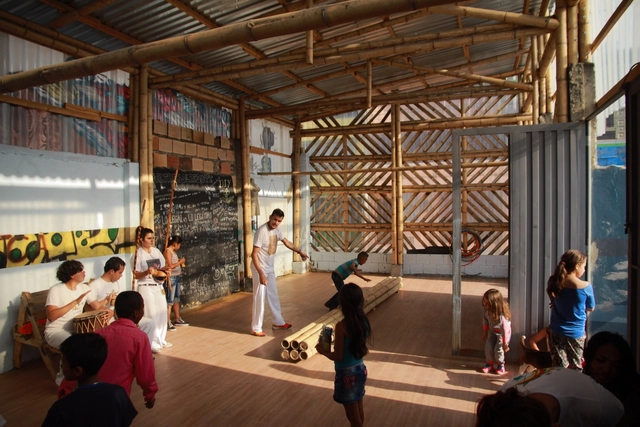
El Trébol / Arquitectura Expandida. Image Cortesía de Arquitectura Expandida
The series of articles developed by Nikos A. Salingaros, David Brain, Andrés M. Duany, Michael W. Mehaffy and Ernesto Philibert-Petit researches the peculiarities of social housing in Latin America. This time, the authors focus on the role of participation in design processes and in the construction of a healthy urban fabric based on the experience of Christopher Alexander.
https://www.archdaily.com/944291/socially-organized-housing-in-latin-america-the-experience-of-christopher-alexanderNikos A. Salingaros, David Brain, Andrés M. Duany, Michael W. Mehaffy & Ernesto Philibert-Petit
Videos
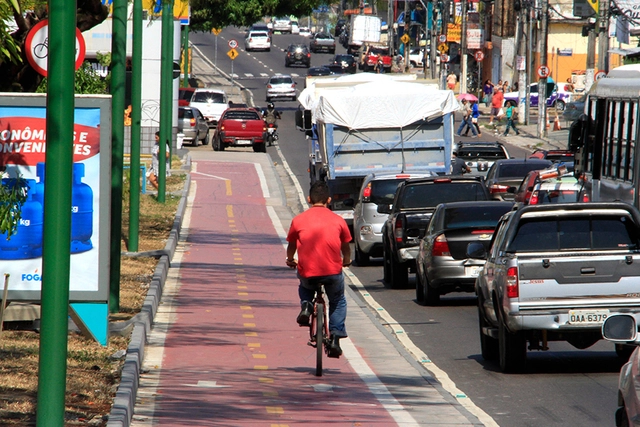
Bike lane in Manaus, AM. Courtesy of Caos Planejado
Cities are on the front lines of the fight against Covid-19. This pandemic has manifested as a global crisis, and the decisions made at this delicate moment by governments, policymakers, decision-makers, and the public will have profound consequences for the future. Countless contexts are already undergoing changes that alter—if only temporarily—human behavior. Social distancing measures, lockdowns, health protocols, and restrictions on urban mobility are major drivers in shaping new urban realities.
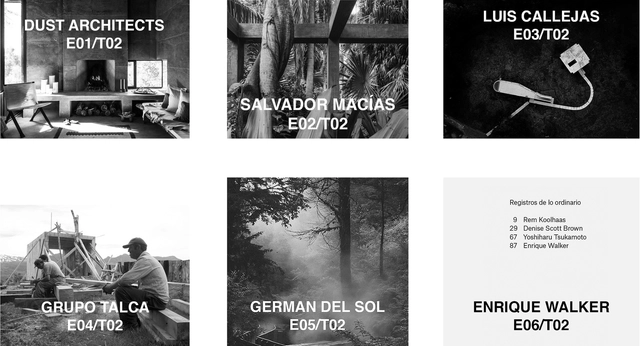
Nicolas Norero presents a new season of his podcast, continuing his conversations on identity, memory, and ways of life. In this edition, the featured guests are Dust Architects, Salvador Macías, Luis Callejas, Grupo Talca, Germán del Sol, and Enrique Walker.
Videos
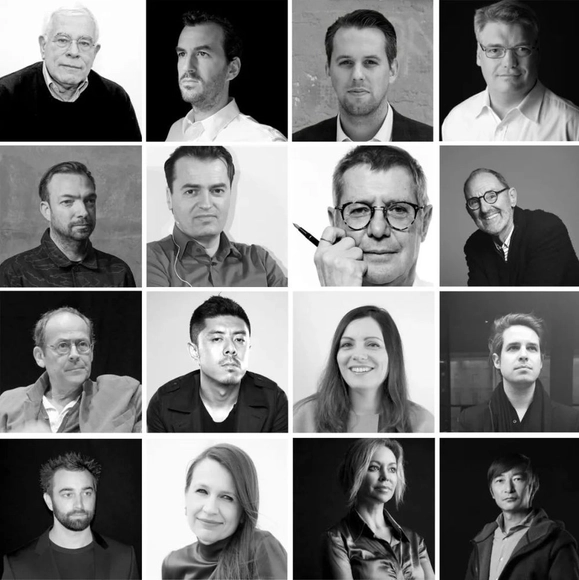
Peter Eisenman, Patrik Schumacher, and Alisa Andrasek among the speakers that participated at Digital Futures. Image Courtesy of Digital Futures
Like most functions in recent months, this year’s Digital FUTURES, which is held annually since 2011 at Tongji University in Shanghai, had to move online due to the pandemic. The organizers took this as an opportunity to give the event a global dimension, turning the festival into what they rightfully call the most significant worldwide event for architectural education ever staged, with a 24/7 display of workshops, lectures and panel discussions involving some of the most prominent architects and educators. Here is an overview of the festival, together with a selection of lectures from Digital FUTURES World.
When Jane Jacobs famously said, “Cities have the capability of providing something for everybody, only because, and only when, they are created by everybody,” she might as well have been foreshadowing the successful partnership formed between SHoP Architects, James Corner Field Operations, and Two Trees Management. The team, who collaborated on the 11-acre Domino Park master plan in Williamsburg, Brooklyn, has been hailed for creating a benchmark standard in perfecting the process for designing and understanding what it means to maintain a park that actively participates in a two-way dialogue with the community.
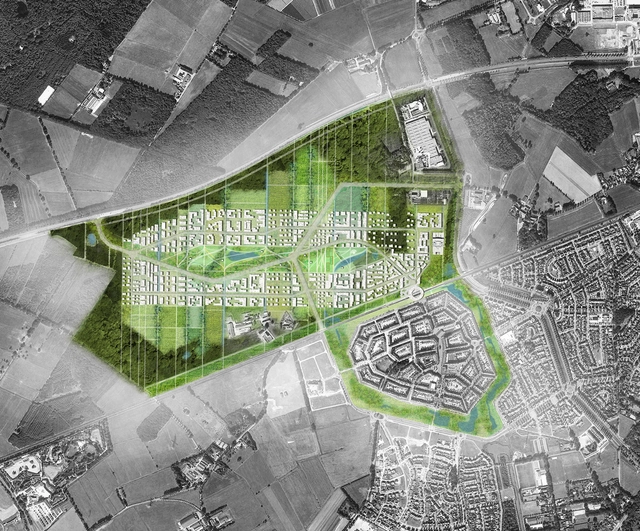
Brainport Smart District, Helmond, NL. . Image Courtesy of UNStudio
By 2025, Frost and Sullivan, a market research company, has predicted that there will be at least 26 fully-fledged major smart cities around the world. While some still think that as our cities get more intelligent, they will resemble sci-fi futuristic movies, the reality is that the quality of life in these cities will drastically improve. Cities are set to become more efficient with better services. Nevertheless, before reaching these ideals, let us go back on the process itself, and evaluate the challenges that we might face.
Because the concept of smart cities is still very new, with rare finalized and implemented projects, the topic is still unclear. Although big titles and strategies are well defined, the on-ground application is still uncertain, giving us the opportunity to question its planning process. In fact, how can we go wrong when designing smart cities? What key element are we failing to address in the planning phase?
Videos
Screenshot from the On Reflection teaser. Image Courtesy of Morris+Company
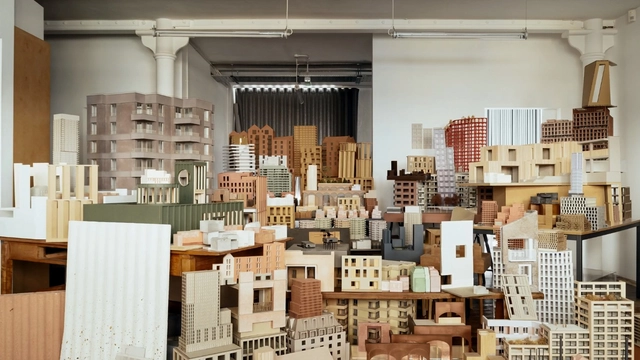
As lockdown provided architects with the opportunity to reflect on their design processes, it prompted Morris + Company founder, Joe Morris, to create On reflection, a series of short films discussing the fundamentals of the practice, centring the conversation around model making as a critical element of design thinking and a wide-ranging architectural tool.
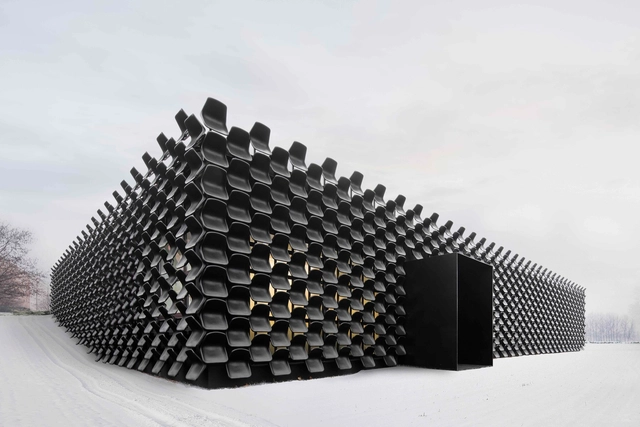
With the aim of supporting architects to become active agents of sustainable design, this week we present a selection of facades that incorporate different recycled materials. Beyond the typical uses of plastic and glass, in this article, you will find innovative materials such as mattress springs, ice cream containers, plastic chairs, and recycled waste from agricultural and industrial products. A look at 21 remarkable projects using recycled materials to create an attractive facade.
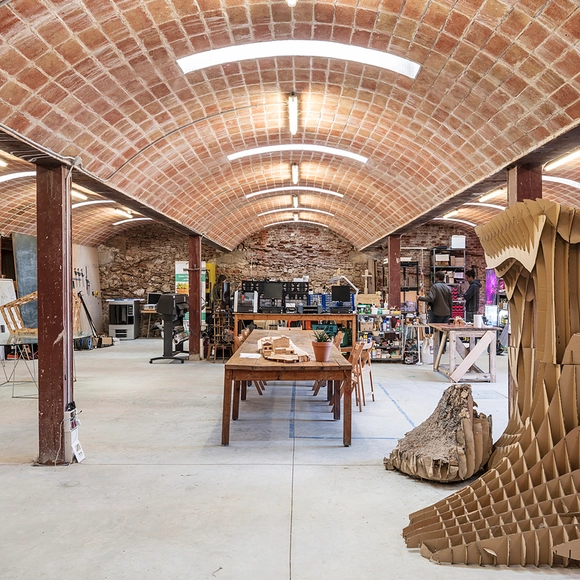
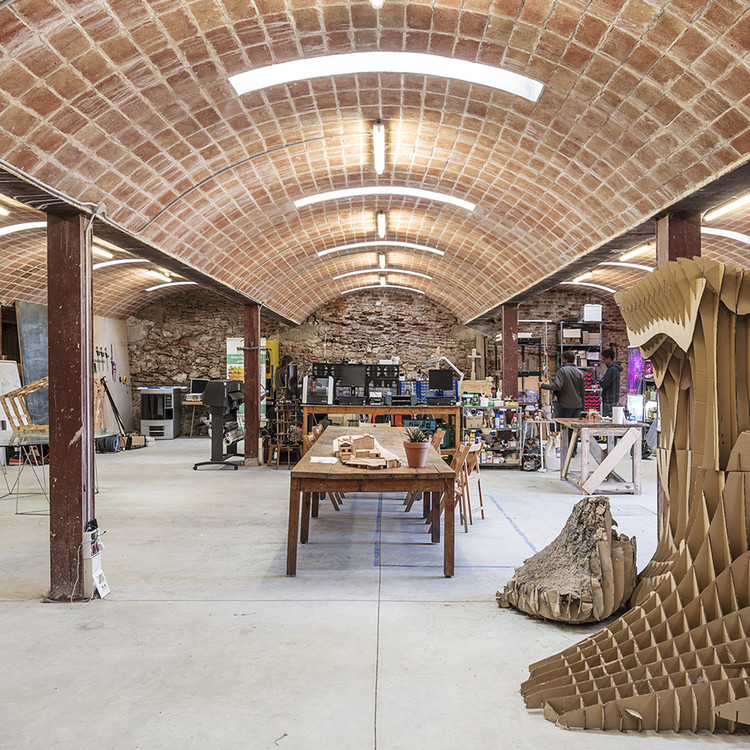
In some cases, a roof can become the shining centerpiece in a work of architecture. Catalan vault, also known as Valencian timbrel vault, became a fixture in Spanish architecture in the 19th century, popularized thanks to its low cost and ease of sourcing and assembly. With the ability to span over 30m per module, this technique is currently making a comeback, establishing itself as a go-to construction method in industrial architecture and can be seen in everything including workshops, factories, and warehouses.
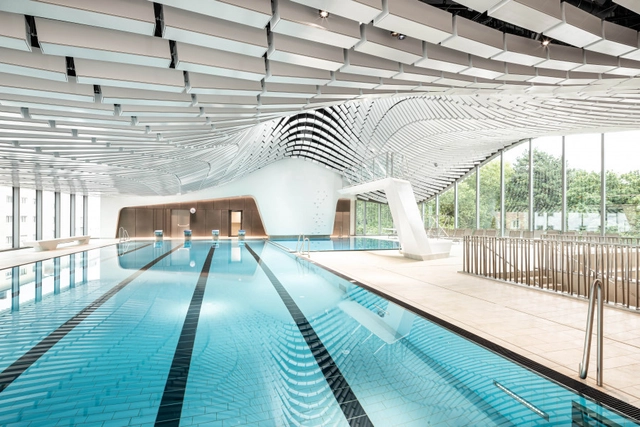
Aquatic centers are defined by activity. Making space for focused exercise and leisure alike, they are designed to support different scales of movement. At their core, they center on swimming pools. These structures explore ideas of light and space spanning millennia, from Pakistan's "Great Bath" at the site of Mohenjo-Daro and Ancient Greek palaestras to contemporary swimming complexes.
A lot of prejudice and contradictions surround the history of Cannabis sativa around the world. It is estimated that hemp was one of the first plants to be cultivated by mankind. Archaeologists have found remnants of hemp fabrics from ancient Mesopotamia (now Iran and Iraq) that date back to 8,000 BC [1]. There are similar records in China documenting the consumption of hemp seeds and oils, dating between 6 and 4 thousand BC. Upon its arrival in Europe, its main use was for the manufacture of ship ropes and fabrics: even the sails and ropes of Christopher Columbus' ships were made of this material. Likewise, the first books after Gutenberg's invention of the printing press [2] and many paintings by Rembrandt and Van Gogh were made of hemp.
The use of hemp for civil construction is not new either. Mortar made of hemp was discovered on the pillars of bridges built by the Merovingians in the 6th century, in what is now France. It is also well known that the Romans used hemp fiber to reinforce the mortar in their buildings. Nowadays, although there are legal barriers in many countries, the use of hemp as a construction material has had encouraging results, with research demonstrating its strong thermoacoustic and sustainable qualities. Hemp can be shaped into fibrous panels, coverings, sheets, and even bricks.
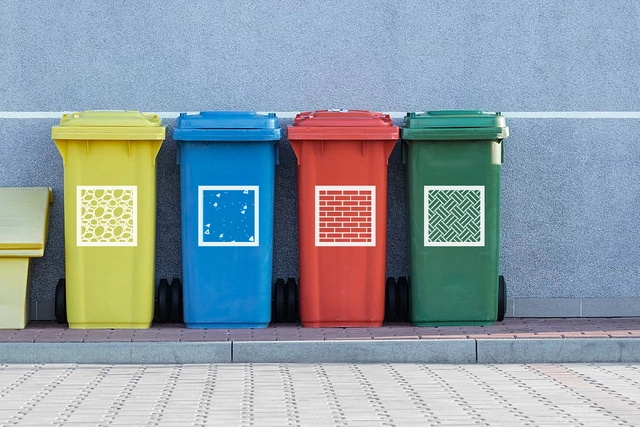
While not all plastics are being recycled, even the ones that display the recycling sign, the global plastic waste problem is nowhere close to being resolved. Recycling, generally determined by factors like demand, legislations, and economy, takes on arguably around 20% of the annual production of plastics, leaving a large quantity unattended, doomed to last forever in our environment. In addition, competing with newly-produced materials, recycled plastics need to meet standards of quality and price, and undergo a sustainable, efficient, and economically viable transformation.
ROGP or Rejects of Glass & Plastics Technology is an innovative approach that repurposes plastics, once labeled as non-recyclable materials due to technical complexity or economy-related issues.
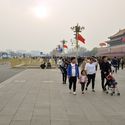
From my hotel room, it was possible to see the roofs of the Forbidden City, though only as a faint shape through the haze blanketing the landscape. Beijing (or Peking, depending on the language or spelling) is one of the most polluted cities in the world, covered by a constant smog produced not only by automobiles—which account for 70% of the city's air pollution—but also by factories, coal-fired power plants, and sandstorms from neighboring regions. It looked like a cloudy day, but in reality, there was not a single cloud in the sky.























.jpg?1596025638 "© Charbel Tannous, courtesy of Development Inc.")