Modular system Mywall by Fantoni. Image Courtesy of Fantoni
As material technology becomes more advanced and the importance of health and wellbeing is taken more seriously, sculpting sound is now a consistent part of specifiers’ briefs in all sectors, from echo-free hospitality to clear and functional meeting rooms, and even transforming home offices or music rooms into headache-free sound vaults.
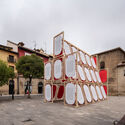
The 7th edition of the International Architecture and Design Festival Concéntrico proposed new readings of public space through a series of temporary installations that re-imagined various places throughout the Spanish city of Logroño. Emerging architecture practices and artists from around the world shared their perspectives on the public realm and the spaces of social interaction by exploring various themes and experimenting with new ways of understanding urban spaces.
Five emerging architecture studio profiles from Switzerland, France, the Netherlands, Austria, the UK, and Slovakia have been chosen by New Generations, a European platform that analyses the most innovative emerging practices at the European level, providing a new space for the exchange of knowledge and confrontation, theory, and production. Since 2013, New Generations has involved more than 300 practices in a diverse program of cultural activities, such as festivals, exhibitions, open calls, video interviews, workshops, and experimental formats.
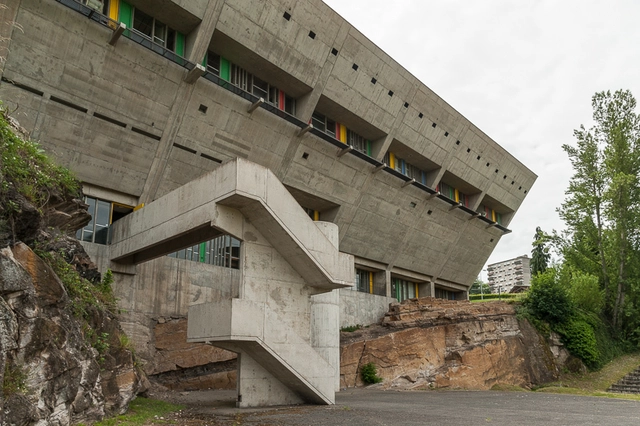
Le Corbusier was a pioneer of the Modernist Movement in architecture. Throughout his career, he undertook an array of projects all around the world. See below for 17 of his works that have been named World Heritage Sites by UNESCO, as well as many more of his other popular pieces. Hopefully, someday you get to go and see them yourself!
The intentions of the 15-Minute City are laudable. I have long believed that walking is the best of all modes of transportation. I also believe that cities should be free from commercial regulations that hinder the emergence of small shops and cozy cafes in residential neighborhoods. A lively and dynamic mixed-use neighborhood can be one of the greatest gifts of urban entrepreneurship.
In the United States, we regulate the entrepreneurship of the poor much more than that of the rich. The rich innovate in cyberspace, a zone largely free of regulation. Conversely, the poor innovate in practice, in real things, under local government rules that micromanage physical space.
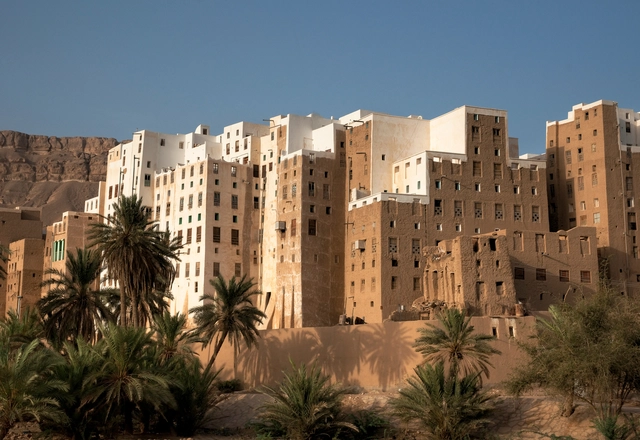
Shibam, the Manhattan of the Desert, a 500-year-old mud-brick city in eastern Yemen. Photograph by Don Whitebread. Image via Shutterstock
The construction industry's role in today's climate crisis is deeply concerning—between material production, building execution, and operations, the sector is one of the largest emitters of greenhouse gases. At the same time, urban populations are growing at unprecedented rates. Within the shaping of major cities—which consume massive amounts of energy—reducing the discipline's impact seems to rely on small-scale interests and personal initiatives rather than sweeping action from the academic, professional, or political spheres.
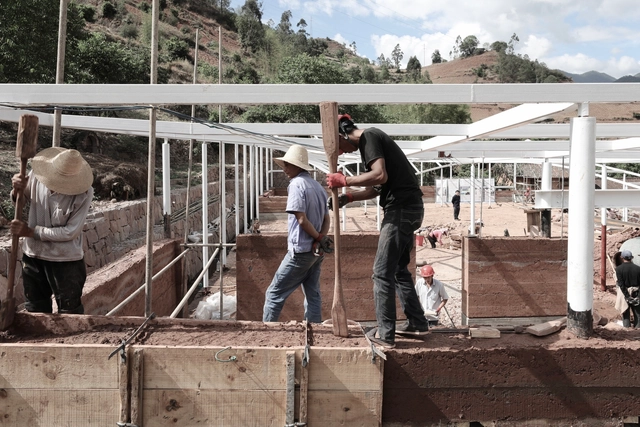
History has provided us with numerous construction techniques and local material uses that have proven sustainable over time. This involves the efficient use of resources that bypass major industrial processing stages and eliminate the need for long-distance transport. In some cases, at the end of their life cycle, they can even be returned to the environment, such as adobe and timber. In other instances, reclaimed materials—such as recyclable waste and debris generated directly on-site—can also be integrated. Undoubtedly, modern technology and knowledge can help optimize these materials for large-scale application in major cities. Is it possible to develop projects with low environmental impact and adapt them to dense urban contexts? Is this the future path for building materials?
The remarkable research paper “A Long History of a Short Block,” by Bill Easterly, Laura Freschi, and Steven Pennings, analyzed the development of a block on Greene Street in New York's SoHo neighborhood over four centuries. Throughout this period, the city remained in a constant state of development, demonstrating that the question “What is the ‘original character’ of a neighborhood?” is far more difficult to answer than it seems.
To begin with, the skyscraper-filled Manhattan we know today is a relatively recent development in its history. Before the Dutch arrived in what they would call “New Amsterdam” in 1625, the region was dominated by forests and wetlands—a rich ecosystem that even included bears and wolves.
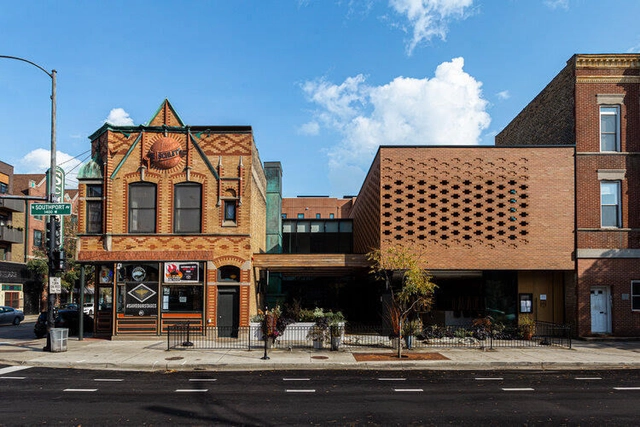
In this video, Will Quam of Brick of Chicago takes us around the American city to question Louis Kahn’s adage that all bricks are motivated to be arches. Here, in the Logan Square neighborhood, we find bricks of all sorts, that — in addition to arches — take on other configurations and metaphors to describe their qualities; textile bricks and diapering, brushstrokes of a painting, butter joints and glazes, soldiers and bullnoses.
CLOU architects is an award-winning international design practice working across architecture, interior, and landscape design. The team has designed a diverse portfolio of projects focused on community connectivity and social spaces. CLOU's diverse design team consists of 65 experienced architects and designers from China and around the world. Clients include retail and mixed-use developers, residential investors, hotel operators, as well as governmental and educational institutions. Under the leadership of German architect Jan Clostermann, the CLOU team is dedicated to tailoring innovative, holistic spatial solutions for clients. By fully exploring the possibilities of public space within high-density developments, CLOU aims to subtly catalyze community growth and exert a positive impact on people's behaviors and lifestyles.
Vernacular techniques and local materials are becoming more and more relevant in architecture, but is it possible to bring these concepts to large urban areas?
In 1984, the Amazonian architect Severiano Porto had already pointed out the need to make architecture more connected to its location. Using local materials and techniques is becoming more important each day, considering the impacts of the commodity chain of building construction on the planet. Not surprisingly, the number of projects that use this approach is growing every day, as Severiano has already mentioned in his work since the 1980s.
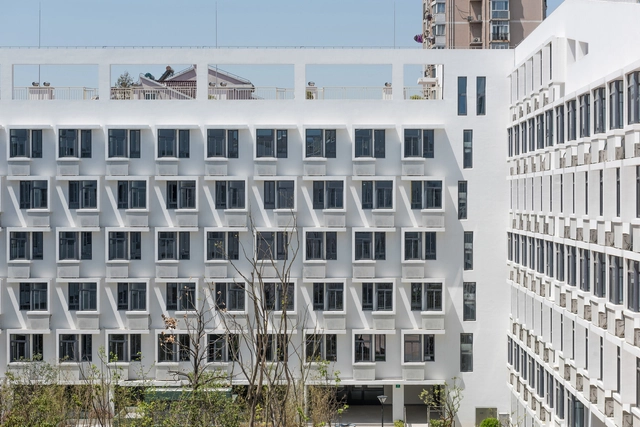
Longnan Garden Social Housing Estate / Atelier GOM. Image Courtesy of Atelier GOM
Saskia Sassen, the Robert S. Lynd Professor of Sociology at Columbia University, predicts in her co-authored book “The Quito Papers and the New Urban Agenda” that, in the future cities will become our crucial battlefield as we continue to fight against gentrification and growing degree of isolation in our communities. Sassen argues that, “Cities should be an inclusive space for both the affluent and the poor. Nevertheless, in reality our cities never achieved equality for all, because our cities were never designed that way. Still cities ought not to be a place that tolerates inequality or injustice”.
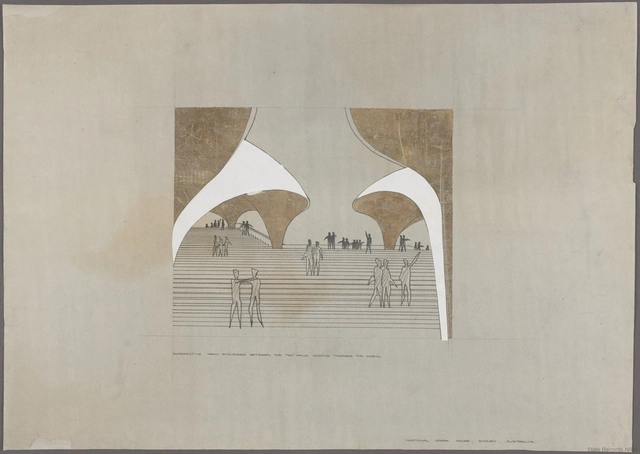
“Is graphicacy a word?” asks Ken Shuttleworth, founder of Make Architects and instigator of The ArchitectureDrawing Prize. It is. “Like literacy”, he says, “, it’s certainly what I’m interested in when looking at and judging drawings. It’s about a fluency in making and understanding them.” The Architecture Drawing Prize is in its fifth year now. “We tend to see very few hand drawings by young architects - they mostly use computers - and, today, most architectural students come from more of a maths and physics than an art background. I still believe, though, that hand drawing is very important.”
A rigorous but warm simplicity remains the foundation of Danish design. Image Courtesy of BoConcept
Today, spaces in the home and at work need to adapt and function in different ways, making Danish design’s flexibility, simplicity and utility more relevant than ever.
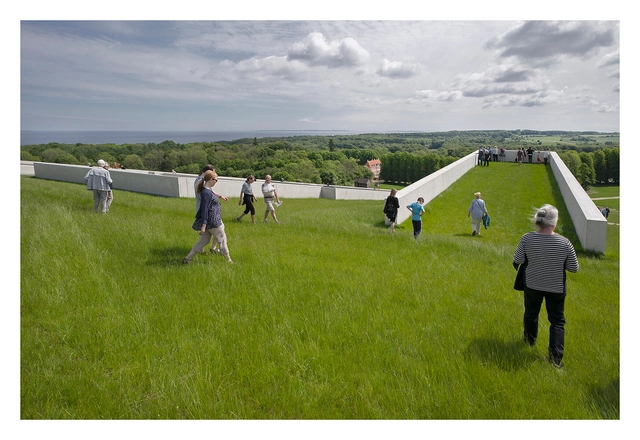
Researchers credit the Hanging Gardens of Babylon as the first examples of green roofs. Although there is no proof of its exact location and very little literature on the structure, the most accepted theory is that King Nebuchadnezzar II built a series of elevated, ascending terraces with varied species as a gift to his wife, who missed the forests and mountains of Persia, their local land. According to Wolf Schneider [1] the gardens were supported by brick vaults, and under them, there were shaded halls cooled by artificial irrigation of the gardens, with a much milder temperature than the outside, in the plains of Mesopotamia (present-day Iraq). Since then, examples of green roofs have appeared all over the world, from Rome to Scandinavia, in the most diverse climates and types.
Nevertheless, inserting plants on roofs is still viewed with suspicion by many, as they are thought to be costly and difficult to maintain. Others, however, argue that the high implementation costs are quickly offset with savings in air conditioning and especially that occupying the building's fifth façade with vegetation is, above all, a rational solution. In any case, the question remains as to how green roofs can really help with climate change.
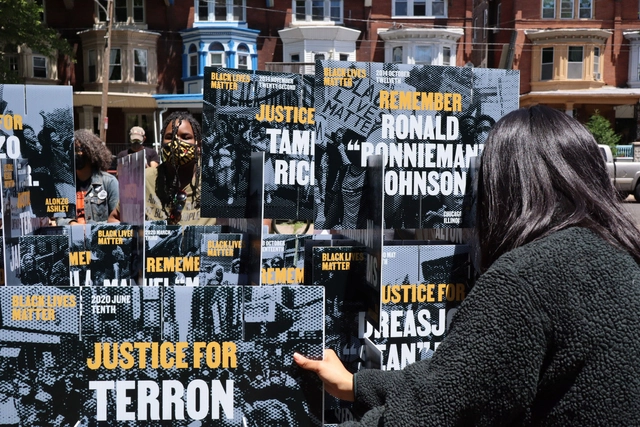
In this week's reprint from Metropolis, author Leilah Stones explores how across the globe, architects, designers, and planners are redefining what it means to be an advocate in the design profession, listing 6 initiatives that practice design justice.
https://www.archdaily.com/968178/six-initiatives-model-ways-to-practice-true-design-justiceLeilah Stone
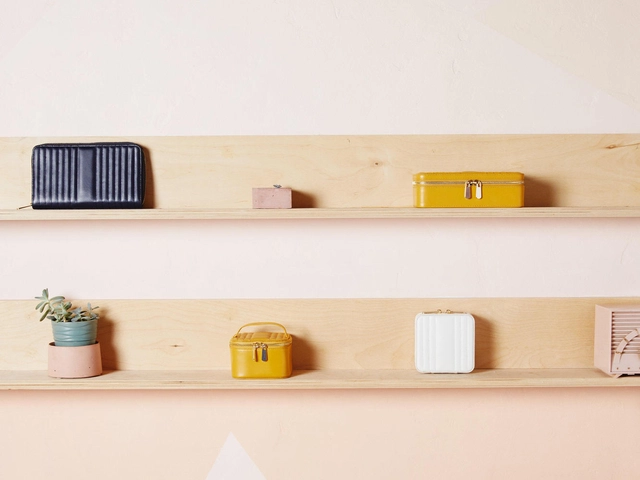
Jewellery can tarnish over time if left exposed to air, so WOLF’s jewellery rolls, zip cases and boxes feature its patented LusterLoc treated lining to protect their contents for up to 35 years. Image Courtesy of WOLF
Where do you keep your most valuable items? Most frequently, they are strewn around the house, hiding in boxes or drawers so they’re impossible to find when they are needed, or lying out in plain sight where they would make easy pickings for an intruder. Even if these pieces are not particularly valuable it is prudent to consider investing in some appropriate storage that would keep them in one place and out of harm’s way.
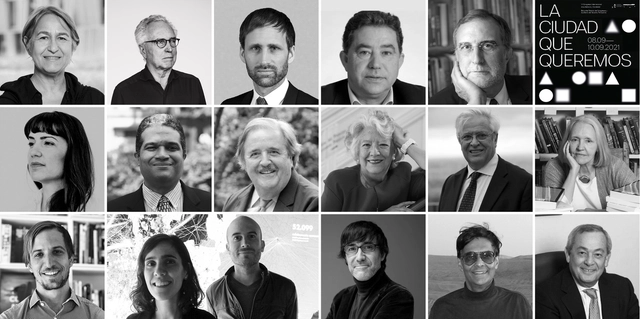
Anne Lacaton, Pablo Martínez y Mar Santamaria, Mohan Munasinghe, Francesc Muñoz, Feniosky Peña-Mora, entre otros ponentes del congreso.. Image Cortesía de Congreso Internacional de Arquitectura: La Ciudad que Queremos
From September 8 to 10, the sixth edition of the International Architecture Congress, titled "The City We Want," will take place. For the first time, the event can be followed live via the Architecture and Society Foundation's YouTube channel.
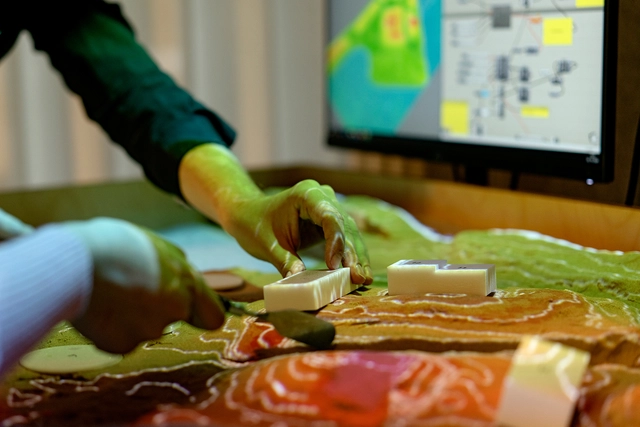
Henning Larsen has been creating projects that address cross-cultural design, tackle diverse climatic zones, and try to achieve ambitious sustainability objectives. All of this wouldn’t be possible without the use of technology and specially crafted digital and generative design tools that allow architects to treat any element as a parameter in design.
In a special interview with ArchDaily, Jakob Strømann-Andersen, Partner and Director of Henning Larsen’s Innovation and Sustainability Department talks about digital tools and their incorporation in the design process. Focusing specifically in this conversation on Sandworm, a new modeling program that uses sandboxes, Anderson explains how they have achieved to scan and directly transfer manipulated landscapes into a 3D model.