1. ArchDaily
  2. Articles

Articles

Interiors That Look as Good as They Sound: Acoustic Design to Enhance Comfort

 | Sponsored Content

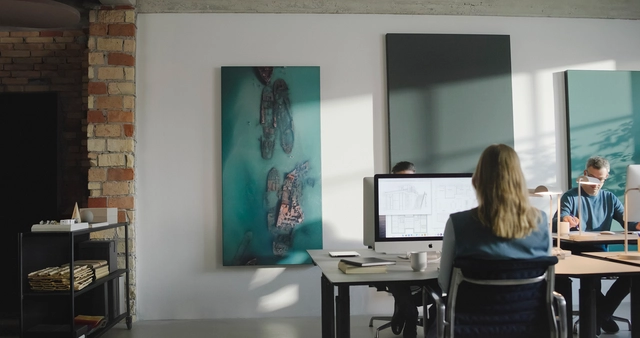
The noisier the environment, the harder it is to concentrate on the sounds we really want –and need– to hear. We spend about 90% of our time indoors, either at home or at work, often with little concern for acoustic qualities, making our body remain in a constant warning state. In offices this is an even more critical issue. While traditional open plan working spaces encourage teamwork and effective communication, many professionals face the challenge of being able to concentrate with the frequent noises, whether from a nearby conversation, the construction site next door, or a noisy espresso machine. Among the problems that noise pollution can cause in the human body are stress, accelerated heartbeat, increased blood pressure, insomnia, and a constant state of vigilance. Studies also show that poor acoustics negatively affect productivity.

This can be further amplified by the environment itself, often composed of "hard" surfaces (masonry, concrete, glass) that reverberate sound several times over, making it necessary for people to raise their voices to be understood. Furthermore, acoustic devices are generally perceived as accessories that are not very aesthetically pleasing, often with clumsy designs and with little or no flexibility.
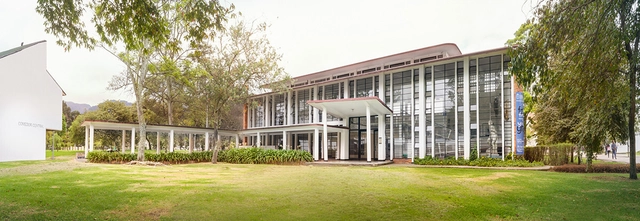
From Diagram to Project: The University City of the National University of Colombia

Subscriber Access | 

University Cities constituted the most powerful architectural and urban action during the period of progressive Latin American governments. Despite North American influences, which pioneered the concept of the campus [1], projects in Latin America emerged in different contexts and took highly unique directions. Because of the scale and complexity of these complexes, for instance, they required several decades to complete. This extended timeline allowed multiple generations of architects to participate, infusing their architecture with diversity. Another characteristic feature in Latin America is the close relationship between University City projects and developmentalist governments—as noted by Gorelik (2005)—which invested in public policies during periods of economic prosperity.

Powerful Crowd Simulation Software for Human-Centered Design

Subscriber Access | 

From smartphones to space rockets and self-driving cars, the power of technology in this modern digital era is enormous (and practically limitless). It has impacted every aspect of our lives and will continue to open up endless possibilities that today we cannot even begin to fathom. When applied in a socially and environmentally responsible way, technology has the power to enhance productivity, communication and sustainability, enabling global communities to function efficiently, addressing people’s everyday needs and improving their quality of life. Simply put, good technology serves humanity. And just as the healthcare or manufacturing industries have taken advantage of this, the architecture, design and construction world cannot fall behind.

Can Local Architecture Help Cure the Ills of Globalism?

The global pause of the COVID pandemic has provided an opportunity to assess present-day globalism and the architecture that has emerged alongside it. Stemming back to the broad expansion of free trade in the 90s at the end of the Cold War, globalism’s cultural promise was simple and aspirational: integrating markets globally would increase the interaction between and learning of different cultures. By normalizing such experiences in our daily lives, we would become global citizens liberated from our previous prejudices–all well-intentioned objectives.

Can Local Architecture Help Cure the Ills of Globalism? - Imagem 1 de 4Can Local Architecture Help Cure the Ills of Globalism? - Imagem 2 de 4Can Local Architecture Help Cure the Ills of Globalism? - Imagem 3 de 4Can Local Architecture Help Cure the Ills of Globalism? - Imagem 4 de 4Can Local Architecture Help Cure the Ills of Globalism? - More Images+ 6

Nameless Buildings Affect Us

Architecture is human. So when I entered Cornell’s College of Architecture, Art, and Planning in 1973 and the entire faculty were as white and male as I was, it made no sense to me but reflected the end times of the full-on male dominance in my chosen profession. In that world, a few professors would often comment on how female students looked at juries, and some sexually victimized some students (none of whom were male).

Nameless Buildings Affect Us - Image 1 of 4Nameless Buildings Affect Us - Image 2 of 4Nameless Buildings Affect Us - Image 3 of 4Nameless Buildings Affect Us - Image 4 of 4Nameless Buildings Affect Us - More Images+ 6

Cocina CoLaboratorio: Social Habitat Management in Chiapas

Subscriber Access | 

A few days ago, I had the opportunity to speak with Emilio Hernández from the Centro de Imaginación Oaxaca, one of the participants in Cocina CoLaboratorio. Our conversation touched upon topics such as collective participation, the social management of habitat, altruism, racism, and many other social issues. During our chat, we addressed the nuances, highlights, and shadows surrounding welfare dependency and “aid” to communities, as well as how counterproductive and violent it can be to act from a position of privilege and top-down hierarchy.

A' Design Award Winners: Top 20 Best Projects in "Good Architectural Design"

 | Sponsored Content

The A' Design Awards - the world's leading annual international juried design competition - were established to promote and recognize the best design work in all countries and in all creative disciplines. The Award has 100 main categories, including Architecture, Building and Structure Design, Interior Space and Exhibition Design, and Furniture Design, in addition to others related to the world of Lighting, Landscape, Building Materials, and some "Super Categories" such as Good Industrial Design, Good Architectural Design, and more. Next year's edition is now open for entries; designers can register their submissions here.

Gender Discrimination on Construction Sites: Fill the ArchDaily Form

With the construction sector getting back into full swing and major upcoming projects being announced, a larger workforce is getting ready to take on these colossal works. Accordingly, on-site presence and inspections are critical and essential to creating good architecture and constitute significant learning instances for architects or engineers looking to build expertise. But despite all these new endeavors that promise new technologies, a more sustainable future, and better ways of living, one old issue prevails the presence of gender discrimination on the construction site. 

From City Scale to Details: 27 Projects for Breast Cancer Awareness Month

Subscriber Access | 

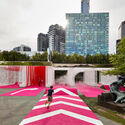
In many countries around the world, October is dedicated to raising awareness for breast cancer. Pink ribbons that represent this cause, are a tribute to Susan G. Komen, responsible for the Cure's 1990 campaign in the USA. To celebrate this month and add spread awareness efforts, ArchDaily selected some projects that incorporate the color pink into façades, interiors, and details.

From City Scale to Details: 27 Projects for Breast Cancer Awareness Month  - Image 1 of 4From City Scale to Details: 27 Projects for Breast Cancer Awareness Month  - Image 2 of 4From City Scale to Details: 27 Projects for Breast Cancer Awareness Month  - Image 3 of 4From City Scale to Details: 27 Projects for Breast Cancer Awareness Month  - Image 4 of 4From City Scale to Details: 27 Projects for Breast Cancer Awareness Month  - More Images+ 24

Environmental design and its role in public safety

Subscriber Access | 

At a time when a lack of public safety daily plagues Brazil's major cities, impacting how we behave in the urban environment, we must examine not only how we act within this space, but also how we build it and with what intentions we modify it.

High walls, fences, cameras, alarms, and razor wire are already part of a landscape that feels fearful, constantly seeking to "protect" private property, often to the detriment of public space appropriation.

Architecture and Collective Living: 50 of Mexico's Most Cutting Edge Apartment Complexes

Subscriber Access | 

Climate is one of the key factors to take into consideration when designing a space. Of course, this can present a challenge, especially when dealing with extreme climates and the need for insulating materials that are able to adapt to a wide range of conditions. Luckily, for architects operating in Mexico, the country's privileged climate facilitates the creation of microclimates and spaces that blur the line between interior and exterior.   

Architecture and Collective Living: 50 of Mexico's Most Cutting Edge Apartment Complexes - Image 1 of 4Architecture and Collective Living: 50 of Mexico's Most Cutting Edge Apartment Complexes - Image 2 of 4Architecture and Collective Living: 50 of Mexico's Most Cutting Edge Apartment Complexes - Image 3 of 4Architecture and Collective Living: 50 of Mexico's Most Cutting Edge Apartment Complexes - Image 4 of 4Architecture and Collective Living: 50 of Mexico's Most Cutting Edge Apartment Complexes - More Images+ 46

Cinema Nouveau: The Architecture of Movie Theaters

Subscriber Access | 

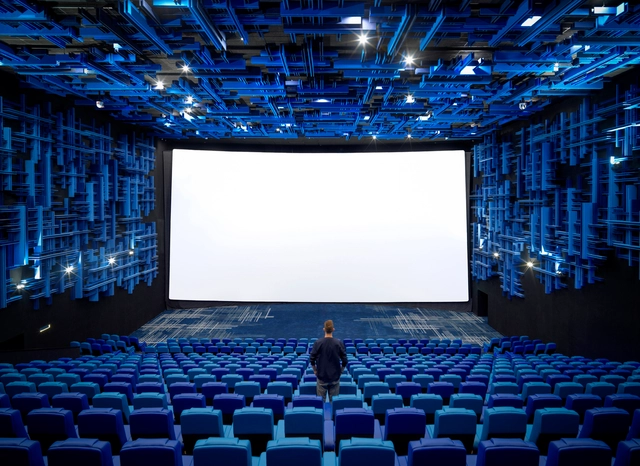
Cinemas mirror architecture. While the coronavirus pandemic shuttered theaters across the world for months, the industry is looking to the future as it aims to rethink the movie-going experience. As crowds flocked to the cinema after the 1918 pandemic, so too will the industry change shape again as it respond to new modes of watching films together.

Cinema Nouveau: The Architecture of Movie Theaters - Image 1 of 4Cinema Nouveau: The Architecture of Movie Theaters - Image 2 of 4Cinema Nouveau: The Architecture of Movie Theaters - Image 3 of 4Cinema Nouveau: The Architecture of Movie Theaters - Image 4 of 4Cinema Nouveau: The Architecture of Movie Theaters - More Images+ 8

Two Brazilian cities seek innovative local approaches to the climate crisis.

Subscriber Access | 

Mitigating climate change and adapting to the risks of more frequent extreme events demand a rapid and radical transformation of cities worldwide, as they account for the majority of global greenhouse gas emissions. However, the impacts of a changing climate are not shared uniformly across all cities; those who feel its most intense effects are precisely the most vulnerable populations. Achieving inclusive, low-carbon urban transformations tailored to diverse urban contexts requires bringing the global climate agenda down to the local scale—to the people who live in and know their neighborhoods.

Portugal in Small-Scale: 15 Architecture Projects Under 25m²

It is becoming a priority for architects to optimize projects that require increasingly smaller spaces, especially when building in urban areas where land value is often the most critical factor. This happens in countries like Portugal, for example, where urban plots are scarce and the properties available for remodeling are usually very small.

Working on a small scale offers somewhat playful flexibility. From adaptable interiors to urban installations and treehouses, one must use the imagination to solve the issues of limited space or budget. Check out the following 15 projects in Portugal —from stores to small pavilions— that show that spatial limitations do not diminish the quality of architecture.

Portugal in Small-Scale: 15 Architecture Projects Under 25m² - Image 1 of 4Portugal in Small-Scale: 15 Architecture Projects Under 25m² - Image 2 of 4Portugal in Small-Scale: 15 Architecture Projects Under 25m² - Image 3 of 4Portugal in Small-Scale: 15 Architecture Projects Under 25m² - Image 4 of 4Portugal in Small-Scale: 15 Architecture Projects Under 25m² - More Images+ 11

Architecture Without People: the Built Environment of Machines

Data centers, automated assembly lines, telecommunications facilities, and warehouses represent a very utilitarian aspect of the built environment, and yet they compose a particular kind of infrastructure within contemporary society, one that is fundamental to the development of everyday life. Rarely discussed within the profession, these new typologies have more recently penetrated the architectural discourse, raising questions about the architectural significance and design potential of the spaces sustaining the mechanics of today's world.

Architecture Without People: the Built Environment of Machines - Films & ArchitectureArchitecture Without People: the Built Environment of Machines - Films & ArchitectureArchitecture Without People: the Built Environment of Machines - Films & ArchitectureArchitecture Without People: the Built Environment of Machines - Films & ArchitectureArchitecture Without People: the Built Environment of Machines - More Images+ 5

Brutalism and Collective Living in Europe, Through the Lense of Stefano Perego

Subscriber Access | 
Brutalism and Collective Living in Europe, Through the Lense of Stefano Perego - Image 20 of 4
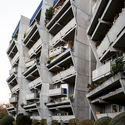
Residential Building in Paderno Dugnano (1990, Milan, Italy). Image © Stefano Perego

Although there is much conflict surrounding the term Brutalist, there are certain constants and patterns within the movement that offer a concrete idea of the movement and its place in contemporary architecture.

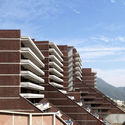
The buildings that adhere to Brutalism—an off-shoot of the Modern Movement that erupted between 1950 and 1970— stand out in part to their constructional sincerity- that is, keeping no secrets about the materials that went into their creation, their bold geometry, and the asperity of their textures and surfaces. Reinforced concrete is the predominant material in Brutalist works thanks to its prominent and dramatic texture, which is put on full display.

Brutalism and Collective Living in Europe, Through the Lense of Stefano Perego - Featured ImageBrutalism and Collective Living in Europe, Through the Lense of Stefano Perego - Image 1 of 4Brutalism and Collective Living in Europe, Through the Lense of Stefano Perego - Image 2 of 4Brutalism and Collective Living in Europe, Through the Lense of Stefano Perego - Image 3 of 4Brutalism and Collective Living in Europe, Through the Lense of Stefano Perego - More Images+ 16

Building Near the Sea: Façade Solutions for Greater Durability

 | Sponsored Content

When building near the sea, a project’s design strategy must pay special attention to the effects of marine corrosion. The salt content in the environment provokes a chemical and physical process which incites a material breakdown or degradation, compromising the durability of the building’s infrastructure. 

As a response to the demands for ocean-side buildings, and the corresponding façade components that go along with them, air-lux has developed a system that aims to perform reliably in maritime conditions. By virtue of its corrosion-resistant materials, improved surface coatings, and technically optimized components, the system withstands marine climates and minimizes salt water damage.

When Architectural History Meets Personal History

This article was originally published on Common Edge.

Writer Eva Hagberg and I have known each other for a long time. Way back, in a year I can’t remember, I assigned her one of her first magazine assignments. Literally, dozens of other assignments followed. So it was with some anticipation, and a bit of surprise, that I received her new book When Eero Met His Match: Aline Louchheim Saarinen and the Making of an Architect (Princeton University Press), an intriguing hybrid text, one-part Aline and Eero biography, one part memoir of Hagberg’s experiences as a design writer and publicist. (I am briefly mentioned in the book.) The book’s main argument is that Aline Saarinen largely invented the role of the architectural publicist. Recently I traveled out to the Brooklyn Navy Yard to talk to a very pregnant Eva about the impetus for her new book, its dual structure, and the journalistic ethics of Aline Saarinen.