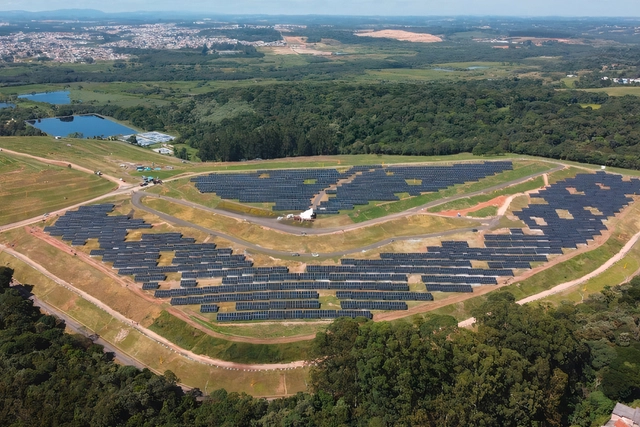
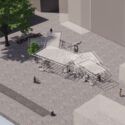
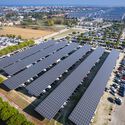
A solar power plant built on top of the Caximba landfill, which was decommissioned in 2010, is the new symbol of Curitiba. Nicknamed the “solar pyramid” due to its shape, the plant has an installed capacity of 4.55 megawatts (MW) and was inaugurated last Wednesday (29) during the city's 330th anniversary celebrations.
The project is part of “Curitiba Mais Energia,” one of the city's initiatives to combat and mitigate climate change by producing renewable energy. The municipality will reduce the emission of 2,000 tons of CO2 into the atmosphere, helping meet the city's greenhouse gas reduction targets.
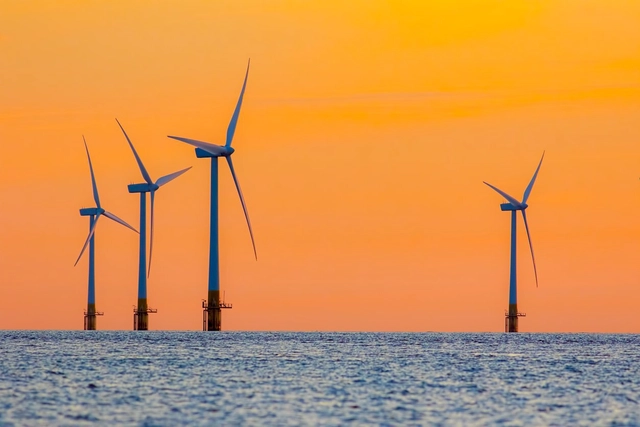
As of February this year, Brazil has 890 wind farms installed across 12 states. These facilities represent 25.04 gigawatts (GW) of installed capacity in commercial operation, benefiting 108.7 million people.
Of this total, 85% are located in the Northeast region. According to the Brazilian Wind Energy Association (Abeeólica), by 2028 Brazil will have 44.78 GW of installed capacity of this energy source, whose share in the national energy mix currently stands at 13.2%. Today, wind power already accounts for 20% of the energy generation needed by the country.
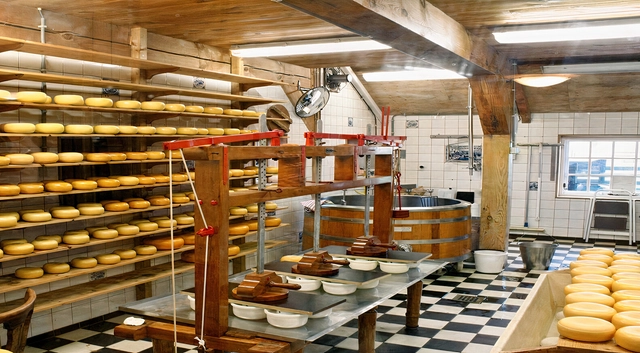
On Wednesday (29), the National Institute of Historic and Artistic Heritage (Iphan) formally presented the nomination of the Artisan Minas Cheese-Making Practices to the Representative List of the Convention for the Safeguarding of the Intangible Cultural Heritage of Humanity, through the Permanent Delegation of Brazil to UNESCO (Brasunesco). The list comprises intangible cultural assets that are considered representative of global cultural diversity and require protection and appreciation.
https://www.archdaily.com/1135897/minas-cheese-could-join-the-intangible-cultural-heritage-of-humanity-listArchDaily Team
Beyond Club. Courtesy of aflalo/gasperini arquitetos
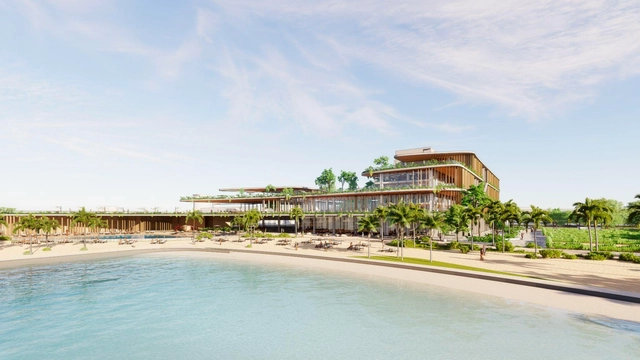
Surfers in São Paulo will no longer need to travel to catch a wave. Scheduled to open in 2025, Beyond The Club is a sports and wellness complex featuring an artificial wave beach. Designed by the firm aflalo/gasperini arquitetos, the club will feature, in addition to the wave pool and sandy beach, a sports complex with beach tennis and tennis courts, a gym, a spa, an indoor skate park, and three restaurants.
The club will occupy the site of the former Hotel Transamérica, located near Marginal Pinheiros in the city's south zone, which was designed by the firm's first generation in the 1980s.
https://www.archdaily.com/1135969/sao-paulo-to-get-an-artificial-beach-designed-by-aflalo-gasperini-arquitetosArchDaily Team
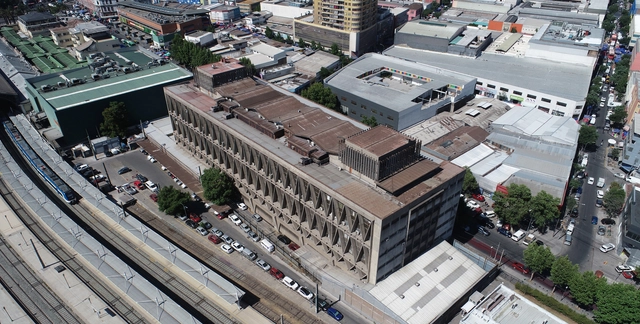
El ex Edificio de Clasificadora de Correos de Chile, adquirido por EFE para convertirlo en su nueva sede corporativa. Image Cortesía de EFE
Twenty-two proposals were submitted to the EFE (Trenes de Chile) architectural competition to convert the iconic seven-story, triangular concrete structure at 221 Exposición Street in Santiago into its new corporate headquarters. Originally designed by architect Boris Guiñeman, the building was constructed between 1970 and 1974 to house the Correos de Chile sorting center.
At ArchDaily we are always looking for ways to increase the value of what we provide to the architecture community. In order to do this, we try to be at the forefront by identifying trends, providing the best tools possible, and connecting with our audience, which is why feedback from the community is so important.
We would love to hear your opinion on how we could make your experience better: the type of content you value the most, how and where you consume it, and what you would like to see on ArchDaily. To do this, we created a short survey to better understand you
https://www.archdaily.com/991947/what-do-you-think-about-your-archdaily-account-we-want-to-hear-from-youArchDaily Team
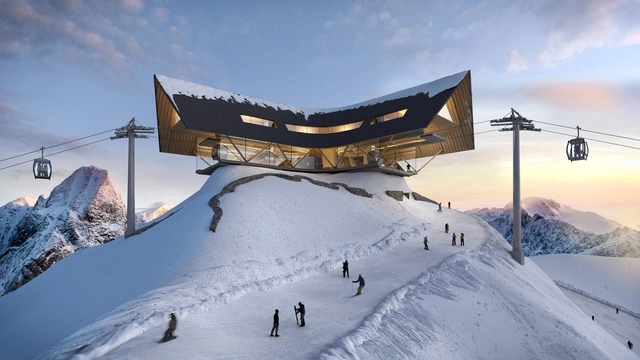
Peter Pichler Architecture has been invited to participate in a private competition for the design of a set of Ski Facilities in Ponte di Legno, Italy. The project includes the addition of three new cableway lines for the ski resort, each marked by an architectural intervention designed to provide shelter and dining options. The buildings also include exhibition spaces dedicated to the preservation of the cultural, natural, and historical heritage of the site.
The National Pavilion of Serbia, curated by Iva Njunjić and Tihomir Dičić, has just announced its exhibition at the 2023 Venice Biennale, which explores architecture's futures, presents, and pasts through the lens of an international Trade Fair in Lagos, Nigeria, in 1977. The trade fair was a product of non-aligned cooperation between Yugoslavia and Nigeria.
The Ministry of Transport, Mobility and Urban Agenda (Mitma) revealed in November 2022 the winning proposal for the curation and exhibition design of the Spanish Pavilion at the 18th edition of the Venice Architecture Biennale, which will take place from May 21 to November 26, 2023. Developed by Eduardo Castillo Vinuesa and Manuel Ocaña, "Foodscapes" focuses on the biennale's theme "The Laboratory of the future", by choosing as the object of its research the architecture related to the food production, distribution, and consumption chain, from the domestic to the territorial level.
The National Preliminary Project Competition for the construction of the new laboratories of the Córdoba Grain Exchange and Chamber was organized by the Association of Architects of the Province of Córdoba (CAPC) and sponsored by the Argentine Federation of Associations of Architects (FADEA). As a public, nationwide ideas competition, its goal is to rethink the laboratory headquarters through flexible spaces capable of adapting to future changes and growth. The design incorporates functional, constructive, and energy efficiency, while remaining mindful of both the people who occupy these spaces and their landscape context.
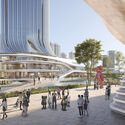
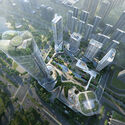
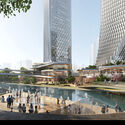
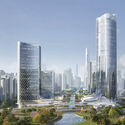
Nanjing K.Wah G72 / UNStudio. Image Courtesy of K.Wah
UNStudio has been commissioned to create a human-centric mixed-use destination on the waterfront of Nanjing, China. Developed by K.Wah Group, the new complex aims to enhance the working-living environment for the local community while contributing as a hub for culture and finance. The project, set along the central axis of the Hexi New District, introduces high-rise office towers, commercial and cultural functions, two serviced apartment buildings, a headquarters tower, a hotel, and various public amenities.
The Mendoza College of Architects (CAMZA) launched a Provincial Preliminary Design Competition for the refurbishment of its offices at the Central Regional and Board of Directors headquarters in the city of Mendoza. With a focus on functional, construction, and energy efficiency, the project aims to rethink the headquarters as a model space, keeping in mind everyone who inhabits and moves through these spaces.
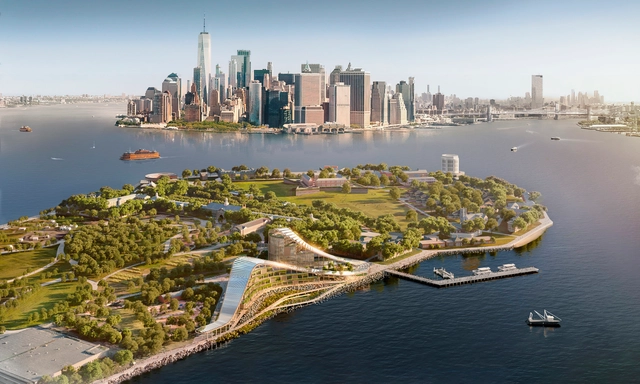
Skidmore, Owings & Merrill have been selected to design the New YorkClimate Exchange in partnership with Stony Brook University, a public research institute in New York. The new net-zero campus, located on Governors Island, New York, is planned to serve as an anchor institution for the development of new climate solutions. As a first-of-its-kind international center, “The Exchange” will also act as a regional hub for the green economy.
The Belgian Pavilion has announced its display for this year’s international architecture exhibition - La Biennale di Venezia. Curated by Bento and Venciane Despret, “In Vivo” concentrates on investigating the architect's new relationship with resources. The display challenges our extractivist production system by identifying and designing architectural alternatives using components obtained from live organisms and the imagery that goes along with them.
Every year since its establishment in 1970, Earth Day aims to bring into focus not only the increasingly threatening effects of climate change but also highlight the effective measures and adaptation efforts that can improve the quality of our environment. This year’s event comes after a report from the United Nations’ Intergovernmental Panel on Climate Change (IPCC) in March, which presented another warning on the magnitude of changes produced by human-induced global warming and its impact on people and ecosystems. The same report does offer some hopeful prospects as well, showing that adaptation measures can build resilience, but those urgent systemwide transformations are needed to secure a net-zero future. In response to these findings, the 2023 Earth Day is focused on the theme of “Investing in Our Planet,” as an encouragement for governments, institutions, businesses, and civil society to accelerate the change. Read on to discover several citywide initiatives aligned with these objectives of building resilience and a more sustainable future through legislation, civic involvement, and innovative systems.
rendering for the Pavilion of the Republic of San Marino. Image Courtesy of Archivio Corsini
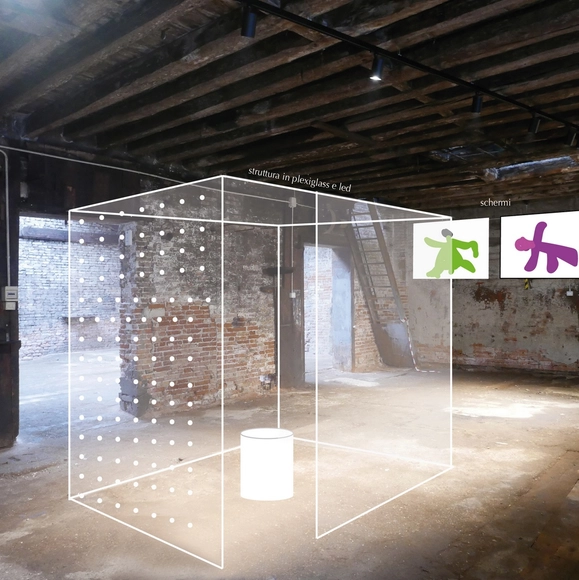
For this year’s annual architecture exhibition – La Biennale di Venezia, the Pavilion of San Marino will present the Hosting Guest project. Curated by Michael Kaethler and Marco Pierini, this intervention is an authentic co-design workshop focused on hospitality-related issues, part of an international and multi-year research project based on real places and needs. Representing the oldest Republic in the world, Artist Vittorio Corsini will participate in the pavilion with the help of a research team of students, designers, and researchers from San Marino, Venetian, and international universities.
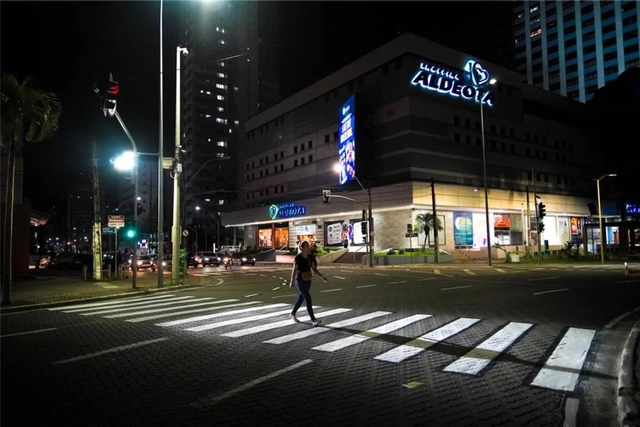
It is the first city in Latin America to implement the system. Photo: Daniel Calvet | Fortaleza City Hall
Fortaleza, the capital of Ceará, has just implemented an intelligent lighting model for crosswalks. Installed at the Praça Portugal roundabout, in the middle of the intersection of two of the city's major roads, the system could help reduce traffic accidents.
Powered by artificial intelligence, the system is capable of detecting human presence based on movement. When the dynamic lighting is activated, light beams track pedestrians from the start to the end of the crosswalk. The light improves driver visibility, especially at this specific location, where vehicles navigate a curve.
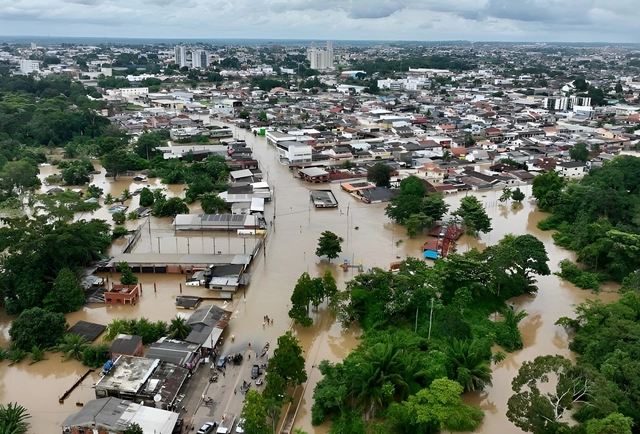
Situation in Rio Branco, capital of Acre. Photo: Pedro Devani | Secom
The past week brought chaos and despair to thousands of Brazilian families living in the country's North and Northeast regions. Heavy rains hit cities in Pará, Maranhão, Acre, and Amazonas, flooding hundreds of homes while others were completely destroyed by currents.
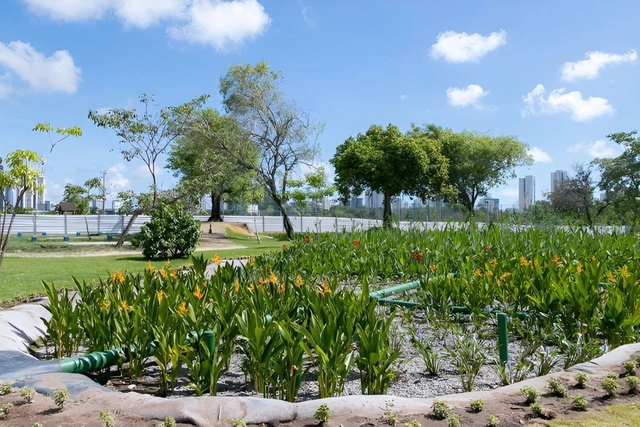
The system uses native aquatic plants to filter pollutants. Photo: Giselle Cahú | ARIES/CITinova
A nature-based solution to clean up a tributary of the Capibaribe River will be implemented in Recife, Pernambuco. Known as filtering gardens, the system consists of a group of native aquatic plants that will filter the mouth of the Cavouco Stream. Considered a sustainable and low-maintenance technology, the filtering gardens will be installed along the section where the stream flows through Caiara Park in the western zone of the capital, where about 10% of the polluted water flow will be treated.
https://www.archdaily.com/1135887/recife-to-build-a-7000-m2-filtering-garden-to-clean-up-a-streamArchDaily Team
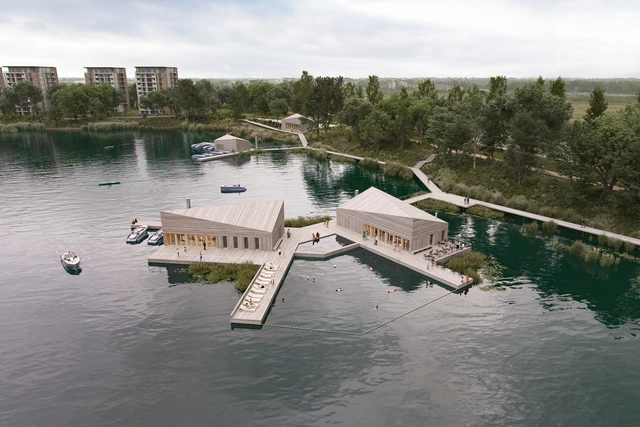
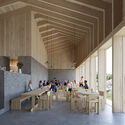
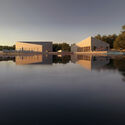
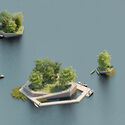
Danish Maritime Architecture Studio MAST, working together with the Municipality of Segrate, plans to transform a former sand quarry into a central park to reconnect the surrounding neighbourhoods and create a new destination for the residents of Milan, Italy. The abandoned quarry has left behind a unique landscape. The off]ice’s proposal includes a series of buildings along the lake’s perimeter linked by a public walkway and a cluster of islands in the centre of the lake. MAST is currently working with the Municipality of Segrate toward realising the project.
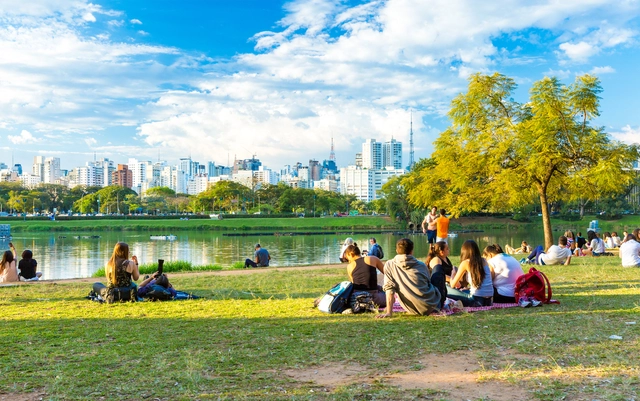
Earlier this month, the Viva o Verde SP project was launched. The result of a partnership between the São Paulo Municipal Government and UN-Habitat (United Nations Human Settlements Programme), the initiative is set to guide new municipal public policies aimed at improving the quality of green public spaces.
Initially, improvements will be proposed for 111 parks across the city of São Paulo. The goal is to achieve equity in the spatial distribution and accessibility of public green areas. “This will be an ongoing effort, not just to expand the number of parks. They will conduct diagnoses starting with ten main parks, followed by a batch of 80 parks, eventually reaching all 111 parks, identifying the specific improvements that need to be made,” said Mayor Ricardo Nunes.