Until recently, the origins of the tiny-house movement were of little interest to the scientific community; however, if we take a look at the history of architecture and its connection to the evolution of human lifestyles, we can detect pieces and patterns that paint a clearer picture of the foundations of this movement that has exploded in the last decade as people leave behind the excesses of old and opt for a much more minimalist and flexible way of life.
World Architecture Day, celebrated on the first Monday of every October, was set up by the Union International des Architects (UIA) back in 2005 to “remind the world of its collective responsibility for the future of the human habitat”, coinciding with UN-Habitat's World Habitat Day.
https://www.archdaily.com/277569/happy-world-architecture-dayArchDaily Team
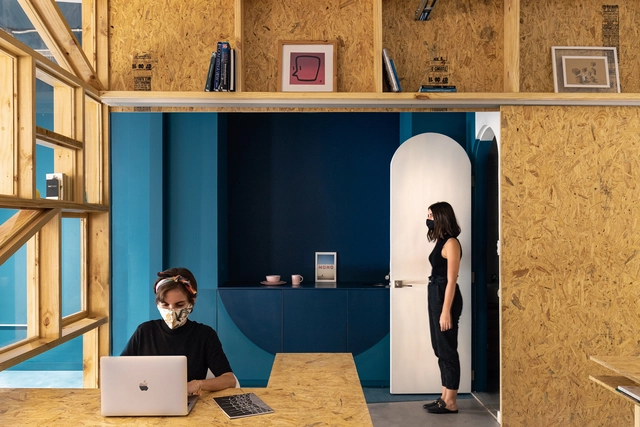
Working from home comes with a flexible schedule, not to mention savings on travel costs, and you can be closer to family. But distractions can make working from home inefficient. It becomes critical to separate the spaces used for living from the ones used for working. Building an addition is, in most cases, the perfect solution.
https://www.archdaily.com/947157/tiny-offices-extensions-to-separate-the-home-from-the-work-spacesClara Ott
BIG has partnered up with ICON, a developer of advanced construction technologies, and with SEArch+ (Space Exploration Architecture) to imagine humanity’s home in another world. Working with NASA, the collaboration seeks to develop a “space-based construction system that could support future exploration of the Moon”.
The Royal Institute of British Architects (RIBA) has just announced that Sir David Adjaye will receive the 2021 Royal Gold Medal. One of the world’s highest honors for architecture, the Royal Gold Medal is given as a recognition of a lifetime's work, “to a person or group of people who have had a significant influence either directly or indirectly on the advancement of architecture".
John Wardle (b. 1956) founded John Wardle Architects in Melbourne, Australia, in 1986. His early interest in architecture started with encountering objects and precious bits and pieces of demolished buildings at the demolition yard owned by his father’s friend.
Wardle studied architecture at RMIT, acquiring his bachelor’s degree in 1981. Wardle returned to his alma mater to acquire his master’s almost 20 years later, when he was already a seasoned practitioner, leading his own successful office. He now heads a large practice of over 90 employees with studios in Melbourne and Sydney.
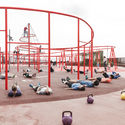
Stairways are central to access and mobility within a space, and yet, they often take a backseat to other elements of design within a work of architecture. However, Mexican firm PRODUCTORA has put them at the forefront of many of their projects, notably the Teopanzolco Cultural Center.
British researcher Darmon Richter has completed a series of journeys into the Exclusion Zone of Chernobyl. Captured through the book Chernobyl: A Stalkers’ Guide, Richter's documentation explores an area the size of a small country, and in turn, ventures deeper than any previously published account. Through a series of photographs, his work reveals forgotten ghost towns and monuments lost deep in irradiated forests.
The Un-Habitat or the United Nations agency for human settlements and sustainable urban development, whose primary focus is to deal with the challenges of rapid urbanization, has been developing innovative approaches in the urban design field, centered on the active participation of the community. ArchDaily has teamed up with UN-Habitat to bring you weekly news, article, and interviews that highlight this work, with content straight from the source, developed by our editors.
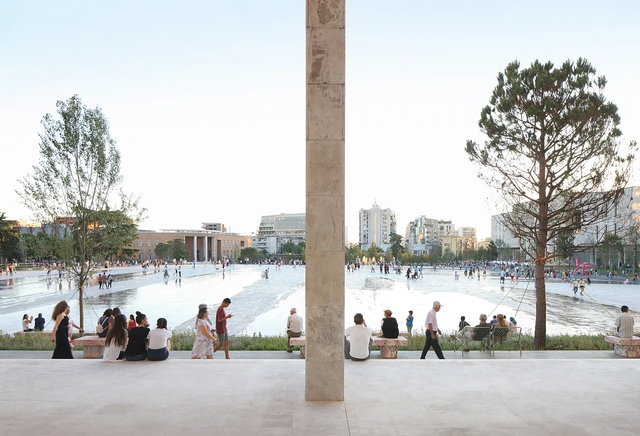
“People all over the world are increasingly demanding a say in the way that their cities are planned and designed”.For our third collaboration, discover UN-HABITAT’s guideline on achieving quality public spaces, a site-specific assessment consisting of a series of activities and tools that help understand the quality of the selected area and plan future design and planning solutions on the site through participatory approaches. Focusing on open public space, within a five minutes walking distance, the guide helps users gather and analyze information, creating a logical transition from needs to design.
An emerging design trend is filling the gap between furniture and architecture by shaping space through objects at the intersection of the two, creating a dynamic and highly adaptable environment. Either a consequence of the increased demand for flexibility in small spaces or the architectural expression of a device-oriented society, elements in between architecture and furniture open the door towards an increased versatility of space. Neither architecture nor furniture (or perhaps both), these objects operate at the convergence of the two scales of human interaction, carving a new design approach for interior living spaces.
With the recent completion of several new stations and tunnels, the Athens underground metro expansion and the development of the ThessalonikiMetro system are on a set course to completion in Greece. The construction of a direct connection between the Athens airport and the Piraeus harbour, as well as the development of Thessaloniki’s first metro line, are underway, and images by photographer Pygmalion Karatzas show the new underground infrastructure coming together in the two Greek cities.
According to the United Nation’s “The World’s Cities in 2018”, it is estimated that, “by 2030, urban areas are projected to house 60 percent of people globally and one in every three people will live in cities with at least half a million inhabitants.” Also, between 2018 and 2030, it is estimated that the number of cities with 500,000 inhabitants or more is expected to grow by 23 percent in Asia. China, as the largest economy in Asia, with a GDP (PPP) of $25.27 trillion, is expanding rapidly, both economically and demographically.
With more and more migrant workers coming into the bigger cities in China, it has become increasingly difficult for workers to find an affordable place to live. Some people decide to move away from urban centers and bear with the lengthy commute time, while others are seeking creative design solutions to transform their home into a tiny, functional space to meet their daily needs.
ArchDaily's theme of August 2020, How We Will Live Together, invites readers to contemplate the way we inhabit spaces with those around us. In this article, we address different aspects of coexistence in a world impacted by COVID-19 and the changes that need to be made in order to create a world where everyone has the space to live, work, and grow.
Nowadays, our day to day interactions with those around us hinge on social distancing, leading many to question--is this truly the best solution for curbing the spread of COVID-19? With people worldwide still reeling from the socio-economic upheaval caused by the pandemic, the concept of forcefully distancing yourself from friends and family, especially at at time when you most need them, seems just plain inhuman. While distancing is undoubtedly necessary, it seems more optimistic words would serve to better drive home the message. For example, a slogan like 6ft of Empathy maintains the necessary safety principles without stripping away the social element that humanity thrives on.
In all cities around the world, there are some forms of residual space, forgotten pieces of the urban fabric, remnants of overlapping layers of past development. This land whose conditions make it unsuitable for most types of conventional construction might be a fertile ground for architectural invention. Assigning a new value to vacant corner lots, dead-end alleys and strangely shaped plots opens up a new field of opportunities for inward urban development, expanding available living space and increasing amenities in densely populated cities. The following explores the potential for experiment and urban activation held by urban leftover space.
Interior design begins with human experience. Considering the physical, mental, and emotional needs of people, interior designers use human-centered approaches to address how we live today. Creating novel approaches to promoting health, safety, and welfare, contemporary interiors are increasingly inspired by biophilia as a holistic approach to design.
For the 2019 Shenzhen Biennale of Urbanism\Architecture (UABB), titled "Urban Interactions," (21 December 2019-8 March 2020) ArchDaily has been working with the curators of the "Eyes of the City" section to stimulate a discussion on how new technologies might impact architecture and urban life. The contribution below is part of a series of scientific essays selected through the “Eyes of the City” call for papers, launched in preparation of the exhibitions: international scholars were asked to send their reflection in reaction to the statement by the curators Carlo Ratti Associati, Politecnico di Torino and SCUT, which you can read here.
https://www.archdaily.com/946136/what-futures-for-architecture-biennales-lessons-learned-from-the-2019-2020-shenzhen-biennaleEyes of the City Curatorial Team
With society's needs and aspirations shifting, spatial typologies and architectural programs are continually being questioned, and this re-evaluation creates the premises for innovation. The following is an exploration of how architecture is metabolizing society's fundamental changes throughout several aspects of everyday life, challenging the existing assumptions regarding program and space.
Force Majeure - Futura. Image Courtesy of Jeanne Schultz Design Studio
Putting together competition entries from all around the world, this week’s curated feature for Best Unbuilt Architecture showcases inspiring approaches and concepts. Submitted by our readers, the selection highlights uncommon proposals, part of international contests. While some are winning projects, others received honorable mentions.
Serie imagines stacked timber pavilion-like offices, Schlaich Bergermann Partner, LAVA, and Latz + Partner design new pedestrian and cycle bridge over the Neckar River in Heidelberg, Germany and Aidia Studio create an Oculus in the Emirati desert. Other competition entries include a landscaped avenue by ZXD Architects in Hangzhou, a community school in Egypt by Hand Over, a winning pavilion for the Singapore’s Archifest 2020 by ADDP Architects and OWIU Design Studio; and a Baha’i House of Worship by SpaceMatters in India.