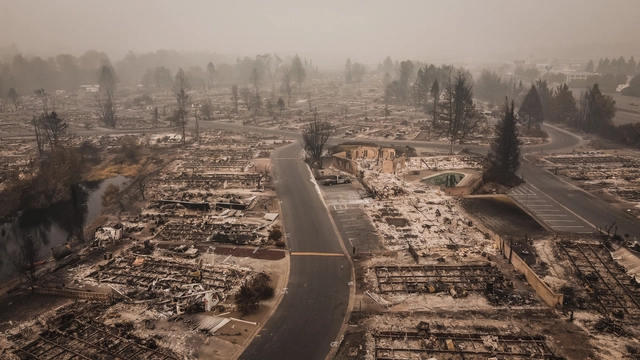
via Shutterstock by ArboursAbroad. ImageAerial View of the Almeda Wildfire in Southern Oregon
The Intergovernmental Panel on Climate Change, the UN's body for assessing the science related to climate change, has recently published a comprehensive report documenting the extent of global warming. The paper provides new time estimates for crossing the 1.5 degrees Celsius threshold, urging immediate and large-scale action to reduce greenhouse gas emissions. Following the publication of the report, UK Architects Declare has issued a statement inviting decision makers to a dialogue on how to collectively address the climate crisis while at the same time calling for the design professionals to re-evaluate their practice to support meaningful change.
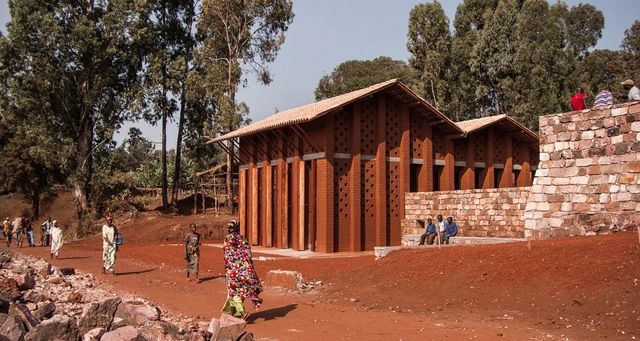
Library of Muyinga. Image Courtesy of BC Architects
In his 1983 now-classic essay Towards a Critical Regionalism, Six Points of an Architecture of Resistance, Kenneth Frampton discussed an alternative approach to architecture, one defined by climate, topography and tectonics, as a form of resistance to the placeness of Modern Architecture and the gratuitous ornamentation of Postmodernism. An architectural attitude, Critical Regionalism proposed an architecture that would embrace global influences while firmly rooted in its context. The following explores the value and contribution of Frampton’s ideas for contemporary architecture.
Displacement implies uncertainty, uprooting, and instability, in addition to the loss of community, privacy, and physical and emotional orientation. Addressing these needs through appropriate architectural responses can help displaced communities regain social, economic, and environmental well-being. In this context, community kitchens are designed to help generate a sense of belonging and "normality" in domestic lives.
https://www.archdaily.com/966201/community-kitchens-the-challenge-of-generating-roots-in-displaced-communitiesClara Ott
Around the world, the COVID-19 pandemic exposed the fact that some of the poorest people were hit the hardest by not only the impacts the virus had on public health but also the social and economic shockwaves that came as a result. And now, as we emerge on the other side yet also enter the second wave of restrictions around the globe, urban planners and government officials are beginning to realize that the pandemic has pulled back the curtains on another inequitable feature of cities- the proximity to public parks and spaces.
Exactly a year ago, on August 4, 2020, the third-largest non-nuclear explosion ever-recorded destroyed almost half the city of Beirut, ripping through the port and the eastern part of the capital. One of the biggest urban tragedies of modern times, killed more than 200 people, wounded thousands, and left an estimated 300,000 people homeless, damaging over 80,000 commercial, residential and public spaces. Felt across neighboring countries, the blast stripped the city’s constructions of their cladding, framing, and glass elements, while completely tearing down other buildings, leaving around US$15 billion in property damage, in times of Covid, political and social unrest, and economic collapse.
One year later, so little has changed. One year later, it only became harder for the people of Beirut. One year later, everything in the city still reminds them of that day. Major questions remained unanswered, no rescue or action plans have been taken by governmental institutions, instead, civil society rose to take into their own hands, reconstruction efforts, in the total absence of the state.
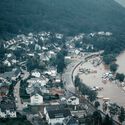
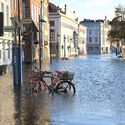
Recent extreme weather events and the acceleration of climate change, paired with decarbonization efforts that are not on track, make climate-related disruption unavoidable for urban environments, raising the issue of climate-risk adaptation. Moving past what can be done to prevent climate change, there is a strong imperative to develop strategies to prepare urban environments to cope with inevitable challenges such as sea-level rise, floods, water scarcity or extreme heat. The following discusses how cities can build resilience and adapt to undergoing and expected future climate threats.
When we think of migration, we think of movement. We think of the movement of people simply looking for greener pastures – a better life for themselves. But we also think of war, of conflict, of an unstable situation in a specific place forcing the hand of a location’s residents to seek safety elsewhere. Historically and into present day, war has been the reason for the increased presence of refugees. Instability in places such as Syria, Iraq, or the Central African Republic have caused millions to flee their homes. Lurking amongst this migration due to conflict, however, is the migration of people at mercy of the changing environmental conditions of the Earth – climate migration.
How materials move shapes both architecture and how we design. While architects often consider both material sourcing and manufacturing, the physical products and assemblies themselves also move and adapt as they cross geographic and national lines. How materials migrate, and in turn design ideas themselves, tells a story of architecture that transcends construction and climate, as well as borders both real and imagined.
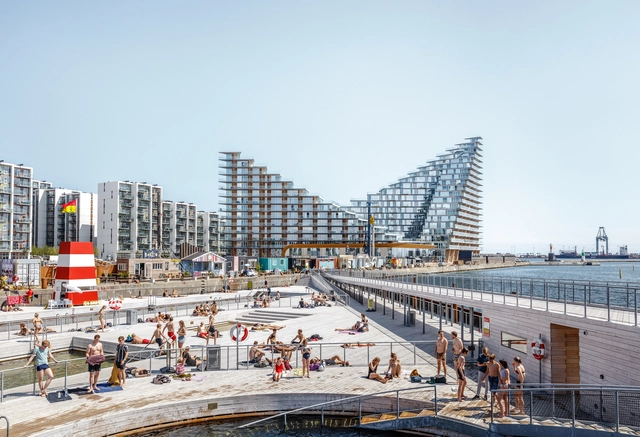
AARHUS, Image by Rasmus Hjortshoj . Image Courtesy of BIG
"The future is already here, it's not just very evenly distributed". Starting off with this William Gibson quote, BIG’s latest publication Formgiving looks at the past and present in order to determine the future. Talking of predictions that aren’t so far down the road, but rather than could occur in 5, 10, or 50 years, the book seeks to “give form to the future”, or to what has not taken shape yet.
ArchDaily had to chance to interview Kai-Uwe Bergmann, Partner at BIG-Bjarke Ingels Group, and discuss not only the firm’s latest manuscript but the trilogy of publications: Yes is More, an “Archicomic on Architectural Evolution”, Hot to Cold an “Odyssey of Architectural Adaptation”, and Formgiving, an “Architectural Future History”.
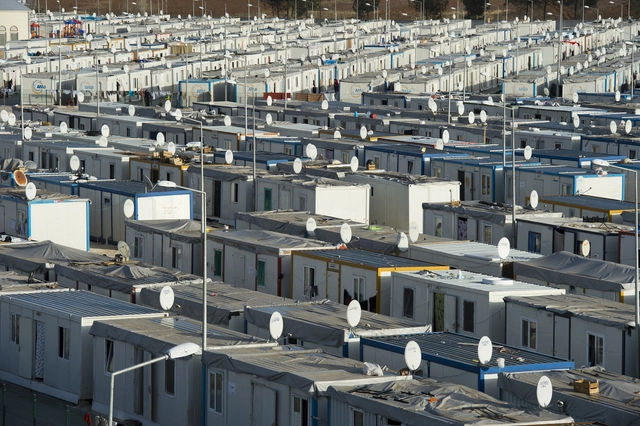
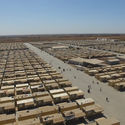
SANLIURFA, TURKEY - February 19, 2014: Aerial view of Akcakale Refugee Camp. Approximately 28.000 Syrian people reside in Akcakale Tent Camp in Urfa.. Image via Shutterstock/ By answer5
With more than 70 million forcibly displaced people worldwide, according to the UNHCR, and nearly 25.9 million refugees, the time has come to reconsider the traditional emergency camp approach. Although the concept is temporary by definition, in real life the lifespan of these refugee camps exceeds the planned and the expected.
Ranging from seven to seventeen years, most of these settlements surpass their expiry dates. Actually, on average, according to the United Nations High Commissioner for Refugees (UNHCR) in Kenya, "many displaced persons spend more than 16 years living as refugees in temporary shelter."
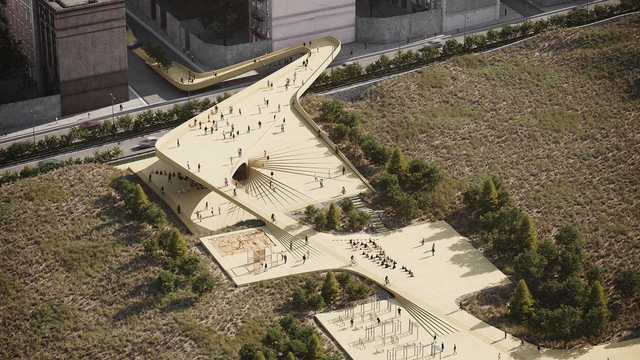
This week's curated selection of Best Unbuilt Architecture highlights different competition-winning designs submitted by the ArchDaily Community. From large scale urban developments to small interventions in the landscape, from commercial projects to public spaces and urban planning strategies with an environmental focus, this article showcases a variety of design approaches, programs and scales. The proposals featured are the results of local and international competitions, either creative concepts or projects currently in progress.
The award-winning entries include a range of different projects, designed by both young architects and established firms. An adaptive reuse project for office towers in New York, the redevelopment of an industrial site in China, an abstract installation for a Russian festival, or a masterplan focused on climate resilience and ecosystems protection are a few of this week's highlights.
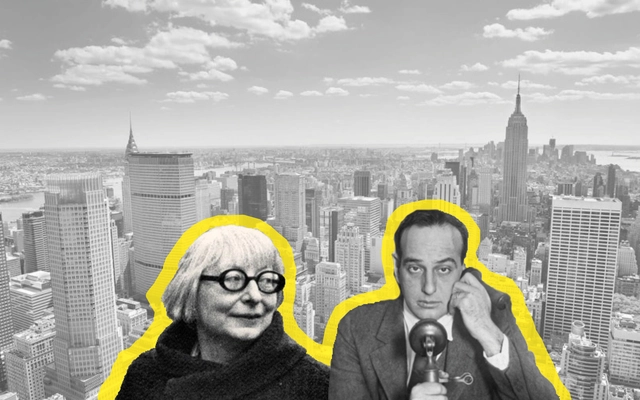
The development of cities has historically been a slow-moving process. In the everchanging urban landscape that faces the pushes and pulls of a variety of social, economic, and financial factors, it’s been hard to pinpoint just one main reason over another why each city has evolved over time into the way that we experience it today. And as designers and planners speculate about what the future of our cities should be, sometimes the reason that our cities look and operate in the way that they do has come down to a few famous battles between individuals with competing schools of thought.
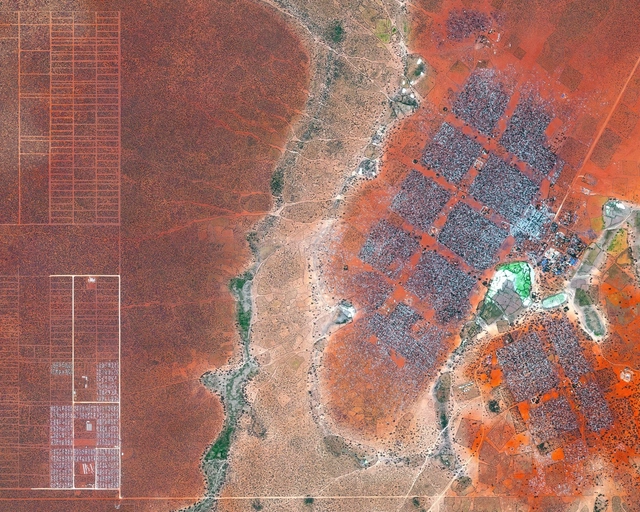
Refugee camp in Dadaab, Northeast Kenya. Created by @benjaminrgrant, source imagery: @digitalglobe. Image
What do Katuma, Hagadera, Dagahaley, Zaatari or Ifo bring to mind? They are truly beautiful names, and could easily belong to Italo Calvino's 55 invisible cities.
But they are not invisible cities, they are informal settlements in Kenya and Jordan, home to between 66,000 and 190,000 refugees, mostly from bordering countries, supposedly temporary camps that half a century later are still with us today. Generally lacking in infrastructure, some have schools and hospitals, and Zaatari even has a circus academy, but for most of the people who live there, they are the only cities they have ever known.
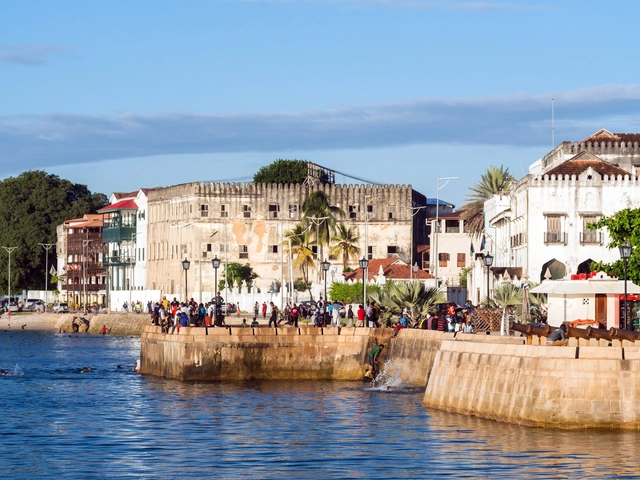
The African continent has been - throughout history – a key player in the ever-evolving story of human migration. Cultures and customs have been shared, adapted, and re-imagined as a result of this movement of populaces, and architectural styles are no exception. In a way, the varied architecture present in Africa is a lens one can look at to understand the intricacies of migration. Present on the continent are ancient indigenous and building typologies born out of the organic assimilation of cultures. Also present are remnants of colonial architecture, a legacy not of voluntary migration, but of forced colonial imposition.
Other than the contribution of national participations, the 2021 Venice Architecture Biennale invites architects and researchers to exhibit their work between the Central Pavilion at the Giardini, the Arsenale, and Forte Marghera, seeking to answer the general theme of “How will we live together?”, set by curator Hashim Sarkis. With 113 Participants from 46 countries, and an increased representation from Africa, Latin America, and Asia, these architectural contributions underline worldwide and contextual challenges as well as present multidisciplinary and inventive solutions.
The 17th International ArchitectureExhibition, running from 22 May to 21 November 2021, divides these projects amongst the following titles: Co-Habitats, Stations, Among Diverse Beings, As New Households, As Emerging Communities, Across Borders, and As One Planet, How Will We Play Together? After having explored the recurring qualities observed in the national pavilions, this feature highlights the rest of the interventions through the lens of Laurian Ghinitoiu.
Urban planning is often based on the assumption of ongoing demographic and economic growth, but as some environments face urban shrinkage, a new array of strategies comes into play.The shrinking city phenomenon is a process of urban decline with complex causes ranging from deindustrialization, internal migration, population decline, or depletion of natural resources. Referencing the existing research on the topic, the following showcases approaches to this phenomenon in different urban environments, highlighting the need to develop new urban design frameworks to address the growing challenge.
The global landscape of today has been moulded by centuries and centuries of human migration. This movement of people, of individuals and communities travelling far away from their place of origin to eke out better lives for themselves, has seen the evolution of the architectural and urban character of cities – moulded by the diverse influences fuelled by migration. This has meant that around the world, enclaves have popped up in cities, migrants carving out spaces for themselves which have a different character to other areas of a city.
If we ever wonder what the future could look like, all we have to do is take a look into our past, and observe how far we have come since thousands, a hundred, or even ten years ago. Life was radically different back then and it will be just as different in the future. And since we are well aware that the future merely resembles the present, we have the possibility to shape our future the way we want to. TASCHEN's latest BIG book installment Formgiving. An Architectural Future History explores the past, present, and future, drawing a timeline of the built environment from taking shape to giving form.































.jpg?1624875360&format=webp&width=640&height=580)
.jpg?1624875658 "Le Consortium – Land \"Grancey-le-Château, A World at the Edge\" . Image © Laurian Ghinitoiu")
.jpg?1624875488 "ICD Institute for Computational Design and Construction and ITKE Institute of Building Structures and Structural Design \"Material Culture: Rethinking The Physical Substrate For Living Together\". Image © Laurian Ghinitoiu")
.jpg?1624875439 "Philip Beesley and the Living Architecture Systems Group / University of Waterloo School of Architecture \"Grove\". Image © Laurian Ghinitoiu")
.jpg?1624875630 "TVK \"The Earth is an Architecture\". Image © Laurian Ghinitoiu")
.jpg?1624875360)