For the past couple of years, the metaverse has been gaining prominence, prompting architects to consider its implications for our relationship with the physical environment and how can architecture contribute to this new virtual space. Architecture in the metaverse is no longer a fringe subject, having been embraced by established firms. "The metaverse is where much of the architectural action and innovation will be happening in the coming period,"says Patrick Schumacher. Unbound from restraints such as physics, material properties and construction costs, the metaverse unlocked a new realm of architectural expression. The following looks at some of the various ways the profession engages with the expanding field of digital environments.
As the climate crisis continues to present itself as a significant threat to the future of the ecosystem and built environment, this year's IPCC report, titled Climate Change 2022: Impacts, Adaptation, and Vulnerability, found that while adaptation efforts are being observed across all sectors, the progress being implemented so far is greatly uneven, as there are gaps between the actions taken and what is needed. On this year's Earth Day, we explore the progress being made by governments and architects to achieve net-zero operations within the next decades.
Circular Dimensions x Microscape by Cris Cichocki. Photo by Lance Gerber. Image Courtesy of Coachella Valley Music & Arts Festvial
The Coachella Valley Music and Arts Festival 2022, an annual festival held in the Colorado Desert in Indio, California, has opened to the public on Friday April 15th with immersive installations by 11 international architects, artists, and designers. Through explorations of scale, light, sound, and colors, the contextual installations explore global themes such as connectedness, environmental sustainability, immigration, social behavior and architecture, pop culture, and the community, and will be on display on April 15-17 and April 22-24, 2022.
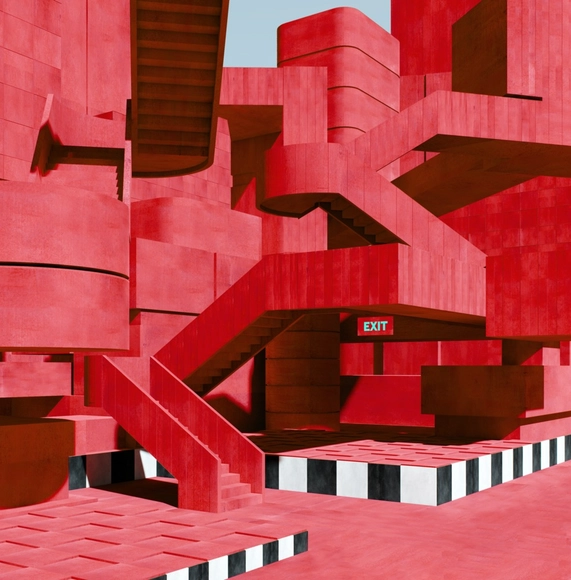
Beyond hyper-realistic renders and accurate depictions of what projects look like once completed, visualizations have become tools to communicate atmospheres and emotions portrayed by architects. The use of mixed media, combined with architectural compositions, art, lighting, and oftentimes music, have generated a new genre of architectural storytelling, one that combines reality with imagination. And as the world immerses in NFT's and experimenting with cutting-edge technologies to create digital environments, visualizations might soon become "the new reality".
ArchDaily had the opportunity to talk to Visual Artist Ceren Arslan about branching out from the architecture practice, how she describes her creative process, her latest project EXIT, and what the future holds for architectural visualizations.
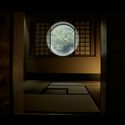
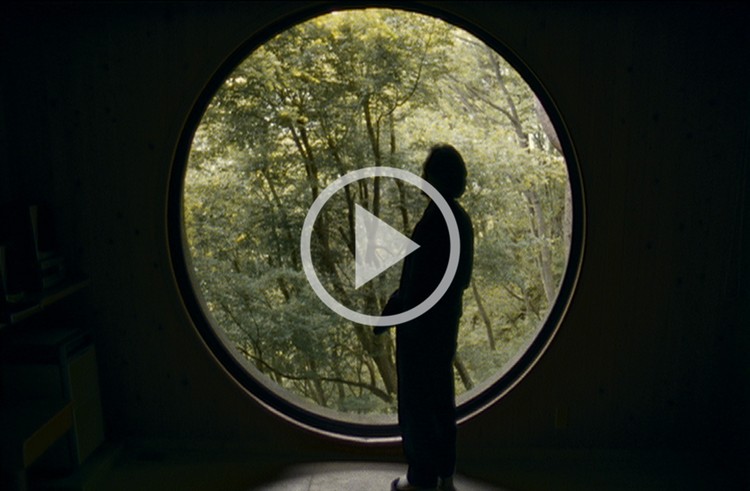
‘’In the background there is still invisible Japanese tradition’’, expresses Kisho Kurokawa, in an excerpt from the film ‘Kochuu’. He puts an emphasis on Japanese tradition, an architectural tradition that rejects symmetry despite the utilization of high-tech. He contemplates the Nakagin capsule tower (1972) a mixed-use residential and office tower located in Tokyo, Japan. The first of capsule architecture built for practical and permanent use.
Jesper Wachtmeister’s‘Kochuu’ is based upon the influence and origins of Modernist Japanese architecture. Through visions of the future, tradition and nature, it amplifies elements of Japanese tradition and its impact on Nordic design. The narrative tells us of how contemporary Japanese architects strive to unite the ways of modern man with old philosophies to create anew.
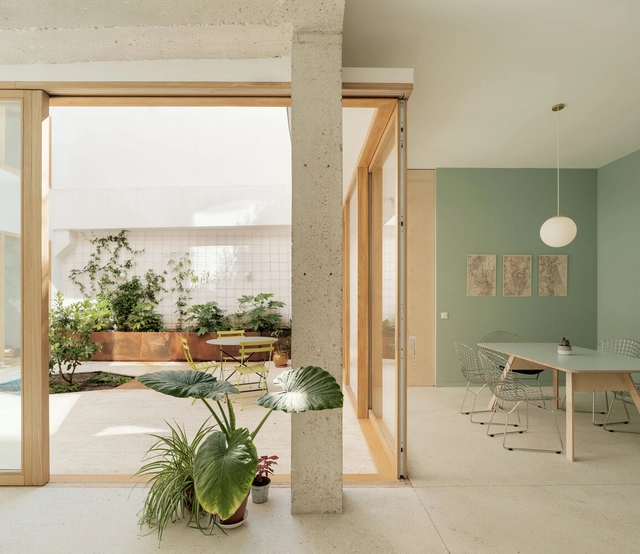
What would a project be like if user emotions were part of the program? Planning environments that can accommodate different sensations is, according to Pinterest Predicts 2022, one of the decoration trends for the coming years. More and more people have been looking for ways to set up rooms that provide the apotheosis of their feelings, no matter if the goal is to be more calm, express their anger, listen to music or a leisure activity, the focus of the so-called "emotional decor" is on make emotions flow freely and safely.
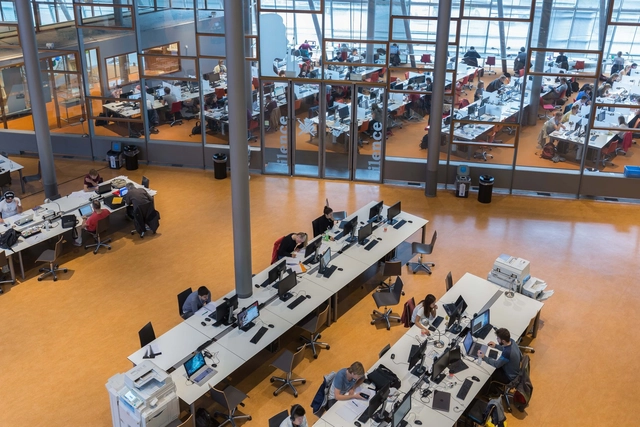
DELFT, THE NETHERLANDS - AUGUST 19, 2017: Students at work in the Library of the Technical University Delft, The Netherlands. Image via Shutterstock/ by T.W. van Urk
Delft University of Technology in the Netherlands took the second place while UCL, in the United Kingdom, came third. ETH Zurich, Harvard, and the National University of Singapore (NUS) maintained fourth, fifth, and sixth place. The Manchester School of Architecture was upgraded to seventh position this year, moving the University of California, Berkeley (UCB) to eighth place and the Tsinghua University in Beijing, China to the ninth. Politecnico di Milano, in Italy, remains a non-mover at 10.
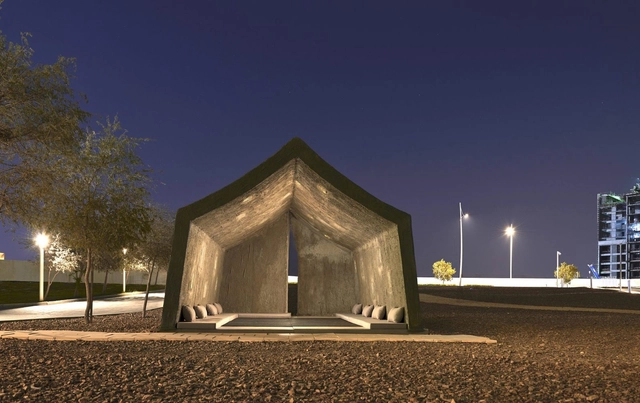
It’s a ubiquitous architectural form. An architectural typology that spans centuries and borders, a staple across cultures. The tent. In its simplest form – it’s a shelter, with material draped over a frame of poles. It’s an architectural language that is intrinsically linked to nomadic living. Yurts, for instance, functions as an easily portable dwelling for the Kazakh and Kyrgyz peoples. At the same time, tents have proved a popular stylistic precedent for architects, the lightweight structures of German architect Frei Paul Otto being a case in point. The tent is a complicated architectural language – one that straddles the line between temporary and permanent, and one that also functions as a symbol of wealth and a symbol of scarcity.
Over the past two decades, urban highways' social and economic ramifications have been brought into focus as a large part of this mid-century infrastructure comes to the end of its lifespan, prompting conversations over its role in contemporary urban planning. Freeway removal entails the replacement of the transport infrastructure with new urban developments, green amenities and alternative street grids to promote a healthier urban environment and smart growth. In some cases, the idea of removing highways is met with concern over the potential increase in traffic and gentrification of the areas adjacent to the road, but the pandemic has further exacerbated the need for quality public spaces and brought once again into question the hegemony of the car. The following highlights various highway removal projects, discussing how these interventions restore the urban fabric, reknit communities and recover urban spaces for city dwellers.
Graphics, even before language and writing, were the first means of communication and significance for humanity. Drawing is the act of replacing reality with representation, that is, replacing objects with images encoded in each of the graphic representation systems.
In architecture, graphics stimulate the imagination and are the basis of project thinking since they do not only constitute our code of communication but configure our ability to express ourselves in disciplinary terms. In fact, at first, the drawing is constructed in the mind of the architect, before it looks for support from any type of instrument.
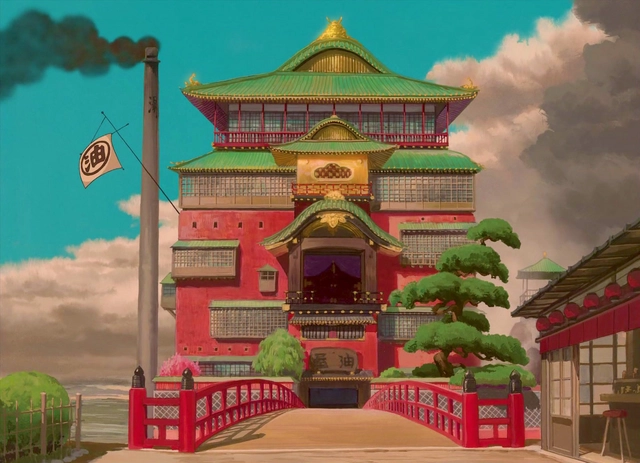
Still from 'Spirited Away' (2001). Image Courtesy of Studio Ghibli
Writers in film and animation, specifically pertaining to the genre of anime, endeavor to incorporate varied architectural backdrops to assist them in telling their stories, with influences ranging from medieval villages to futuristic metropolises. Architecture as a subject includes a wide array of elements to study, with each architectural era further inferring its context and history through its design alone. However, in film and anime, all of the contexts behind a building’s design can be condensed into a single frame, powerful enough to tell a thousand stories.
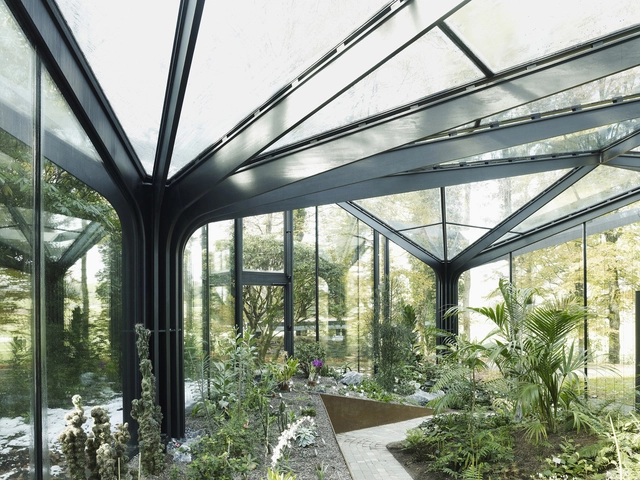
Few structures are as elegant and ingenious as greenhouses. Largely built with simple and straightforward designs, these minimalist shelters create airy and light-filled spaces that shape indoor climate. Dedicated to the cultivation of plants and crops, they are diverse projects combining programs and systems to emphasize sustainability, education and conservation. At their heart, greenhouses are about experience and discovery.
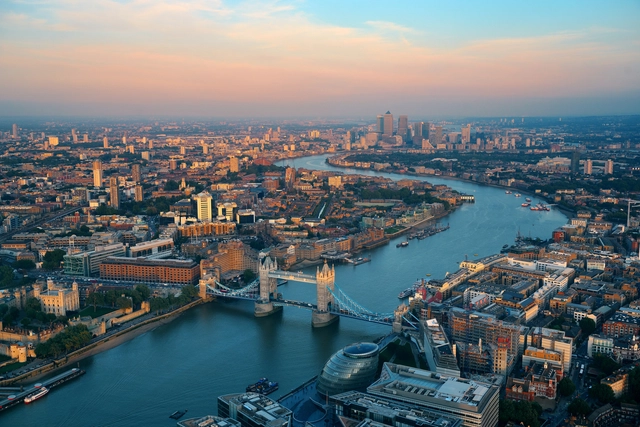
Global Finance's ranking of the world's best cities to live in, during 2022 has just been released. Centered on 8 different parameters that calculate and compare the quality of life of people living in urban areas such as economy, culture, population, environment, etc., this year’s edition also took into consideration Covid-19 deaths per thousand for each country, to reflect the new reality we live in. With data from the Global City Power index, Johns Hopkins University, Statista, and Macrotrends, the list seeks to have a complete vision, putting together traditional metrics with new factors.
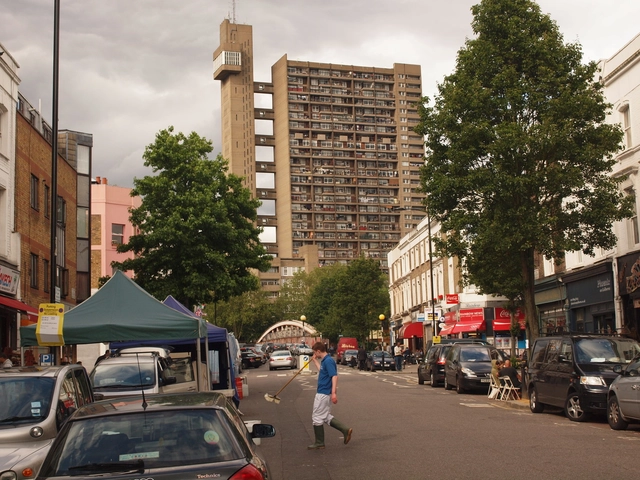
Claiming the first position is London, U.K, a city that although didn’t get high rankings in its Covid-19 metrics, still topped the list, mainly due to its scores in culture, accessibility, and population growth. Tokyo was selected for the second position, showing weakness in one parameter, population, as its numbers have been declining for the past 10 years. Shanghai followed next, in the third position, because of relatively low Covid-19 death figures and strong population growth. Singapore and Melbourne came in 4th and 5th positions.
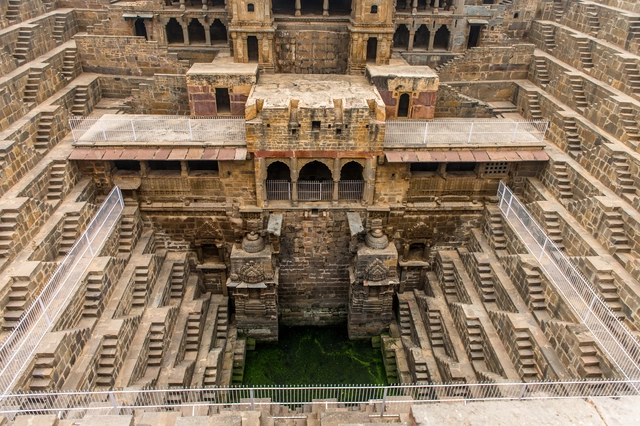
The 22nd of March 2022 saw the twenty-ninth commemoration of World Water Day – as a worldwide water crisis continues to leave populations vulnerable. It is an extremely multi-faceted issue. Governance sadly determines water accessibility, with marginalized people disproportionally affected. Urban typologies are another factor. The over-pumping of groundwater sources to meet the water demands of Hanoi, for instance, has resulted in arsenic being drawn into Vietnam’s village wells.
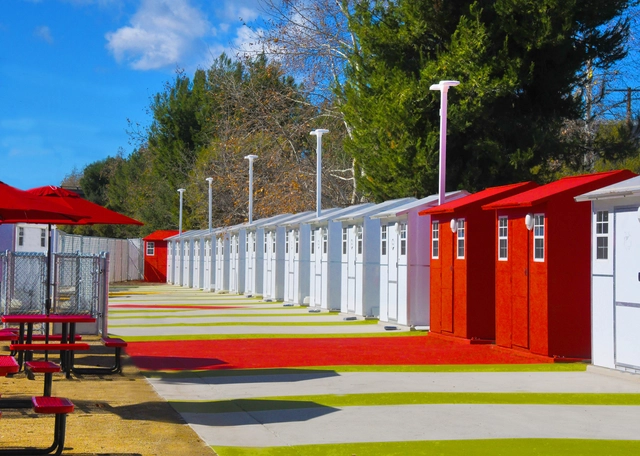
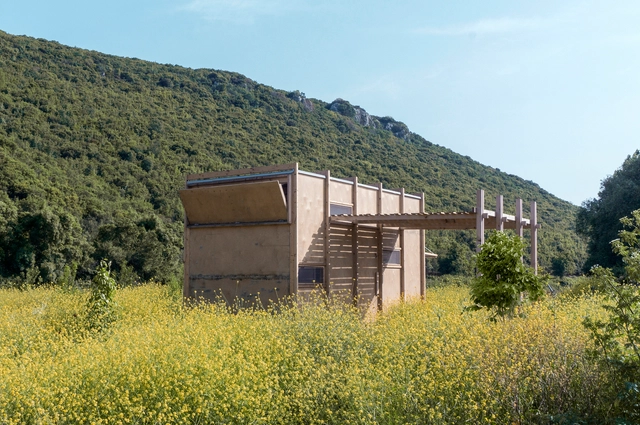
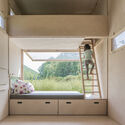
Architects Sevince Bayrak and Oral Göktaş from SO? Architecture&Ideas were attracted to the idea of having the opportunity to escape the urban bustle of Istanbul into a natural setting, and in 2017, they designed and built the Cabin on the Border. Since its completion, the project has undergone several changes, and the dwelling experience prompted the architects to re-evaluate their initial ideas and assumptions and change how they see the tiny house typology. Five years after the project's design, the architects share what they've learned from living in a tiny house, providing valuable insight for the design of such projects.
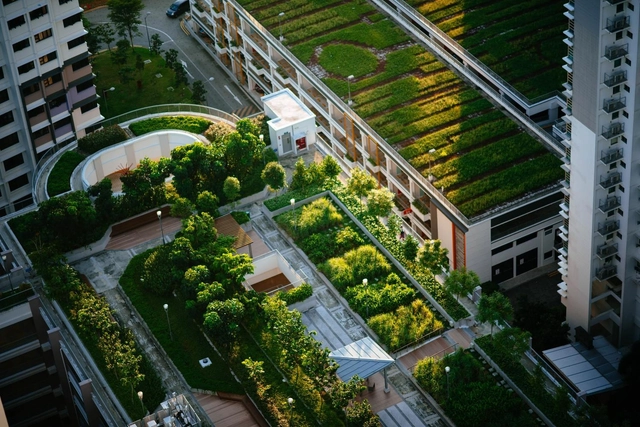
A carbon neutral building is achieved when the amount of CO2 emissions is balanced by climate-positive initiatives so that the net carbon footprint over time is zero. Considering their unmatched ability to absorb CO2, planting trees is often viewed as the best carbon offsetting solution. But as cities become denser and the amount of available horizontal space for green areas drastically reduces, architects have been forced to explore other approaches. Therefore, to address these climatic challenges and connect people to nature, exterior green walls have become a rising trend in increasingly vertical cities. Even if there is research to claim that these can positively impact the environment, many question if they can actually contribute to a carbon neutral architecture. Although the answer may be quite complex, there seems to be a consensus: green walls can be effective, but only through good design.
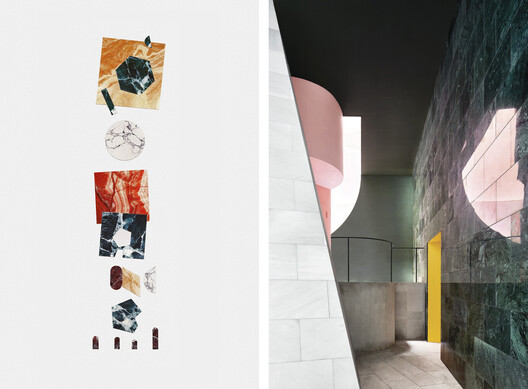
For centuries and centuries we’ve built – and the diversity in our global built environment is a testament to that. The many different cultures around the globe have had different ways of building throughout history, adapting locally found materials to construct their structures. Today, in our globalized present, building materials are transported across the globe far from their origins, a situation that means two buildings on completely opposites sides of the world can be more or less identical.


.jpg?1650608161)


.jpg?1650608161)


.jpg?1650442901&format=webp&width=640&height=580)
.jpg?1650442892 "Circular Dimensions x Microscape by Cris Cichocki. Photo by Lance Gerber. Image Courtesy of Coachella Valley Music & Arts Festvial")
.jpg?1650443789 "The Playground by Architensions, photo by Lance Gerber. Image Courtesy of Coachella Valley Music & Arts Festvial")
.jpg?1650443636 "Mutts by Oana Stănescu, photo by Lance Gerber. Image Courtesy of Coachella Valley Music & Arts Festvial")
_by_Mart%C3%ADn_Huberman__photo_by_Lance_Gerber__courtesy_of_Coachella_Valley_Music___Arts_Festvial_(2).jpg?1650443369 "Cocoon (BKF + H300) by Martín Huberman, photo by Lance Gerber. Image Courtesy of Coachella Valley Music & Arts Festvial")
.jpg?1650442901)