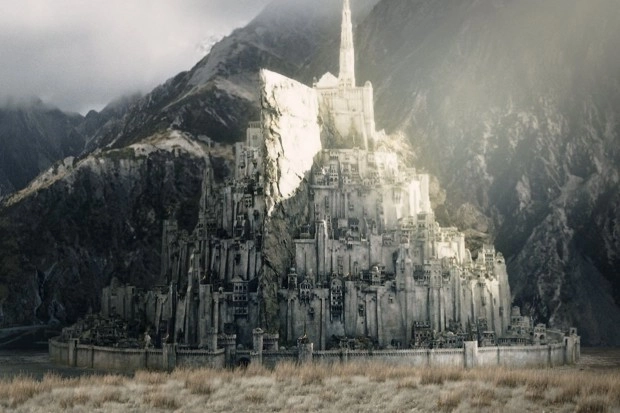
Are you looking for the perfect walled city to lay down your roots? Look no further than Minas Tirith, J.R.R. Tolkien's fictional capital of Gondor, located in mountainous and remote Middle Earth. Except, if an ambitious group of British architects get their way, it might not be fictional for much longer. With their plans to construct a replica of Minas Tirith in the non-fictional hills of southern England, the Lord of the Rings-inspired community promises to be a bustling center of activity occupied by the most diehard Middle Earth supporters. This is only possible, of course, if the founders of Realise Minas Tirith are able to fundraise £1.85 Billion ($2.86bn USD) within 60 days on Indiegogo.
When it comes to applying for a new job, in any field, often the most difficult part is standing out from the crowd at the first stage. Fortunately for architects, in our field we have a tool that can help you to do just this: the portfolio. Unfortunately, according to Brandon Hubbard, many architects are getting it wrong when it comes to application portfolios. In this article, originally published on his blog at The Architect's Guide, Hubbard outlines six tips on how to create and submit a two-page portfolio that will increase your chances of getting a callback.
When applying to any architecture job I advise applicants to use the shortest portfolio possible. I have successfully applied to the top firms in the world with only a resume and a TWO PAGE portfolio. Most people are surprised by this, since the typical portfolios I see are in the 20-40 page range. To be clear I am only talking about the initial introduction to a firm, not the in person interview. For that I recommend a full length traditional portfolio.
For the first contact architecture application I recommend a “sample portfolio”, usually two to five pages long. Just like the resume, it is only a snapshot of your greatest work and experience.
Getting into a portfolio discussion is difficult because a lot of the final product is creativity based. Yet, I will cover several general guidelines to follow below when preparing and submitting a sample portfolio.
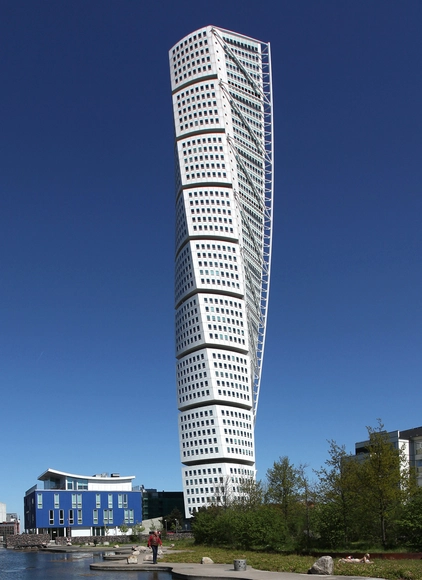
Rotating a full 90 degrees along nine pentagonal sections, Santiago Calatrava's "Turning Torso" was deemed the world's first twisting skyscraper upon its completion in 2005. Still Scandinavia's tallest tower, the 190-meter Malmö skyscraper has been awarded a 10 Year Award by the Council on Tall Buildings and Urban Habitat (CTBUH) for its continued valued to the surrounding area and successful performance across a number of categories, including environmental, engineering performance, vertical transport, iconography, and others.
“The Twisting Torso is one of those superb examples that went beyond the creation of a signature tower and helped shape an entirely new and invigorating urban fabric,” said Timothy Johnson, Vice Chairman, CTBUH Board of Trustees and Partner, NBBJ.
For decades, one of the most pressing questions surrounding architecture and urban planning has been "who gets to decide what is built?" Various systems have been tried, but one of the most popular strategies to emerge in recent years has been "The Public Vote." Thanks to the new possibilities afforded by the internet, it's becoming increasingly common to display all the entries to competitions to the public, as in the Guggenheim Helsinki competition, and even to have the public vote for their favorite, as in the recent competition to design Den Bosch's city centre theatre, or even Karim Rashid's informal poll of his Facebook followers to choose a facade for one of his designs. In some ways these approaches seem like the perfect response to years of complaints that decisions are made behind closed doors, away from the people who they affect.
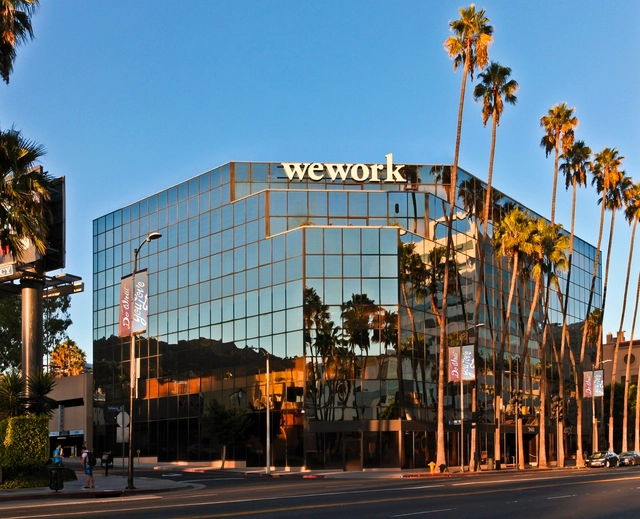
Exterior of WeWork Hollywood in LA. Image Courtesy of WeWork
"Buildings shouldn't just be a place where you go to do stuff. How can we enable the buildings themselves to be a positive contributor to the activities that happen within them?"
This is how David Fano, co-founder of New York consultancy CASE, explained the logic behind their acquisition by WeWork, the company that provides flexible coworking spaces for entrepreneurs and small businesses. Announced today, the merger could potentially mark a new chapter in the field of office design, as CASE proposes to bring their trademark attitude to Building Information Modeling (BIM) and other cutting edge technology to every space developed by WeWork.
Find out how this acquisition could change the face of Office design after the break.
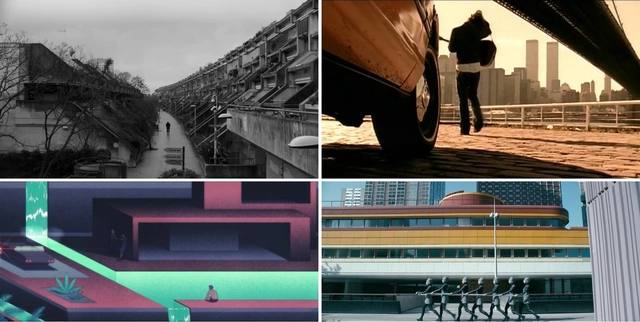
When it comes to the confluence of music and architecture, maybe the first thing that comes to mind is Goethe's claim that "music is liquid architecture." Goethe, however, was writing before the advent of MTV: music videos have become miniature films, attempting to capture all the tone, undercurrents and context of a particular song and translate them visually. Even better, the way music videos use architecture isn't the same as any documentary or film location; the camera attempts to mimic the way people listen to music by cutting and weaving around, designed for listeners as much as they are designed for viewers. Hence we see protagonists turning to the side, important elements placed away from the center and shots that both explore and disguise spaces in an attempt to fit the songs' acoustics to the setting.
What this means for us is that music videos can relate to architecture and capture its underlying tones in a way that a film might struggle to. For an architect wondering how the public truly understand and interact with a piece of architecture or remember a style, music videos are an untapped goldmine, since every setting location and filming choice show off how our wider culture relates to a building. Read on after the break for seven music videos that tell us a surprising amount about the architecture they feature.
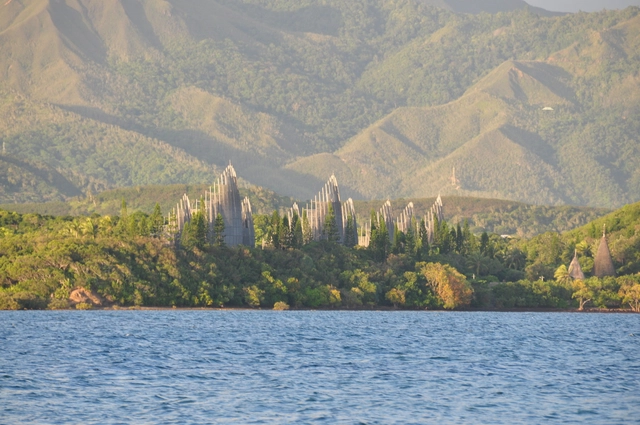
Sydney. Bilbao. Nouméa? They are cities recognized, popularized, and revitalized by a single foreign intervention of modern architecture. The phenomenon by which this occurs, often dubbed the “Bilbao Effect” in reference to Frank Gehry’s iconic museum, is one of the most fascinating and sought-after contributions of modern architecture to economic development.
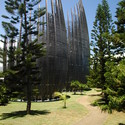
The latter of these locations—the capital of the Pacific island cluster of New Caledonia—may seem a misfit on this list to those who have still not heard of it, now sixteen years after the completion of Renzo Piano’s Tjibaou Cultural Center, but it most certainly is not: the transformative economic effect of this project on the city of Nouméa has been no less dramatic than that of any opera house or museum of greater renown. Since the Center's completion, New Caledonia has found itself in the international architectural spotlight, as the graceful, ephemeral design of the building's iconic shells has brought fame and business in equal parts to its island and to Piano’s firm.
Videos
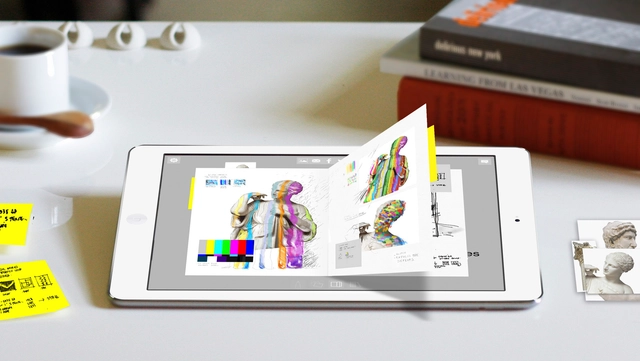
Work by Javier Galindo. Image Courtesy of Morpholio
Continuing their streak of new apps for architects and designers, today Morpholio has released their latest work – a digital notebook known as “Journal.” An improvement to existing digital sketchbooks, Journal seeks to capture the day-to-day recording of ideas, inspiration, thoughts and recollections of an analog notebook as faithfully as possible. Unlike most digital sketchbooks, Journal allows users to combine the amalgamation of photos, images, hand sketches and drawings that a real journal might encompass, lending new material to the debate between digital versus analog. But could such an app ever really replace the role that analog journals have in the life of an architect? To find out, we spoke to the people of Morpholio about Journal and the future of digital and analog media.
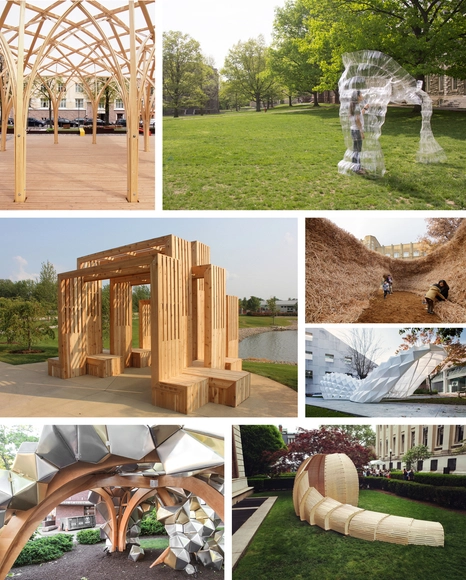
Almost two months ago we put a request out to all of our readers who were completing the academic year to send us any built work that they may have completed as part of their studies. Our hope was to display the fantastic diversity of ideas and styles that is emerging from institutions across the globe, and the response that we got was fantastic. With almost 100 submissions, we received projects from countries as far afield as Chile, the United States, Norway and Japan. We also received everything from pragmatic projects such as a chapel for a disadvantaged community in Mexico or a low-budget sidewalk parklet, to wondrously bizarre constructions such as a steel worm that connects spaces through sound and an inhabitable haystack.
With the help of our colleagues at ArchDaily Brasil andallofArchDailyen Español, we've compiled a selection of 26 of the most interesting, elegant or unusual projects from around the world - join us after the break to see what your international peers have been up to.
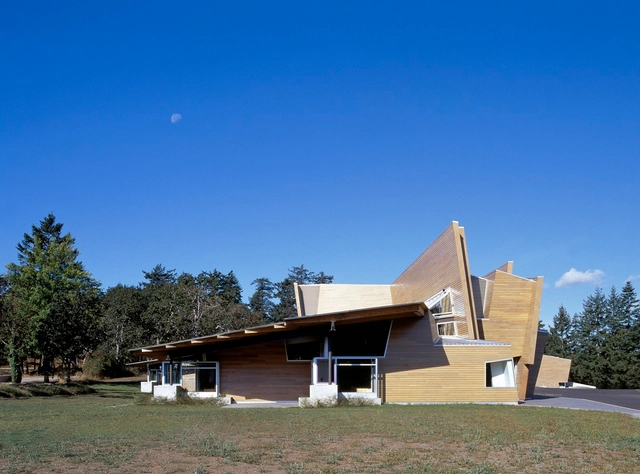
In the struggle against the homogenizing forces of an increasingly globalized architectural culture, the particularized interventions of Patkau Architects in the Canadian southwest proffer a means of resistance, grounded in the immediacy of context and the sacrosanctity of nature. Combining local material palettes with a rich tectonic vocabulary that borrows from the diverging currents of modernity and vernacular practice, the firm’s projects are dynamic and eminently sui generis, the results of an inspired pursuit at the nexus of regionalism, technology, and critical theory.
A community of 750 units interconnected on, below and above ground, Steven Holl Architects"Linked Hybrid" was an intentional shift away from the monolithic, monofuctional skyscraper. The entire complex was designed to be a "three-dimensional urban space" that encouraged chance encounters beyond the ground floor.
In this video architect Steven Holl talks about the building's design and how it has performed, seven years after the building's completion.
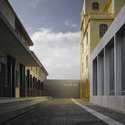
With the opening of the Fondazione Prada art galleries in May, OMA showed a different side to their practice, one focusing on preservation and assemblage rather than the iconography and diagrammatic layout that many associate with the firm. In this interview, originally published by Metropolis Magazine as "Koolhaas Talks Prada," Rem Koolhaas explains the reasoning behind this new approach, and how they attempted to avoid falling into the clichés of post-industrial art spaces.
When the Fondazione Prada opened its doors to a new permanent home in Milan dedicated to contemporary culture, it not only placed the Italian city firmly at the forefront of today’s global art world, but also introduced an ambitious new way of thinking about the relationship between architecture and art. The location—an original 1910 distillery in a distinctly gritty part of the city—comprised seven spaces including warehouses and three enormous brewing cisterns with a raw industrial quality that the architects, Dutch firm OMA, retained while adding three new buildings made of glass, white concrete, and aluminum foam. One, the centrally located Podium, is intended for temporary shows, while another—still under construction—is a nine-story tower that will house the foundation’s archives, art installations, and a restaurant. The third, a theater with a mirrored facade, features folding walls that allow the building to open onto a courtyard. In total, the collection of buildings provides nearly 120,000 square feet of exhibition space, more than twice that of the new Whitney Museum of American Art. Metropolis correspondent Catherine Shaw visited the site with Pritzker Prize–winning architect Rem Koolhaas to find out more about the challenges of creating a new cultural paradigm.
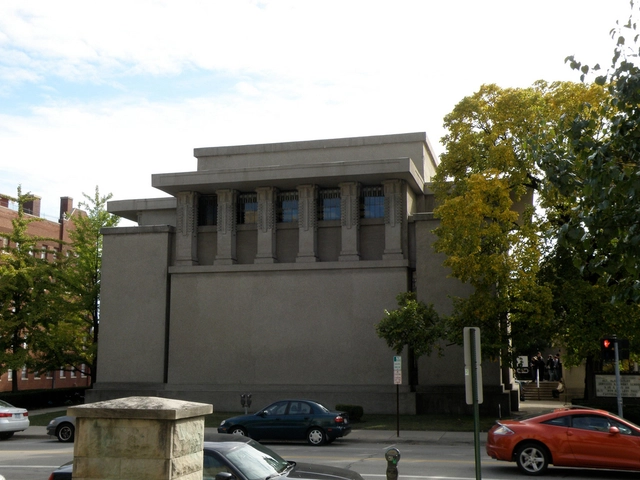
Frank Lloyd Wrights's Unity Temple is undergoing a much needed $23 million restoration. As the Chicago Tribune reports, the Oak Park temple's integrity was first called into question when a large piece of the ceiling fell above the pulpit in 2008 (thankfully no one was hurt).
The comprehensive overhaul is going beyond restoring the building's to its original beauty; a geothermal heating system and air conditioning will be integrated into the building and site for the first time, allowing the uninterrupted services year-round.
Photographer Nikhilesh Haval of nikreations has shared with us this virtual tour of the 2015 Serpentine Pavilion. Taking viewers through a series of 360-degree panoramas shot on a mercifully sunny day, the tour shows off the pavilion's striking colors to good effect and gives some indication of the complex and dynamic arrangement of the design's double skin.
For those won't get the opportunity to visit for themselves, Haval's virtual tour is a great way to experience SelgasCano's psychedelic space as it gives a reasonable impression of what it feels like to actually be there. I can say that with some authority because, since I last wrote about the pavilion, I got the chance to visit it myself - and what I found was completely different to the pavilion I might have expected had I been taking cues from our comments section. I'd like to talk to our readers about that directly, if I may.
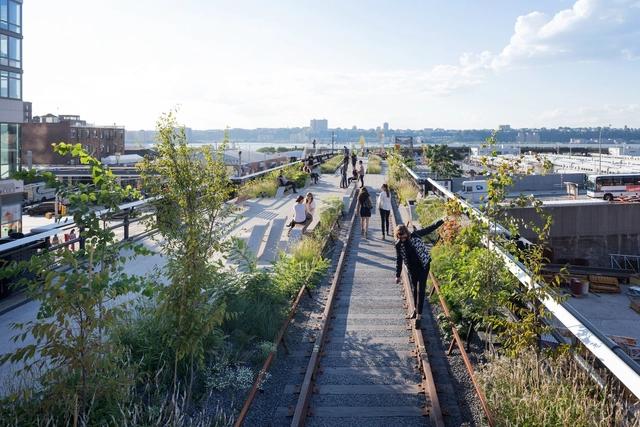
For most people, spending time outdoors in well-designed public spaces is one of the highlights to city life. Why, then, do we spend comparatively little time and money on designing them? In this article, originally posted on Metropolis magazine as "Designing Outdoor Public Spaces is Vital to the Future of our Cities" Kirt Martin, the vice-president of design and marketing at outdoor furniture designer Landscape Forms, makes the case that landscape architects and industrial designers working in the public realm are key for our cities' health and happiness.
All of us treasure our time in outdoor spaces. So why do we devote so little of our attention to their design?
As a designer in the site-furniture industry, I am always curious about the value people place on the outdoors. I like to ask people I meet to describe a great city like New York, Chicago, or Paris and what they most remember about being there. Or I ask them, if they won $25,000 to spend on a dream vacation, where they would go and what they would do. Their fond memories of a celebrated city or an escape into the wild often have little in common, except for one thing: Their most memorable and meaningful experiences almost always revolve around the outdoors.
https://www.archdaily.com/771035/why-landscape-designers-will-be-key-to-the-future-of-our-citiesKirt Martin
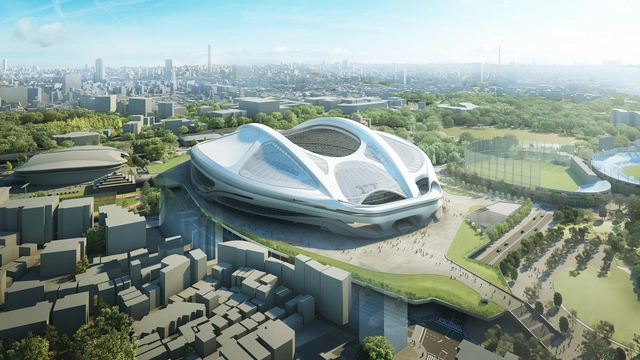
Following the news earlier this month that their design for Tokyo's 2022 Olympics stadium would be scrapped, Zaha Hadid Architects have released a comprehensive statement about the project's cancellation. Despite the many critics of the project's design - including Toyo Ito and Fumihiko Maki - it was ultimately the project's increasing costs that sparked its demise. However, the 1400-word statement from ZHA attempts to put distance between the firm and the claim by the Japan Sport Council (JSC) that much of the increase in costs was due to a complex design, instead arguing that "At every stage over the two years of development, the design and budget estimates were approved by the JSC" and adding a number of times that "ZHA worked proactively to reduce the estimated cost throughout."
Read on after the break to find out where ZHA pins the blame for the cost increases and to read the statement in full.









.jpg?1410204566 "© Flickr user Eustaquio")




.jpg?1438787272&format=webp&width=640&height=580)



.jpg?1438347714 "The Fondazione’s inaugural exhibition, the Serial Classic, explores questions of authenticity and imitation in classical antiquity. The lifesize sculptures are mounted on an intricate flooring system designed for the exhibition and composed of travertine, brushed aluminum, and perspex—all exposed along the edges. Image © Attilio Maranzano")
.jpg?1438347662 "The gilded exhibition hall is the central focal point of the Fondazione. Called the Haunted House, the structure’s blank utilitarian features are draped in gold leaf, an ostensibly spontaneous extravagance that Koolhaas post-rationalizes on functionalist grounds. The building towers above the rest of the campus’s open-air spaces and warehouses, which all can be taken in from the Haunted House’s balconies. Image © Bas Princen - Fondazione Prada")