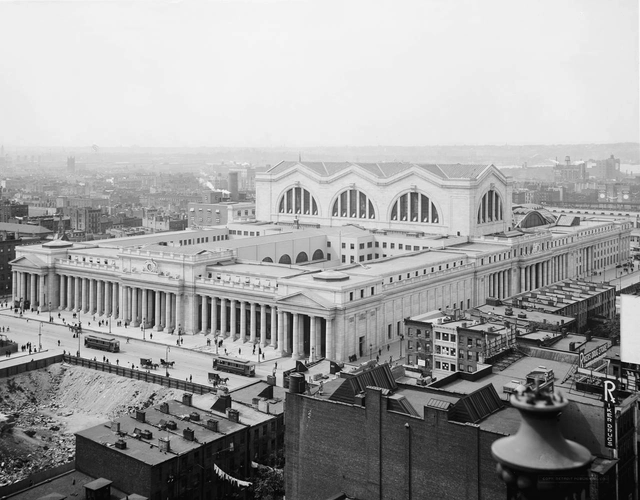
Courtesy of Detroit Publishing co. via US Library of Congress (Public Domain)
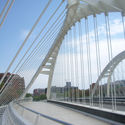
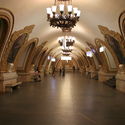
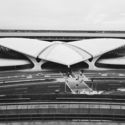
Architecture inherently appears to be at odds with our mobile world – while one is static, the other is in constant motion. That said, architecture has had, and continues to have, a significant role in facilitating the rapid growth and evolution of transportation: cars require bridges, ships require docks, and airplanes require airports.
In creating structures to support our transit infrastructure, architects and engineers have sought more than functionality alone. The architecture of motion creates monuments – to governmental power, human achievement, or the very spirit of movement itself. AD Classics are ArchDaily's continually updated collection of longer-form building studies of the world's most significant architectural projects. Here we've assembled seven projects which stand as enduring symbols of a civilization perpetually on the move.
The 2016 European Architecture Students Assembly (EASA) has concluded in Nida, Lithuania. Centering around its title theme of "Not Yet Decided," the two-week event included 35 workshops, with over half of the results still available to view around Nida. Among the most noticeable are "Highlight," a 10-meter tall observation tower close to Nida's lighthouse, a "nomadic theater" named "Atmosphere," a relaxation space known as "The Living Room" at the end of a pier, and a sculptural seating installation on the beach known as "Dream Dune." Read on to see images of all the completed installations.
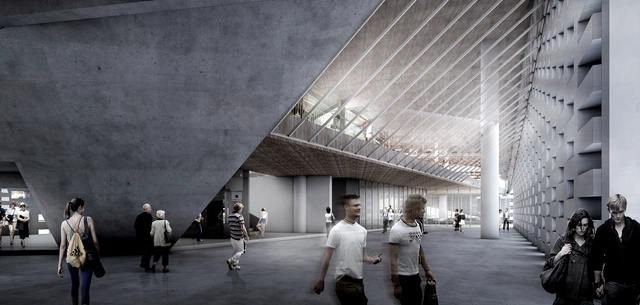
Just as the competition to design the official Obama Presidential Library in Chicago was heating up, Arcbazar orchestrated a simultaneous, open-call for ideas competition asking “What sort of Presidential Library would the people design?." Raynaldo Theodore Design Studio (RTDS) led by Raynaldo Theodore, Ryan Ridge, and Kalvin Widjaja responded with a proposal that focuses on Obama's peaceful and inclusive spirit to create a place of welcome and community. Dubbed The V-House, their design is comprised of a series of indoor/outdoor sequences which reference Obama's life and significant points in its Chicago context.
Day View of the Vessel. Image Courtesy of Bart//Bratke
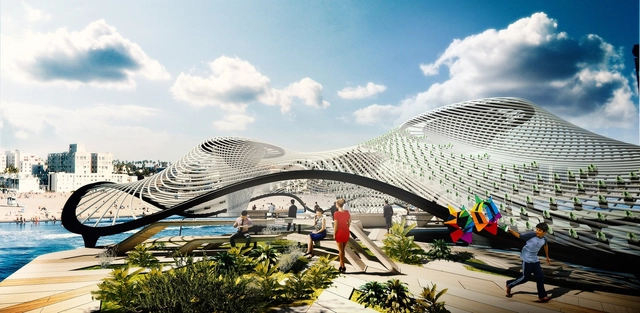
California is suffering through its 5th year of severe water shortage. Aquifers and rivers continue to dry out as the water provided by melting snowpacks is reduced, and even the heavy rain brought by El Niño this year could not relieve the drought. Authorities are wary of the long-term consequences for California and neighboring areas of the Colorado River, and Santa Monica is now seeing a growing number of initiatives to control the use of potable water and find sustainable solutions.
Most recently, a competition asked architects, artists and scientists to conceive sustainable infrastructure projects to improve Santa Monica’s water supply. Bart//Bratke and studioDE developed a raft structure named “Foram” that illustrates the future of floating platforms in sustainable development.
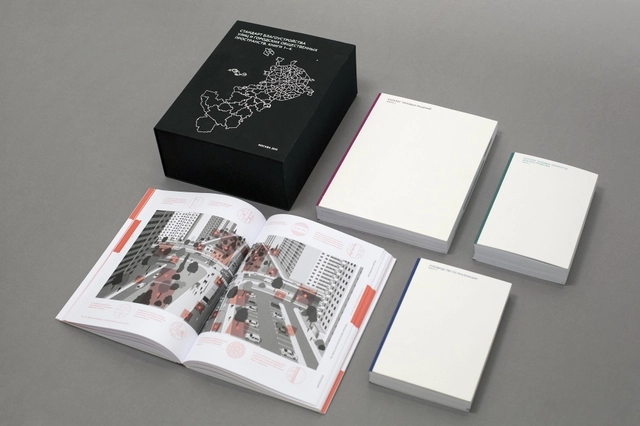
Earlier this year the development of a new Street Design Standard for Moscow was completed under a large-scale urban renovation program entitled My Street, and represents the city's first document featuring a complex approach to ecology, retail, green space, transportation, and wider urban planning. The creators of the manual set themselves the goal of making the city safer and cleaner and, ultimately, improving the quality of life. In this exclusive interview, Strelka Magazine speaks to the Street Design Standard's project manager and Strelka KB architect Yekaterina Maleeva about the infamous green fences of Moscow, how Leningradskoe Highway is being made suitable for people once again, and what the document itself means for the future of the Russian capital.
This article is part of our new "Material Focus" series, which asks architects to elaborate on the thought process behind their material choices and sheds light on the steps required to get a building constructed.
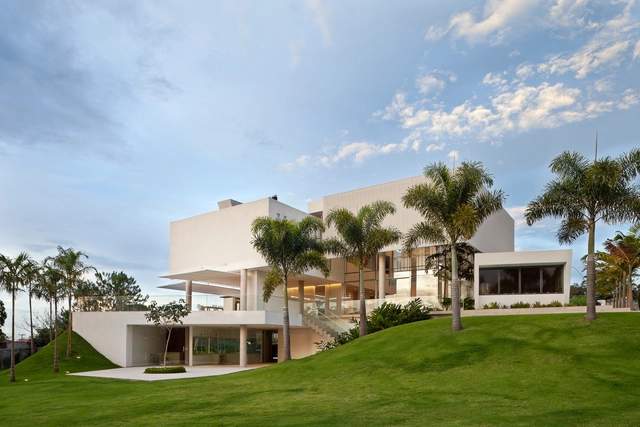
The House in Lago Sur Qi 25 was designed by Sérgio Parada Arquitetos Associados firm. The project is 800 square meters and the layout is organized into 3 floors. Their volumes were defined by their use: intimate, service, formal and leisure. The project’s structure is completely made up of reinforced concrete with large openings that allow for complete integration of the exterior with the interior. We talked with the architect Rodrigo Biavati to learn more about the material choices and challenges of the project.
https://www.archdaily.com/793747/material-focus-house-in-lago-sul-qi-25-by-sergio-parada-arquitetos-associadosEquipe ArchDaily Brasil
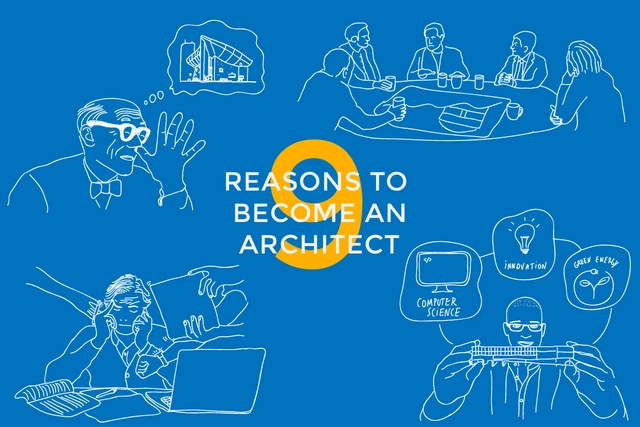
Making the decision to pursue architecture is not easy. Often, young students think that they have to be particularly talented at drawing, or have high marks in math just to even apply for architecture programs. Once they get there, many students are overwhelmed by the mountainous tasks ahead.
While the path to becoming an architect varies from country to country, the average time it takes to receive a Masters in Architecture is between 5 and 7 years, and following that is often the additional burden of licensure which realistically takes another couple of years to undertake. Knowing these numbers, it’s not particularly encouraging to find out that the average architect does not make as much as doctors and lawyers, or that 1 in 4 architecture students in the UK are seeking treatment for mental health issues. These are aspects which architecture needs to work on as an industry. However, beyond these problems, there are still many fulfilling reasons to fall in love with the industry and become an architect. Here are just some of them.
On this day twenty-five years ago Tim Berners-Lee launched the “World Wide Web” protocol at CERN in Switzerland, ushering in the age of the Internet. Over the last two decades this global information network has rapidly evolved, increasingly influencing how architecture is conceived, produced, discussed and ultimately implemented in real space.
https://www.archdaily.com/793914/internet-25-years-old-why-we-are-celebrating-today-why-all-architects-should-tooAD Editorial Team
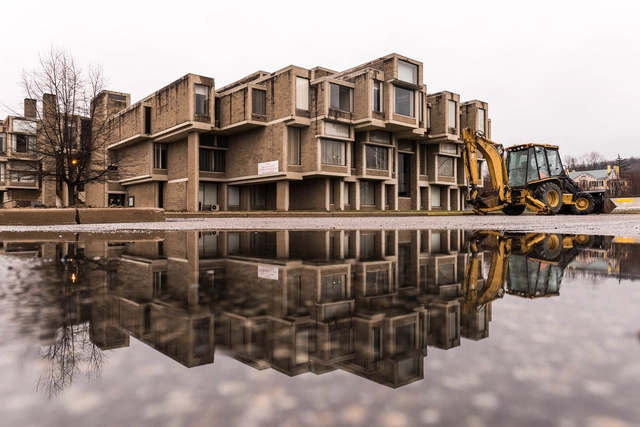
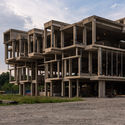
Visiting on four separate occasions throughout 2015 and 2016, Erskine captured the dismantling of this iconic Brutalist work with stunning severity. See the building's final seasons below.
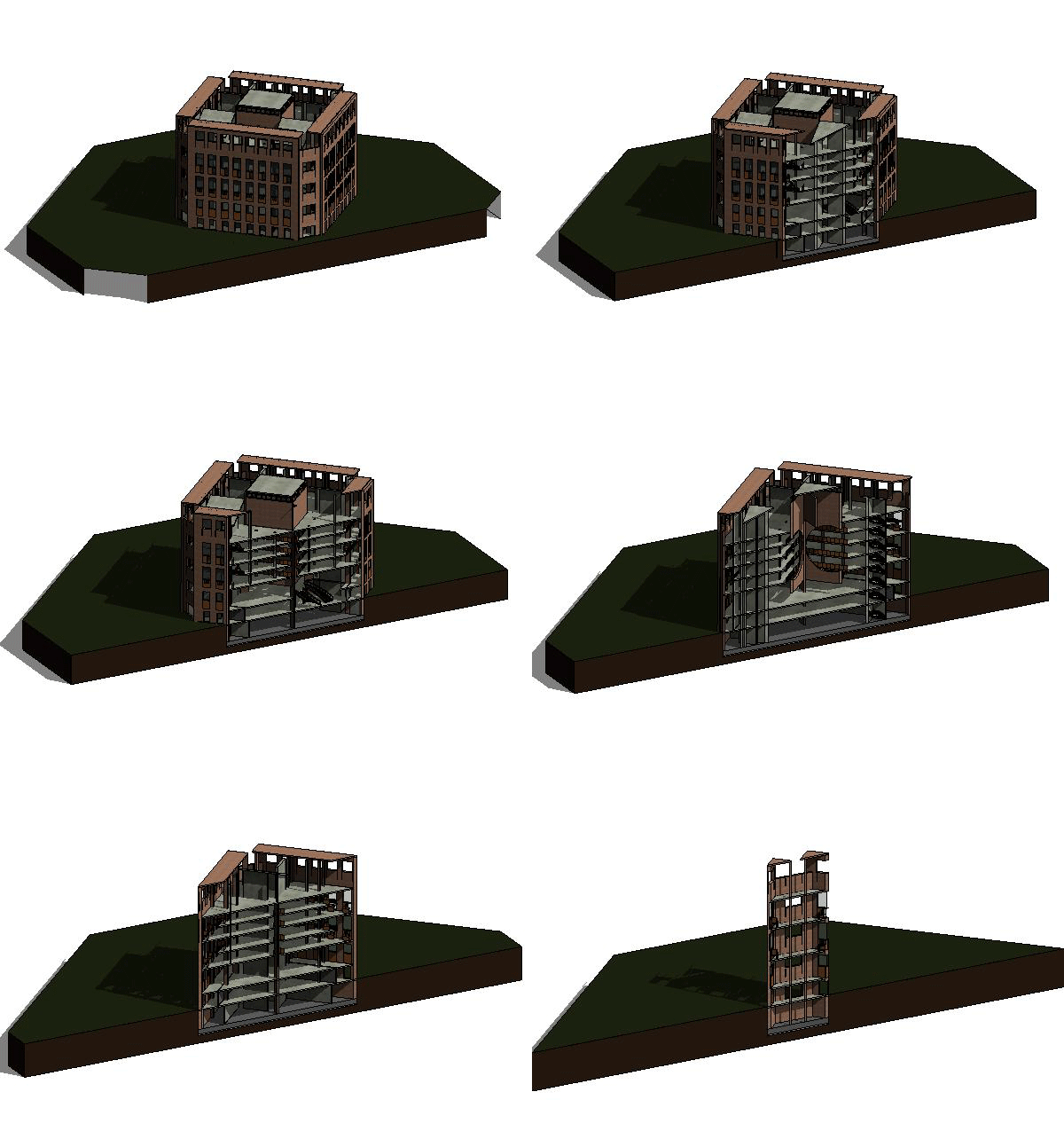
ArchDaily recently posted an interesting article on using animated GIFs for architectural drawings. The article had some great examples but was short on details of how to actually create these images.
I was curious how to create animated GIFs using Revit so I looked into the process. It turns out it’s pretty easy, provided you’re systematic when creating your views and have access to photo-editing software, like PhotoShop. Want to try it yourself? Follow the steps below to create your own animated GIFs in Revit.
In 1978, Australian ecologists David Holmgren and Bill Mollison coined the concept of permaculture as a systematic method for the first time. For Mollison, "permaculture is the philosophy of working with, rather than against, nature, after long and thoughtful observation." [1] Meanwhile, Holmgren defines the term as "consciously designed landscapes that simulate or mimic the patterns and relationships observed in natural ecosystems." [2]
In 2002, Holmgren published the book "Permaculture: Principles and Pathways Beyond Sustainability," in which he defines 12 design principles that serve as a guide for creating sustainable systems. These principles can be applied to everyday processes to humanize them, enhance efficiency, and ensure mankind's long-term survival."
What if we apply them to the design process of an architectural project?
In 2014, Syrian architect Marwa al-Sabouni won the Syria category of the UN Habitat Mass Housing Competition for a housing scheme she developed for the city of Homs, her hometown. Now over two years later, Thames and Hudson has published her bookBattle for Home: The Vision of a Young Architect in Syria. Throughout all of these events, al-Sabouni has remained in Syria. As the Guardian puts it: “As bombs fell around her, Syrian architect Marwa al-Sabouni stayed in Homs throughout the civil war, making plans to build hope from carnage.”
In this TEDSummit video, Al-Sabouni argues “that while architecture is not the axis around which all of human life rotates... it has the power to... direct human activity” She believes that the Old Islamic cities of Syria were once harmonious urban entities which advocated for co-habitation and tolerance through their intertwining. However, she posits that over the last century, beginning with French colonization, the Ancient towns were seen as un-modern and were gradually “improved” with elements of modernity: “brutal unfinished concrete blocks, aesthetic devastation and divisive communities that zoned communities by class, creed, or affluence.” This urban condition, she argues, is what created the conditions for the uprising-turned-civil war.
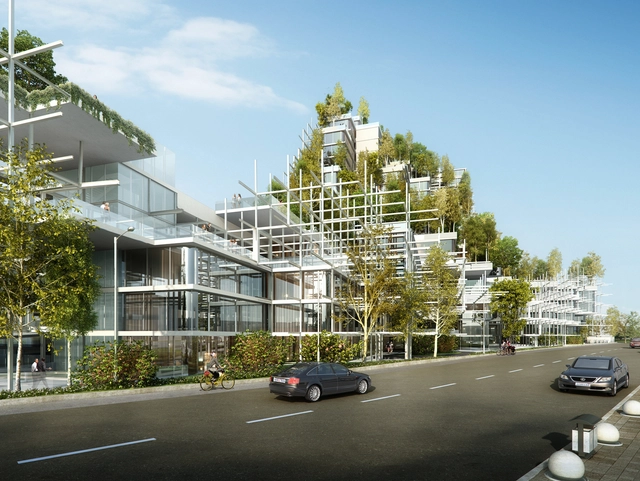
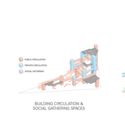
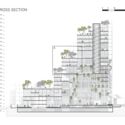
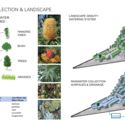
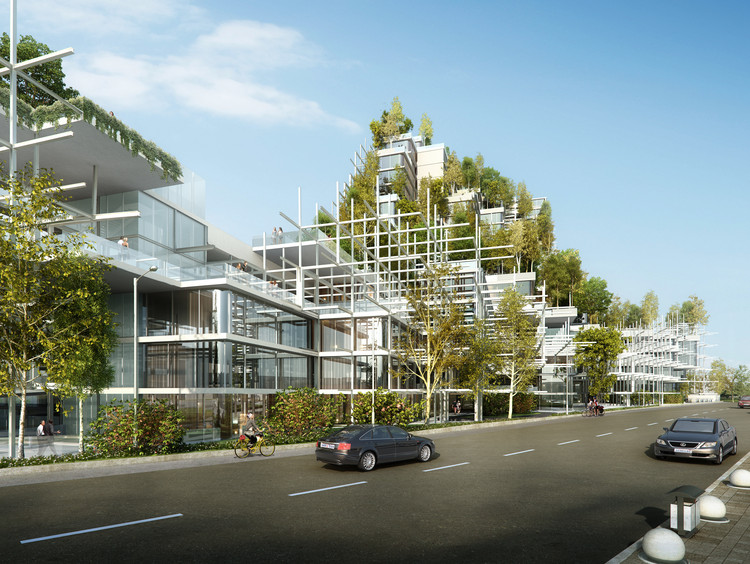
New-York-based studio Architensions has released the design for its shortlisted project, Rising Ryde, for the Ryde Civic Center in Sydney, Australia. In an effort to embrace local communities and contexts, the project is conceived as a hill-shaped building covered in local vegetation and it aims to prioritize people through its complex system of social connections and interactions with nature.
Richärd + Bauer’s Arabian Library in Scottsdale, Arizona, won an IIDA Metropolis Smart Environments Award in 2009 for its groundbreaking approach to both sustainability and community needs. The building’s form and rusted-steel cladding were inspired by slot canyons in the Arizona desert. Image Courtesy of Richärd + Bauer
The city hall of my current hometown, Scottsdale, Arizona, gives no hint of any sort of civic function to the boulevard on which it sits. You enter it from the parking lot in back. The only reason I have been there was as part of a team presenting our credentials in a design selection process. My other dealings with government have been online, via mail, or at suburban locations where I have gone to handle such matters as smog tests. I vote by mail.
The big push in American local, state, and federal government is to take everything possible online and off-site and to make whatever remains as minimal and anonymous as possible. The actual operations of government have long taken place in back rooms where politicians and bureaucrats have done the real work. Yet they were often encased in grand structures that gave us a sense of identity and pride in our government while also serving as open sites where we could encounter our civic agents and one another. As a result, we live with a heritage of civic monuments that proclaim our investment in deliberation and democracy, but we build very few, if any, such structures today. Instead, we are looking to get rid of whatever relics of such a history of civic architecture we can—the governor of Illinois would like to sell the James R. Thompson Center, designed by Helmut Jahn in 1982–85, and only the specificity of the grand classical edifices that predate that Postmodern monument prevents other politicians from trying the same. Civic buildings cost money to build and maintain, and their formal spaces sit empty most of the time.
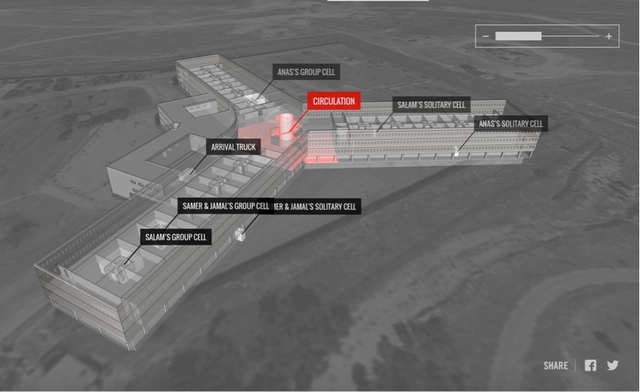
Forensic Architecture, a research agency based at the University of London, in collaboration with Amnesty International, has created a 3D model of Saydnaya, a Syrian torture prison, using architectural and acoustic modeling. The project, which was commissioned in 2016, reconstructs the architecture of the secret detention center from the memory of several survivors, who are now refugees in Turkey.
Since the beginnings of the Syrian crisis in 2011, tens of thousands of Syrians have been taken into a secret network of prisons and detention centers run by the Assad government for a variety of alleged crimes opposing the regime. After passing through a series of interrogations and centers, many prisoners are taken to Saydnaya, a notoriously brutal “final destination,” where torture is used not to obtain information, but rather only to terrorize and often kill detainees.
Located about 25 kilometers north of Damascus, Saydnaya stands in a German-designed building dating from the 1970s. In recent years, no meaningful visits from independent journalists or monitoring groups have been permitted, so no recent photographs or other accounts exist of its interior space, except for the memories of Saydnaya survivors.
Felipe Correa’s latest book “Beyond the City: Resource Extraction Urbanism in South America” takes us to a region that architects and urban designers typically have neglected—the hinterland. The South American hinterland provides a unique subject of analysis as it has typically been urbanized for its natural resources, which are tethered back to the coastal cities where these resources are either consumed or distributed to global markets. Within this context, the hinterland is viewed as a frontier whose wilderness is to be tamed, put to work, and territorialized through infrastructure and urban design. Beyond the City provides an insightful look into these processes and the unique urban experiments that emerged in South America. Organized by five case studies, Beyond the City is tied together by what Correa has termed “resource extraction urbanism,” which he links to “new and experimental urban identities in the context of government-sponsored resource extraction frontiers.” Written as a lucid historical account that anchors the discussion within the political, economic, and social context, as well as within global design discourse, the book is also projective—setting the table for a series of questions on how design can act in these landscapes.
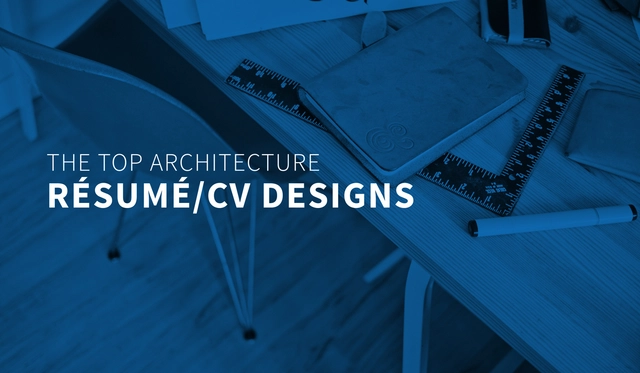
A few months ago we put out a call for the best architecture résumé/CV designs. Between ArchDaily and ArchDaily Brasil we received over 450 CVs from nearly every continent. We witnessed the overwhelming variety and cultural customs of the résumé: some include portraits, others do not; some include personal information about gender and marital status; others do not. In the end, however, we based our selection on the CVs that stood out from the hundreds of submissions. We looked for CVs that transmitted the personality of the designer, their ability to communicate visually and verbally, and perhaps, the most intangible criteria for evaluation—the "creativity" of the CV. The documents below represent the diversity of styles and formats that just might land you a job at your dream firm.
https://www.archdaily.com/793375/the-top-architecture-resume-cv-designsAD Editorial Team
In response to a conservative and sometimes fragmented building industry, some architects believe that improving and automating the construction process calls for a two-front war: first, using experimental materials and components, and second, assembling them in experimental ways. Extra-innovative examples include self-directed insect-like robots that huddle together to form the shape of a building and materials that snap into place in response to temperature or kinetic energy.
The automation battle has already been fought (and won) in other industries. With whirring gears and hissing pneumatics, rows and rows of Ford-ist mechanical robot arms make cars, aircraft, and submarines in a cascade of soldering sparks. So why shouldn’t robotic construction become commonplace for buildings, too?



_Alexandra_Kononchenko_(29).jpg?1472389338&format=webp&width=640&height=580)
_Alexandra_Kononchenko_(23).jpg?1472389191 "The Living Room. Image © Alexandra Kononchenko")
_Alexandra_Kononchenko_(33).jpg?1472389433 "© Alexandra Kononchenko")
_Alexandra_Kononchenko_(27).jpg?1472389297 "The Next Step. Image © Alexandra Kononchenko")
_Lucas_Bonnel_(1).jpg?1472388851 "Highlight. Image © Lucas Bonnel")
_Alexandra_Kononchenko_(29).jpg?1472389338)


.jpg?1471951511 "Courtesy of Raynaldo Theodore Design Studio")