Paraguayan Architecture

  1. ArchDaily
  2. Countries
  3. Paraguay

Latest projects in Paraguay

Latest news in Paraguay

The Architecture of the FIFA World Cup: Looking Back at 2026 and Ahead to 2030

Audio available

The conclusion of the FIFA World Cup 2026 marks the end of the tournament's largest edition to date. Hosted across Canada, Mexico, and the United States, the competition expanded to 48 national teams and brought together sixteen host cities distributed across three countries. For decades, FIFA World Cups have served as catalysts for architectural production. Each edition has generated a distinct collection of stadiums, transportation investments, public spaces, and urban interventions that often remain part of their host cities long after the tournament concludes. While recent competitions have become associated with landmark stadium projects and ambitious national building programs, the 2026 edition followed a different trajectory, relying primarily on existing venues adapted to FIFA's technical and operational requirements.

Energy Landscapes: How Infrastructure Reshapes Territory in South America

Audio available

Some of the most significant transformations of South American landscapes have been produced not by cities, but by large infrastructures built to extract and distribute natural resources. Mining operations, energy systems, and transport networks have connected remote landscapes to broader economic structures while transforming rural territories and urban settlements throughout the continent. These infrastructures do not simply occupy space; they reorganize it. They have not only supported economic growth but also reconfigured territories in ways that continue to generate political, environmental, and social debate across the continent. From this perspective, territories can be understood not as fixed geographic areas but as socio-ecological systems shaped by cultural, environmental, and political relations, a point emphasized by anthropologist Arturo Escobar in his work on territorial thinking in Latin America.

Community-Centered Architecture: Redefining the Role of Architects in South America

Subscriber Access | 

Across South America, architecture is increasingly being understood as a collective act. Rather than imposing external views, many studios and designers are building with and for communities, learning from their local practices, materials, and ways of inhabiting. These projects are repositioning the architect's role from an author to a facilitator, transforming design into a participatory process that centers collaboration, care, and mutual respect.

Highlights from BAL 2025: Latin American Architecture Biennial

Subscriber Access | 

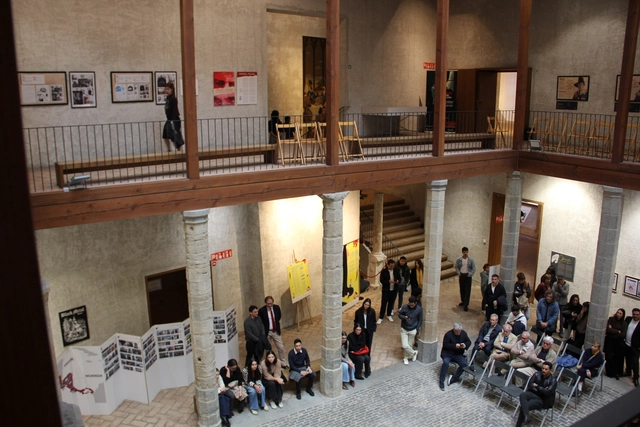
Held in Pamplona from the 23rd to the 26th of September, the 2025 Latin American Architecture Biennial (BAL) brought together emerging studios and established voices from across the continent. This year’s edition stood out for the diversity and depth of its participants: projects of striking formal and conceptual richness, developed by young yet remarkably mature offices. Together, they reflected the vitality of today’s Latin American architecture — thoughtful, inventive, and deeply aware of its context.

The 50 Best Latin American Houses of 2024

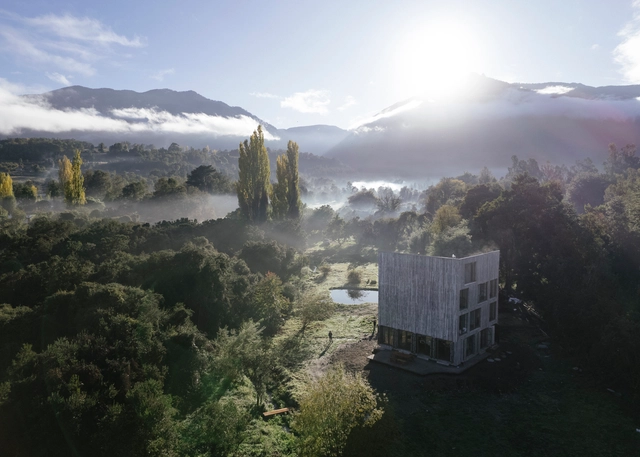
Annually, ArchDaily's curatorial team undertakes a rigorous selection process to identify exemplary projects in Latin American residential architecture. The goal is to share these works of architecture with our audience and highlight and promote good practices within contemporary architecture. This meticulous effort focuses on identifying projects that stand out for their design and their positive impact on the environment, innovative use of materials and techniques, and ability to address current needs.

Latin American Architecture Biennial 2025: Meet the 14 Selected Emerging Practices

Subscriber Access | 

The Latin American Architecture Biennial (BAL), which has gained significant relevance in the contemporary architectural scene, will celebrate its ninth edition next year. This meeting gathers emerging Latin American architecture studios in Pamplona, Spain, to share their work, fostering dialogue and debate about the current state of the discipline, as well as acting as a bridge between the Latin American continent and the Spanish context. In this edition, Costa Rica will be the guest country, accompanied by Honduras, El Salvador, Panama, Guatemala, and Nicaragua. As part of this invitation, there will be an exhibition and specific seminars dedicated to analyzing the situation of architecture in these countries.

How Latin American Female Architects Are Tackling Their Countries' Challenges: 4 Inspiring Interviews Highlighting Creativity and Resilience

Architecture and urban planning in Latin America face deeply rooted social, environmental, and economic challenges shaped by historical inequalities, rapid population growth, and unplanned urbanization. Addressing these issues requires innovative solutions that balance housing needs, ecological preservation, and respect for local identities. Amid this complex landscape, several visionary female architects are making a difference with creative and impactful approaches.

Gloria Cabral: “Everything Begins With the Wisdom of a Place”

Subscriber Access | 

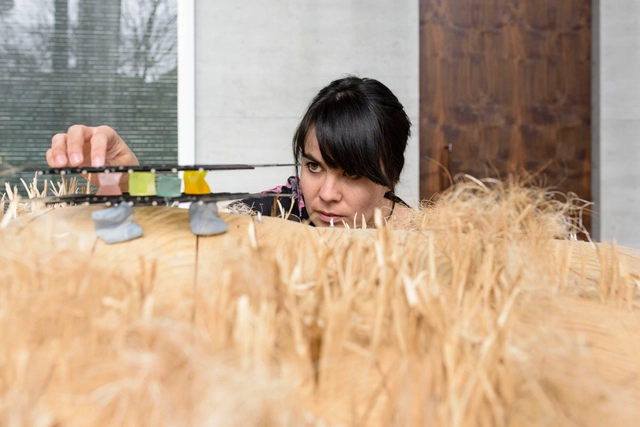
Born in Brazil and educated in Paraguay, Gloria Cabral is an architect who early on learned that home can be many places—or none at all. Guided by a comprehensive understanding of the geography, culture, and social conditions of the places she designs, she has left her mark on buildings and artistic installations constructed in various locations, from Assumption to Venice.

Building with Earth in Latin America: 12 Examples in Contemporary Architecture

Subscriber Access | 

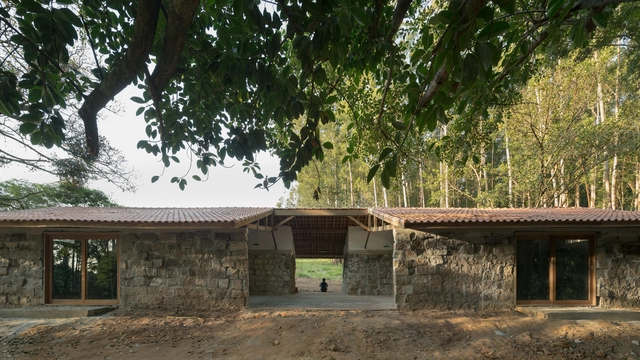
Being one of the first construction methods developed by humans, earth has proven its resilience and durability over time. While construction techniques have evolved and been updated over the years, there is still a long way to explore where the understanding of climate, geographic location, sustainability, structural requirements, and other factors determine its degree of application.

Local Colors in Rammed Earth Construction: 50 Projects Revealing Earth's Vibrant Palette

With the proper know-how, readily available earth, sand, chalk, lime, or gravel can yield a versatile, strong, and durable construction material. Its colorful results vary from region to region, depending on the natural soil component, climate, and treatment. While some prefer to minimize any added processing, others relish the exploration of rammed earth surfaces. Different textures and mesmerizing layers of multitoned or multicolored earth can be used to create a solid surface that enriches the visual quality of a space and carries a sense of warmth to any project.